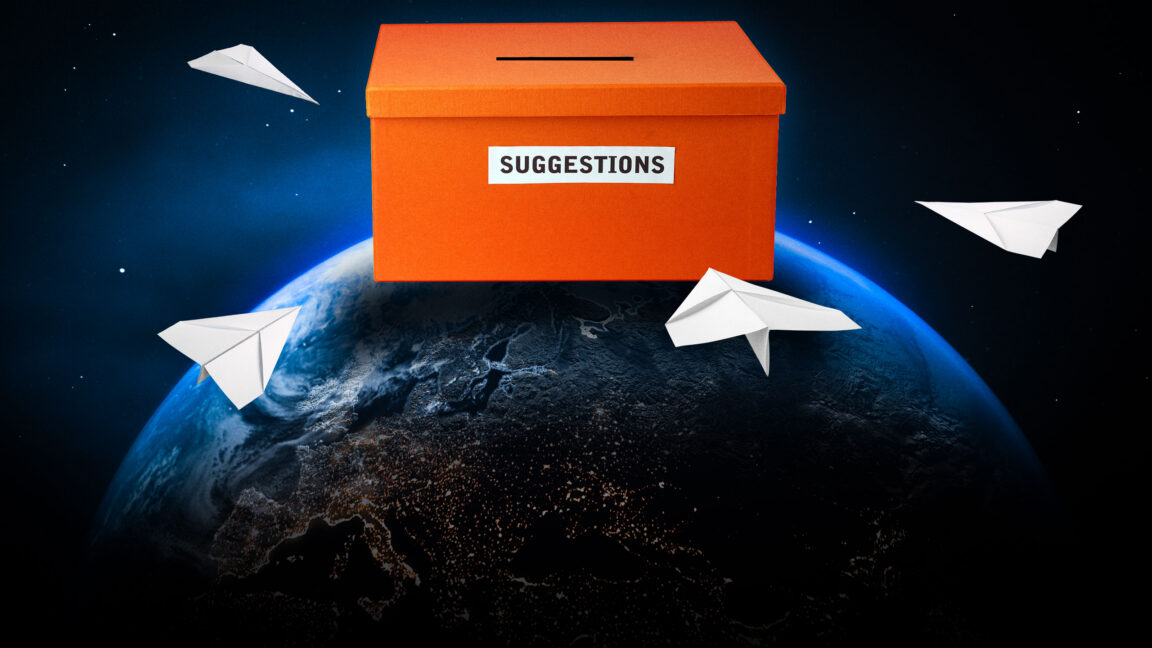
“Any time there’s dynamic change, there’s the opportunity for new ideas to insert themselves,” Autry said in an interview with Ars. So Autry and others want to give people a chance to voice those ideas by launching the “Space Ideation Challenge.”
A challenge for new ideas
A prize purse of $125,000 will be awarded to the best ideas, of which $25,000 will be devoted to the best undergraduate and graduate student submissions. Entrants will be required to write three- to five-page white papers that explain their idea and how they would shape markets and strengthen the space economy or national security. Papers are due by June 30, and judging will be complete by August 15.
As an additional incentive, the best ideas will be briefed to relevant policymakers, including key members of Congress, NASA Administrator Jared Isaacman, and Saltzman, of the Space Force.
So what constitutes a good idea? It is not, Autry said, a business plan. These ideas will be shared with others, so if you have a proprietary idea to make billions of dollars, go elsewhere. Beyond that, though, it could be anything, Autry said, and the goal is to really open the aperture widely.
As an example, he cited NASA’s Commercial Orbital Transportation Services program, initiated more than two decades ago. This program ultimately spawned private cargo and crew services to the International Space Station and provided key funding to help SpaceX survive its early, lean years and accelerate to what it has become today. Autry said forward-looking ideas today might help the space agency with the transition to private space stations from the ISS or in the competition with China to reach the Moon and develop its resources. There could also be other kinds of prize-based competitions to spur innovation.
Ideas could come from students; the various super-engaged space communities on Twitter, YouTube, Reddit, Discord, or elsewhere; or even employees at NASA or private companies who can’t get management to listen to them. Basically, if someone has thought about space and how something could be done better, this is an opportunity to speak up and be heard.
“I think we all know that we’re on the verge of some big things in space, but I think there’s some frustration with how to get there with traditional thinking,” Autry said. “So we’re looking for some non-traditional thinking.”