“This is obviously not what we want to be doing,” said Dr. Constantinos “Taki” Michaelidis, director of Hospital at Home at UMass Memorial Health.
The hospital had around 90 patients boarding in the emergency room, awaiting beds elsewhere, as of Wednesday, Michaelidis said.
“Obviously, us transferring back 15 or 16 patients is going to very much challenge the medical center,” he said.
Mass General Brigham, which also has a home hospital program, will pivot its operations to provide advanced home care for patients after they have been discharged from a hospital stay if Congress does not renew the waiver in time, a spokesperson said. This differs from the current model, where patients are considered “in-patient” even while recovering at home.
The US House of Representatives voted to extend home hospital programs last week as part of a Health and Human Services funding bill. But Senate passage of the bill is uncertain. Democrats have promised to oppose the larger government spending package — which includes over $64 billion for the Department of Homeland Security — following the shooting death of a 37-year-old nurse in Minneapolis by federal immigration agents.
During the last government shutdown, Massachusetts home hospital programs were on pause for nearly two months at the start of respiratory virus season.
The home hospital model has had a positive impact since its initial approval during the pandemic, health care providers say. A report from the Massachusetts Health Policy Commission found that home hospital patients were discharged to skilled nursing homes less than 1 percent of the time, while patients in traditional hospital settings were sent to nursing facilities 11 percent of the time. Data suggest that, because patients are at home, they can recover for longer without the pressure of giving up a hospital bed.
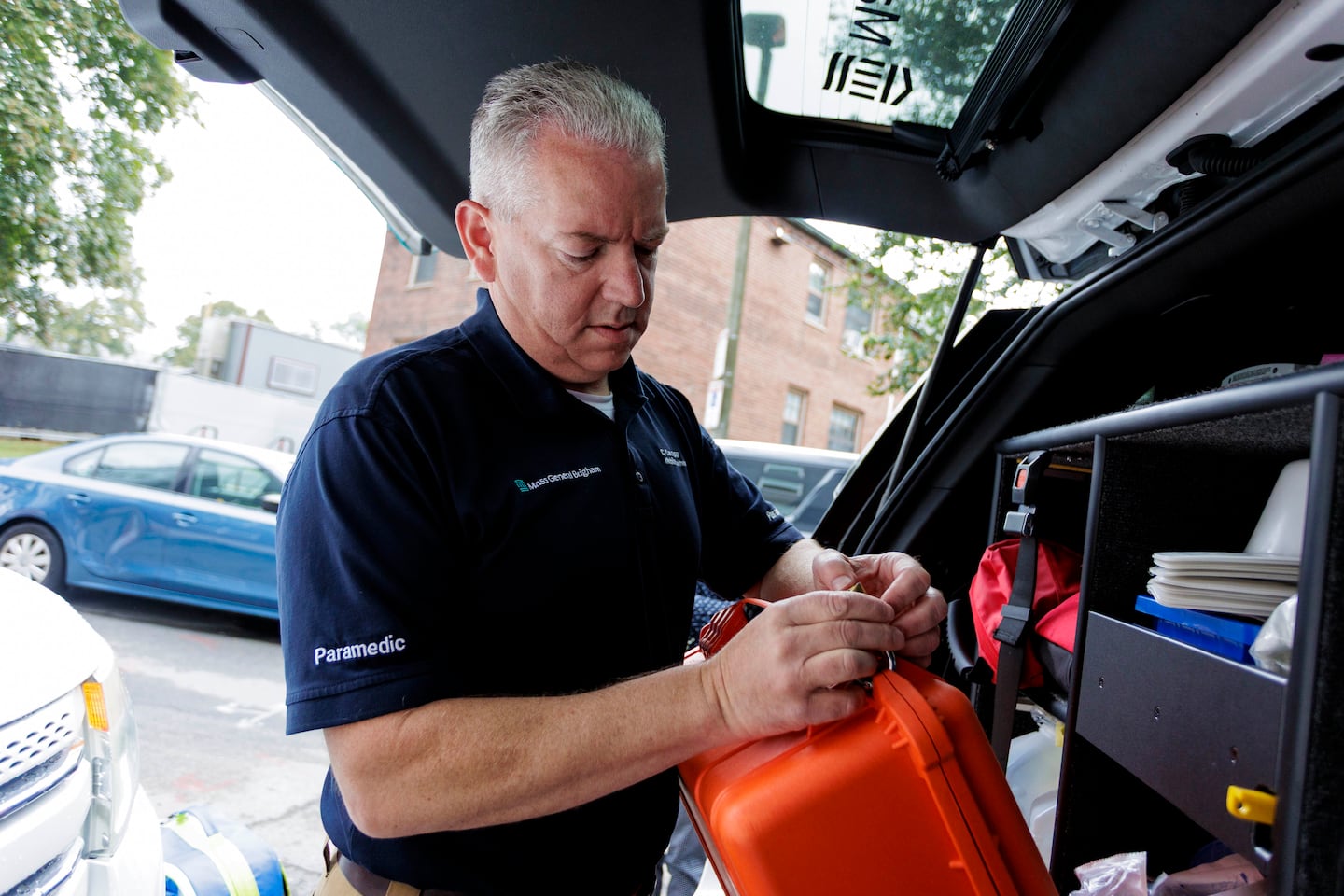
While patients in home hospital programs aren’t within the four walls of a hospital, they are seen multiple times a day by paramedics and nurses who administer medicines, draw blood, and facilitate video calls between the patient and doctors. The patients are also connected to a remote monitoring system that is continuously checking their vital signs.
UMass Memorial hopes to expand its home hospital offerings, Michaelidis said, but two program shutdowns in only a few months makes it harder for him to advocate for additional investments.
“Our C-suite believes strongly in everything we’re doing,” Michaelidis said. “I think it just hurts us strategically and how we care for patients in our community.”
Marin Wolf can be reached at marin.wolf@globe.com.