The proposed Fort Worth 2026 bond saw a slight bump of $5 million for a total cost of $845 million.
What’s happening
During a Fort Worth City Council work session Jan. 27, council members got an update that city staff refunded $65 million in debt in December. The move saves $460,000 through fiscal year 2034-35 and means the city was able to increase the bond capacity, according to the presentation.
The plan, by a consensus of the 11 council members, was to add $5 million to the bond for the affordable housing proposition.
That is one of six propositions that could be on the ballot. Streets and mobility infrastructure is the largest portion at $511.5 million, or 60.5% of the overall bond.
Park and open space improvements account for 21.9% of the bond, followed by public safety at 7.6%; animal care and shelter with 7.1%; public library improvements with 1.7%; and public housing is now 1.2%, up from 0.9% at the $840 million bond proposal.
Council will vote at the Feb. 10 meeting to place the bond on the May 2 election.
Diving deeper
According to the presentation by city staff, the affordable housing bond eligibility is to target opportunities for residents/households making up 120% of the area median income. That would range from one person making $89,640 or less, or up to $169,080 for a family of eight.
“We’re expanding the definition of affordable housing,” said Kacey Thomas, Fort Worth Neighborhood Services director. “It wouldn’t be just single-family home ownership, but it would just be any type of home ownership opportunities. We also took a look at what some other Texas cities and how they have done with their bond proceeds. We could put money into developing new rental family housing. We could do rental housing repair and rehab; we’re talking about substantial repair work.”
Thomas said other avenues would be developing new permanent supportive housing or short-term housing options. A final option is look at a public-private partnership to leverage the $10 million, if approved.
What they’re saying
District 4 council member Charlie Lauersdorf questioned why the $5 million was added to public housing when there were suggestions at the previous meeting about adding that money for infrastructure improvements, such as roadwork, according to previous reporting.
Lauersdorf and District 10 council member Alan Blaylock both provided pushback to adding $5 million to the proposal for affordable housing. Lauersdorf suggested that the $5 million should be added to the other propositions.
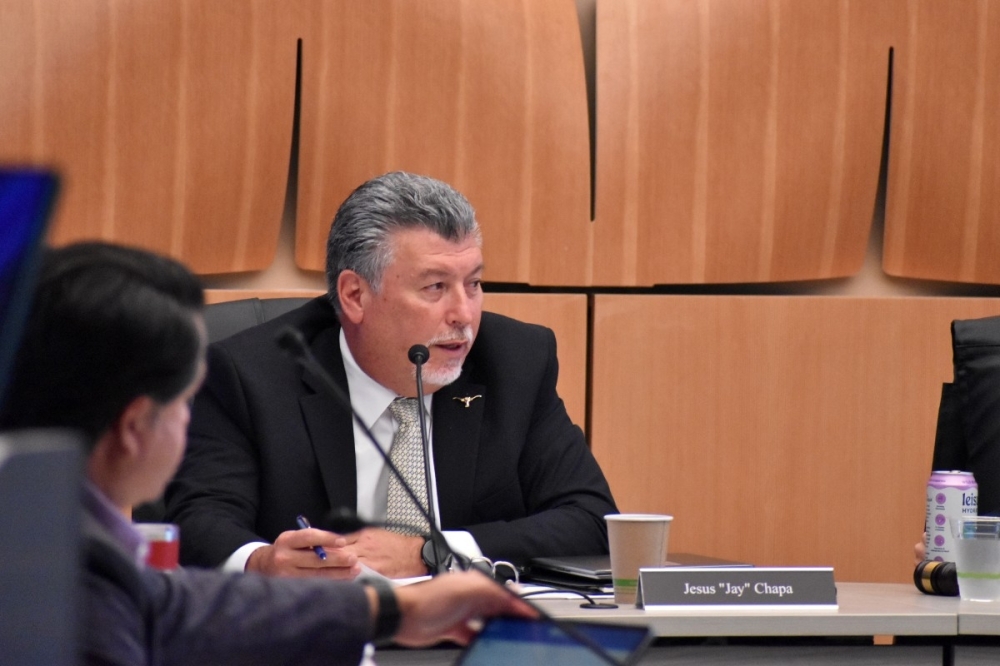
City Manager Jesus “Jay” Chapa said that city staff did that based on conversations at the last work session.
“More than half of the city council said they could support it verbally,” Chapa said. “So, based on the fact that there was a consensus, the staff and myself followed the council’s recommendation.”
What else?
The other portion of the bond that was discussed at length was the public art ordinance tied to bond passage.
By city ordinance, the amount for public art allocated is set at 1% for streets and mobility infrastructure; and 2% for parks and recreation, library, and affordable housing.
Many of the council members asked if the 2% could be lowered to 1%.
Chapa said that if the council passes a 1% funding cap on all bond propositions, the city could reallocate $2.9 million toward additional capital improvements. Mayor Mattie Parker said the discussion would continue into closed session but stressed it was not a good idea to change that portion of the bond after months of meetings in council districts.
Council will have a chance to alter the city ordinance going forward by changing the percentage of public art funding in future bonds from 2% to 1% at the April 14 meeting, according to the presentation.
“I really do think we need to look at revisiting our entire public art program to make those dollars more effective,” Blaylock said, “To get more signature work, instead of just what we can pitch and pull in certain locations.”