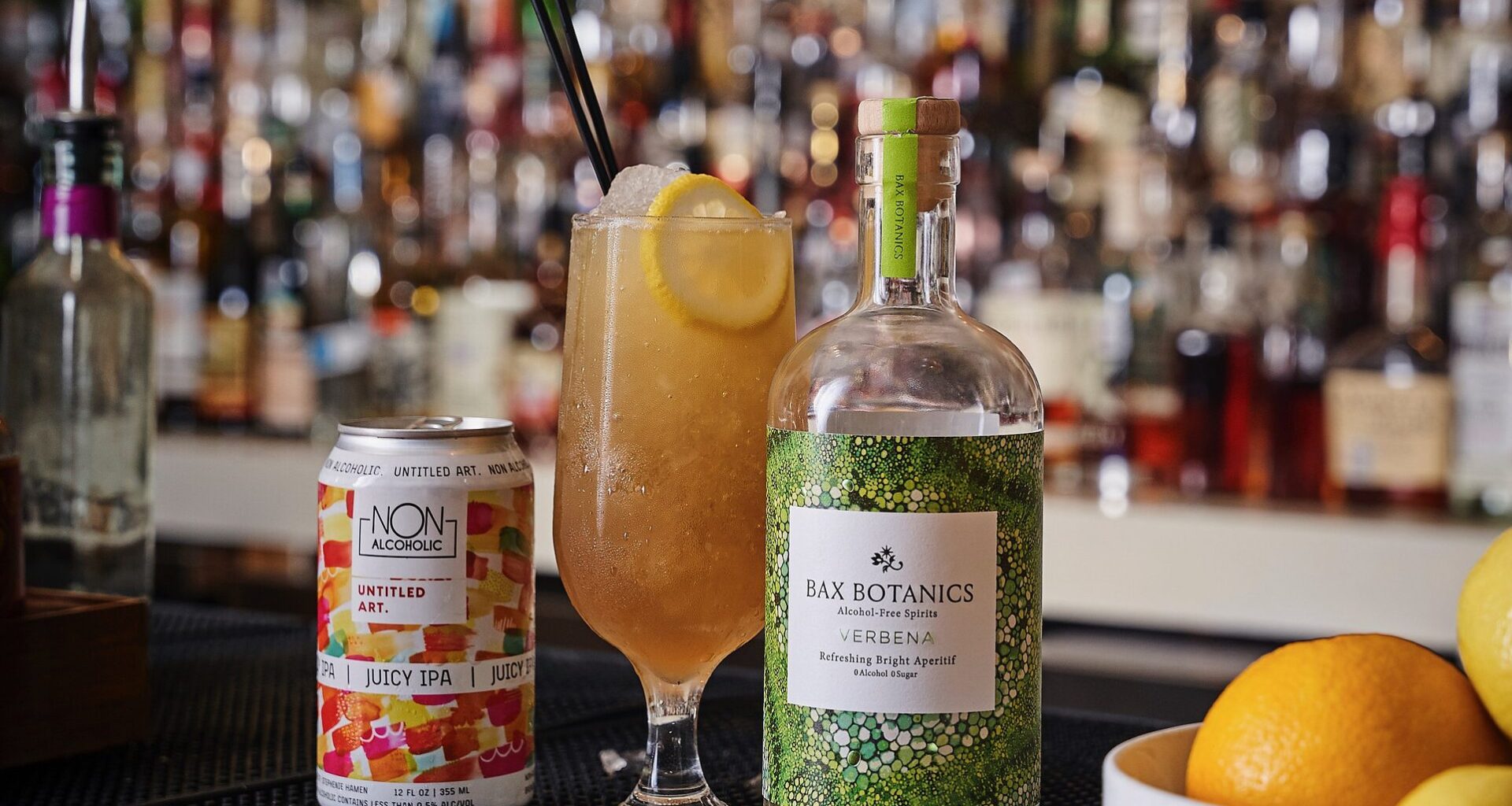
Jenn Kautsch didn’t have a low point in life that led her to sobriety, and she never really considered herself as having a problem with alcohol.
Like many people, having a drink at the end of the day was just part of the Fort Worthian’s routine.
“It wasn’t bad enough, but it wasn’t good enough either,” Kautsch said. “What started out as moms getting together drinking socially turned into drinking with my husband and drinking on my own. It became a coping mechanism, a boredom filler, a habit.”
So in 2018, she started Sober Sis, an online community that started as an Instagram account for women curious about what an alcohol-free lifestyle looks like.
She launched the effort after learning about the gray area of drinking defined as small but significant increases of alcohol dependence by the National Center for Biotechnology Information. This relationship with alcohol, which is a middle ground between a social drinker and alcohol use disorder, is common with 38 million Americans meeting this definition, according to a 2022 survey from American Addiction Centers.
As Dry January wraps up, experts say more people nationwide are moving away from a lifestyle that includes alcohol.
The sober curious movement, which was defined by the Alcohol and Drug Foundation as being mindful of drinking habits, has grown over the last couple years.
Nearly 50% of respondents wanted to drink less, according to a survey by Circana. A Gallup poll released in August found 2025 to be the lowest year on record for people who reported that they drank at 54%.
Although rates specific to Fort Worth aren’t available, Texas was ranked as the eighth most sober curious state in a study by health care publisher Recovered last year.
Locals in the zero-proof industry say they can attest to Cowtown’s interest in an alcohol-free alternative.
Beth Hutson, executive producer and publicist of Fort Worth advertising agency Elevated Content, stopped drinking in 2019. Alcohol alternatives were available then but not commonplace.
Around that same time, she woke up with an idea to spread awareness.
“I told my husband, ‘I think we need to make mocktails cool,’” Hutson recalled. “‘We need to show people that it doesn’t have to be out-of-date O’Doul’s, that brands can put a really meaningful cocktail program together at restaurants.’”
She created Elevated Elixir, a branch of her advertising agency that works with local and national brands, restaurants and bars to create and promote zero-proof options.
It was a difficult sell at first, Hutson said.
A lot of businesses weren’t convinced that the industry would grow. Now the nonalcoholic beverage industry is a $3 billion operation, according to the U.S. Chamber of Commerce. And IWSR, one of the leading global drinks data and insight providers, estimates the industry will be worth almost $5 billion by 2028.
Locally, several restaurants, bars and hotels have emerged as leaders in providing customers with mocktails or zero-proof options, Hutson said. The Usual, Clay Pigeon, 61 Osteria, Bowie House and The Crescent Hotel were a few she highlighted, not including the nonalcoholic bars that have popped up throughout Tarrant County.
“It’s not just like a movement at this point. They’ve disrupted the culture,” Hutson said. “There’s starting to be more of a cultural shift where people just come to expect that there should be thoughtful zero-proof options.”
A change in perception
The last five years has seen a positive shift when it comes to sobriety, said Todd Garlington, a clinical manager at Greenhouse Treatment Center, an alcohol recovery program in Grand Prairie.
“A lot of people are beginning to live their recovery out loud,” Garlington said. “In the past, it was almost a dirty secret, and we’ve gotten away from that, and that’s bringing more people into the movement.”
Part of that change in perception comes from more consensus around medical groups and published literature, said Adam E. Barry, head of the Department of Health Behavior at Texas A&M University’s School of Public Health.
Most medical experts now agree that drinking alcohol offers no health benefits, he said. That, coupled with celebrity endorsements for nonalcoholic drinks and the spirits industry actively participating in promoting zero-proof options, points to the seismic growth in the last decade, Barry said.
“The context now with social media, with an emphasis on healthy lifestyle and healthy living, coming together with this idea of sober curious abstinence challenges and this idea of mindful drinking … it’s sort of all coming together at this point in time,” Barry said.
Alcohol-free challenges are more common. Dry January, one of the most popular ones, started as an official campaign in 2013 in the United Kingdom.
Participation in the annual event continues to steadily increase, according to a survey from Civic Science, which found that 56% of people were set to try the challenge this year.
Barry cautioned that no long-term research connects the increased participation to a reduction of drinking. Still, the benefits of living a sober lifestyle are clear — including losing weight and improving liver function as well as reducing the chances of cancer, according to UT Southwestern Medical Center.
“Someone who is engaged in self-reflection and trying to engage in more positive health behaviors — those are good things that will only have positive outcomes,” Barry said.
Spreading the journey
Kautsch also wanted to share her experience with sobriety with others — but she didn’t stop at Cowtown.
Sober Sis has since grown to an Instagram page with 60,000 and a nonprofit, where 250,000 women worldwide seek guidance through her free “Happy Hour Survival Guide.”
Kautsch authored a book titled “Look Alive, Sis” and created a 21-day sobriety program.
Part of her drive is looking at fellow Gen Xers. A lot of the push toward sobriety comes from Generation Z — about a third of young adults out of college don’t drink, according to the Cleveland Clinic.
But Kautsch, who is 54, notes that people her age are still gray-area drinkers.
“The alcohol industry is seeing sales drop,” she said. “My specific demographic is skewing that. We’re an outlier. We’re drinking more, not less.”
The majority of people in Sober Sis are above 40. Kautsch said for women her age, loneliness and lackluster lives often lead to alcohol becoming the companion.
That’s why she continues the work.
“We’re outsourcing our ability to have fun and relax to alcohol, giving it such prominence and such value in our society,” she said. “I would like to see alcohol become less relevant, less key to celebrating, and see more people be educated.”
Ismael M. Belkoura is the health reporter for the Fort Worth Report. Contact him at ismael.belkoura@fortworthreport.org.
At the Fort Worth Report, news decisions are made independently of our board members and financial supporters. Read more about our editorial independence policy here.
This <a target=”_blank” href=”https://fortworthreport.org/2026/01/29/mocktails-nonalcoholic-drinks-gain-popularity-what-does-that-look-like-in-fort-worth/”>article</a> first appeared on <a target=”_blank” href=”https://fortworthreport.org”>Fort Worth Report</a> and is republished here under a <a target=”_blank” href=”https://creativecommons.org/licenses/by-nd/4.0/”>Creative Commons Attribution-NoDerivatives 4.0 International License</a>.<img src=”https://i0.wp.com/fortworthreport.org/wp-content/uploads/2021/04/cropped-favicon.png?resize=150%2C150&quality=80&ssl=1″ style=”width:1em;height:1em;margin-left:10px;”>
<img id=”republication-tracker-tool-source” src=”https://fortworthreport.org/?republication-pixel=true&post=388113&ga4=2820184429″ style=”width:1px;height:1px;”><script> PARSELY = { autotrack: false, onload: function() { PARSELY.beacon.trackPageView({ url: “https://fortworthreport.org/2026/01/29/mocktails-nonalcoholic-drinks-gain-popularity-what-does-that-look-like-in-fort-worth/”, urlref: window.location.href }); } } </script> <script id=”parsely-cfg” src=”//cdn.parsely.com/keys/fortworthreport.org/p.js”></script>