Baltimore has a graffiti problem that’s no longer isolated to vacant buildings and unkempt public places.The markings are creeping onto residential properties and commercial businesses, prompting growing concern about its impact on property values, tourism and safety.Nothing is sacred; nothing is off limits. An explosion of this type of expression magnifies the question, is it art or vandalism?No limits on where graffiti appearsBill Smith, the manager of an industrial machine shop in South Baltimore, said removing the graffiti costs thousands without knowing whether it’ll happen again.”It’s vandalism,” Smith told WBAL-TV 11 News Investigates. “I’ve been here 19 years. While we’ve dealt with all the other stuff — theft, homelessness — tagging has never been an issue. And, in the last six months, they’ve started on one end of the building, made their way all the way up to the end, and now are going around to the front of the building where the entrances are.”The office of the City Union of Baltimore has been tagged by graffiti so many times, the owner can’t clean it off without damaging the brick.”When you spray it off, this grouting comes out and the bricks will start to shift,” said Chris Runge-Chacko, the union’s administrator.Runge-Chacko told WBAL-TV 11 News Investigates that because the building looks abandoned, she’s running into issues with insurance.”We’re struggling with that, but we’re hoping to work something out. Our building is in good shape except for graffiti,” Runge-Chacko told WBAL-TV 11 News Investigates.Artist defends creativity, calls graffiti reflection of communityArtists told WBAL-TV 11 News Investigates that graffiti is a source of excitement, action involving an element of risk. Some are even rapelling off building rooftops to write and turn barren landscapes into playgrounds of the imagination.Adam Stab is a style writer, graffiti artist and muralist. He created a mural underneath the Jones Falls Expressway at the Farmers’ Market. His work can also be seen at Charles and 20th streets. Stab told WBAL-TV 11 News Investigates that graffiti involves creative expression, a reflection of what’s going on in a community.”Ingenuity. Who brings an ingenuity to their game gets noticed. Who brings daring, who brings the risk,” Stab told WBAL-TV 11 News Investigates. “It’s an exchange of information in the public face available to all, whether you want it to be or not.”Stab told WBAL-TV 11 News Investigates that graffiti is a source of great pride and notoriety.”Everybody’s given the same tools — spray paint can — and it’s how you bring to the usage of your style, aesthetics, your popularity, your fame,” Stab told WBAL-TV 11 News Investigates.Code of respect guards muralsWhile graffiti artists are no longer just using vacant property and unkept public spaces as their canvas, curiously, murals are, for the most part, left untouched. WBAL-TV 11 News Investigates discovered there is a code of respect between graffiti artists and muralists, and murals may be a key part of resolving the problem.Tonya Miller-Hall worked for the city before moving to the consulting business. She created a graffiti task force.”Artists come from around the world to put up work in Baltimore. This is one of the bigger cities that graffiti work is shown,” Miller-Hall told WBAL-TV 11 News Investigates.Should Baltimore pay graffiti artists to paint murals?One of the task force’s recommendations is to team up graffiti artists with muralists — and pay them.”My thought was, let’s replace that with a beautiful mural or a project, and it’s cost effective,” Miller-Hall told WBAL-TV 11 News Investigates.Baltimore City currently handles graffiti complaints by sending a six-person unit to remove it. But they only remove graffiti from city-owned property and public rights of way. Over the summer, they erased more than 1,200 pieces of graffiti.Baltimore Mayor Brandon Scott told WBAL-TV 11 News Investigates that he’s open to the idea of adding more murals, saying he’ll consider “making sure that we are working with local artists who do those to replace that graffiti with art so that we can keep our city beautiful, but also so that we can continue to showcase the art and the talent and culture that we have here.”Business and property owners find the idea of a mural collaborative appealing.”If a local artist wanted to paint a mural on the side of the building, we’d be open to it,” Smith told WBAL-TV 11 News Investigates.”Unless we figure out a way to get a mural up here, I don’t know that we take the paint off again. We take it off and they’ll be back within a week or two,” Runge-Chacko told WBAL-TV 11 News Investigates.For graffiti artists, it’s not what you see, but how you see it.”What all the municipalities need to accept is that graffiti is not going away,” Stab told WBAL-TV 11 News Investigates. “It is always, I think, been a part of the urban landscape.”
BALTIMORE —
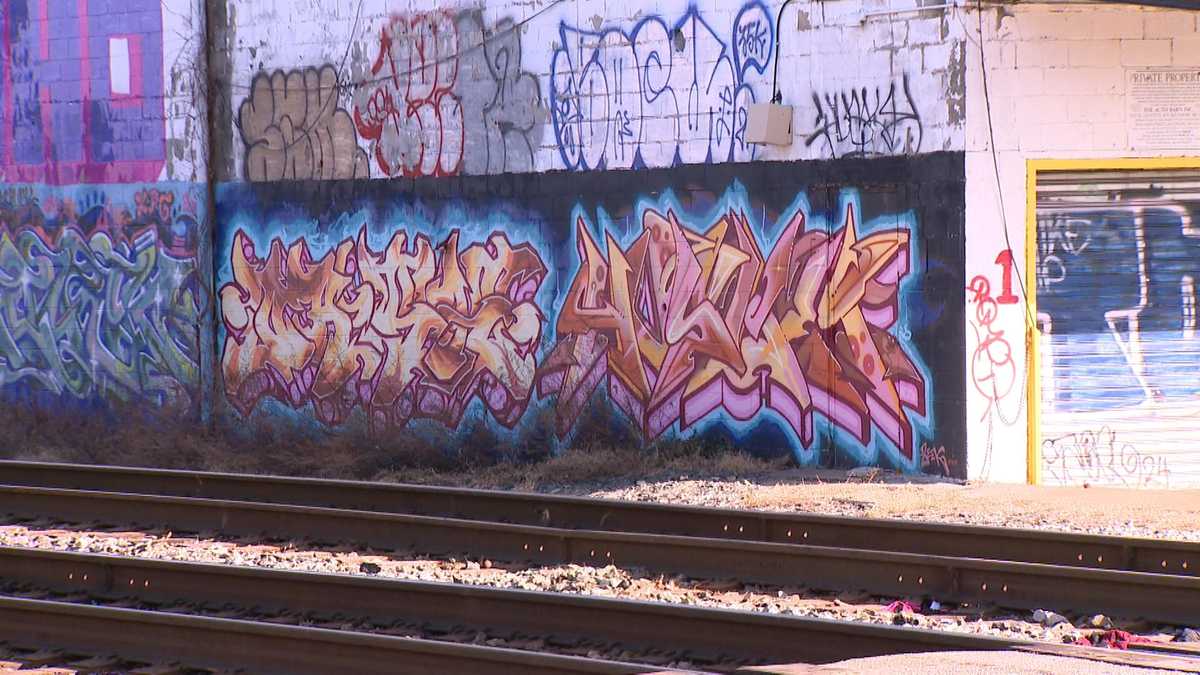
Baltimore has a graffiti problem that’s no longer isolated to vacant buildings and unkempt public places.
The markings are creeping onto residential properties and commercial businesses, prompting growing concern about its impact on property values, tourism and safety.
Nothing is sacred; nothing is off limits. An explosion of this type of expression magnifies the question, is it art or vandalism?
No limits on where graffiti appears
Bill Smith, the manager of an industrial machine shop in South Baltimore, said removing the graffiti costs thousands without knowing whether it’ll happen again.
“It’s vandalism,” Smith told WBAL-TV 11 News Investigates. “I’ve been here 19 years. While we’ve dealt with all the other stuff — theft, homelessness — tagging has never been an issue. And, in the last six months, they’ve started on one end of the building, made their way all the way up to the end, and now are going around to the front of the building where the entrances are.”
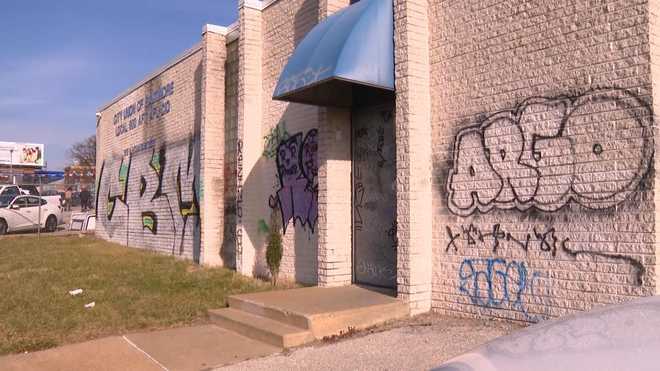
The office of the City Union of Baltimore has been tagged by graffiti so many times, the owner can’t clean it off without damaging the brick.
“When you spray it off, this grouting comes out and the bricks will start to shift,” said Chris Runge-Chacko, the union’s administrator.
WBAL
The City Union of Baltimore tells WBAL-TV 11 News Investigates that because the building looks abandoned, the union is running into issues with insurance to remove the graffiti.
Runge-Chacko told WBAL-TV 11 News Investigates that because the building looks abandoned, she’s running into issues with insurance.
“We’re struggling with that, but we’re hoping to work something out. Our building is in good shape except for graffiti,” Runge-Chacko told WBAL-TV 11 News Investigates.
Artist defends creativity, calls graffiti reflection of community
Artists told WBAL-TV 11 News Investigates that graffiti is a source of excitement, action involving an element of risk. Some are even rapelling off building rooftops to write and turn barren landscapes into playgrounds of the imagination.
Adam Stab is a style writer, graffiti artist and muralist. He created a mural underneath the Jones Falls Expressway at the Farmers’ Market. His work can also be seen at Charles and 20th streets. Stab told WBAL-TV 11 News Investigates that graffiti involves creative expression, a reflection of what’s going on in a community.
WBAL
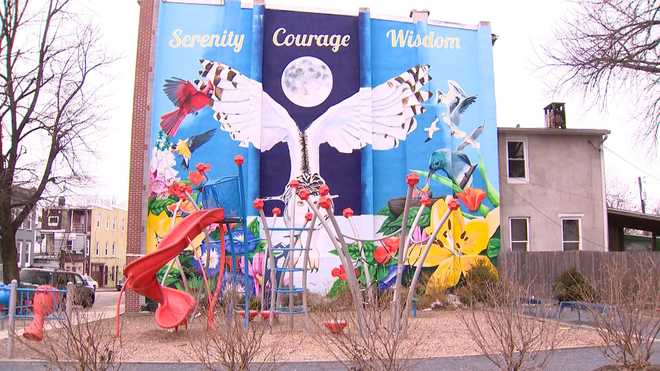
Baltimore Mayor Brandon Scott told WBAL-TV 11 News Investigates that he’s open to the idea of adding more murals.
“Ingenuity. Who brings an ingenuity to their game gets noticed. Who brings daring, who brings the risk,” Stab told WBAL-TV 11 News Investigates. “It’s an exchange of information in the public face available to all, whether you want it to be or not.”
Stab told WBAL-TV 11 News Investigates that graffiti is a source of great pride and notoriety.
“Everybody’s given the same tools — spray paint can — and it’s how you bring to the usage of your style, aesthetics, your popularity, your fame,” Stab told WBAL-TV 11 News Investigates.
Code of respect guards murals
While graffiti artists are no longer just using vacant property and unkept public spaces as their canvas, curiously, murals are, for the most part, left untouched. WBAL-TV 11 News Investigates discovered there is a code of respect between graffiti artists and muralists, and murals may be a key part of resolving the problem.
“Artists come from around the world to put up work in Baltimore.”
Tonya Miller-Hall worked for the city before moving to the consulting business. She created a graffiti task force.
“Artists come from around the world to put up work in Baltimore. This is one of the bigger cities that graffiti work is shown,” Miller-Hall told WBAL-TV 11 News Investigates.
Should Baltimore pay graffiti artists to paint murals?
One of the task force’s recommendations is to team up graffiti artists with muralists — and pay them.
“My thought was, let’s replace that with a beautiful mural or a project, and it’s cost effective,” Miller-Hall told WBAL-TV 11 News Investigates.
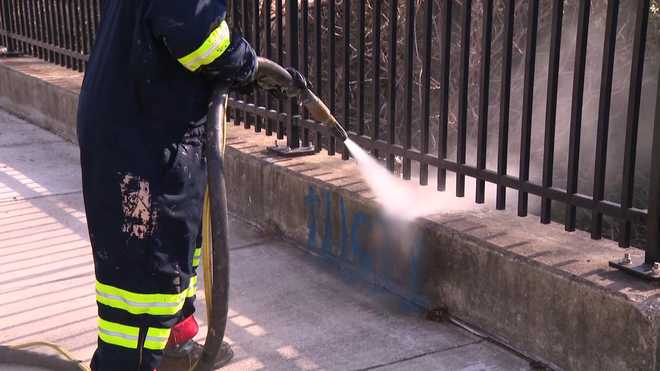
Baltimore City currently handles graffiti complaints by sending a six-person unit to remove it. But they only remove graffiti from city-owned property and public rights of way. Over the summer, they erased more than 1,200 pieces of graffiti.
WBAL
Baltimore City currently handles graffiti complaints by sending a six-person unit to remove it. But they only remove graffiti from city-owned property and public rights of way. Over the summer, they erased more than 1,200 pieces of graffiti.
Baltimore Mayor Brandon Scott told WBAL-TV 11 News Investigates that he’s open to the idea of adding more murals, saying he’ll consider “making sure that we are working with local artists who do those to replace that graffiti with art so that we can keep our city beautiful, but also so that we can continue to showcase the art and the talent and culture that we have here.”
Business and property owners find the idea of a mural collaborative appealing.
“If a local artist wanted to paint a mural on the side of the building, we’d be open to it,” Smith told WBAL-TV 11 News Investigates.
“We take it off and they’ll be back within a week or two.”
“Unless we figure out a way to get a mural up here, I don’t know that we take the paint off again. We take it off and they’ll be back within a week or two,” Runge-Chacko told WBAL-TV 11 News Investigates.
For graffiti artists, it’s not what you see, but how you see it.
“What all the municipalities need to accept is that graffiti is not going away,” Stab told WBAL-TV 11 News Investigates. “It is always, I think, been a part of the urban landscape.”