After the Chicago City Council passed its 2026 spending plan over the objections of Mayor Brandon Johnson, the mayor set aside a $5 million appropriation for gunshot detection technology to be purchased and activated by the middle of 2026.
In February 2025, the city’s procurement department issued a Request for Proposals for “gun violence detection technology” with a deadline of April 2025.
“Through this process, the City of Chicago will be able to aggressively look at equitable alternatives to help first responders acquire the absolute best community safety resources to aid them in reaching and responding to emergency scenes,” Johnson said in a September 2024 news release.
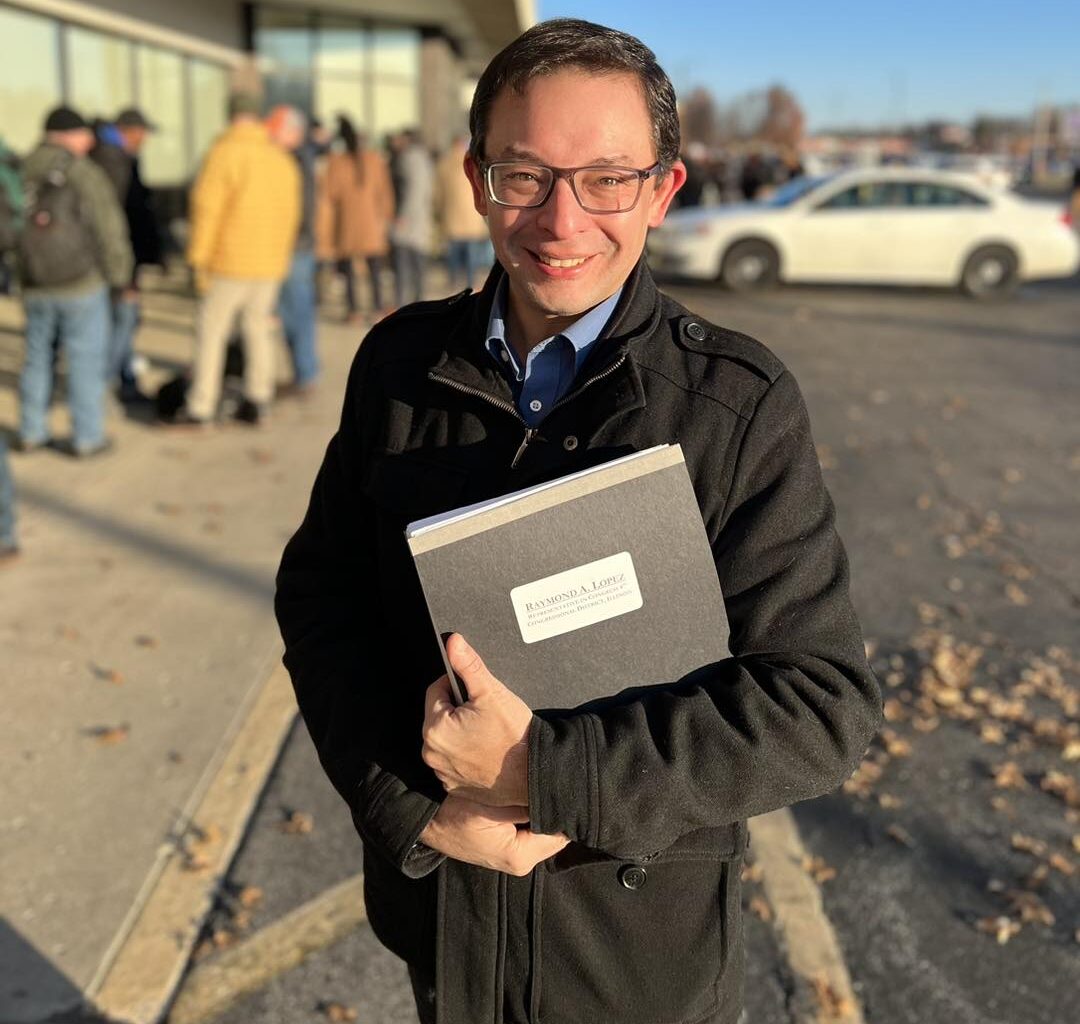
That’s not good enough, according to Ald. Raymond Lopez (15th), who disagrees with the mayor’s decommissioning the ShotSpotter gunshot detection system, and his cutting of the original $8,975,000 appropriation to $5 million.
Residents and Chicago police have been without ShotSpotter’s ability to detect gunshots and alert police within 90 seconds, which significantly increased the chance of lives saved and criminal apprehension, Lopez said.
The $5 million line item does not specifically reflect funds for a “gunshot detection system” but is listed in the 2026 budget under “software maintenance and licensing,” according to a November 2025 story by the Chicago Tribune.
The almost $4 million cut for the promised gunshot technology system was discovered by Ald. Marty Quinn (13th) after questioning Chicago Police Superintendent Larry Snelling during a City Council meeting in November.
Lopez said Johnson’s plan is to execute a 2026 gunshot technology contract mid-year.
In addition, 2025’s $8,975,000 allocation, the original price of Shotspotter, was never spent, according to Lopez.
“We budgeted the $8,975,000 in 2025, charged taxpayers, but never spent it because we didn’t have gunshot detection technology last year,” he said. “The mayor chalked up last year’s $8,975,000 as a budget surplus. As an efficiency, as extra play money, whatever you want to call it.”
The technology serves another purpose as well, Lopez said.
“Aside from saving victims, the other issue with not having gunshot detection technology across Chicago is evidence collection,” he said. “We are now relying on uncooperative victims to tell us the location where they were shot as well as lacking an inability to recoup spent shell casings in the city. We have no idea how many people are shooting in the City of Chicago right now.”
The number of bullet casings recovered, before ShotSpotter was decommissioned, was 260,000, enough to have injured or killed 10 percent of Chicagoans, Lopez said.
“That is the information the mayor does not want to highlight which is why he refuses to reinstate gunshot detection technology because that technology is unbiased,” he said. “That technology can’t be manipulated.”
Because the data is not being collected anymore, Lopez said Johnson has “all the ammunition he needs” to support his claim that crime is down in Chicago.
From Jan. 1 to Dec. 31, 2025, there were 5,971 gun-related crimes for assault, robbery, battery, weapons violations, criminal sexual assault and other offenses, according to the Chicago Data Portal, City of Chicago.
The decrease in the number of shootings is driven in an outsized way by seven communities on the south and west sides.
Austin, North and South Lawndale, West Englewood, Chicago Lawn, Auburn, Gresham and West Pullman, accounted for a 35% drop in 2025 homicides, according to the University of Chicago Crime Lab.
The communities driving a 58% downturn in gun violence in 2025 include another seven experiencing a decrease in homicides and including Humboldt Park, the Near West Side, New City, South Shore, Chatham, Roseland and Englewood, also according to the Crime Lab.
The 14 communities represent 24% of Chicago’s population.
A vote by 33 aldermen to retain ShotSpotter in September 2024 continues to be ignored by the mayor, said Ald. William Conway (34th) in a November story by the Chicago Tribune.
“It seems as though their voice, through the voice of their elected officials, is being ignored under the guise of a complicated (procurement) process,” he told Office of Public Safety Administration staff.
Lopez refuses to give up on gunshot detection technology.
“As long as we have money in the bank to pay for it, the issue is not dead,” he said. “The question is how much pressure will Chicagoans put on the mayor as bodies continue to mount in [police] districts that used to have this tool.”
Related