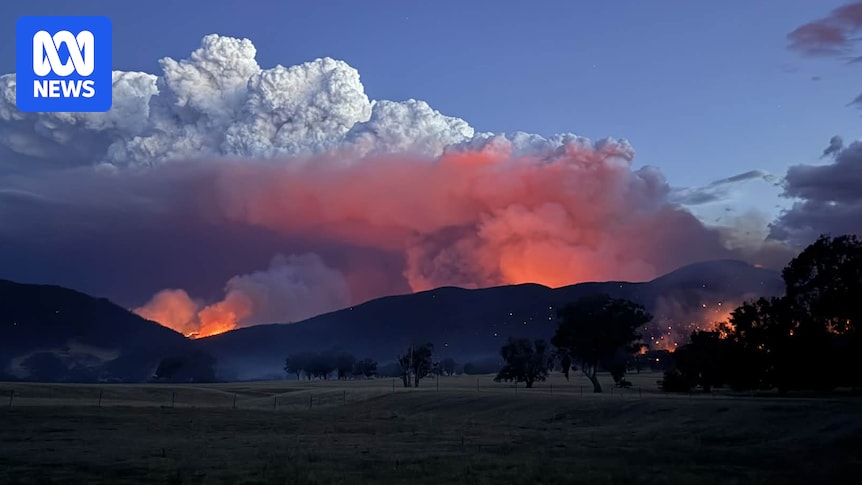
Recovery funding for bushfire-affected communities in Victoria will be nearly doubled, with the state and federal governments pledging a further $160 million in support.
More than 1,550 structures have now been confirmed as damaged or destroyed by fire across Victoria this month, with authorities still battling four major bushfires in the state.
The Albanese and Allan governments will jointly fund $158 million in additional support, with the state government contributing a further $2 million towards mental health services in bushfire-affected areas.
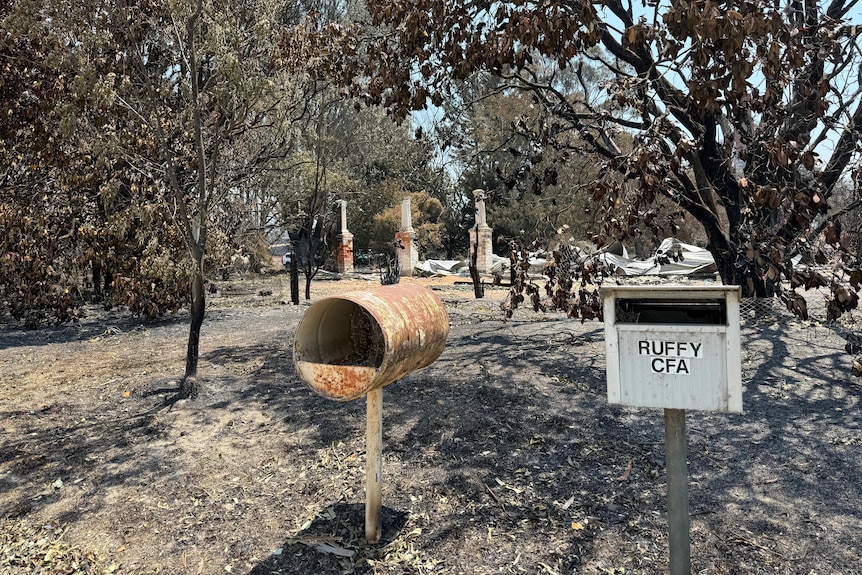
A further $112 million is being allocated towards cleaning up the damage from January’s bushfires. (ABC Goulburn Murray: Jo Printz)
“At the worst of times, we always see the best of the Australian character, and we’re seeing that right here in Victoria,” Prime Minister Anthony Albanese said.
“We’ve got their back, which is why we’re rolling out support now to support communities through the recovery.”
A large portion of the funding will go towards the state-coordinated clean-up program, with $112 million dedicated to the clean-up effort.
Additional money has been allocated to recovery support programs, temporary accommodation, financial counselling, land recovery and mental health support.
The government will also allocate $500,000 to rebuilding the Harcourt Cooperative Cool Store facility, which was destroyed when a fire tore through the town earlier this month.
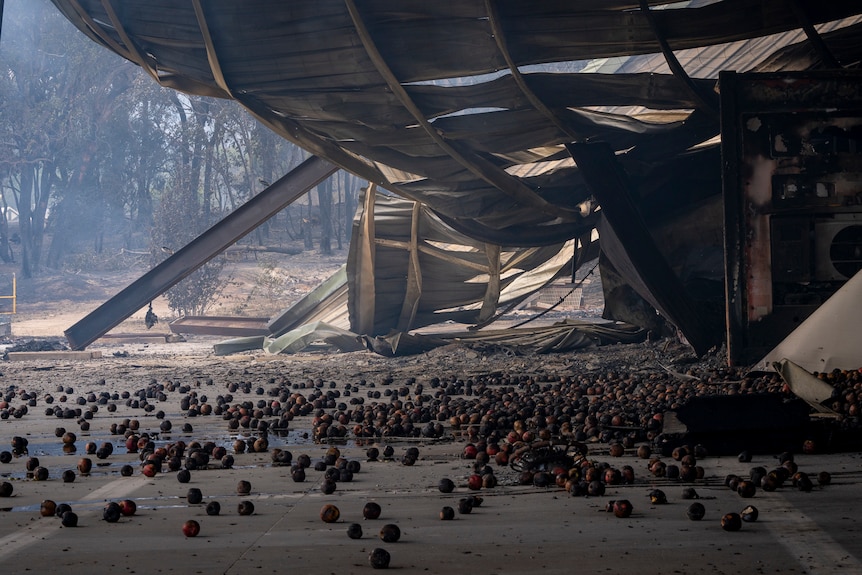
All the stock inside the Coolstore was destroyed by a fire in Harcourt. (ABC News: Danielle Bonica)
Premier Jacinta Allan said the community had made it clear how important the building was.
“It’s a big and powerful symbol of the start of the rebuild,” Ms Allan said.
“We heard very clearly … when we were in Harcourt just a day or two after the fires ripped through that beautiful country community that this was a priority, and that’s why we’ve identified it as part of this package of support.”
The federal government said access to the disaster recovery allowance had been expanded following fires near Carlisle River and Gellibrand, and was expected to be available online in the coming days.
Four major fires still burning as cool change approaches
Authorities warn the fire risk remains high as the Bureau of Meteorology forecasts the possibility of dry lightning across the state.
Major fires in the Wonnangatta Valley near Dargo, at Carlisle River in the Otways, in Mt Lawson State Park near Walwa and near Longwood in central Victoria are still active.
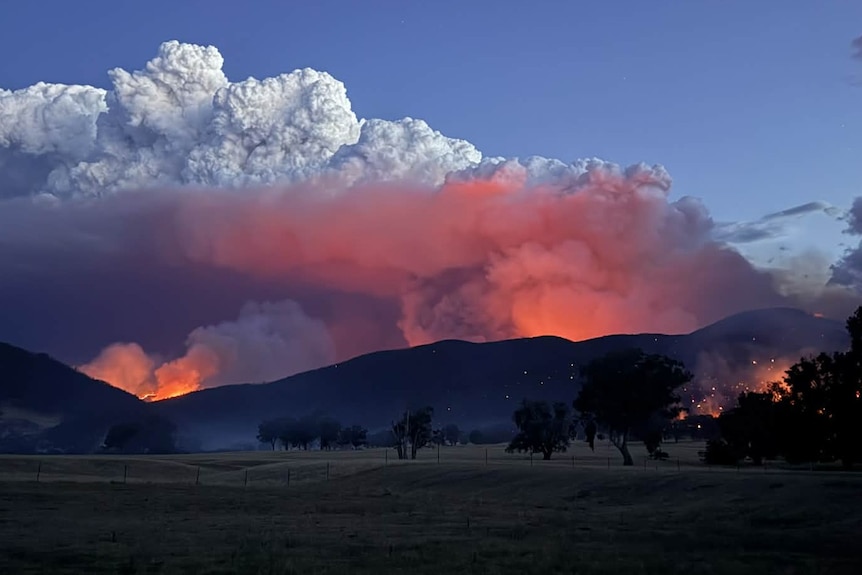
The Walwa fire in the state’s north-east continues to burn out of control. (Supplied: DEECA Hume)
Emergency Management Commissioner Tim Wiebusch said the fire near Longwood had not moved, but the Dargo and Otways fires remained dangerous.
“Both of those fires really won’t be safe until we see decent rain, and there is no forecast rain in the near future,” he said.
“But both of those fires have remained in containment lines in recent days, and we’re hoping ,come early next week, those fires may be deemed, in fact, contained.”
Mr Wiebusch said firefighters near the Walwa fire would be under pressure in the next 24 hours due to high temperatures and strong winds.
But Victorians can expect relief with cooler weather forecast over the weekend.
A statewide warning remains in place for extreme heat, with a heatwave gripping parts of the state for the past week.
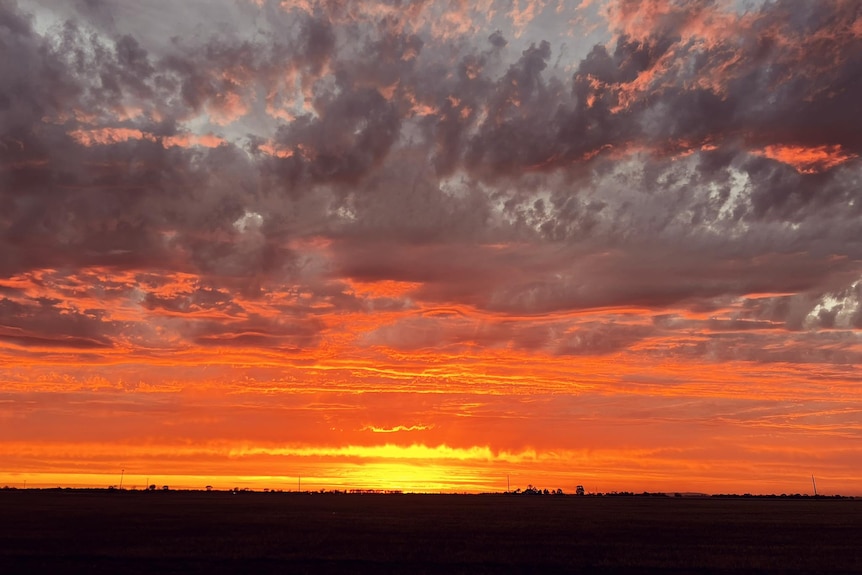
Temperature records fell in several towns across Victoria this week as a heatwave scorched the state. (Supplied: Weather Obsessed/Jacquie Tinkler)
Mr Wiebusch said the worst-hit communities in the state’s north would have to wait until Sunday for relief.
“The bureau is forecasting that the cool change that will come through southern parts of the state late on Saturday will reach the north of our state during Sunday morning,” he said.
“By sunrise, we’ll start to see those really hot temperatures that we’ve seen in the north of the state to start to abate.”