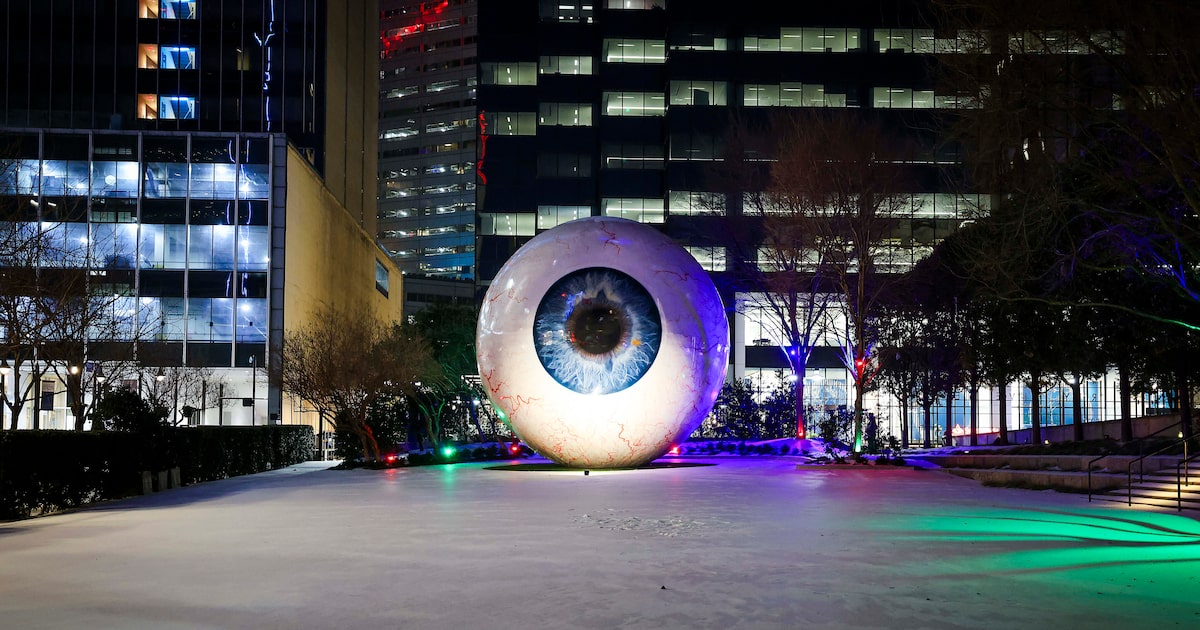
In 2026, Dallas will have its most photographed, live streamed, geotagged moment in modern history. Millions of fans, broadcasters, brands, athletes and creatives will pour into our city for the FIFA World Cup.
For a few weeks, the world’s eyes will be on Dallas — bright, unfiltered and revealing every detail. In moments like this, what a city chooses to showcase — and invest in, especially its public art — becomes part of the story the world remembers long after the final match.
So here’s the question we should be asking now, not when the opening whistle blows:
What exactly do we want the world to see?
If arts education and creative programming continue to be under-resourced, this city risks greeting the world not as a global cultural capital, but as a city of blank walls, under-resourced classrooms and missed creative potential. Arts, music and design programs are often the first to disappear when budgets tighten, even though they help build the creative and critical thinking skills cities rely on to thrive.
Opinion
I say this as a Dallas-based artist who has spent the past year working in global cities like Bangkok, Seoul, Mexico City and Tokyo — places where public art and creative education aren’t treated as extras, but as civic infrastructure. There, culture doesn’t decorate public space; it defines it.
Every time I told someone abroad I was from Dallas, they smiled and said, “Howdy.”
Charming, sure. But is that really the brand we want to export?
The 2026 World Cup is projected to generate billions of dollars in economic impact across U.S. host cities, driven by tourism, hospitality, dining, transportation and entertainment. Dallas is expected to be one of the most heavily trafficked host regions. Public art and cultural programming directly influence how long visitors stay, where they spend money, and whether they return.
We’ve already seen this locally. Neighborhoods like Bishop Arts became cultural destinations not by accident, but through creative investment — murals, music and public-facing art that helped transform foot traffic into sustained economic activity. You can’t invite the world in and forget to invest in the people and programs that shape the experience once they arrive.
Public art is infrastructure
Public art isn’t decoration — it’s infrastructure. In the Dallas Arts District alone, the nonprofit arts and culture sector generated $340.7 million in economic activity in 2022, including $137.3 million in audience spending that supported local restaurants, hotels, retail and transportation, based on an Arts & Economic Prosperity 6 study by Americans for the Arts. More than 40% of attendees came from outside Dallas County, directly strengthening the city’s tourism economy.
As a Dallas artist, I’ve worked on murals, installations and community-driven projects across the city alongside schools, nonprofits, small businesses and global brands. I’ve seen what funded public art actually does: it activates underused spaces, builds neighborhood pride, supports local economies and gives young people visible proof that creativity has value.
So what can we do?
Dallas already has many of the building blocks of a cultural capital — world-class museums, a growing art fair, internationally recognized artists, and industries hungry for authentic local culture. But without sustained investment in arts education and public programming, that ecosystem weakens from the bottom up. You cannot present a global city to the world if you don’t invest in the cultural foundation that supports it.
If the World Cup is going to be a mirror reflecting who we are — this is the time to act together. With city budgets, programming priorities and partnerships taking shape now, the months ahead offer a critical window for alignment and collaboration. It’s encouraging to see organizations like Downtown Dallas, Inc., expanding mural initiatives, alongside the work of Aurora and the Deep Ellum Foundation, signaling a shared commitment to public-facing culture.
Building on this momentum means continuing to prioritize arts education, fully supporting public art programs and strengthening partnerships across institutions, schools, artists, businesses and civic leaders — so that when the world arrives, Dallas’ cultural story feels intentional, inclusive and ready.
Marian Mekhail is a Dallas-based visual artist who works extensively in public art, community-driven projects, and cultural programming.