Australia’s power grid is changing rapidly – so rapidly that it can feel difficult to keep up.
This week, as an oppressive heatwave in the country’s south-east rewrote temperature records, there was also plenty of evidence demonstrating just how fast long-held assumptions about the electricity system are being overturned.
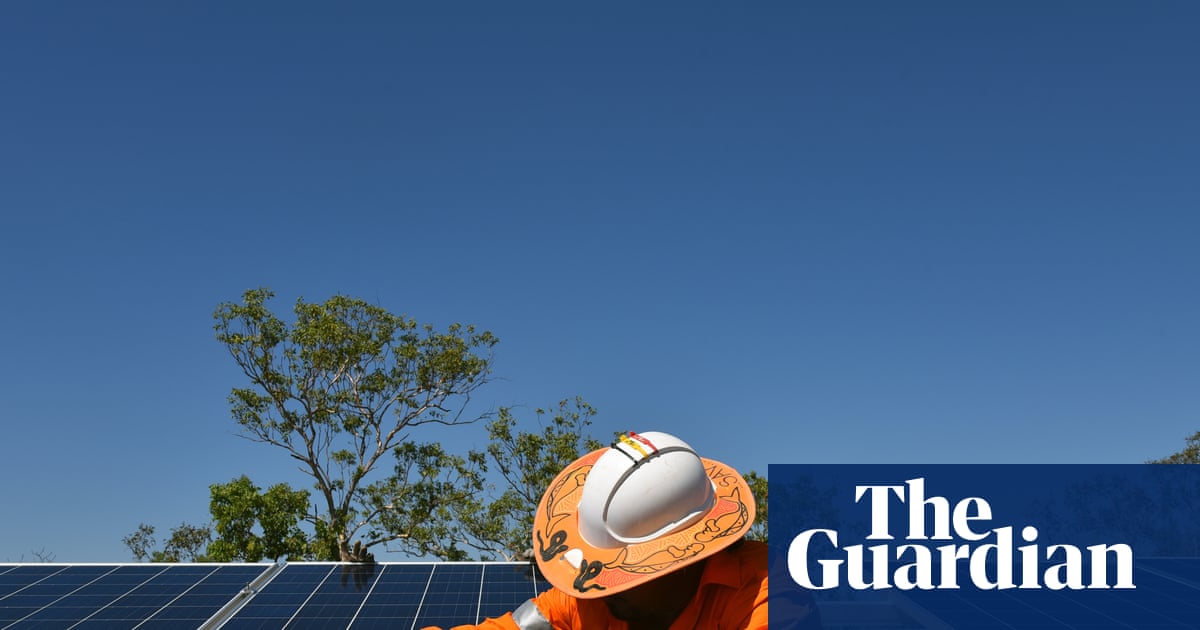
A significant part of the change is due to the astonishing rise of solar power, and the extent to which it is squashing coal generation. The grid is now operating in a way that many people considered unimaginable, and maybe impossible, not that long ago.
Back then, some commentators claimed the grid would not be able to function with more than 10% – and definitely not more than 20% – electricity coming from solar and wind.
Those predictions look foolish now.
Over the past seven days, solar provided 30% of all electricity in the country’s main grid, which supplies the five eastern states and the ACT. That’s across day and night.
If you narrow the calculation to consider just when the sun is out, the numbers are even more striking. Solar met 59% of electricity demand between 9am and 6pm. More than half of this – 37.6% of the total – was from small-scale systems spread across about 4m roofs. The rest was from large-scale solar farms.
Dylan McConnell, a senior research associate at the University of New South Wales, says between 12pm and 1pm solar output peaked at 67% of consumption. It was more than 70% in New South Wales and South Australia.
Coal-fired power, the historic backbone of the grid that once supplied nearly 90% of power, could not compete. Solar energy is incredibly cheap. It costs much more to burn coal. It meant the country’s ageing coal fleet was reduced to filling in gaps, kicking in barely a quarter of the electricity used over lunchtime.
Sign up: AU Breaking News email
That changed as the sun set, when the grid leant much more heavily on coal, with notable support from wind, hydro and batteries and gas.
The system still needs the existing dirty and often inefficient power plants that burn black and brown coal and emit significant amounts of climate pollution to function. There are significant challenges that need to be overcome before all coal plants can be shut, including building a fleet of synchronous condensers and other spinning devices needed to maintain grid security.
But an often overlooked point is that the grid is now just as reliant on renewable energy as it is coal. Each provides nearly half of the electricity that keeps our homes, businesses and, increasingly, cars running across the year.
In parts of the year, renewables are now ahead. The Australian Energy Market Operator this week described the last three months of 2025 as a “landmark moment”, with renewables’ share in the quarter rising beyond 50% for the first time.
The sun rises over wind turbines at the Capital Wind Farm, east of Canberra. Photograph: SUPPLIED/AAP
It coincided with a 44% fall in wholesale electricity prices compared with the same period in 2024. Just as notably, output from batteries – which will be needed on a far greater scale as coal shuts – tripled in just a year.
It’s worth remembering how quickly this has changed. Five years ago renewables provided about 26% of generation. A decade ago it was less than 15%, with solar on less than 2%.
McConnell says one of the most remarkable things this week was how well the system coped as temperatures in parts of Melbourne pushed north of 45C and demand for electricity skyrocketed as people ran air conditioners at full bore. These sorts of conditions are often a cue for warnings of blackouts or load shedding.
Not this time.
“We had a little bit of volatility in the evening, but not much. That’s quite extraordinary for a system during peak demand,” McConnell says. “They are the days when the system is under stress. Things could have gone wrong, but they didn’t. There were really very few issues.”
Australia is in a slightly strange moment on renewable energy. From one perspective, it is embracing renewables, and solar in particular, what by any measure is a historic pace. From another, investment in new developments may not be happening fast enough to meet climate targets, or to ensure there is enough replacement capacity in place as old and failing coal plants close.
The reality is that both are true.
The transition being attempted is huge, more needs to be done, and there may be difficult moments ahead during a rapid shift to a near 100% renewable grid. Some actors – the Queensland LNP government, for example – are doing their best to prevent it.
But change is happening, and working. That’s no small thing.