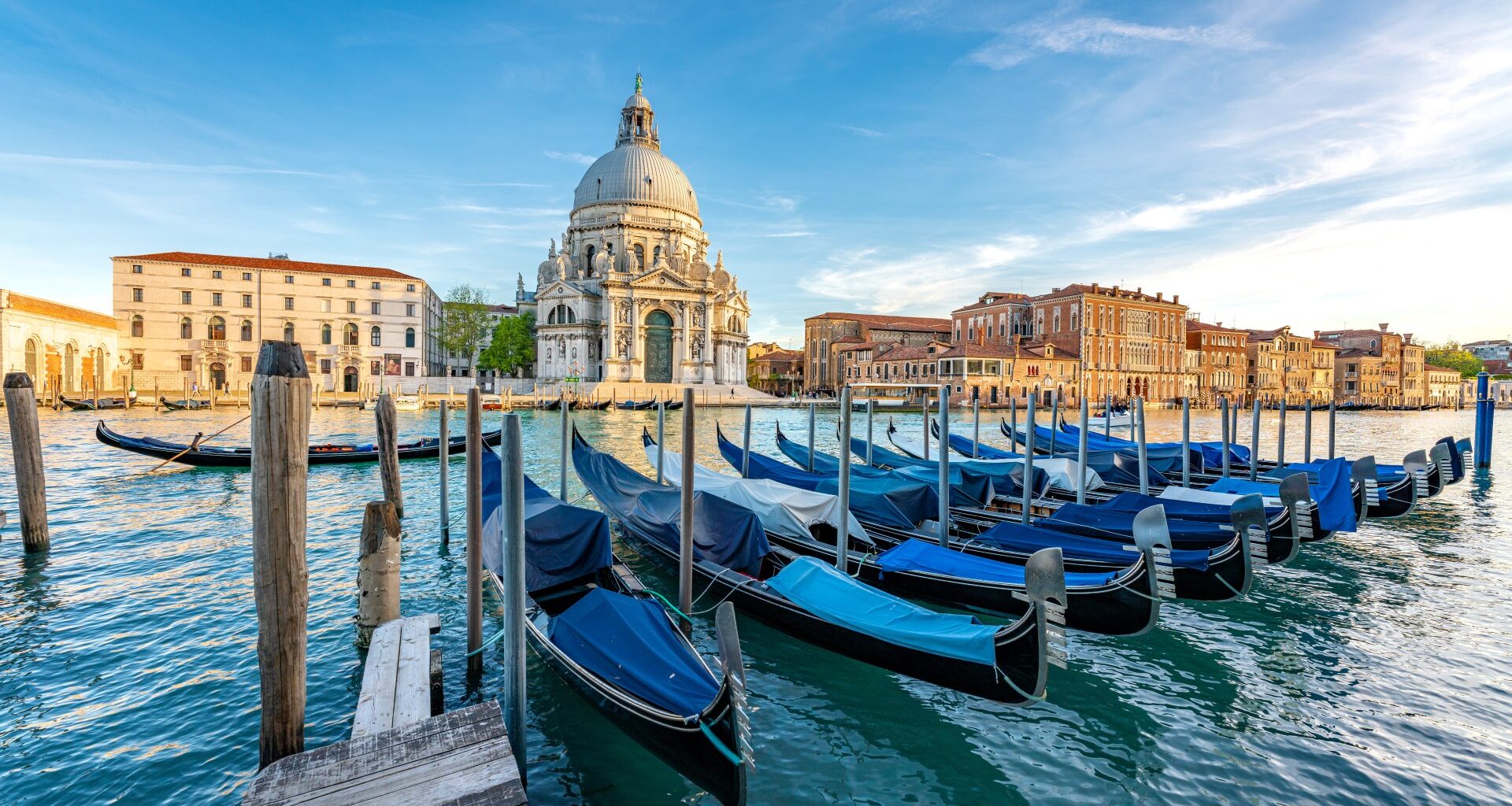
A CANNIBALISTIC jellyfish has colonised the waters surrounding Venice, posing “major” problems for people.
Carrying the peculiar nicknames “warty comb jelly” and “sea walnut”, it is considered to be one of the 100 most harmful invasive species globally.
Sign up for The US Sun newsletter
Thank you!
There has been an explosion in the number of jellyfish in the waters surrounding VeniceCredit: Alamy
More than 300,000 Brits visit Venice every yearCredit: Getty
It is believed to have arrived in the Adriatic Sea in the tanks of cargo ships passing through the region.
The creature is now present throughout much of Venice’s lagoon, which is visited by an average of more than 320,000 British tourists every year.
Until now, the marine animal’s main claim to fame is that it has a transient anus – an opening that magically appears only during defaecation.
It is the only known animal to have such a bit of anatomy. Another freaky characteristic is that the jellyfish eats its own offspring.
DYEING FOR ATTENTION
Fury as Greta Thunberg dyes Venice’s canal green & is BANNED from city
SKI SMASH
Two injured & 100 stranded as cable car slams into barrier on mountain in Italy
Scientists from the University of Padua and the National Institute of Oceanography and Applied Geophysics have now revealed that there has been an explosion in the number of such creatures surrounding the historic Italian city.
This is due to warmer water temperatures and ideal levels of salinity, says a report in the journal Estuarine, Coastal and Shelf Science.
Fishermen who are already struggling to protect their livelihoods are the ones bearing the brunt of this surge.
Not only do the jellyfish clog up their nets, but they are also voracious predators that feast on fish eggs, fish larvae and plankton – all essential elements of the lagoon’s ecosystem.
The invasion poses a growing threat to the Adriatic fishing industry, which is worth billions of euros and is particularly renowned for its production of clams and mussels.
While the jelly is native to the east coast of America, it wreaked havoc to the Black Sea in the 1980s, turning it into a “gelatinous ocean”, according to Dr Thomas Larsen, an ecologist at Max Planck Institute for the Science of Human History.
“The first invaded area where the impact of this species was disruptive was the Black Sea, where the first massive bloom was recorded in 1989,” the report stated.
“Favoured by the warming of the sea, the ecosystem experienced a strong regime shift.”
This led to the “collapse” of the European anchovy stock and had “cascading” impacts on fisheries.
Little is still known about the relation between the warming waters and the spread of this invasive species.
Italy‘s waters suffered a similar attack from the Atlantic in 2024 – the blue crab, named for its vivid blue claws.
Chefs are trying to tackle the problem by cooking their way out of it.
Blue crabs are increasingly appearing on supermarket shelves and restaurant menus as officials scramble to curb their numbers.
View of the Rialto bridge over the Grand Canal in VeniceCredit: Getty
Sea nettle Chrysaora fuscescens, Pelagiidae, Celenterata, jellyfishCredit: Alamy