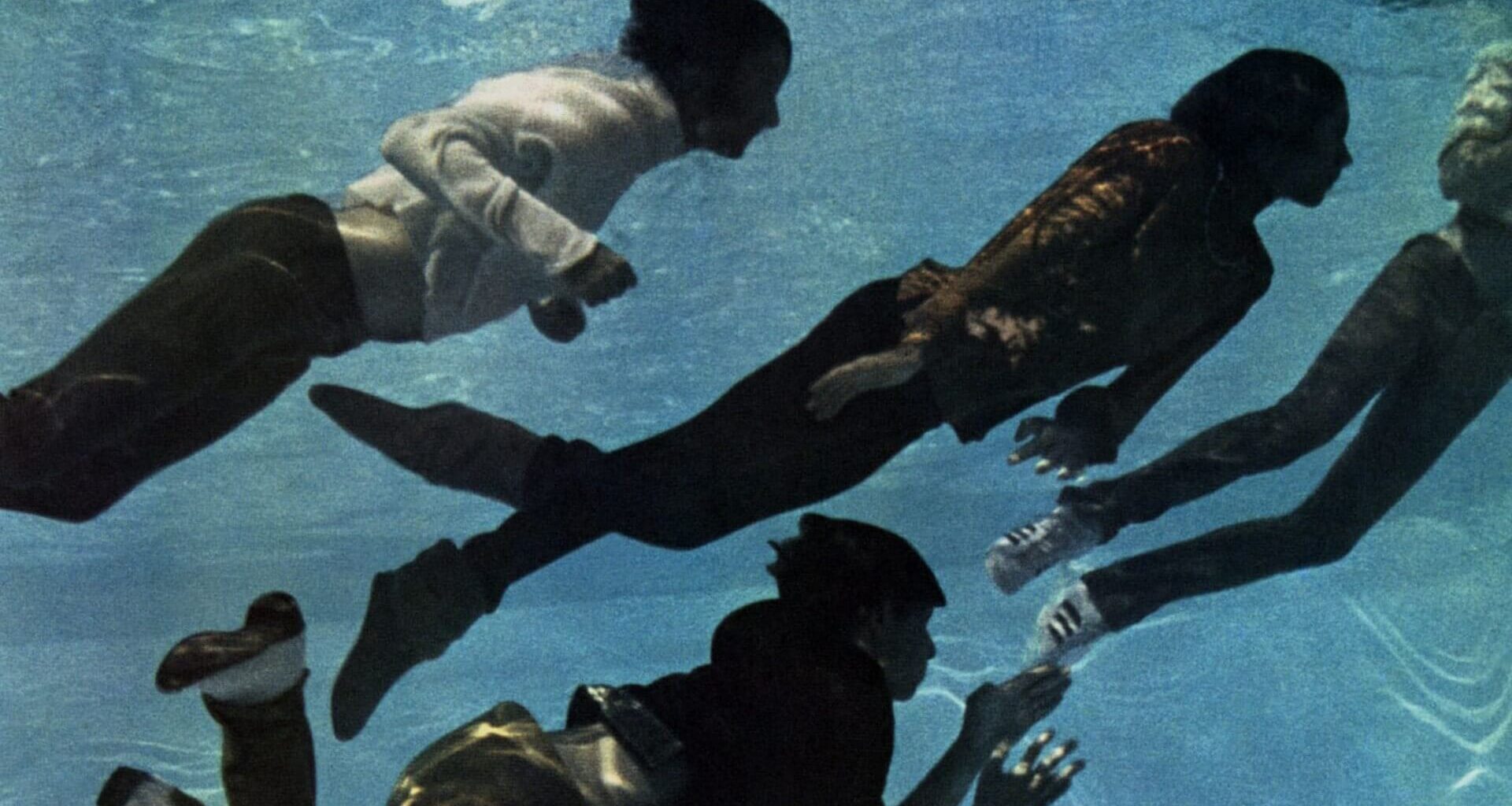
Head opens with a scene that should be familiar to fans of The Monkees TV show, but something is a little off. Here they come, running down the street, getting concerned looks from everyone they meet. Hey, hey, they’re the Monkees, and…they’re going to kill themselves? The staged suicide kicks off a profoundly weird and surprisingly trenchant media satire from the 1960s’ most perennially uncool band. Made by the same outsiders who formed the band and introduced them to audiences only two years earlier—writer-director Bob Rafelson, and producer Bert Schneider—Head was co-written by Jack Nicholson and turned A Hard Day’s Night-like romp into biting avant-garde comedy.
Ignored upon release, Head‘s kaleidoscopic deconstruction of pop superstardom lives on. As more pop stars, from The Weeknd to Charli xcx, use movies as a form of pop-star character assassination, Head remains as gleefully irreverent and self-assuredly edgy as ever. It’s pop-stardom dissected by chainsaw, with Davy, Mike, Peter, and Micky transforming into mannequins for their fans to cut apart. Yes, to become free, “God’s gift to the eight-year-olds,” as they’re described in the film, would have to die.
Released in 1968, Head hit screens about a year after the release of Headquarters, the album that was supposed to shut the Monkees’ haters up. There’s a nice bit of symmetry between Headquarters and Head. Following years of criticism over the group’s inauthenticity, Headquarters was a chance for Davy Jones, Mike Nesmith, Peter Tork, and Micky Dolenz to show off their chops and play their own instruments on a record for the first time. But timing is everything: A week after Headquarters hit number one, The Beatles released Sgt. Pepper’s Lonely Hearts Club Band, reducing every album on the new release wall to rubble. At every turn, The Monkees were a step behind. However, as their NBC show wound down, Rafelson saw the Monkees’ movie as a way to make a final statement about the project. For the first and last time, The Monkees would be ahead of their time.
If there is a plot to Head, it’s one in which the band becomes trapped in the very media machinations that created them. Attempting to shed their TV-born pop-idol personas, the Prefab Four bounce from situation to situation and genre to genre, hoping to break free of the ecosystem that defined the group. High on the jump-cutting, montage mania of the French New Wave, Rafelson and editor Mike Pozen structure the film like a bored channel surfer flipping through stations in search of something to distract them from the Vietnam War. Following the band’s failed suicide, Rafelson pulls out and fills the frame with TV screens, like The Architect from The Matrix Reloaded. Clips from the film juxtapose footage from Vietnam as the Monkees’ self-deprecating “Diego Ditty (War Chant)” declares a sarcastic mission statement: “Hey, hey, we are the Monkees / we’ve said it all before / the money’s in, we’re made of tin / we’re here to give you more.” Carried along by the group’s best tunes, including the Gerald Goffin and Carole King-penned “Porpoise Song” and Mike Nesmith’s garage-rock toe-tapper “Circle Sky,” Head deconstructs their image and the nascent media landscape, flattening their jokey Hard Day’s Night parody against the constant small-screen war dispatches, contextualizing the Monkees’ playfulness within a world of violence.
Head doesn’t abide by the conventional rules of film, and instead offers an omnibus of sketches akin to what was on The Monkees TV show. Scenes start and stop on a whim, serving a single joke or a better idea. In one, Micky finds an out-of-order Coke machine in the desert that sets up a Lawrence Of Arabia joke; another shows Peter’s trip to a diner that ends with the actor calling cut to discuss the scene’s misogyny with Rafelson—and giving Nicholson and Dennis Hopper, already in Easy Rider costume, a chance for a cameo. Like in the TV series, there’s plenty of room for flights of fancy, but with a heightened sense of reality and a grim sense of humor within the nesting doll of cultural references. War scenes feature more realistic sets and detailed trenches, but carve out space for a dumb bit about Micky’s helmet being too heavy and a jab at Life magazine’s coverage. Davy restages the show’s boxing-based episode, “The Monkees In The Ring,” with boxer Sonny Liston. Liston is one of many “losers,” as Jones and Rafelson refer to their guest stars in the Criterion release’s archival interviews, dotting the film’s credits. Original Mouseketeer Annette Funicello and backlot wild man Timothy Carey join the festivities as the band is relentlessly mocked by The Big Victor (classic Hollywood staple Victor Mature), who laughs mercilessly at the group’s trials from the heavens like a cruel god. They are but dandruff on Mature’s head—in one scene, literally.
An 85-minute exodus into the heart of American media wasn’t for the fans who were buying Monkees-branded lunchboxes, and those who dismissed the Monkees as phonies weren’t interested either, so distributor Columbia hid the band from the film’s original poster. Instead, Columbia used a photo of the film’s PR executive, John Brockman (who was affiliated with Andy Warhol’s Factory). In an attempt at gonzo marketing, Rafelson and Nicholson stuck Head stickers around New York, and were reportedly arrested at the film’s premiere for trying to stick one on a police officer’s helmet. Perhaps understandably, this defiance—translated through the Monkees—didn’t make for a popular counterculture film.
While audiences mostly avoided Head, it allowed the musicians to thumb their noses at a pop culture that consistently overthought and underrated their talents. It was also the oft-forgotten opening shot in a New Hollywood revolution: After Head bombed, Rafelson, Nicholson, and Schneider moved along to a more adult-friendly form of cultural upheaval—a revisionist biker film called Easy Rider. The trio, along with Stephen Blauner, would help jumpstart the American independent film scene through BBS Productions, with movies depicting an out-of-place American working class in movies like Five Easy Pieces, The King Of Marvin Gardens, and The Last Picture Show. But the impact of Head and its freewheeling, Hellzapoppin’ trip can be felt throughout movie history. Blazing Saddles‘ beloved fourth-wall-breaking studio tour finale owes much to Head, as does the self-spoofery of Gremlins 2. But most specifically, whenever a pop star outgrows their young fanbase, they can always look to the original manufactured boy band, who built their own escape hatch.