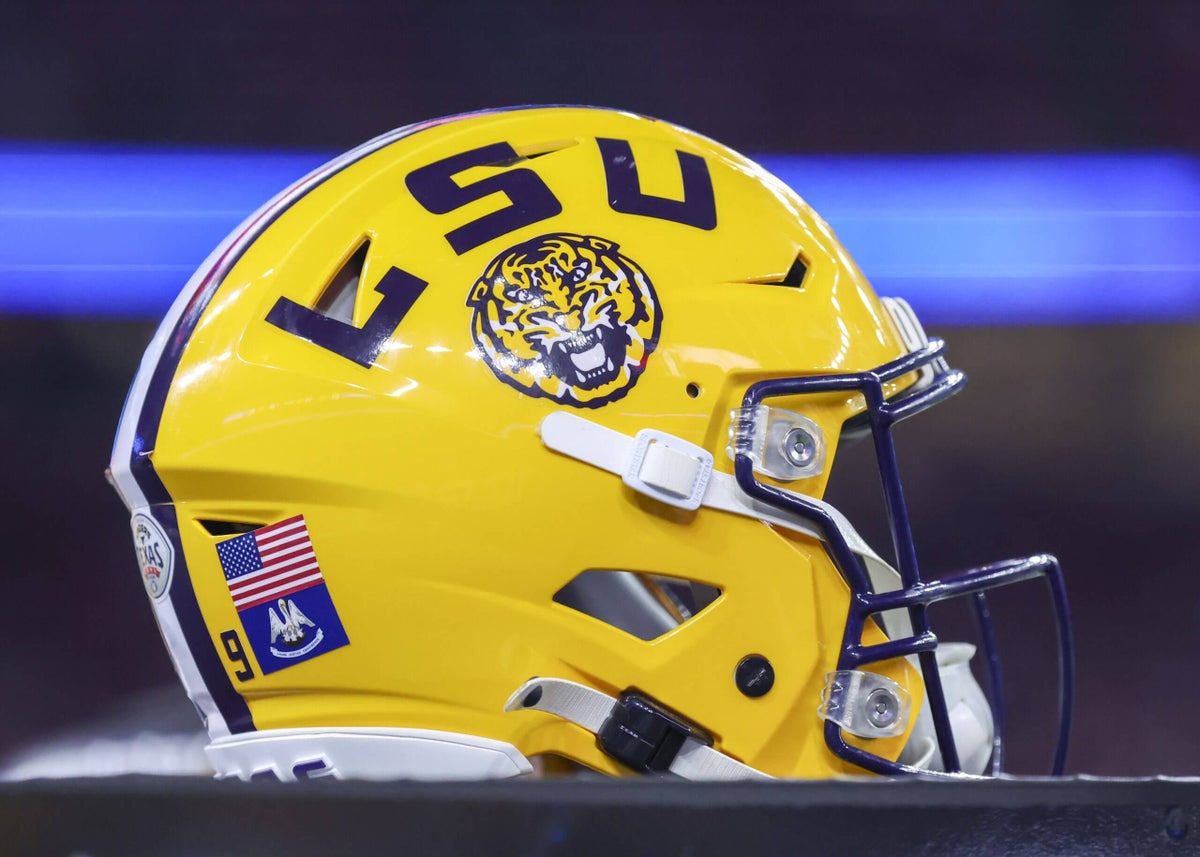
College sports’ new enforcement arm has opened its first publicly known investigation into a big-name program: LSU.
The College Sports Commission (CSC) has started an inquiry into the Tigers over a potential violation of rules related to unreported player compensation, according to a Jan. 15 email obtained Friday by The Athletic through a public records request.
“The College Sports Commission is investigating whether a member of one of your institution’s sports teams failed to report one or more third-party Name, Image, and Likeness (NIL) deals in accordance with applicable rules,” the CSC’s head of investigations, Katie B. Medearis, wrote to LSU athletic director Verge Ausberry.
Medearis asked to set up a phone call with Ausberry or a member of the Tigers’ compliance staff the next day or the next week. No response was included from LSU administrators.
Details of the investigation were not included in the short note and are not publicly known. An LSU spokesperson did not immediately return a request for comment.
“As previously indicated, the CSC has reached out to several schools to inform them of investigations into unreported NIL deals,” a CSC spokesperson said. “We will not comment further at this time.”
The Tigers have come under scrutiny in the industry, especially surrounding the quarterback market. LSU was rumored as a potential destination for Washington’s Demond Williams, who announced his intention to enter the transfer portal before sticking with the Huskies. Arizona State transfer Sam Leavitt committed to LSU three days before the email. The note also came eight days after Yahoo reported on a $3.5 million proposed contract between LSU’s multimedia rights partner and Cincinnati transfer Brendan Sorsby. Sorsby signed with Texas Tech.
Although the specifics of the inquiry are unknown, the email is the first concrete example of the CSC investigating a school. The CSC was created by the Power 4 conferences last year to be an enforcement body in the evolving landscape of player compensation. It oversees the revenue-sharing system and rules related to the $2.8 billion House lawsuit settlement that allows schools to pay players directly. It also verifies the legitimacy of name, image and likeness deals between players and third parties.
The roles and actions of the CSC and NCAA have been questioned recently as schools and coaches accused each other of tampering with players and finding ways to circumvent the cap. Tampering falls under the NCAA’s jurisdiction, but the CSC is in charge of regulating third-party NIL deals, the revenue sharing cap and roster limits rules.
“Have we seen the CSC move against any institution yet? I don’t think so,” Georgia president Jere Morehead said Friday. “ Have we seen the NCAA take any action on tampering? I don’t think so.”