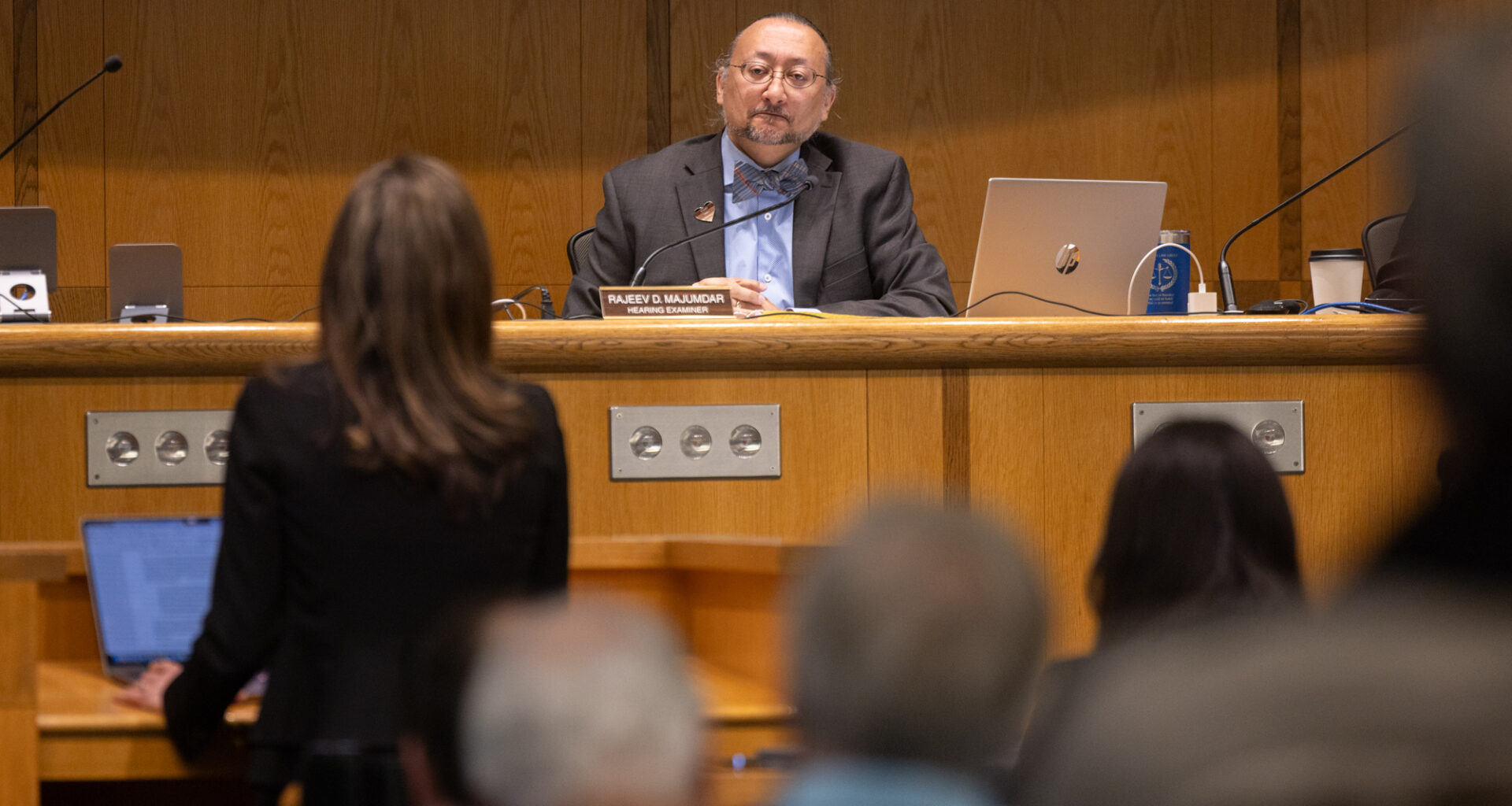
Critics and supporters of Canada-based oil and gas company AltaGas voiced their opinions on the environmental impact of a Ferndale energy terminal during public comment before the Whatcom County Hearing Examiner on Friday, Jan. 30.
At issue is a September decision by Whatcom County that 33 projects at the Ferndale LPG Terminal would have insignificant environmental impacts if owner AltaGas undertook certain mitigation measures. Such a determination is an alternative to a more rigorous Environmental Impact Statement.
Environmental groups appealed that decision on the grounds that these projects, almost all of which have already been completed, have opened the door for significantly more propane and butane to move through the Ferndale facility.
AltaGas argues the projects have already undergone a thorough environmental review process.
Marlene Finley, board president of nonprofit Evergreen Islands, told Hearing Examiner Rajeev Majumdar that increased traffic to the facility puts marine mammals at risk.
“It’s obvious that the use at AltaGas has changed considerably,” she said.
AltaGas environmental specialist Jake Reijm, meanwhile, said his employer provides well-paying jobs “that support families like mine.” He added the company “consistently goes above and beyond its regulatory obligations.”
Attorneys for the county, environmental groups and AltaGas have until March 6 to submit closing arguments in writing. The hearing examiner must publish a ruling within 10 business days of that date.
Controversy over past projects
Most of the projects being debated were completed between 2016 and 2021, when the county had a permit moratorium in place aimed at oil and gas companies at Cherry Point. During that period, Whatcom officials and stakeholders were working to hammer out the Cherry Point Amendments, which imposed new regulations on the fossil fuel industry in the county.
But despite the moratorium, the Ferndale terminal’s former owner, Petrogas, since acquired by AltaGas, moved forward with around 31 projects. Petrogas and Whatcom County came to an agreement after the county found out about the potential code violations around 2022.
Around the same time, Petrogas settled with the Northwest Clean Air Agency for $4 million over allegations including failure to disclose emissions and obtain necessary air quality permits. At the time, the agency wrote the fine was “the largest penalty settlement collected by NWCAA since the agency formed in 1967.”
In a letter to Whatcom County, the clean air agency wrote that between 2015 and 2019, railcar visits to the terminal went from around 1,000 cars per year to around 16,000. In the same period, vessel traffic increased from two to five berthing events per year to 26.
The county’s determination of environmental impacts applies to past projects as well as two new ones.
Dale Johnson, attorney for AltaGas subsidiary ALA Energy, said in his opening statement at the hearing that the company takes safety and environmental responsibilities seriously. The county did not simply approve the projects, he said, but asked “repeatedly” for verification and additional review.
The hearing is “not a case about a new facility. This facility has been in existence since the 1970s,” he said on Wednesday, Feb. 28.
Jan Hasselman, representing the environmental groups with nonprofit firm Earthjustice, disagreed.
“A new terminal is essentially what we have,” he said. “When this company bought this terminal in 2014, it was a tiny terminal that served modest, local needs.”
Since then, he argued, the company grew the facility “through a steady process of making” seemingly small changes that together transformed the terminal.
Back and forth in public comments
One commenter said these projects constitute “a pattern of behavior by AltaGas that shows a consistent willingness to push infrastructure forward first and treat environmental review as an obstacle to be managed, not a responsibility to be honored.”
“Cherry Point,” he continued, “is not an isolated industrial zone. It sits beside treaty-protected fishing grounds, fragile marine ecosystems and working-class communities.”
An environmental impact statement, he argued, “is the minimum standard of responsibility for governance.”
Bellingham resident Jane Bright also expressed concern about the harmful effects of emissions produced by ship traffic and idling trains, both of which have allegedly increased in frequency.
“We cannot choose the air that we breathe. That’s your choice,” she said to Majumdar.
Reijm, in his comments, noted the two new projects included in the appeal aim to reduce emissions while increasing efficiency and safety. The county’s determination “reflects the strength of the environmental analysis that went into these projects,” he said.
Another commenter, who said she was a 30-year Blaine resident, also supported AltaGas, saying existing regulations ensure “industrial activity can coexist with environmental protection and concerns.”
“Restricting newer continued business activity risks economic stagnation in Whatcom County,” she said.
On Friday, Majumdar closed the record to all but the closing arguments, meaning the public comment period is over.
Sophia Gates covers rural Whatcom and Skagit counties. She is a Washington State Murrow Fellow whose work is underwritten by taxpayers and available outside CDN’s paywall. Reach her at sophiagates@cascadiadaily.com; 360-922-3090 ext. 131.