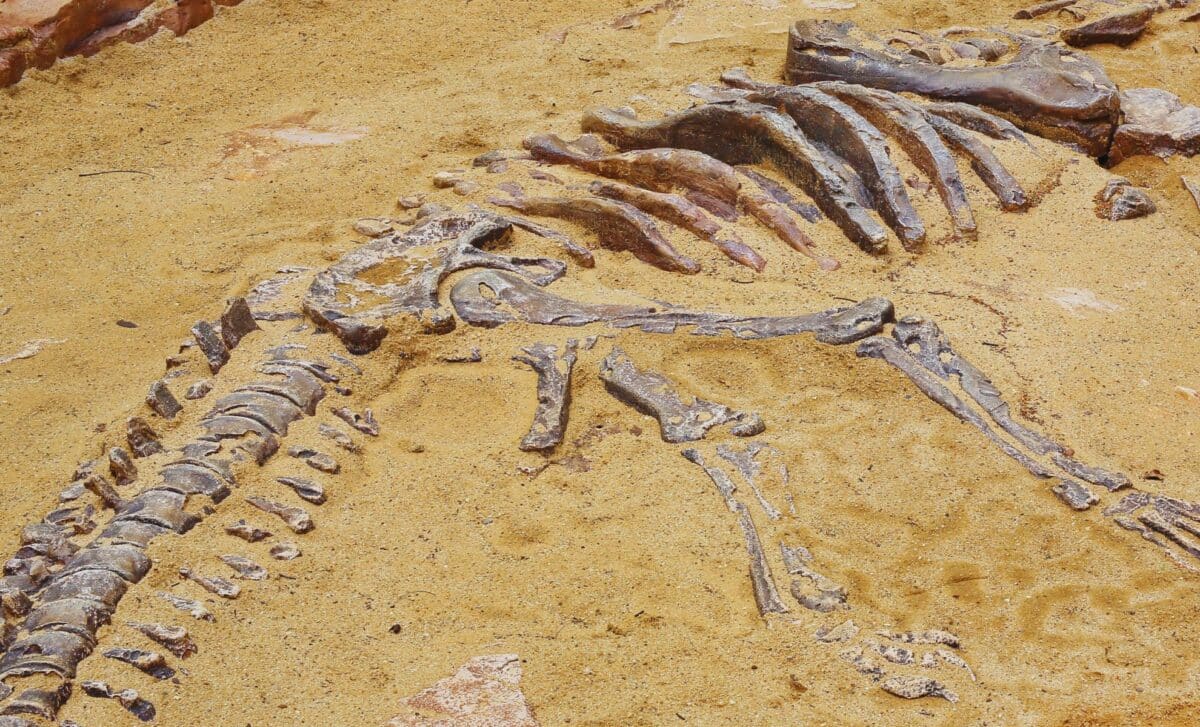
Previously overlooked, two large forelimb bones housed in a Utah museum have now been confirmed as the most massive ever assigned to a stegosaurid dinosaur. According to a new study, these fossils, originally excavated in 1950, are so large they suggest a dinosaur approaching the scale of Jurassic sauropods, far beyond what scientists believed possible for the iconic plated herbivores.
The bones were recovered from the Uinta Basin, part of the famed Morrison Formation, and have been on display at the Utah Field House of Natural History for decades. Despite their public presence, their exceptional proportions went unnoticed until ReBecca Hunt-Foster, a paleontologist at Dinosaur National Monument, and her team reexamined the material.
The Largest Stegosaurid Limb Bones Ever Found
The key fossils include two humeri, measuring 70 and 74 centimeters, as well as a radius, ulna, and partial foot bones, all from the right forelimb. As reported by a study, published in New Mexico Museum of Natural History and Science Bulletin, these humeri exceed all previously recorded stegosaurid examples, Stegosaurids, instantly recognizable by their back plates and spiked tails, have typically been portrayed as medium-sized dinosaurs. The next largest measures 68 centimeters and the newly examined bones are notably thicker, indicating a sturdier build.
According to Rebecca Hunt-Foster, the morphology of the bones, particularly the dumbbell-shaped shaft and the prominent muscle attachment crest, confirms their classification as stegosaurid. While the bones suggest an individual far larger than the known Stegosaurus ungulatus, which reached about 7.5 meters and 5 tonnes, the lack of additional skeletal parts prevents any firm identification at the genus or species level.
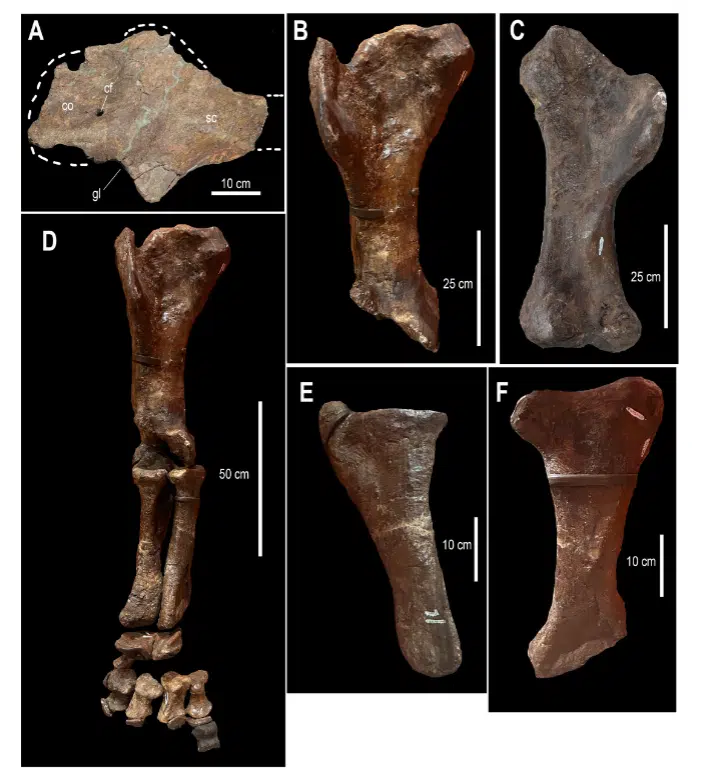 Right forelimb bones of a giant stegosaurid from Utah. The 74 cm humerus is the largest known for this group. Credit: New Mexico Museum of Natural History and Science Bulletin
Hidden In Plain Sight For Over 70 Years
Despite their impressive size, the bones remained unstudied for more than seven decades. The Morrison Formation has produced fossils of colossal sauropods such as Brachiosaurus and Diplodocus, and in that setting, even oversized stegosaur bones may not have seemed exceptional. Hunt-Foster suggested that the original cataloging may have been carried out by a geologist, not a dinosaur specialist, which might explain the long delay in recognizing the specimen’s importance.
“Most of the bones seem to have been correctly identified originally (although one was thought to be a sauropod),” she explained. “It may be that the curator at that time was a geologist and simply hadn’t looked at a lot of stegosaurs.”
One of the bones was initially thought to belong to a sauropod, but the team’s close analysis revealed distinct features specific to stegosaurids. Although the fossils were already on exhibit, most visitors would not have realized they were looking at a record-breaking individual.