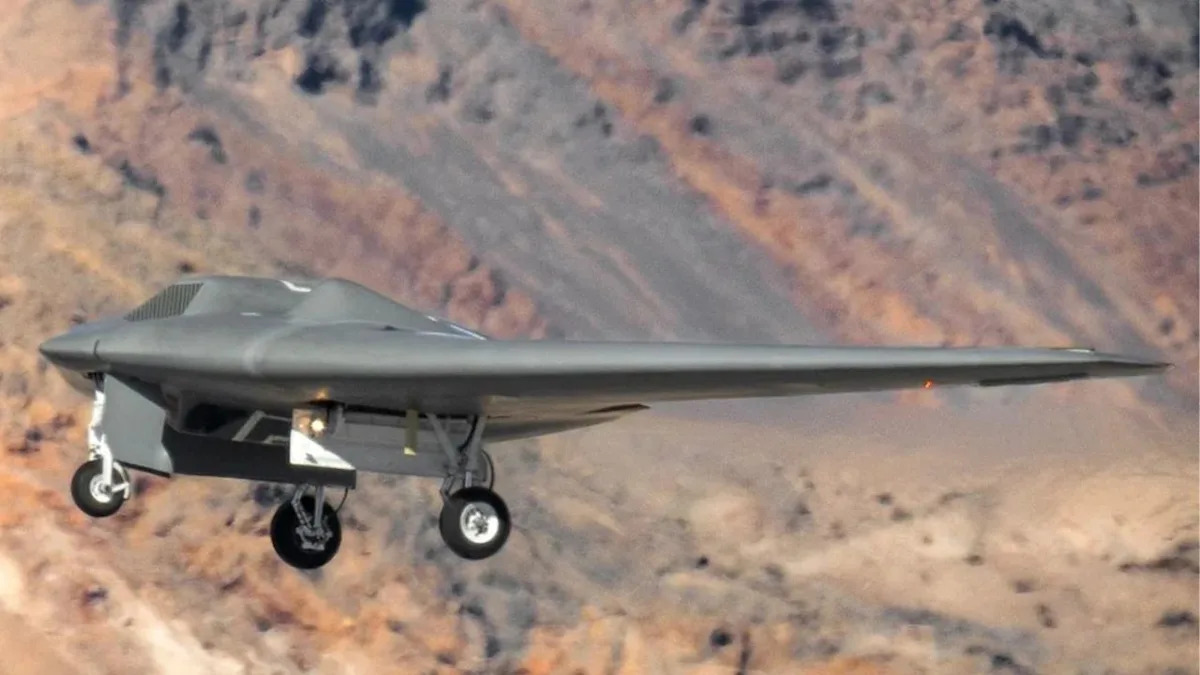
Lockheed Martin has unusually confirmed that its highly secretive RQ-170 Sentinel unmanned aerial vehicle played a role in a recent U.S. military operation in Venezuela. This confirmation represents the most concrete public acknowledgement of the aircraft’s real-world employment since its introduction nearly two decades ago.
In a quarterly earnings call, Lockheed CEO Jim Taiclet outlined how the company’s portfolio of advanced systems supported what was described as “Operation Absolute Resolve,” naming F-35 and F-22 fighters, Sikorsky Black Hawk helicopters, and the RQ-170 Sentinel UAV as key elements of the mission.
The operation culminated on January 3, 2026, with the capture of Venezuelan leader Nicolás Maduro, thrusting one of the military’s most closely held systems into the spotlight.
The Sentinels’ Emergence from the Shadows
Publicly available footage shows at least one RQ-170 returning to Naval Station Roosevelt Roads in Puerto Rico within hours of the operation’s completion. The base served as a hub for aircraft involved in the mission, and the images offered the first visual hint of the drone’s presence in the region.
Although the U.S. military confirmed the involvement of various aircraft types, it did not explicitly name the Sentinel until Lockheed’s confirmation.
The RQ-170 Sentinel was developed by Lockheed Martin’s renowned Advanced Development Programs division, widely known as Skunk Works, as a stealthy intelligence, surveillance, and reconnaissance platform.
From its first flights in the late 2000s to its official acknowledgement by the U.S. Air Force in 2009, the aircraft has been one of the Pentagon’s most opaque programs. Analysts estimate that roughly 20 to 30 units were built, but precise production figures remain classified.
Physically, the RQ-170 is a flying wing design with a wingspan estimated around 20 meters. Its stealth shape and use of radar-absorbent materials allow it to enter contested airspace with a low probability of detection.
It carries advanced sensors that can collect electro-optical and infrared imagery, synthetic aperture radar data, and signals intelligence, the latter crucial for mapping electronic emitters and establishing patterns of life on the ground.
The Sentinel’s Unique Capabilities and Mission Role
What makes the Sentinel unique among U.S. UAVs is its emphasis on passive collection, meaning it can conduct reconnaissance without actively transmitting signals that could reveal its location. That capability is valuable in operations against adversaries with advanced air defenses or in politically sensitive environments where discretion is paramount.
Analysts believe the RQ-170’s primary contribution to the Venezuela mission was real-time situational awareness. By orbiting at high altitude, the drone almost certainly provided commanders with persistent tracking of critical sites, troop movements, and air defense positions.
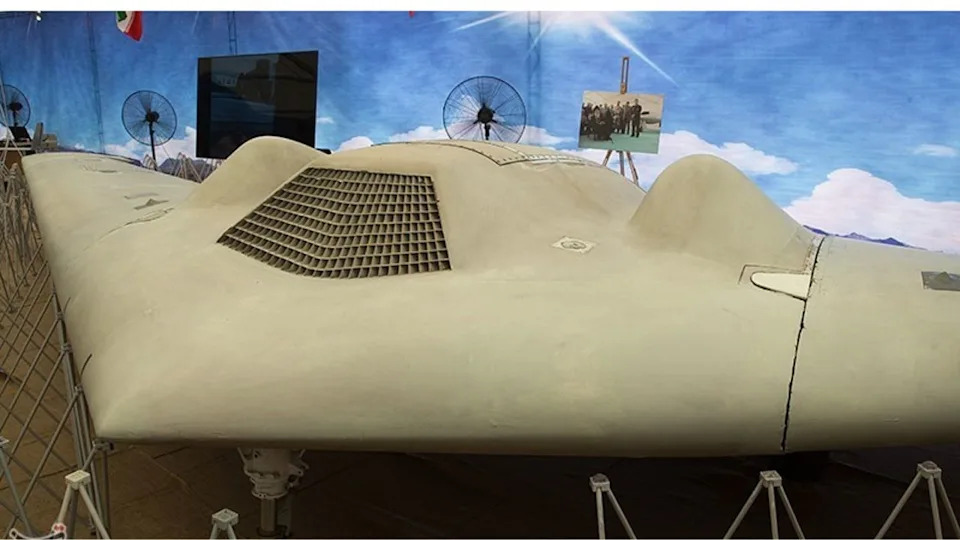
The RQ-170 in Iran / Image Credit: Tasnim News Agency, CC BY 4.0, Wikimedia.
In complex environments where friendly forces and national leadership are operating in real time, such intelligence can shape decisions and reduce risk to personnel.
In addition to overhead imagery, the drone likely contributed to broader intelligence processing. Its sensors could have fed data into battle damage assessments of targets struck by cruise missiles or supported the insertion and extraction of special operations units in the urban expanse of Caracas.
None of this has been confirmed by U.S. officials, but the integration of stealth ISR with kinetic actions reflects how modern conflict leverages information advantage as a form of force multiplier.
A Notorious History and a New Role in Modern Warfare
The Sentinel’s public history is already marked by high-profile missions. It gained attention in 2011 when one unit was lost over Iran, a rare and costly intelligence setback that revealed aspects of the drone’s capabilities to adversaries. It is also believed to have flown in support of operations in Afghanistan, Pakistan, and along the Korean Peninsula.
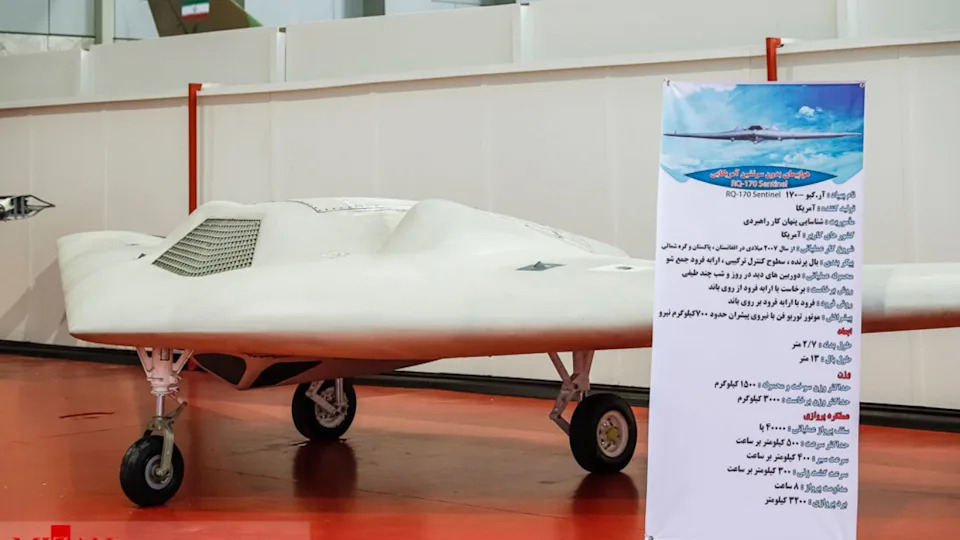
The Iranians caught one / Image Credit: Mostafa Roudaki/Mizan News Agency, Attribution, Wikimedia.
The Venezuela deployment underscores a doctrinal evolution for the RQ-170 from a strategic ISR asset to a tactical enabler for joint operations involving multiple force elements. Its continued use in such missions highlights the enduring value of stealthy, persistent intelligence platforms in shaping outcomes on the modern battlefield.
Lockheed’s confirmation fills a piece of the puzzle in understanding how the U.S. military applies its most advanced reconnaissance tools. Yet it also reminds us how much remains unknown about the Sentinel program, locked away behind layers of classification.