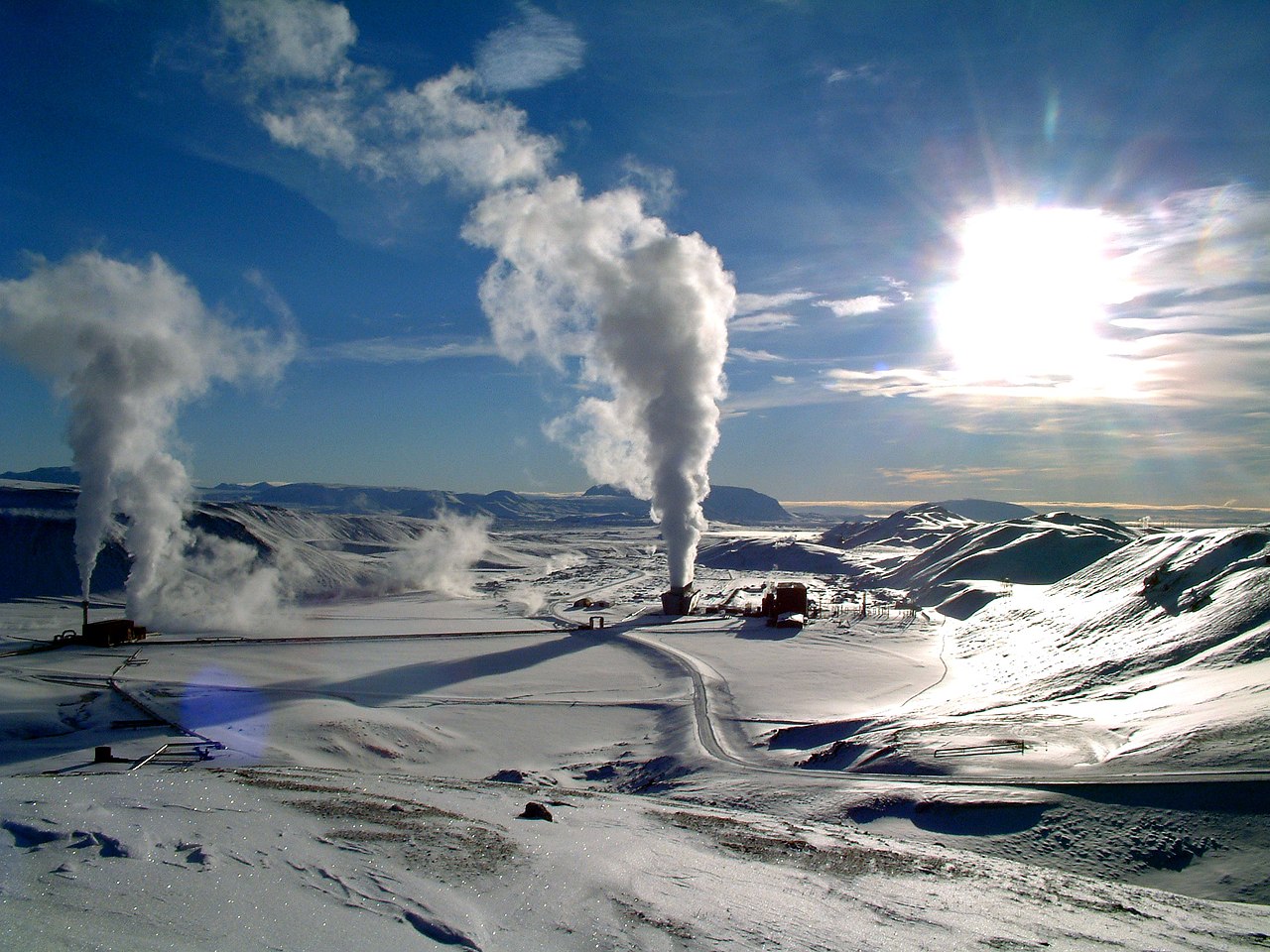
A new Stanford University study proposes that enhanced geothermal technology (EGS) could be just the ticket for global clean energy. According to a new report, EGS not only provides clean power, but also requires less land and infrastructure while also being cheap to maintain.
The report also claims that EGS could be used to reduce reliance on wind, solar, and battery storage. This, the report authors explain, could help provide low-cost, clear electricity all day, every day.
Geothermal power of this kind could also help countries abandon fossil fuels and may even be a competitor for nuclear power. Technology like this will also be key to helping meet the demand for power-hungry enterprises like data centers.
Traditional geothermal power tends to be viable only in volcanic areas like Iceland or New Zealand, where you don’t need to drill very deep to tap the Earth’s heat.
EGS, however, changes all that as it can be made viable with shallower boreholes. Once a desired depth is reached (typically between 3 and 8 km), the rock can be cracked and injected with fluid.
Geothermal power is only better
This fluid is then heated in situ and returned to the surface to generate electricity. According to the report, this process can run continuously throughout the year.
The best part is that the EGS plant could, in theory, be installed pretty much anywhere on Earth.
According to the study, the team found that when geothermal power accounts for around 10% of a nation’s power generation, it can provide significant relief to the grid from other sources like wind or solar.
In fact, at just 10%, they found that wind capacity can achieve a 15% reduction in wind, a 12% reduction in solar, and a 28% drop in reliance on battery storage. All this while also using just a fraction of the land needed.
Not only does EGS help reduce land use, but it also offers the potential for significant savings on energy bills. The study estimates that countries should expect to see at least a 60% over fossil fuel costs.
With the proliferation of data centers needed for artificial intelligence (AI), EGS, Stanford proposes, could be one of the best ways to support this technology.
Data centers require constant, uninterrupted power and typically need to be off-grid or located in semi-isolated locations. EGS, therefore, might just be the perfect solution.
Regarding nuclear power, the authors propose that EGS can provide a similar steady baseload. It can also work day and night, much like nuclear power.
Still some work to do
In contrast, however, EGS is much faster and cheaper to set up than a nuclear power station. It has no meltdown risk, produces no radioactive waste, and cannot be used for nuclear weapon proliferation programs.
The study also notes that while promising, EGS is not yet ready for scalability. It is still an emerging technology, but costs are expected to drop enough to make it economically viable by around 2035.
“EGS is a promising clean, renewable technology that works together with wind, solar, hydro, and batteries to help power the world for all purposes, thereby providing energy security while eliminating energy-related air pollution and global warming at low cost,” explains study lead author Mark Jacobson.
“Due to improvements in EGS drilling speeds, EGS costs are declining rapidly,” Jacobson added.
“These speeds allow EGS projects to be completed quickly, unlike with nuclear, which requires planning-to-operation times of 12 to 23 years worldwide. Also, unlike nuclear, EGS has no risk of weapons proliferation, meltdown, radioactive waste storage leaks, or underground uranium mining lung cancer risk,” he concluded.