By Jack Tomczuk
A federal judge is weighing the request of Mayor Cherelle Parker’s administration to order the National Park Service to restore the slavery exhibit at the President’s House.
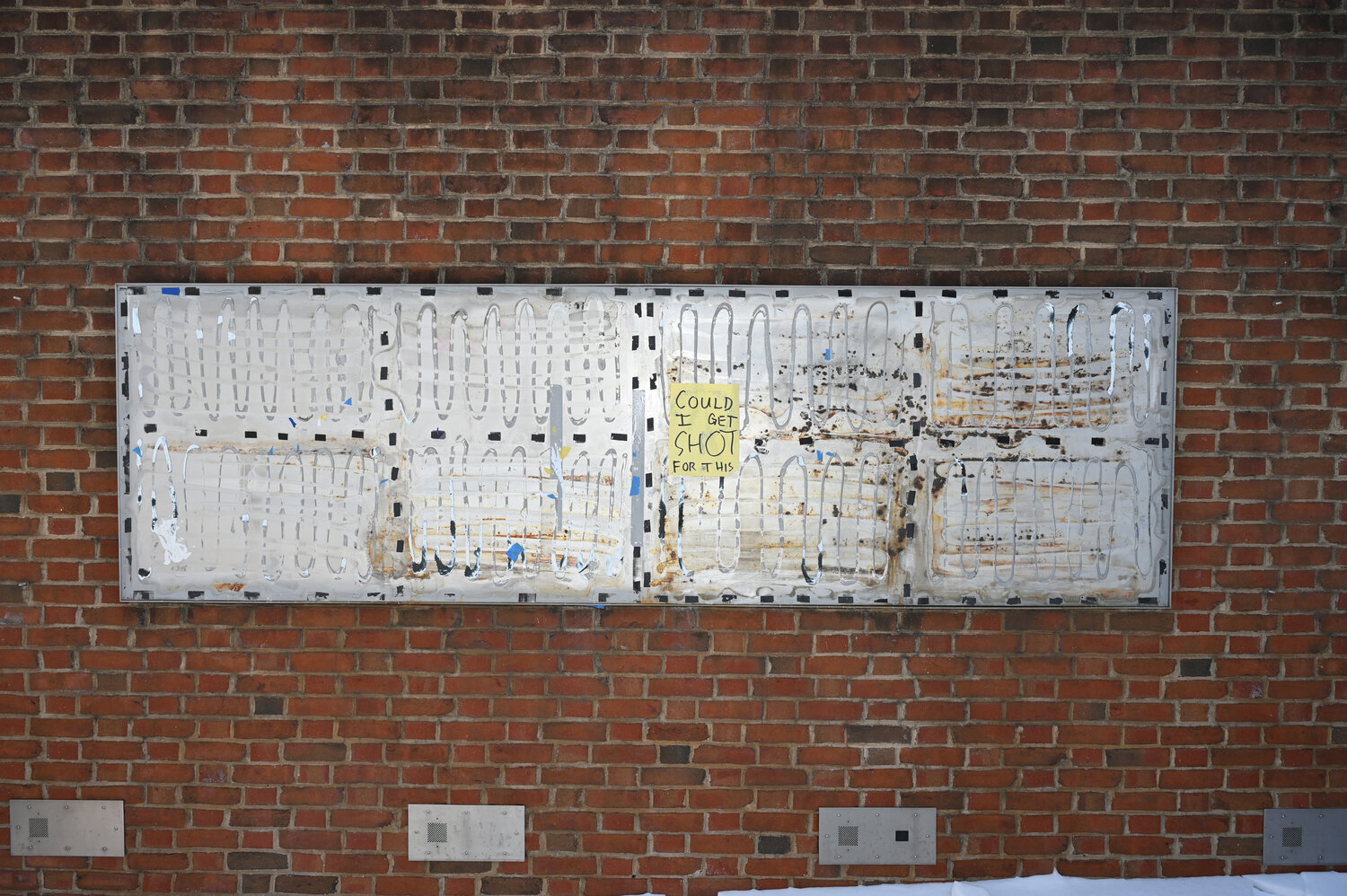
Attorneys representing the city and President Donald Trump’s administration sparred in court Friday, and an initial ruling is expected in the coming days. NPS staff abruptly removed the display panels Jan. 22.
The exhibit examines the contradiction of slavery and freedom in early America, with a particular emphasis on the nine enslaved individuals George Washington kept in the house when he lived there as the nation’s first president.
Background
Controversy arose in 2002, when, during the relocation of the Liberty Bell to its current location at 6th and Chestnut streets, historians noted that visitors would be lining up above the remnants of the house’s slave quarters. Parts of the home, at 6th and Market, were uncovered during an archaeological dig.
The long-demolished property served as the executive mansion from 1790 to 1800, when construction was completed on the White House. Washington and John Adams, who was not a slaveholder, lived at the site.
Advocates, academics, elected officials and the public successfully pressed the NPS to revise its design for the new Liberty Bell Center to incorporate space for Washington’s slaves — two of whom, Oney Judge and Hercules, escaped to freedom from the Philadelphia house.
Among the organizations involved was attorney Michael Coard’s Avenging the Ancestors Coalition, which has coordinated recent efforts to preserve the exhibit.
Funding was raised to pay for the installation, including an eventual $3.5 million commitment from City Hall; a $3.5 million grant from the Delaware River Port Authority; and federal dollars secured by Philadelphia’s Congressional delegation.
An agreement between the municipal government and NPS, signed in 2006 and amended several times, stipulated that the city would design and install the exhibit, with the park service responsible for managing and interpreting it.
The legal document is central to the Parker administration’s argument in court. The lawsuit asserts that the NPS is not permitted to enact major alterations without the approval of the city.
Federal government attorneys have stated that the contract expired in 2010, the same year the President’s House exhibit opened to the public.
Second Trump administration
The interpretive site greeted guests, with seemingly little strife, until March 2025, when Trump issued an executive order calling for the restoration of Independence Hall.
The directive instructed his administration to remove “descriptions, depictions, or other content that inappropriately disparage Americans past or living (including persons living in colonial times)” from all national parks.
Stories, from NPR and the New York Times, among others, indicated that the Liberty Bell-adjacent slavery panels had been flagged as problematic. Advocates began meeting to devise strategies to save the exhibit.
Interior Secretary Doug Burgum, who is named as a defendant in the Parker administration’s lawsuit, published an order in May providing a timeline for implementation; however, that target date came and passed in September with no changes at the President’s House.
On Jan. 22, Steven Sims, acting NPS regional director and superintendent of Independence National Historical Park, was told by the park service’s acting director, Jessica Bowron, to remove the exhibit that day, according to court documents submitted by the Trump administration.
Employees, equipped with wrenches, crowbars and other basic tools, proceeded to remove the panels and turn off television screens that had been broadcasting videos about the experiences of Washington’s slaves.
The exhibit materials were hauled to the nearby National Constitution Center, where they will be stored pending the outcome of the case, NPS attorneys wrote in legal filings.
Keywords
Slavery,
President’s House,
slavery exhibit,
National Constitution Center