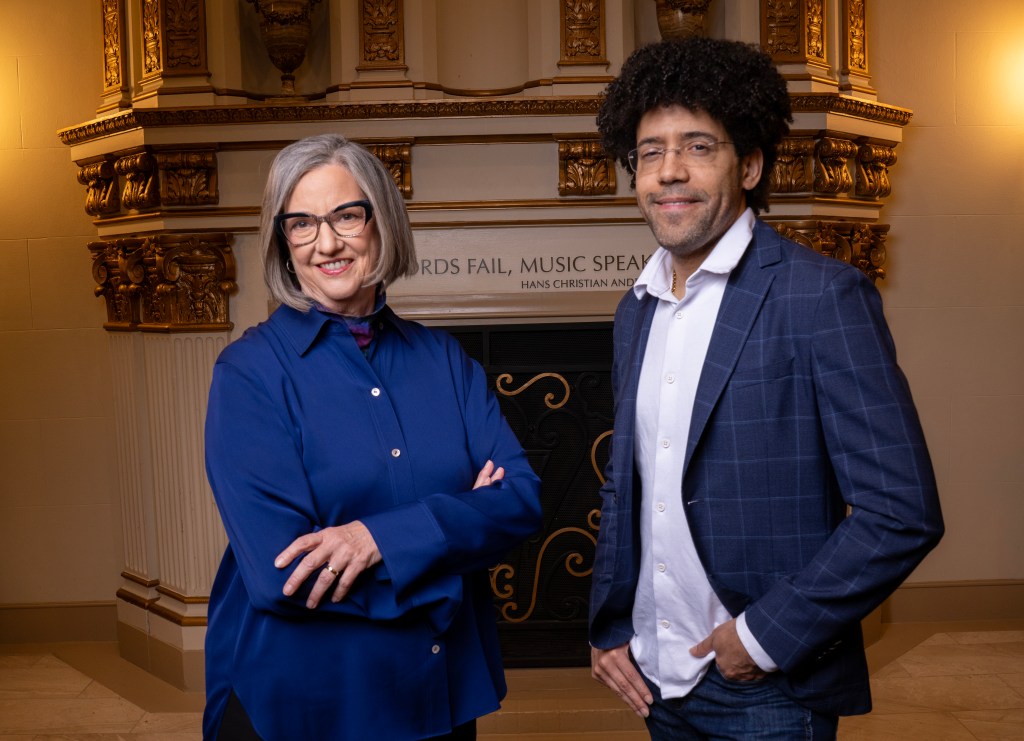
It has been three years since the San Diego Symphony soared to new heights following the $163 million, top-to-bottom rebuilding of its downtown home, the Jacobs Music Center. But anyone wondering if this 116-year-old orchestra — the oldest in California — is considering kicking back even a tiny bit with its upcoming 2026-27 season in its recently renamed Miller Family Theater should think again.
Nine soloists and six conductors will give their San Diego Symphony debut performances between October and next June. The orchestra’s repertoire will include 15 concertos and 13 symphonies, ranging from Liszt’s Piano Concerto No. 1, Sibelius’ Symphony No. 2 and Copland’s Symphony No. 3 to Prokofiev’s Symphony No. 7, Dvořák’s Symphony No. 8 and the ninth symphonies by Beethoven, Bruckner and Dvořák.
No fewer than 15 pieces of music will be performed by the symphony for the first time. Four of them are by living composers, including the world premiere of Symphony No. 6, “Monarch,” by the orchestra’s composer-in-residence Jimmy López, which was co-commissioned by the San Diego Symphony.
“It is very important to be doing premieres, debuts of pieces, debuts of artists and debuts of conductors,” said Rafael Payare, the orchestra’s music and artistic director. “It’s exciting for our audiences and our musicians.”
Those sentiments are shared by San Diego Symphony President and CEO Martha Gilmer, who playfully invoked a children’s campfire music favorite known to several generations of Girl Scouts.
“It’s like the song, ‘Make New Friends (but keep the old),’” she said.
“I think that there are a number of people who want to come to hear the orchestra regularly, and this is an opportunity for them to get to know some of these new soloists, guest conductors and new composers.”
San Diego Symphony CEO Martha Gilmer is Musical America’s 2026 Impresario of the Year
The 2026-27 lineup includes a varied mix of new and returning guest artists, including cello great Alisa Weilerstein (who is Payare’s wife) and piano stars Yefim Bronfman and Daniil Trifonov. Three of the soloists are longtime symphony members — concertmaster Jeff Thayer, principal English horn player Andrea Overturf and harpist Julie Phillips, who this year celebrates her 20th anniversary with the symphony.
Phillips will be featured Feb. 5 and 6 on acclaimed Italian film composer Nino Rota’s Harp Concerto. Overturf will be featured Jan. 17 on Rachmaninoff’s Symphony No. 2, while Thayer — who is a featured soloist annually with the symphony — will be featured May 29 on Bartók’s Violin Concerto. “We always want to give our wonderful musicians the spotlight, and we ask them: ‘What are the pieces that you would like to perform?’” said Payare, who began his orchestral career as a French horn player.
“Bartok’s concertos are fantastic!” said Gilmer, who became the symphony’s president and CEO in 2014. “I don’t think this orchestra played a lot of his music before. They probably played his Concerto for Orchestra a lot, but the other works, not so much. The six concertos Bartok wrote are exquisite. And we are thrilled to feature our symphony musicians as soloists in the coming season.”
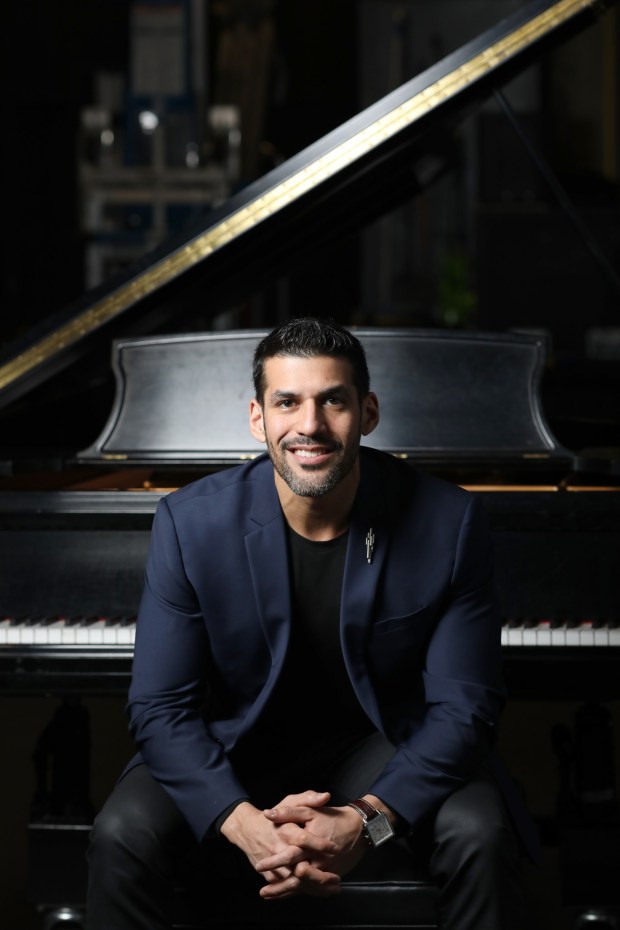 Jimmy Lopz is the San Diego Symphony’s Composer-in-Residence for its 2026/27 season. (Anda Chu/Bay Area News Group)
From Montreal to San Diego
The coming season will also offer San Diego audiences their first opportunity here to experience Payare conducting Canada’s L’ Orchestre symphonique de Montréal. He became its music director in 2022, a job that sees him dividing his time between San Diego and Montreal.
Payare’s Oct. 19 concert with the Canadian orchestra will include Stravinsky’s epic The Firebird, Moussa’s Elysium and Tchaikovsky’s Violin Concerto, with Greece’s Leonidas Kavakos as the soloist.
“This is a great opportunity for them to play in our hall and for our orchestra to be able to hear them,” Gilmer, said. “So, we’re very excited to welcome them and host them here in San Diego.”
So is Payare, who will also conduct Stravinsky’s The Firebird Suite — a shorter version of Firebird — with the San Diego Symphony on March 20 and 21, 2027.
“I’m very, very happy that I will be bringing the Montreal orchestra here to our beautiful, world-class concert hall,” he said.
What are the similarities and differences Payare sees between the San Diego Symphony and its Montreal counterpart?
“Both are full of musicians, but the Montreal orchestra is an English- and French-speaking orchestra. With both, we dive into the music — everything we do is about that,” he replied.
“Every orchestra has their own, let’s say, personality. An orchestra is like a human being, but a human being made up of 94 people, and that is always a wonderful thing. And the whole idea is that, in the not-too-distant future, I will take the San Diego Symphony to Montreal, so that the audience in Montreal can see and have a taste of our wonderful orchestra. So, I could not be happier.
“It is very important for the orchestra to travel, to tour and to record. The city of San Diego should be proud to have an orchestra of this caliber. And we cannot be selfish! I think the rest of the country and the world should also hear this orchestra.”
A native of Venezuela, Payare became a naturalized U.S. citizen in 2024 during a ceremony conducted on the stage of the Jacobs Music Center’s concert hall. The name of the hall was quietly changed last fall to the Miller Family Theater at Jacobs Music Center, following a generous behest to the symphony by donors who do not want their full names disclosed or publicized.
Accordingly, there has been no press release announcing the venue’s renaming. The only visible representation is the understated Miller Family Theater signage to each side of the stage.
“The family had wanted a modest sign and not a lot of attention paid to it, so we’re not putting that in any of our promotions or anything else,” Gilmer said. “The signage is a nice, quiet acknowledgement, but they’re very private about (their philanthropy). This is a family that has loved music for a long time, including the symphony. And some families prefer anonymity.”
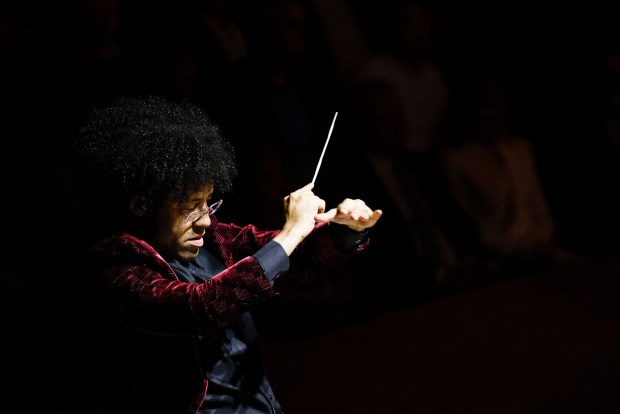 San Diego Symphony Music and Artistic Director Rafael Payare has led the orchestra since 2019. (Meg McLaughlin / The San Diego Union-Tribune)
Brahms, Beethoven, Mahler
The 2026-27 season will see Payare conduct nine concerts.
The first is the season-opening Oct. 3 and 4 performances of Strauss’ “A Hero’s Life” (Ein Heldenleben), Gubaidulina’s “Fairytale Poem” (Poema-Skazka) and Mozart’s Piano Concerto No. 24, featuring Yefim Bronfman as the soloist.
He will also conduct the season-closing 2027 concerts next June 4 and 5. That repertoire will include San Diego Symphony Composer-in-Residence López’s Symphony No. 6, “Monarch,” and Beethoven’s Symphony No. 9, featuring soprano Tasha Hokuao Koontz, mezzo-soprano Nikola Printz, tenor Viktor Antipenko and baritone Hansung Yoo.
In between those October and June concerts, Payare will lead the orchestra in seven other concerts. They will feature works by Mahler, Rachmaninoff, Berlioz, Estévez, Liszt, Brahms, Elgar, Salonen and others.
At each concert, Payare hopes to elevate the orchestra’s listeners while engaging in musical communion with them and the orchestra.
“The beautiful thing about going to a concert is that you enter a bubble, a different world,” he said, “This is what we want to offer. We want to make sure that the audience can escape from the normal life things that are happening every day, and get into this world of something completely different.
“The music could be centuries old or completely new. It could be about absolute joy, or it could be somber or tragic, and you can almost see it and smell it from the playing of the orchestra. The goal is to always give the audience this kind of unique experience and it’s a wonderful thing to do that.”
Payare chuckled when asked to cite a few concerts in the new season that he is especially excited about.
“Oh, my god, it’s almost impossible to pick,” he said.
“We’re doing Mahler’s Sixth (symphony), which is his darkest of them all, and we’ll be doing Bruckner’s Ninth, which has such a beautiful sound, and I can’t pick between them or any others. Because the thing is, the composers whose music I conduct, I really believe in all of them. It’s never like: ‘Well, I have to do this piece, and I really don’t like it. ‘
“Sometimes, depending on the length of a concert, I think about: ‘What would the audience like to explore? So, in that sense there are things that are more suitable or not. The orchestra is playing so wonderfully that I know people will never be disappointed after a concert.”
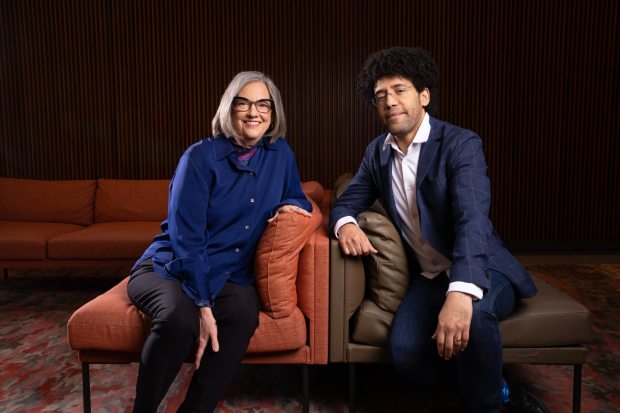 San Diego Symphony President/CEO Martha Gilmer and Music and Artistic Director Rafael Payare work closely putting together each new season for the orchestra. (Nelvin C. Cepeda / The San Diego Union-Tribune)
A team effort
Putting together a symphony season of dozens of concerts by dozens of composers, old and new, is an extended process for Payare, Gilmer and their dedicated team. So is determining which guest soloists and conductors are available and best suited to specific pieces of music.
“I’m always inspired by Rafael’s passion and his ‘the sky’s the limit’ approach,” Gilmer said. “There are also times when we can’t do everything we want to and he takes my guidance on that, he listens. We respect one another, and we’re great friends.”
Payare readily agreed.
“This is one of the things that is the most fun and most complicated as well,” he said. “Because when we have our programming meetings, we spend hours and hours and hours. Because there are so many things that we could do, so we need to trim it a little bit to try to make sure that there is balance and that we give the audience the best opportunity to be with us on this beautiful journey with the orchestra.
“It’s like, I don’t want to say a flower, because flowers don’t last that long. But music just blooms and blooms, and it keeps expanding and expanding. So, it is an absolute joy. But sometimes we have to make harder decisions, like: ‘We cannot do this because there’s not enough time. Or, we will have to wait for our next season to do this.’ And that is always difficult, I have to say.”
Regardless of the music being performed, Payare seeks to remain true to each composer’s intentions while also adding his own stamp to the music.
“That’s the whole point all the time,” he said. “The whole idea of trying to be true to the composer is trying to understand them. But, of course, I’m understanding them through my eyes, so already I am putting an imprint of my own on what I think the composer meant. But that is the case all the time. It doesn’t mean that I have ‘the truth’ about any piece of music.
“Sometimes, not even the composer themselves know exactly when they look at a piece. And sometimes, when somebody else performs their piece, the composer is like: ‘Yeah, that was exactly what I meant,’ even though it maybe deviates a little bit from the score.”
Orchestras typically rehearse each piece several times, and the give-and-take between the musicians and their conductor to shape the music is vital, Payare said. He laughed when asked if, prior to rehearsing with the orchestra, he practices at home with his baton while listening to recordings of the music.
“No, everything goes into my head,” Payare said. “And normally, if I’m conducting a piece I don’t listen to recordings. I just try to leave everything to kind of form in my head. You don’t practice your endurance (for conducting) like doing cardio in front of a mirror! At least in my case, that’s not how it works for me.
“You try to see what the composer did and everything is sounding in your head. And then, when you are in front of the orchestra, you will hear those sounds and see what needs to be done. Sometimes, you need to balance a theme because you want to achieve certain colors. Sometimes, you get the surprise of something that maybe you were not thinking would be the way it ends up, but it is wonderful to have it that way.
“There are many things that happen in your head, but in reality, the sound comes comes from the orchestra. We rehearse and then we offer the music to the audience. That’s the beauty of art, that it is always evolving. It never rests or sits still. And every orchestra is a living organism. So, everything we do together is a beautiful dance.”
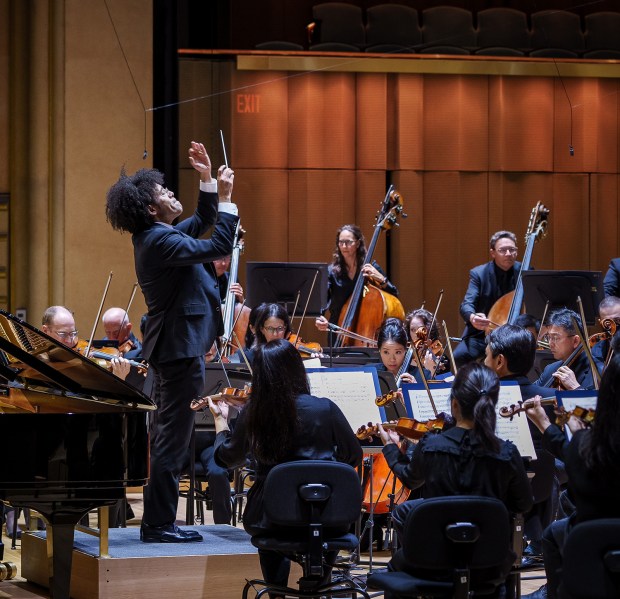 San Diego Symphony Music and Artistic Director Rafael Payare is shown leading the orchestra at Jacobs Music Center on the opening night of its 2024/25 season . (Gary Payne)
San Diego Symphony 2026-27 Jacobs Masterworks season
Saturday, Oct. 3 at 7:30 p.m. and Sunday, Oct. 4 at 2 p.m.: Gubaidulina’s “Fairytale Poem” (Poema-Skazka), Mozart’s Piano Concerto No. 24, Strauss’ “A Hero’s Life” (Ein Heldenleben), featuring music & artistic director Rafael Payare and pianist Yefim Bronfman. ($30-$110)
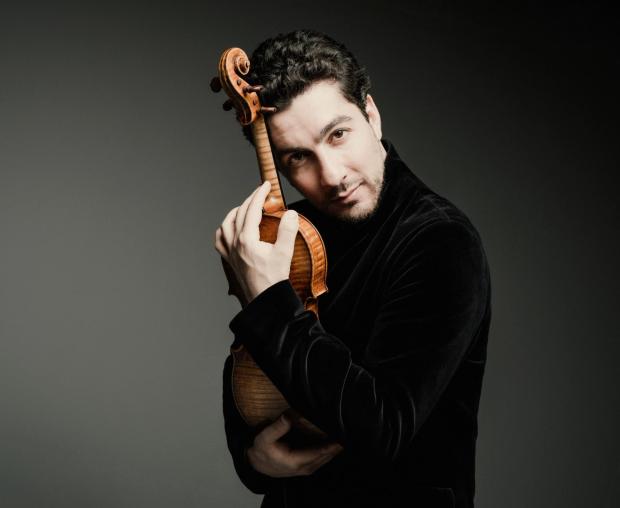 Sergey Khachatryan will be the featured soloist on Khachaturian’s Violin Concerto at the San Diego Symphony’s Oct. 10 and 11 concerts. (Marco Borggreve)
Saturday, Oct. 10 at 7:30 p.m. and Sunday, Oct. 11 at 2 p.m.: Khachaturian’s Violin Concerto and Bruckner’s Symphony No. 9, featuring music & artistic director Rafael Payare and violinist Sergey Khachatryan. ($30-$110)
Friday, Oct. 16 at 11 a.m. and Saturday, Oct. 17 at 7:30 p.m.: Debussy’s “Nuages” and “Fêtes” from Nocturnes, López’s Shift, Concerto for Trombone and Orchestra, Ravel’s Alborada del gracioso, Poulenc’s Suite from Les biches (The Does), Ravel’s Rapsodie espagnole, featuring conductor Ludovic Morlot and trombonist Jörgen van Rijen. ($30-$110)
Thursday, Oct. 29 at 8 p.m.: San Diego Symphony presents Orchestre Symphonique de Montréal performing Moussa’s Elysium, Tchaikovsky’s Violin Concerto and Stravinsky’s The Firebird, featuring music & artistic director Rafael Payare and violinist Leonidas Kavakos. ($30-$110)
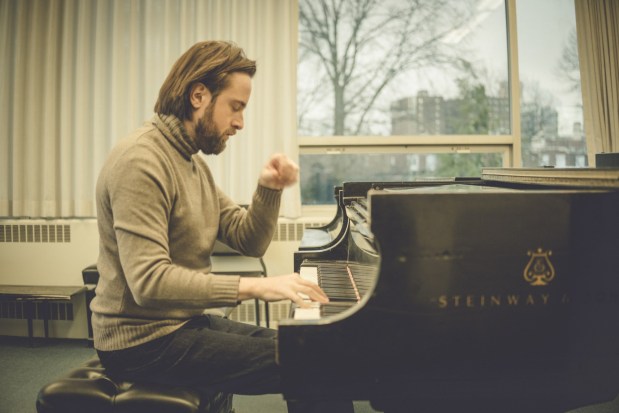 Piano star Daniil Trifonov will perform for the first time with the San Diego Symphony as part of the orchestra’s 2026/27 season. (Dario Acosta)
Saturday, Nov. 14 at 7:30 p.m. and Sunday, Nov. 15 at 2 p.m.: Brahms’ Piano Concerto No. 1 and Shostakovich’s Symphony No. 10, featuring music & artistic director Rafael Payare and pianist Daniil Trifonov. ($30-$110)
Friday, Nov. 20 at 7:30 p.m. and Sunday, Nov. 22 at 2 p.m.: Liszt’s Piano Concerto No. 1 and Mahler’s Symphony No. 6, “Tragic,” featuring music & artistic director Rafael Payare and pianist Inon Barnatan. ($30-$110)
Saturday Nov. 28 at 7:30 p.m.: Jazz @ The Jacobs: Gilbert Castellanos performs “Miles Davis: Milestones, Celebrating Miles Davis’s Centennial.” ($30-$82)
Friday Dec. 4 at 7:30 p.m. and Saturday Dec. 5 at 7:30 p.m.: Carreño’s Margariteña, Prokofiev’s Piano Concerto No. 2, Sibelius’s Symphony No. 2, featuring conductor Diego Matheuz and pianist Aristo Sham. ($30-$110)
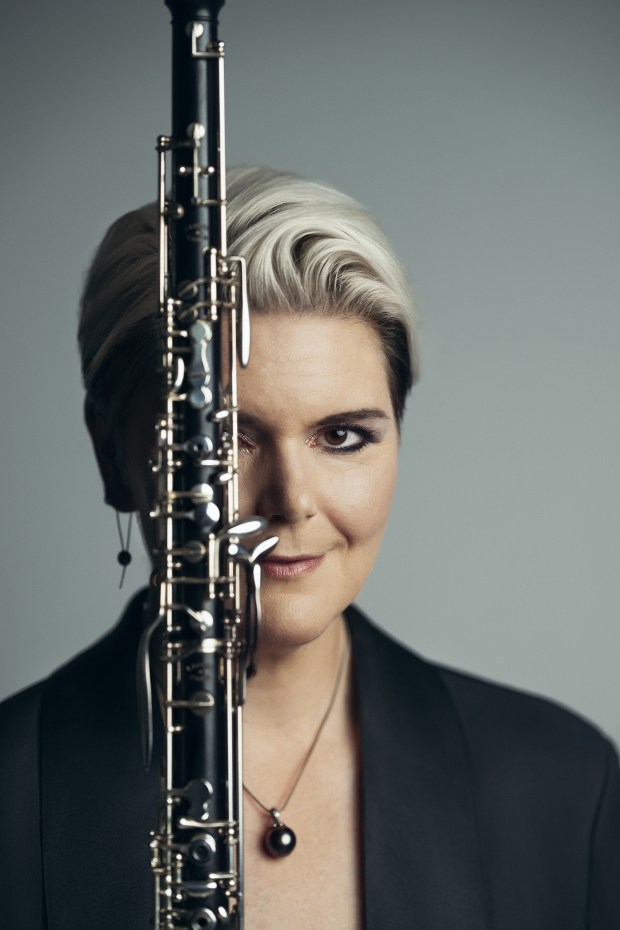 Andrea Overturf has been the Principal English Horn player for San Diego Symphony since 2009. She will be a featured soloist in the orchestra’s upcoming 2026/27 season. (Todd Rosenberg)
Saturday, Jan. 16 at 7:30 p.m. and Sunday, Jan. 17 at 2 p.m.: Glinka’s Overture to Ruslan and Ludmilla, Rorem’s English Horn Concerto, Rachmaninoff’s Symphony No. 2, featuring conductor Delyana Lazarova and Andrea Overturf, English horn. ($30-$110)
Saturday, Jan. 23 at 7:30 p.m. and Sunday, Jan. 24 at 2 p.m.: Smetana’s Overture to the Bartered Bride, Ginastera’s Concierto argentino, Albéniz’s Rapsodia española, Dvořák’s Symphony No. 8, featuring conductor Aziz Shokhakimov and pianist Simon Trpčeski. ($30-$110)
Friday, Jan. 29 at 7:30 p.m. and Saturday, Jan. 30 at 7:30 p.m.: Elgar’s Cello Concerto, Berlioz’s Symphonie fantastique, featuring music & artistic director Rafael Payare and cellist Alisa Weilerstein. ($30-$110)
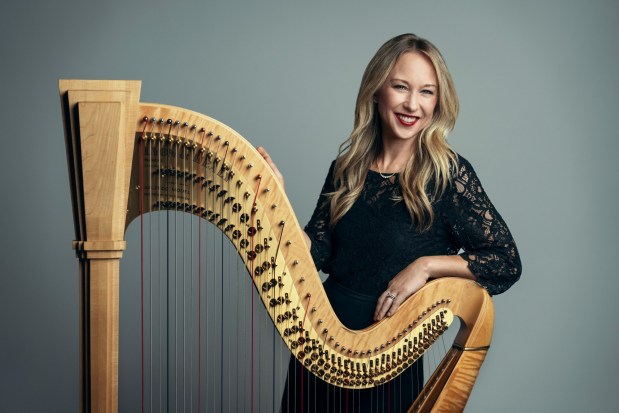 San Diego Symphony harpist Julie Phillips this year celebrates her 20th anniversary with the orchestra. and will be the featured soloist at its Feb. 5 and 6 concerts. (Courtesy San Diego Symphony)
Friday, Feb. 5 at 11 a.m. and Saturday Feb. 6 at 7:30 p.m.: Ravel’s Rigaudon from Le tombeau de Couperin, Rota’s Harp Concerto, Shostakovich’s Symphony No. 5, featuring conductor Andreas Ottensamer and harpist Julie Phillips. ($30-$110)
Saturday, Feb. 13 at 7:30 p.m.: Jazz @ The Jacobs: Gilbert Castellanos performs “Billie Holiday: All or Nothing at All.” ($30-$82)
Saturday, Feb. 20 at 7:30 p.m. and Sunday, Feb. 21 at 2 p.m.: Pintscher’s Assonanza for violin & chamber orchestra, Ravel’s Tzigane, rapsodie de concert, Copland’s Symphony No. 3, featuring conductor Matthias Pintscher and violinist Blake Pouliot. ($30-$110)
Saturday, Feb. 27 at 7:30 p.m. and Sunday, Feb. 28 at 2 p.m.: Mozart’s Chaconne from Idomeneo, Piano Concerto No. 23, Symphony No. 41, featuring conductor Bernard Labadie and pianist Benedetto Lupo. ($30-$110)
Friday, March 5 at 7:30 p.m. and Sunday, March 7 at 2 p.m.: Mendelssohn’s Calm Sea and Prosperous Voyage, Tchaikovsky’s The Tempest, Ravel’s Shéhérazade, Debussy’s La mer, featuring conductor Edward Gardner and mezzo-soprano Sasha Cooke. ($30-$110)
Saturday, March 20 at 7:30 p.m. and Sunday, March 21 at 2 p.m.: Ortiz’s Kauyumari, Shostakovich’s Violin Concerto No. 1, Bartók’s Suite from The Miraculous Mandarin, Stravinsky’s The Firebird Suite, featuring music & artistic director Rafael Payare and violinist Joshua Brown. ($30-$110)
Friday, March 26 at 11 a.m. and Saturday March 27 at 7:30 p.m.: Estévez’s Mediodía en el llano (Midday on the Plains), Salonen’s kínēma, Bernstein’s Symphonic Dances from West Side Story, Rachmaninoff’s Symphonic Dances, featuring music & artistic director Rafael Payare and Ricardo Morales, clarinet. ($30-$110)
Saturday, April 3, at 7:30 p.m.: Jazz @ The Jacobs: Gilbert Castellanos performs Lee Morgan’s “The Sidewinder” ($30-$82)
Saturday, April 10 at 7:30 p.m. and Sunday, April 11 at 2 p.m.: Prokofiev’s Symphony No. 7, Dvořák’s The Wood Dove, Janáček’s Taras Bulba, featuring conductor Sir Mark Elder. ($30-$110)
Saturday, May 22 at 7:30 p.m. and Sunday, May 23 at 2 p.m.: Sibelius’ Pohjola’s Daughter, Grieg’s Piano Concerto, Nielsen’s Symphony No. 5, featuring conductor Osmo Vänskä and pianist Alessio Bax. ($30-$110)
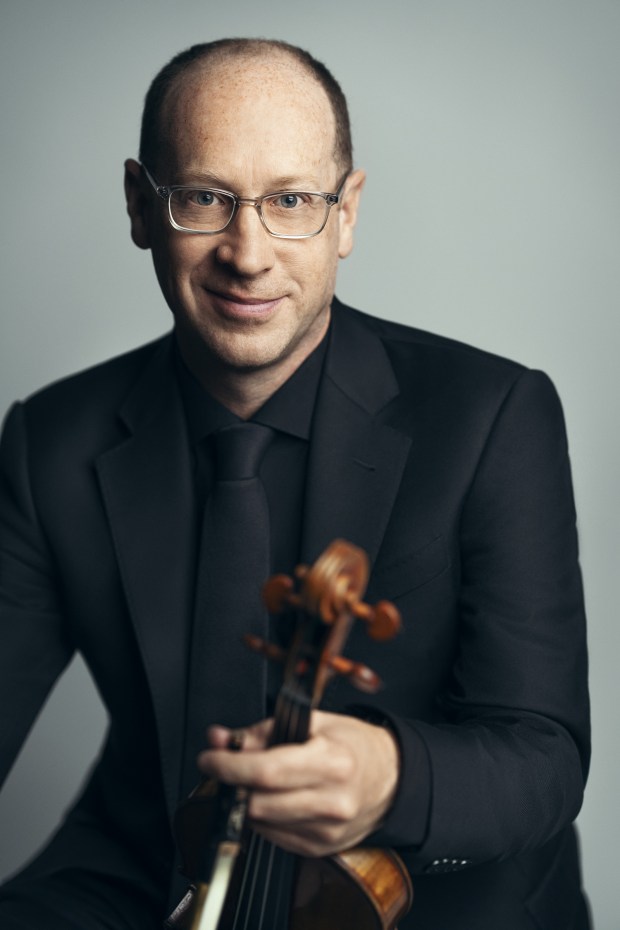 Jeff Thayer has been Concertmaster for the San Diego Symphony since 2004. (Todd Rosenberg)
Saturday, May 29 at 7:30 p.m. and Sunday, May 30 at 2 p.m.: Klein’s Partita for Strings, Bartók’s Violin Concerto No. 1, Dvořák’s Symphony No. 9 “From the New World”, featuring conductor Joshua Weilerstein and violinist Jeff Thayer. ($30-$110)
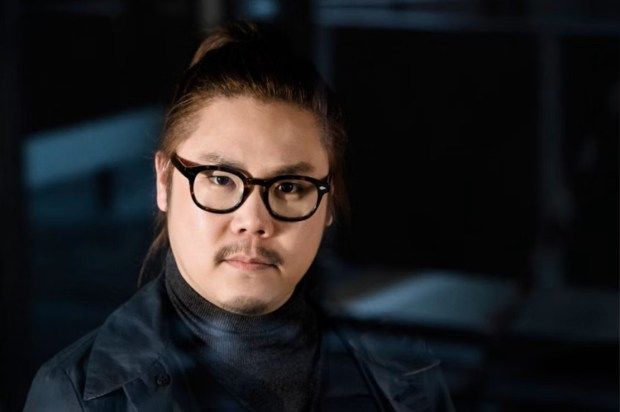 Bariton Hansung Yoo will sing with the San Diego Symphony at its season closing June 2027 concerts. (N. Klinger / Courtesy San Diego Symphony)
Friday, June 4 at 7:30 p.m., Saturday, June 5 at 7:30 p.m. and Sunday, June 6 at 2 p.m.: López’s Symphony No. 6, “Monarch” and Beethoven’s Symphony No. 9, featuring music & artistic director Rafael Payare, soprano Tasha Hokuao Koontz, mezzo-soprano Nikola Printz, tenor Viktor Antipenko, baritone Hansung Yoo, San Diego Symphony Chorus. ($30-$110)
2026-27 Season subscription packages
Prices include a $25 subscription fee
Jacobs Masterworks Saturday packages (10 to 20 percent off single tickets)
Saturday A (17 concerts): $433-$1,521
Saturday B (8 concerts): $225-$777
Saturday C (9 concerts): $250-$871
Saturday D (6 concerts): $187-$619
Saturday E (5 concerts): $160-$520
Saturday F (6 concerts): $187-$619
Jacobs Masterworks Friday packages (15 percent off single tickets)
Friday (3 matinee concerts): $100-$307
Friday A (5 evening concerts): $150-$495
Jacobs Masterworks Friday packages (15 to 20 percent off single tickets)
Sunday A (14 concerts): $361-$1,257
Sunday B (7 concerts): $200-$683
Sunday C (7 concerts): $200-$683
Jazz @ The Jacobs series
(3 concerts) $106-$247 (10 percent off single tickets)
Tickets: Season subscription packages go on sale today, Friday, Jan. 30, at the San Diego Symphony’s downtown box office at 750 B Street, by phone at 619-235-0804 and online at sandiegosymphony.org.