Mayor Zohran Mamdani has said he’s dispatching 20 “warming buses” around New York City, where homeless people can eat sandwiches and escape the elements as the dangerously cold weather continues.
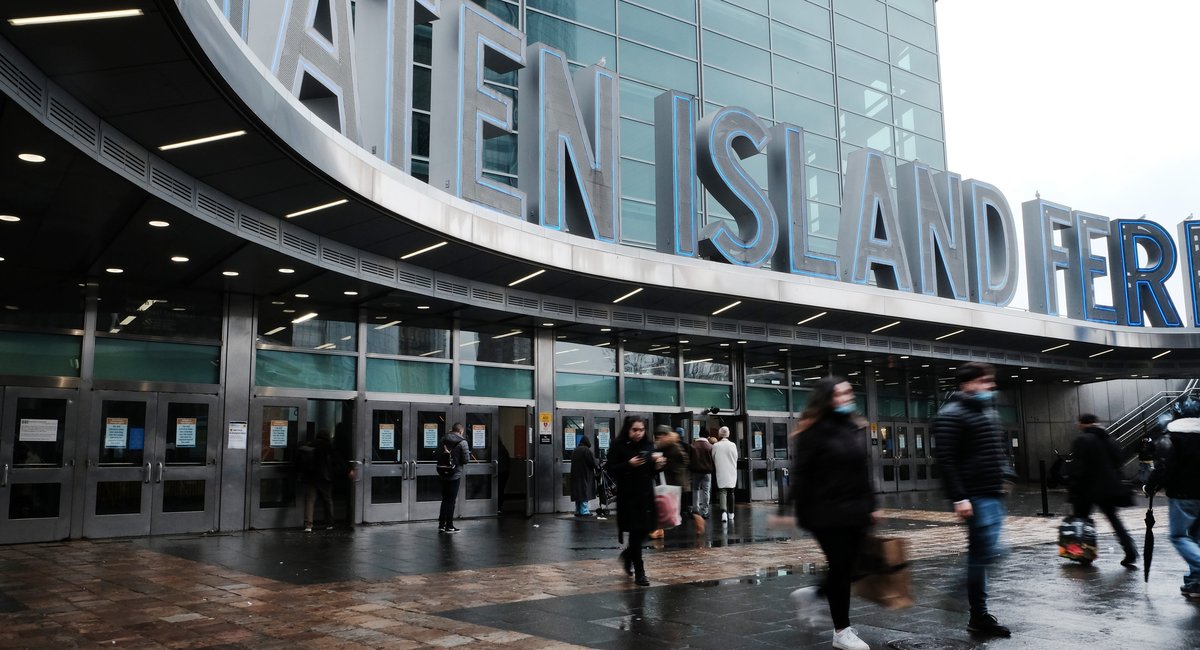
On a recent night at the Staten Island Ferry Terminal, the flaws in that plan were laid bare. No one in the terminal — including homeless people, an NYPD officer and terminal employees — knew two warming buses were parked outside.
Gothamist observed the communication breakdown play out over two-and-a-half hours while accompanying homeless outreach volunteers at the ferry terminal in Battery Park. City officials say they have launched an “all-hands on deck” approach to getting homeless people into shelter during the brutally cold weather.
At least 14 New Yorkers have died outside during the freeze, including several who had previous contact with the shelter system. But it was evident that communication between Department of Homeless Services, the NYPD, and Department of Transportation could be improved.
“As the cliché goes, sometimes the left hand doesn’t know what the right hand is doing,” said Norman Siegel, a civil rights attorney who runs the volunteer homeless outreach program.
On Thursday night, Siegel and three other volunteers visited the ferry terminal, which is a well-known resting place for the homeless.
A warming van stationed outside Staten Island Ferry Terminal.
Elizabeth Kim
No signage was posted in the terminal notifying people the two warming buses were idling outside.
Siegel and his fellow volunteers walked up to the roughly 10 homeless people milling about the terminal — both indoors and outside — informing them the buses were warm, nearby, and had plenty of space.
“Wow, I can’t believe this,” said Balla Abamigbo, 31. He was standing by the terminal entrance wondering how he would get through the night when Siegel approached and asked if he needed help.
Abamigbo, who said he had been sleeping outside, likened the news of the bus to a “lightning bolt.”
Were it not for the volunteers, it’s not clear if anyone would have learned of the warming buses. An NYPD officer at the terminal, as well as a transportation department employee, both said they had no idea the vehicles were parked outside.
The buses themselves also weren’t very noticeable.
A sign in the vehicle’s window that read “warming center” was barely visible. Siegel said he’d personally complained to Department of Homeless Services Commissioner Molly Wasow Park about the lack of signage on the vehicles.
After Siegel and his volunteers alerted the driver that the sign couldn’t be read, he stuck it to the outside of the vehicle.
The mayor’s office said the city is planning to use larger and more visible signage in more than 10 languages.
Mamdani recently said outreach teams are “working around the clock,” and that more than 860 people have been moved into shelters since Jan. 19.
On Saturday, the mayor announced the opening of additional single-room units, which are generally preferred over barracks-style shelters.
But many homeless New Yorkers refuse to go to shelters, citing concerns about violence and overly strict rules. People can come and go as they please from the warming buses, no questions asked.
Matt Rauschenbach, a spokesperson for the mayor, said transit and senior ferry officials had been notified about the warming bus earlier on Thursday.
“Responding to this crisis will require all of us, from outreach workers to our first responders at FDNY and NYPD to our partners across government and in the nonprofit sector,” Rauschenbach said in a statement. “We continue to pursue every avenue to keep New Yorkers safe during these freezing temperatures.”
The spokesperson added that contracted outreach workers have been out in Lower Manhattan, although none were spotted by Gothamist on Thursday night.
Siegel, 82, is a well-known critic of government dysfunction. He said he could accept some blunders.
The warming van had room for around 40 people.
Elizabeth Kim
“But not in emergency situations like this,” he said. “You really have to do a public campaign to let people know.”
Siegel is convinced that everyday New Yorkers can be enlisted to help address homelessness. His group, the Street Homeless Advocacy Project, which is now in its third year, has more than 100 people who fan out in teams across Manhattan once a week. Each member receives training on how to approach and talk to homeless people.
The group’s philosophy is to urge — but never coerce — people to accept shelter. Although Siegel openly criticized former Mayor Eric Adams, a longtime friend, for pushing to forcibly move mentally ill people on the street to hospitals, the Adams administration nevertheless assisted his outreach efforts.
Out of more than 2,300 interactions, the group has placed over 1,100 people in shelter, according to Siegel.
He is hoping to grow the program under Mamdani, a mayor he does not know but whose progressive politics and rhetoric about civic engagement match his own.
“The mayor seems very heart-led, and I think that he’s doing a lot quickly,” Siegel said.
By 8:30 p.m., six men were sitting inside the once-empty bus. All had been escorted by Siegel and his volunteers. The bus could seat roughly 40 people.