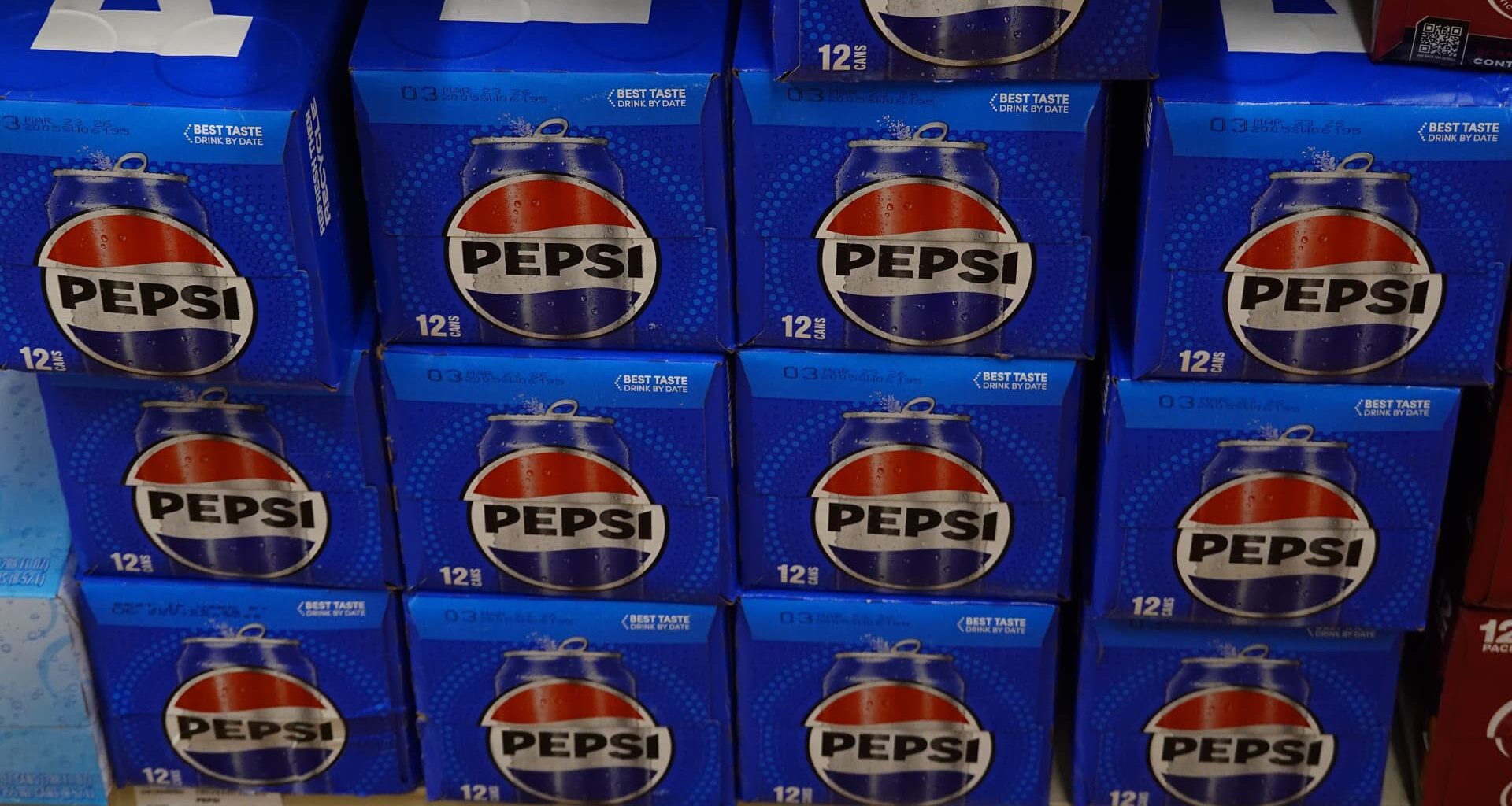
Packages of Pepsi are displayed on a store shelf on Oct. 9, 2025 in San Anselmo, California.
Justin Sullivan | Getty Images
PepsiCo on Tuesday reported quarterly earnings and revenue that topped analysts’ expectations, fueled by improving organic sales across its business.
Demand for the company’s snacks has been sluggish as consumers balk at higher prices. This year, Pepsi plans to lower prices on products from its North American food division to “improve competitiveness and the purchase frequency of our brands,” executives said in prepared remarks. Productivity savings will offset the lower prices, they said.
Shares of the food and beverage giant fell more than 1% in premarket trading.
Here’s what the company reported compared with what Wall Street was expecting, based on a survey of analysts by LSEG:
- Earnings per share: $2.26 adjusted vs. $2.24 expected
- Revenue: $29.34 billion vs. $28.97 billion expected
Pepsi reported fourth-quarter net income attributable to the company of $2.54 billion, or $1.85 per share, up from $1.52 billion, or $1.11 per share, a year earlier.
Excluding restructuring and impairment charges and other items, the company earned $2.26 per share.
Net sales rose 5.6% to $29.34 billion. Organic revenue, which strips out foreign currency, acquisitions and divestitures, increased 2.1% in the quarter.
“PepsiCo’s fourth quarter results reflected a sequential acceleration in reported and organic revenue growth, with improvements in both the North America and International businesses,” CEO Ramon Laguarta said in a statement.
However, the company is seeing volume declines, particularly for its North American businesses. The metric excludes pricing and foreign exchange fluctuations to reflect demand more accurately.
Global volume for its food fell 2% in the quarter, although global volume for its drinks ticked up 1%.
Pepsi’s home market was once again the weak point of the quarter, although it is showing signs of improvement. Inflation-weary shoppers have been buying less of Pepsi’s snacks and drinks in a sign of consumer backlash agianst higher prices.
PepsiCo Foods North America, which spans brands from Quaker Oats to Cheetos, reported that volume fell 1%. PepsiCo Beverages North America, which includes Gatorade, Starry and Poppi, saw volume shrink 4%, though its organic sales rose 2%.
Pepsi also reiterated the outlook for 2026 that the company provided in December. The company is projecting that organic revenue will rise between 2% to 4% and core constant currency earnings per share will increase in a range of 4% to 6%.
In December, Pepsi struck a deal with activist investor Elliott Investment Management, which had revealed a roughly $4 billion stake in the company two months earlier. As part of the agreement, Pepsi said it would slash its U.S. product lineup by 20%, cut costs across its food and beverage operations and lower snack prices. Elliott did not receive any seats on Pepsi’s board.
As Pepsi implements that plan this year, the company is projecting that its North American business will improve, while its international divisions remain “resilient,” according to Laguarta.