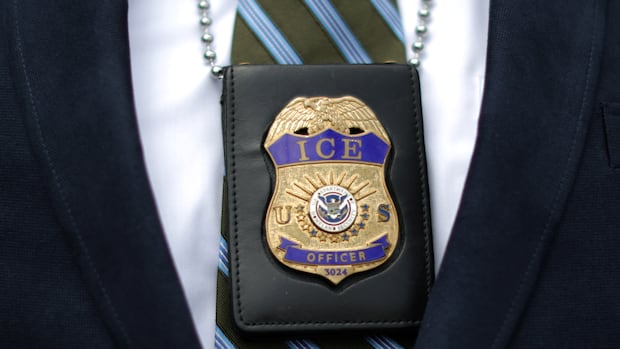
As U.S. Immigration and Customs Enforcement (ICE) continues to draw widespread criticism for its deportation crackdown in the States, there’s concern brewing about the agency’s presence north of the border.
The U.S. government’s website lists ICE offices in five Canadian cities: Toronto, Vancouver, Calgary, Montreal and Ottawa.
In an emailed statement to CBC News, an ICE spokesperson confirmed its criminal investigative law enforcement component — Homeland Security Investigations (HSI) — conducts work at the U.S. embassy in the country’s capital, and at consulates in the other four cities.
HSI personnel are separate from the ICE arm at the forefront of the immigration crackdowns making headlines in cities like Minneapolis, known as Enforcement and Removal Operations.
According to the government website, HSI has over 93 offices in more than 50 countries, with a mandate to identify and stop crime “before it reaches the United States.”
What does ICE do in Canada?
“HSI special agents conduct criminal investigations to protect the United States from dangerous transnational organizations, like terrorist groups and drug cartels,” the ICE spokesperson told CBC News.
“These skilled and highly trained special agents focus on a wide variety of serious crimes, like drug trafficking, child exploitation, weapons smuggling, human smuggling, financial fraud, and more.”
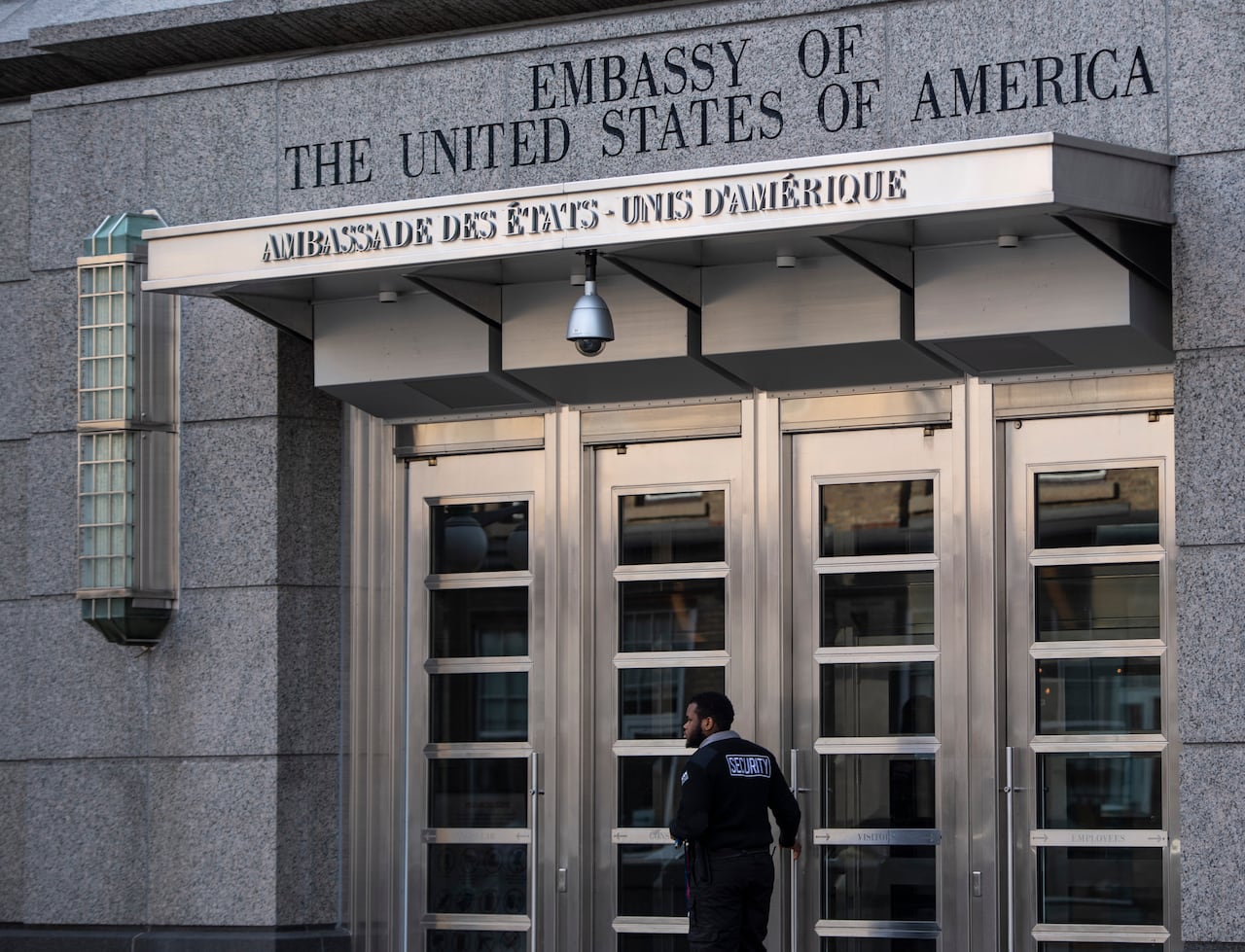 A security guard works outside the Embassy of the United States of America in Ottawa on Nov. 7, 2020. ICE said its Homeland Security Investigations component operates out of this location and four consulates across Canada. (Justin Tang/The Canadian Press)
The ICE spokesperson said the agency also helps track and detain known and potential terrorists before they can carry out attacks against the United States and its allies.
According to the U.S. Embassy in Ottawa, HSI has supported several investigations in Canada, including a case from October where police laid 700 charges against 20 people after a law enforcement operation seized over 14 kilograms of drugs and 35 firearms in raids in Ottawa, Cornwall, Ont., and Akwesasne, Que.
ICE did not confirm how long it has been established in Canada.
Here’s what the U.S. agency can — and can’t — do north of the border:
Can ICE arrest people in Canada?
No. HSI special agents do not conduct operational activities in Canada, such as making arrests or executing search warrants, according to ICE.
Are agents armed?
No. ICE confirmed HSI agents do not carry firearms in Canada.
Calls for Canada to ‘ICE-out’
News of these ICE field offices spread quickly on social media over the past week, leading to calls for Canada to shut down ICE operations in the country.
In a letter to the prime minister last week, Edmonton Strathcona MP Heather McPherson called on Mark Carney to close ICE field offices in Canada until the “human rights crisis is resolved,” referring to the agency’s operations in the U.S.
“Canada has sovereign authority over who operates on our territory, and you must revoke ICE’s permission to maintain offices here,” said McPherson, who is currently running for the leadership of the federal NDP.
CBC News has reached out to the Prime Minister’s Office for a response to McPherson’s letter.
The U.S. Embassy in Ottawa addressed the outpouring of concern with a thread on its X account recounting a number of investigations HSI has supported north of the border, adding that its “work in Canada is about partnership, public safety, and upholding the law.”
“We remain committed to working with our Canadian counterparts to keep our communities safe.”
Mark Kersten, an assistant professor of human rights law at the University of the Fraser Valley and a consultant with the Wayamo Foundation, an international justice organization, said ICE’s recent fatal operations in Minnesota and Trump’s threats to Canadian sovereignty are critical to understanding how ICE in Canada could pose a potential public safety concern.
“In that context, I think people rightly deserve and want to know more about what experts have called a paramilitary of the Trump administration is doing in Canada,” he said.
“And whether in fact we should have any presence, regardless of what they’re doing, of an entity that is committing such horrible harms with impunity in America, again, at a time when our sovereignty is consistently being put to question by American authorities.”
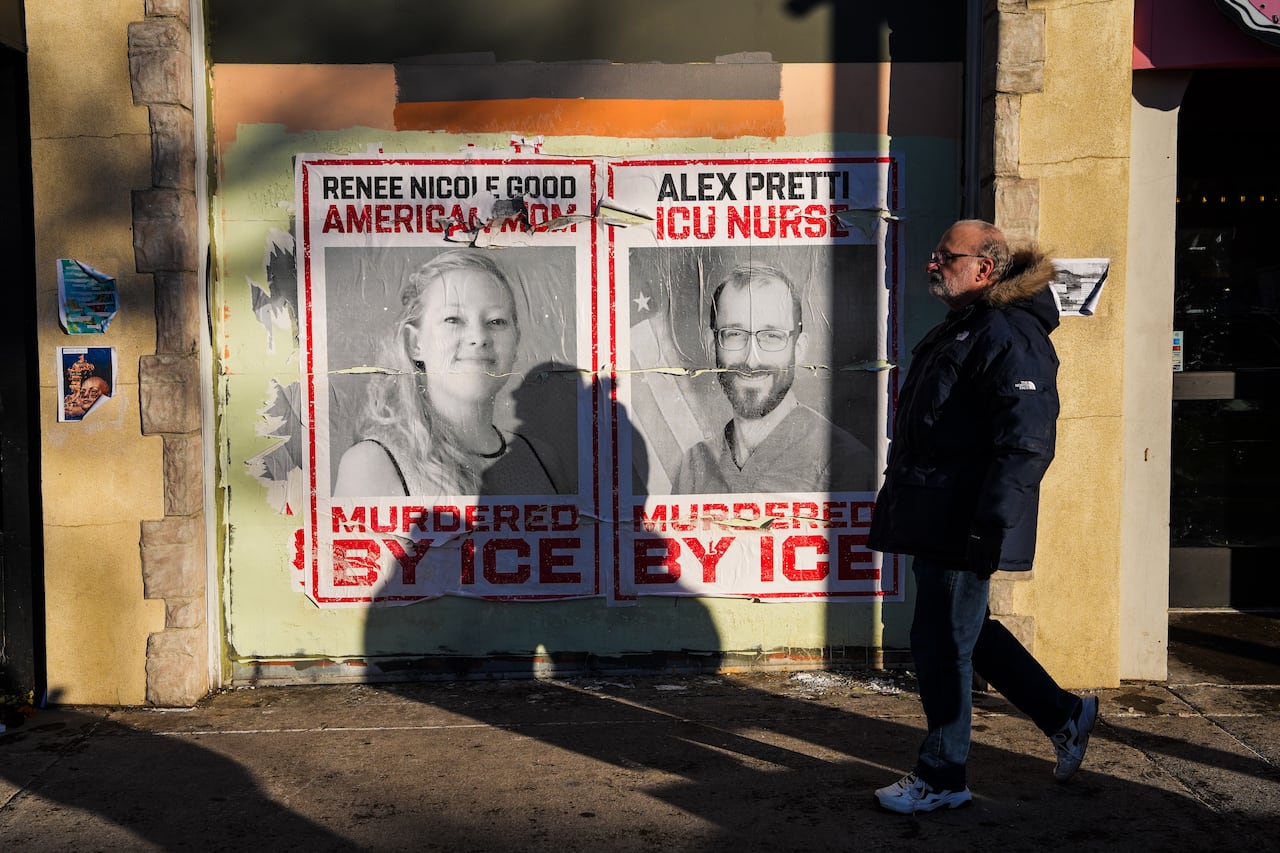 A man walks by posters of Renee Nicole Good and Alex Pretti, who were both fatally shot by federal agents, in Minneapolis, Saturday, Jan. 31, 2026. (Ryan Murphy/AP)
Renee Nicole Good was fatally shot by an ICE agent in Minnesota on Jan. 7. Then, just over a week ago, ICU nurse Alex Pretti was killed in another shooting by federal officers.
CBS News reported ICE was holding a record 73,000 people in detention in mid-January — an 84 per cent increase since U.S. President Donald Trump took office last year.
LISTEN | What happens when people are detained by ICE?
Front Burner29:13What happens in ICE detention?
“No one is saying that Canada, Canadian authorities and American authorities shouldn’t cooperate when it comes to human trafficking, when it comes to drug trafficking, when it comes to various types of transnational, trans-border criminal conduct. We absolutely need to co-operate on those issues,” Kersten said.
But he said that other agencies under the U.S. Department of Homeland Security, such as Customs and Border Protection, could potentially carry out HSI’s current duties without ICE needing to operate on Canadian soil.
In its statement, ICE said “HSI has a longstanding and productive relationship with Canada, one of America’s most essential partners.”