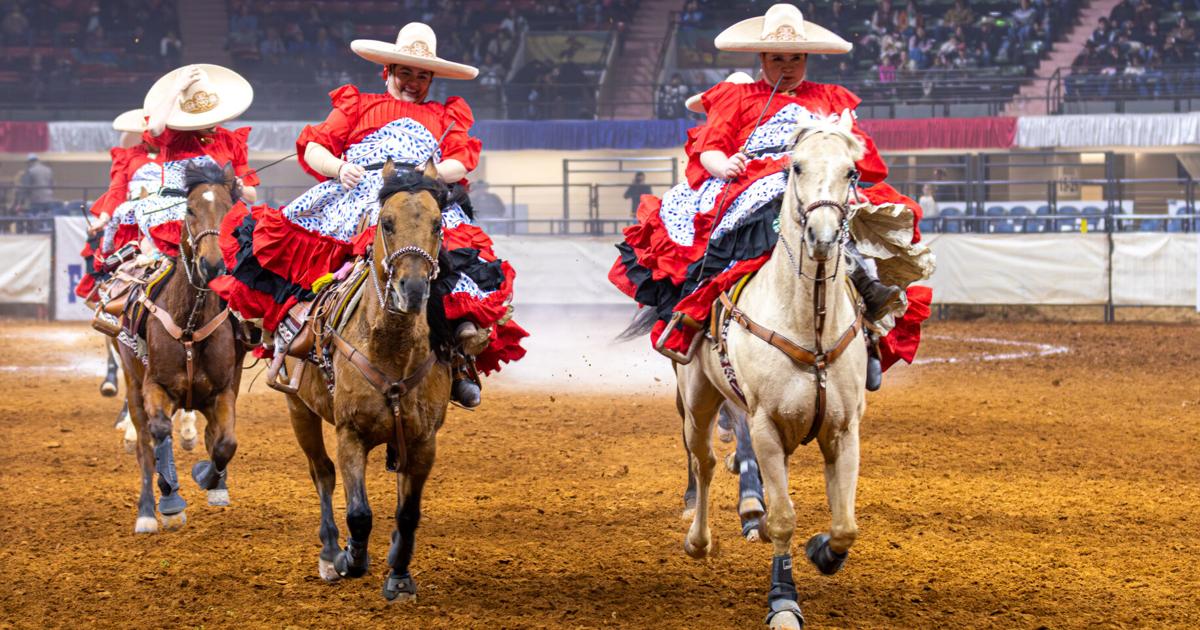

Riders from Team Lucero Lindo gallop toward the arena exit following their first team performance of the event. The escaramuza and charro cala competitions date back to the Mexican Revolution of 1910.
FORT WORTH – At the staging area in Will Rogers Coliseum, horses’ breaths were showing in the cold air. Their hooves planted in the red clay as they galloped along in circles. Girls of all ages rode sidesaddle, attempting to keep their horses warmed up.
The girls wore colorful dresses of pink, red and purple. The horses donned custom saddles of similar uniqueness. The event called for extravagance, but it also called for precision. A oneness between not only the rider and their horse, but with their teammates too.
On Sunday, at the Fort Worth Stock Show and Rodeo the Texas Invitational Escaramuza Competition took place. Teams of girls from across the state competed for scholarships, as well as stock show glory.
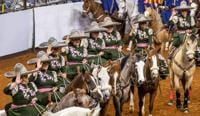
Riders from Team Agua Santa from Austin, Texas, salute the crowd while mounted during the opening. The women, dressed in matching green charra outfits and grey sombreros, ride in a tight formation across the arena dirt.
Escaramuza competitions date back to the Mexican Revolution of 1910, according to the Fort Worth Stock Show and Rodeo website. Teams of eight women riding horses sidesaddle perform synchronized maneuvers that call for concentration and perfect timing from each team.
Escaramuza coordinator Hilda Garcia described the competition like synchronized swimming, but on horses.
The competition featured two judges from Mexico that assessed each team’s routine. Garcia said each routine consists of 12 exercises and a routine starts with 304 points, with the chance of additional points or deductions in each exercise.
The riders wore traditional dresses, stemming from the history of the Mexican Revolution.
“It’s very traditional, handmade,” Garcia said. “Everybody has to wear the same dress.”
She said she gets emotional thinking about the competition, with the girls representing Mexican culture and community in a historic arena.
“We love to share who we are and what we do and it’s part of the rodeo, it’s the Mexican Rodeo,” Garcia said. “It’s a part of our community and why not share it and work together as a community?”
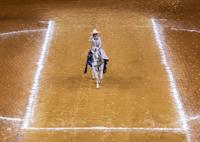
Sofia Rico, the national queen of the Federación Mexicana, opens the Texas Invitational Escaramuza and Charro Cala competition Feb. 1 at Will Rogers Will Rogers Memorial Center. She stood alone for a moment and smiled as the audience grew loud.
Jasmin Velazquez competed for the Lucero Lindo, a Dallas-based escaramuza team. While some girls start riding and preparing for escaramuza as early as four years old, Velasquez is relatively new at it. She said she didn’t start competing because of a family tradition, but because her dad owned a horse.
“I’ve been riding for two years,” Velazquez said.
The Lucero Lindo team rehearses its shows all year long in preparation of contests like the stock show’s.
Velazquez said she was grateful that her team was one out of 18 chosen to compete at the show.
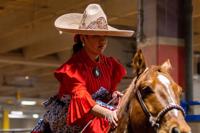
Jasmin Velazquez, riding her horse, Cantador, competed in the Texas invitational escaramuza competition at the Fort Worth Stock Show and Rodeo Feb. 1 at Will Rogers Memorial Center. Velazquez is from Quiland, and has been riding for two years.
Liliana Perez rode for Dinastia Charra, out of Alvarado, Texas, with her horse Machete. Perez said she and her team had been competing in the competition for about four years.
She said the team begins practicing around three to four months before the competition with practice twice a week. As the competition gets closer, the number of practices increases.
“It’s pretty cool that all the girls come together and unite,” Perez said. “At the end of the day after stepping out of the arena, we all come together and just celebrate together.”
Fort Worth resident Sebastian Mendoza, 22, said he came to the event because he liked the culture. Being hispanic himself, Mendoza said it interests him.
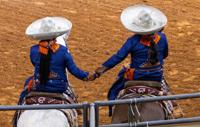
Laura Escobedo, 35, and her sister, Alexis Escobedo, 27, hold hands as they represent their team, Villa de Guadalupe, during the escaramuza competition on February 1, 2026. Having started the team together eight years ago in Brownsville, the sisters bring decades of experience to the arena.
“It’s a blessing to see it here represented in the Will Rogers,” he said.
Mendoza said the routines the escaramuzas do are difficult and that all of the skill that the girls were showing while going full speed was amazing.
At the end, he was proud that his culture was at center stage.
“It shows where rodeo came from, where it started and where they get ideas from for the American rodeo,” Mendoza said.
@wall035203