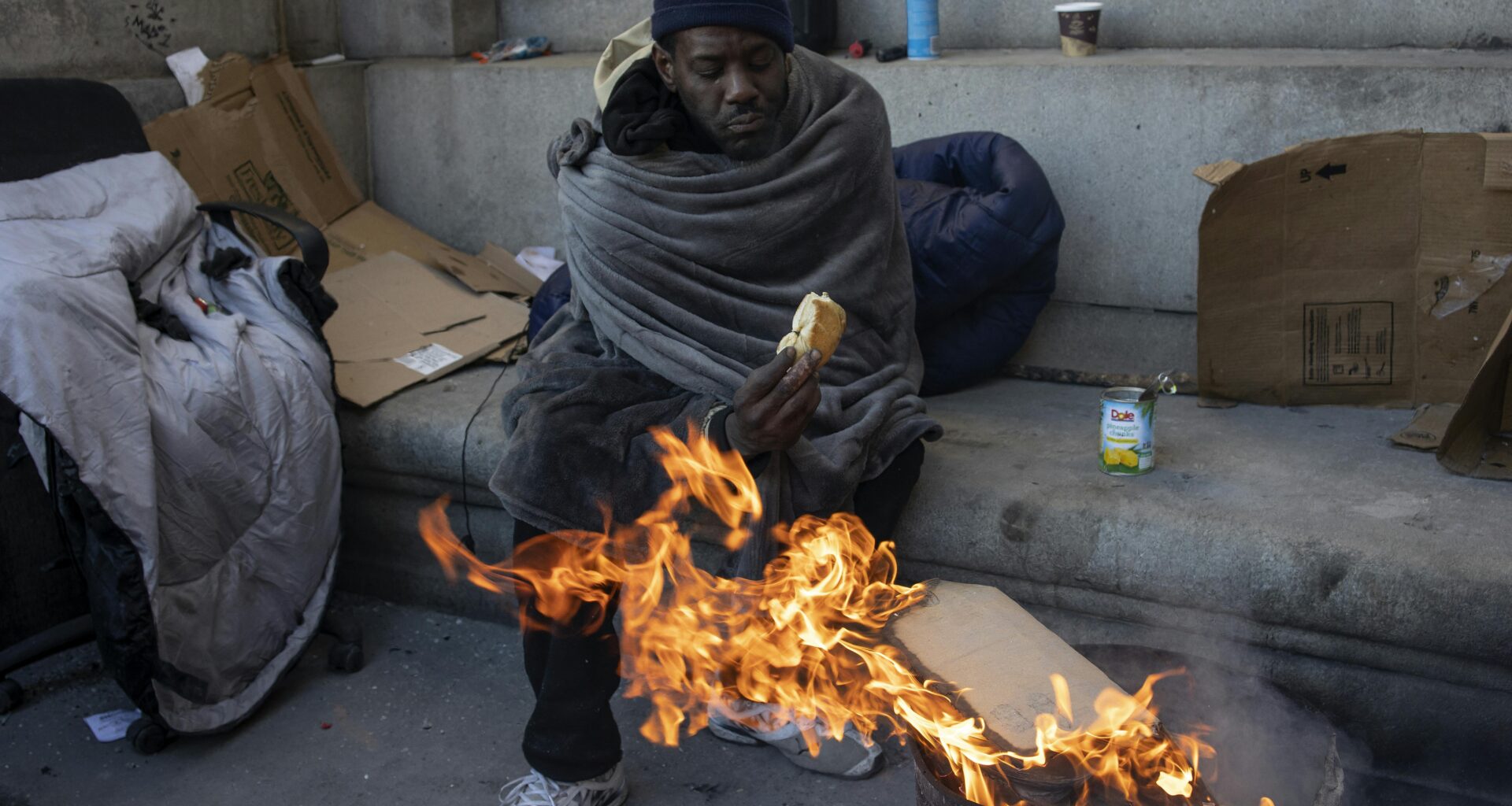
New York is enduring its coldest stretch in years, with temperatures set to plunge again this coming weekend. On Wednesday, Mayor Zohran Mamdani reported that 17 people have died outdoors during the freeze, including three from overdoses and one from unknown causes. (To compare these death totals to those in previous years, see here.) He said the City has placed more than 1,100 people in shelter, opened over 100 new low-barrier Safe Haven beds in Lower Manhattan and involuntarily removed 20 people from the streets.
Those numbers prompt obvious questions. Is 20 involuntary removals a lot or a little? What does involuntary removal actually mean, and who has the authority to do it? Why can’t the City simply bring everyone inside when temperatures turn deadly? And what, if any, is the role of Mamdani’s approach to homeless encampments?
The answers are more complicated than most people realize.
As a general matter, what legal authority does the City have to remove someone from a public place against their will?
Two sections of the state’s Mental Hygiene Law govern the great bulk of involuntary removal from sidewalks, parks and the like. Section 9.41 authorizes police officers to make the call. Section 9.58 extends that authority to specially trained and certified clinicians. In both cases, involuntary removal means one thing only: transport to a hospital for psychiatric evaluation. A psychiatrist then has up to 72 hours to determine whether the person should be admitted to inpatient care.
Separate and apart from this, there’s authority to uproot homeless encampments — which we’ll get to in a bit.
What has to be true before someone can be removed involuntarily?
Two boxes must be checked for removals under the Mental Hygiene Law. First, the person must appear to be mentally ill — showing symptoms like incoherence, delusions, hallucinations or catatonia. This isn’t a clinical diagnosis; that comes later. Second, the person must be engaging in conduct likely to result in serious physical harm to themselves or others.
Who actually performs these removals?
Police are involved in 100% of involuntary removals — because by definition, force is required. The only question is who makes the decision to involuntarily remove an individual. Monthly involuntary transports averaged 652 in 2024 and 745 in 2025 (through October, reflecting the latest data available).
Even when it’s a clinician who has made the call to involuntarily transport an individual to the hospital, cops still do the physical work of getting the person onto the ambulance. No one expects nurses or social workers to physically compel someone who refuses to go. Involuntary removal, by definition, requires police involvement.
What changes when the temperature drops?
The involuntary removal criteria remain the same. But extreme cold changes how those criteria apply in practice.
At 32 degrees, someone who appears well-bundled may not meet the threshold for danger to self. At 10 degrees, the calculus shifts dramatically. Refusing all efforts to come inside and insisting on sleeping outdoors in single-digit temperatures demonstrates both an extreme lack of awareness of danger and exposure to objectively life-threatening conditions. The refusal itself can constitute the conduct likely to result in serious harm because the person is in serious danger from the cold.
Where do people go after an involuntary removal?
People are brought to hospitals. There’s no such thing as involuntary removal to a shelter or warming center — those facilities aren’t locked and can’t by law hold anyone against their will. So for those who aren’t thought to be mentally ill and a danger to themselves or others, voluntary acceptance of shelter remains the goal. Safe Haven or stabilization beds — there are about 4,000 of these low-barrier-to-entry shelters, with fewer rules than traditional shelters — and shelters with single rooms are typically the most effective sell for people thinking clearly enough to weigh their options.
When someone is brought to the hospital, what happens?
The person can be held for up to 72 hours while psychiatrists determine whether they meet criteria for involuntary admission to the inpatient unit. Admission (sometimes initially on an “emergency” 15-day basis under Section 9.39, and sometimes for longer under Section 9.27) requires a more definitive finding of mental illness than was required for removal, plus affirmation of the finding of danger to self or others, by a psychiatrist (under 9.39) or by two psychiatrists or one psychiatrist and a psychiatric nurse practitioner (under 9.27).
Many people never make it past the psychiatric emergency room. This is often because behavior that on the street appeared to be psychosis turns out to be the temporary effect of substances the person ingested. Once those effects wear off, if there’s no apparent underlying mental illness, there is no basis to hold the person.
Mayor Mamdani wants to limit police engagement with seriously mentally ill individuals and has said he believes in involuntary commitment only as a “last resort.” It’s as yet unclear how this posture will become policy and if so, how that might affect the determination of who gets brought into hospitals.
The Mamdani administration reported 20 involuntary removals during the recent cold snap. Is that a meaningful number?
Context matters. The City isn’t canvassing every block looking for unsheltered people to bring in. Instead, the approach is more targeted: Outreach teams run by nonprofit groups focus on people who are known to be unhoused, typically at familiar locations, while EMS and police respond to reports from the public received via 911 and 311. Most people encountered during extreme cold do agree to come inside.
A more aggressive street-by-street canvassing operation would likely yield far more — but would require police manpower the City has not deployed for this purpose.
Is ideological opposition to involuntary removal resulting in leaving people on the street during dangerously cold conditions?
The ideological divide over involuntary removal is real. But that divide concerns cases where harm is not imminent — situations where mental illness is causing deterioration but has not yet created an emergency.
During extreme cold, imminence is not in question. Someone refusing to come inside at 10 degrees faces obvious, immediate, life-threatening danger. The limiting factor is not ideology about when to intervene — it is operational capacity to find everyone who needs help.
Does the Mamdani administration believe involuntary removals can happen without police?
The preference for non-police responses to mental health calls contemplates situations that will not result in involuntary removal — encounters where a skilled clinician can build rapport and convince someone to come inside voluntarily. When force is necessary, police are necessary. That is definitional, and no serious participant in this debate believes otherwise.
Mamdani has said none of those who have frozen to death have been in encampments. What exactly is an “encampment,” and how does the term matter in this context?
An encampment is a structure — makeshift or otherwise — that someone builds around themselves on the street. A sleeping bag does not qualify. A shopping cart full of belongings does not qualify. The functional test under city regulations: If someone has more possessions than they can physically carry away, they have established an encampment. They have permanently affixed themselves to that location, demonstrating intent to make it a home. The definition is not based on group size.
Many of the people who’ve died outside in this extreme cold were likely unhoused and could well have been mentally unstable. The question of whether they were in an encampment just speaks to whether they tried to claim a particular swath of public space as their “home.” According to the City, that wasn’t the case with these deaths.
What was the encampment policy under Adams?
Zero tolerance. Any reported encampment triggered a protocol: approximately 10 days’ notice, followed by a scheduled sweep. On the designated date, a team including NYPD, Sanitation and DHS outreach workers would arrive. The structure would be dismantled and removed. Outreach workers and other staffers would offer shelter at that moment, typically while carting an individual’s possessions away.
What’s changing under Mamdani?
The dismantling stops. Outreach continues — teams will still engage with people in encampments and try to connect them with services and housing. But without a scheduled sweep, there’s no definitive end date forcing the issue. Some who work closely with the homeless say encampment sweeps and offers of service can and should complement one another.
What should you do if you see a person on the street who seems unable to care for themselves during a period of extreme cold?
When a life might be in danger, the best course of action is to call 911. During Code Blue, calls to 311 about vulnerable individuals on the streets are supposed to get routed to 911. Then, if the system works as designed, both police and EMS respond. The officer can make an involuntary removal determination on the spot if the person refuses to come inside.
What about someone who seems mentally unstable but isn’t facing weather danger — agitated, incoherent?
Verbal threats or menacing behavior warrant a 911 call. Someone sitting and talking to themselves should trigger a call to 311. Response times will be slower, but someone will come.