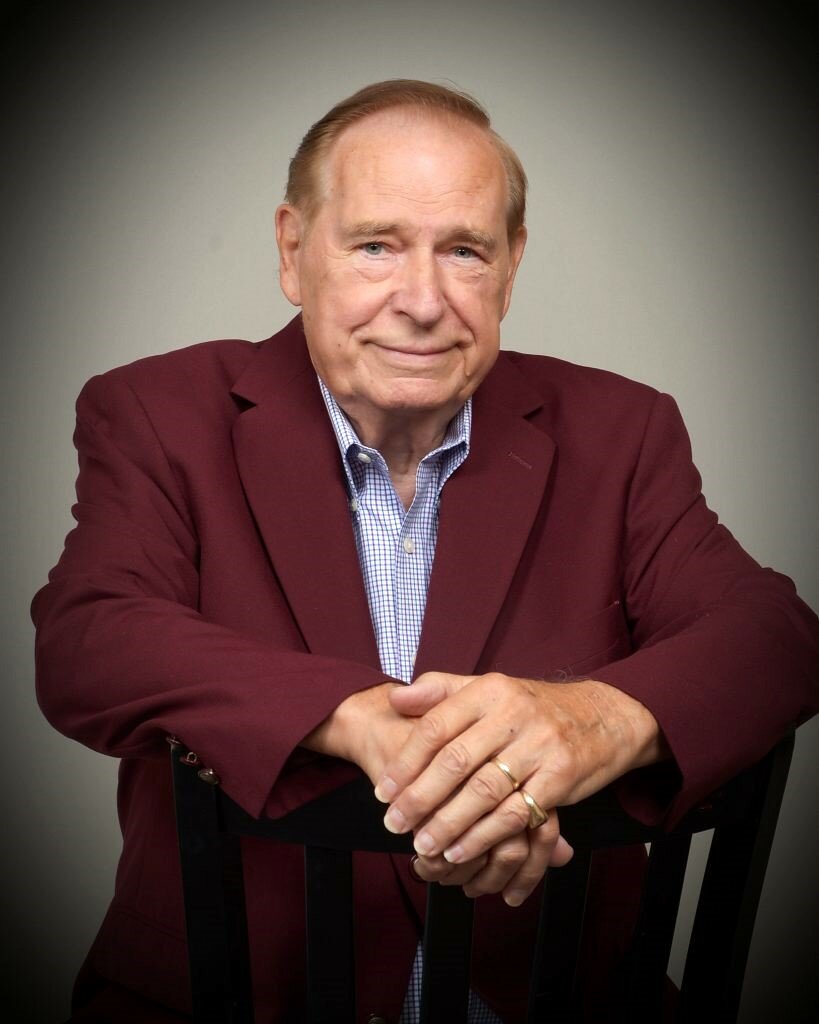
TR Harry
Submitted photo/TR Harry
By TR Harry | Scottsdale
OPINION — Among other things, it’s been a rollercoaster year for U.S. trade policy. Citing authority in the 1977 International Economic Emergency Powers Act — IEEPA — President Trump launched a barrage of new tariffs in 2025, plunging the U.S. into trade (and other) disputes with nearly every country in the world.
The president also turned to tariffs amid personal grudges, or in response to political critics. The whiplash of on-again, off-again duties, and responding retaliation, fueled widespread uncertainty for business and consumers alike, all while households continue to face rising prices.
The Trump administration is unilaterally redefining America’s role in the world. Trump’s tariffs don’t just raise costs, they challenge the very norms of relative peace and prosperity, world-wide, of American leadership promoting globalization.
If sustained — legality of Trump’s actions is under review by the Supreme Court — they could mark a pivot from a world of open rules-based trade toward one of fragmented blocks. In historical terms this resembles a shift from the liberal order of the late 20th century back to the protectionist cycles of the early 20th century.
Why? What is dictating this abrupt reversal in direction, after almost a century of apparent success?
The shift is the result of deep structural forces building for decades. Over time, globalization’s economic benefits became unevenly distributed. Geopolitical rivalry returned. Supply chains proved fragile, and domestic politics drifted toward protection.
After nearly a century of relative success, the liberal trading order is being challenged because the world that sustained it, economically, politically and strategically, has fundamentally changed.
Trump was not the cause of it. It just happened to come to a head as he assumed U.S. leadership, riding a wave of popular discontent with government. One might argue he was, questionably, the right or the wrong personality at the right time for the challenges ahead. Fate happens.
Many argue that U.S. trade policy from the 1970s through the 1990s did not adequately protect domestic workers or communities exposed to global competition. While globalization delivered broad economic benefits, its costs were concentrated and often ignored. This imbalance contributed to widening income inequality and helped create the political conditions in which modern populism emerged. By the 1990s, the U.S. had ample evidence that free trade policies were placing growing pressure on its industrial workforce, yet policymakers failed to respond in a timely or adequate way.
Earlier legislation — the 1962 Trade Expansion Act, the 1974 Trade Act and the 1977 International Emergency Economic Powers Act — shows that Washington understood globalization would potentially create both winners and losers.
Nonetheless, the safeguards for displaced workers were limited, underfunded and often ineffective. As globalization accelerated, the benefits flowed broadly but thinly, while the costs were concentrated in specific regions and industries, contributing to widening inequality and a sense that economic change favored elites over working Americans. In retrospect, this is a clear example of Washington’s failure to govern for at least most of its people all the time.
The post -Cold War assumption that open markets would naturally reinforce stability began to erode as new competitors (most prominently China) emerged, and geopolitical rivalry (most prominently China) returned to the foreground. In this environment, governments around the world — not only in the U.S. — began to rethink the wisdom of deep economic interdependence.
Enter “The Donald.”
Donald Trump is an idiosyncratic political actor holding the world’s most powerful job. He defies norms and protocols as a matter of personal pride. As president, he doesn’t believe he’s constrained by prior U.S. obligations or long-standing commitments.
He views policies as transactional— every issue or problem represents an opportunity for a deal. Short-term transactions rather than long-term relationships are his preferred operating mode.
In its first year in office his administration, Trump 2.0 has turned world politics upside down. On issues including trade, alliances, foreign aid, climate change, international law, human rights and cooperation among liberal democracies, President Trump, under the banner of America First, has made sharp breaks with the long post war tradition of American foreign policy. His view is that from here on, access to the American market is a privilege, not a right, and other countries are going to have to pay for that privilege.
He has repeatedly threatened to raise tariffs to levels not seen since the 1930s, questioned the value of America’s alliances and raised doubts about whether we would honor NATO security guarantees. Trump has pulled the US out of some 60 United Nations agencies, including the World Health Organization and the Paris Climate Agreement; he has shut down the U.S. Agency for International Development, eliminating most of its overseas programs.
Trump’s foreign policy is so disorienting, and controversial. Why? Because it has turned the U.S. into a revisionist great power, putting a wrecking ball to basic norms and institutions of global order.
For 80 years, the U.S. built and presided over a successful international order, a system that has been given various names such as the Free World, Pax Americana and others.
By exercising leadership through an array of institutions and partnerships, the U.S. made its power more legitimate and user-friendly. However, with Trump 2.0, this post- war era appears to be over. What makes this revisionist shift in American foreign policy so surprising is that great powers do not typically seek to destroy their own international order.
Trump is clearly a change-maker, but after one year of his second administration, people are asking to what end and for what (personal?) destination? Others pose the question: Are we better off with such a leader where one might describe his public conduct in terms of outsized self-confidence, sweeping claims of personal indispensability, a personal desire to dominate and a tendency to frame directing — setting — our foreign and domestic policies dictatorially rather than a more traditional, less personally oriented, rules supporting realist navigating the storm?
It’s hard to believe everyone else in the foreign policy marching band is out of step but Trump. Possibly, but the odds/probabilities seem unlikely. So, what’s ahead for us spectators watching from the curb? And why doesn’t Congress have a float in this parade?
Remember “checks and balances?” The era that shaped America’s premium place in the world during our lifetimes is passing by. A suggestion: Remember this come the midterm elections later this year!
It’s your call, one way or the other.
TR Harry is the pen name of a Scottsdale-based author who writes primarily about politics and religion on his blog. Please submit comments at yourvalley.net/letters or email them to AzOpinions@inusua.org. We are committed to publishing a wide variety of reader opinions, as long as they meet our Civility Guidelines.
Keywords
trade policy,
International Economic Emergency Powers Act,
IEEPA,
Trump,
tariffs,
uncertainty,
globalization,
free trade,
open markets,
economic interdependence,
world politics,
foreign policy,
America First,
World Health Organization,
Paris Climate Agreement,
U.S. Agency for International Development,
international order,
midterm elections