
Skylines reveal how cities see themselves. Over the past two decades, the global race for height has intensified, shifting from North America to Asia and the Middle East. Today’s tallest towers are not isolated office blocks but dense vertical environments that combine hospitality, commerce, tourism, and residential life within single megastructures.
Architectural height, as defined by the Council on Tall Buildings and Urban Habitat (CTBUH), determines official rankings. This measurement includes permanent spires but excludes antennae and temporary additions.
10 Tallest Skyscrapers in the World
The following list ranks the ten tallest completed buildings in the world, presenting each as both an engineering achievement and an urban symbol.
 Photo- Bhavya Velani- Burj Khalifa View From the Palm, Dubai
1. Burj Khalifa – 828 meters
Completed in 2010, the Burj Khalifa remains the undisputed tallest building in the world at 828 meters. It transformed Dubai’s skyline and solidified the emirate’s global reputation for ambitious urban development. The tower anchors Downtown Dubai and attracts millions of visitors annually to its observation decks.
- Year completed: 2010
- Primary uses: Residential, hotel, office, observation
- Floors: 163
- Status: Tallest building globally
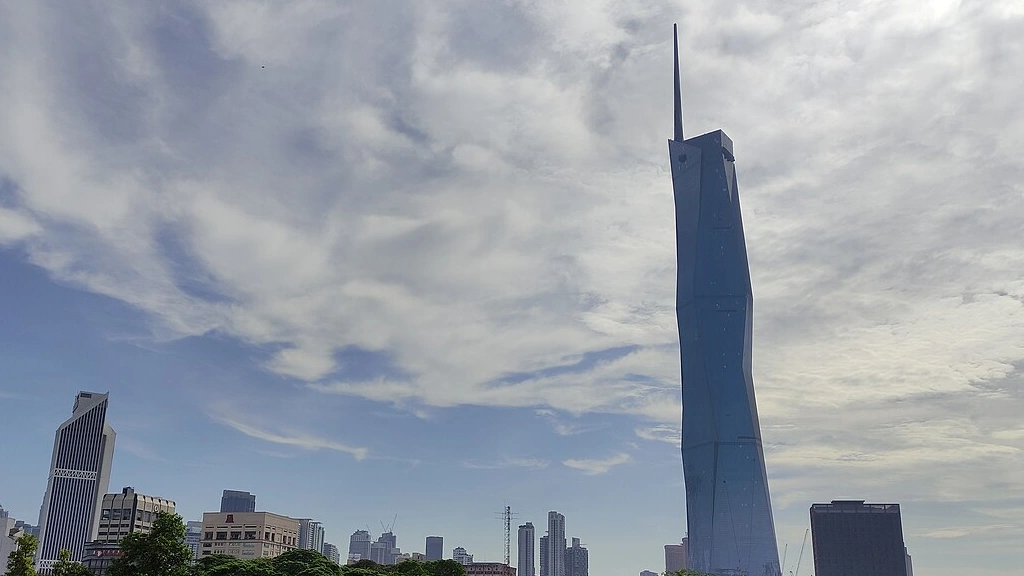 Photo: Sam, Wikimedia
https://commons.wikimedia.org/wiki/File:The_Merdeka_118_alongside_the_KL_Tower_on_its_right.jpg
2. Merdeka 118 – 679 meters
Merdeka 118 reshaped Kuala Lumpur’s skyline upon completion in 2023. Its angular, faceted façade reflects light dynamically and symbolizes Malaysia’s independence, from which it takes its name. The tower stands as Southeast Asia’s tallest structure.
- Year completed: 2023
- Primary uses: Office, hotel, retail, observation
- Regional rank: Tallest in Southeast Asia
- Design feature: Multi-faceted glass exterior
 Wedding Photo in Shanghai; Photo- Ted McGrath | Flickr
3. Shanghai Tower – 632 meters
Shanghai Tower rises 632 meters with a distinctive twisting form engineered to reduce wind loads. Its spiraling design enhances structural efficiency while lowering energy consumption.
The building functions as a vertical mixed-use district in the heart of Shanghai’s financial center.
- Year completed: 2015
- Primary uses: Office, hotel, retail, observation
- Notable feature: Aerodynamic twisting façade
- Sustainability focus: Energy-efficient systems
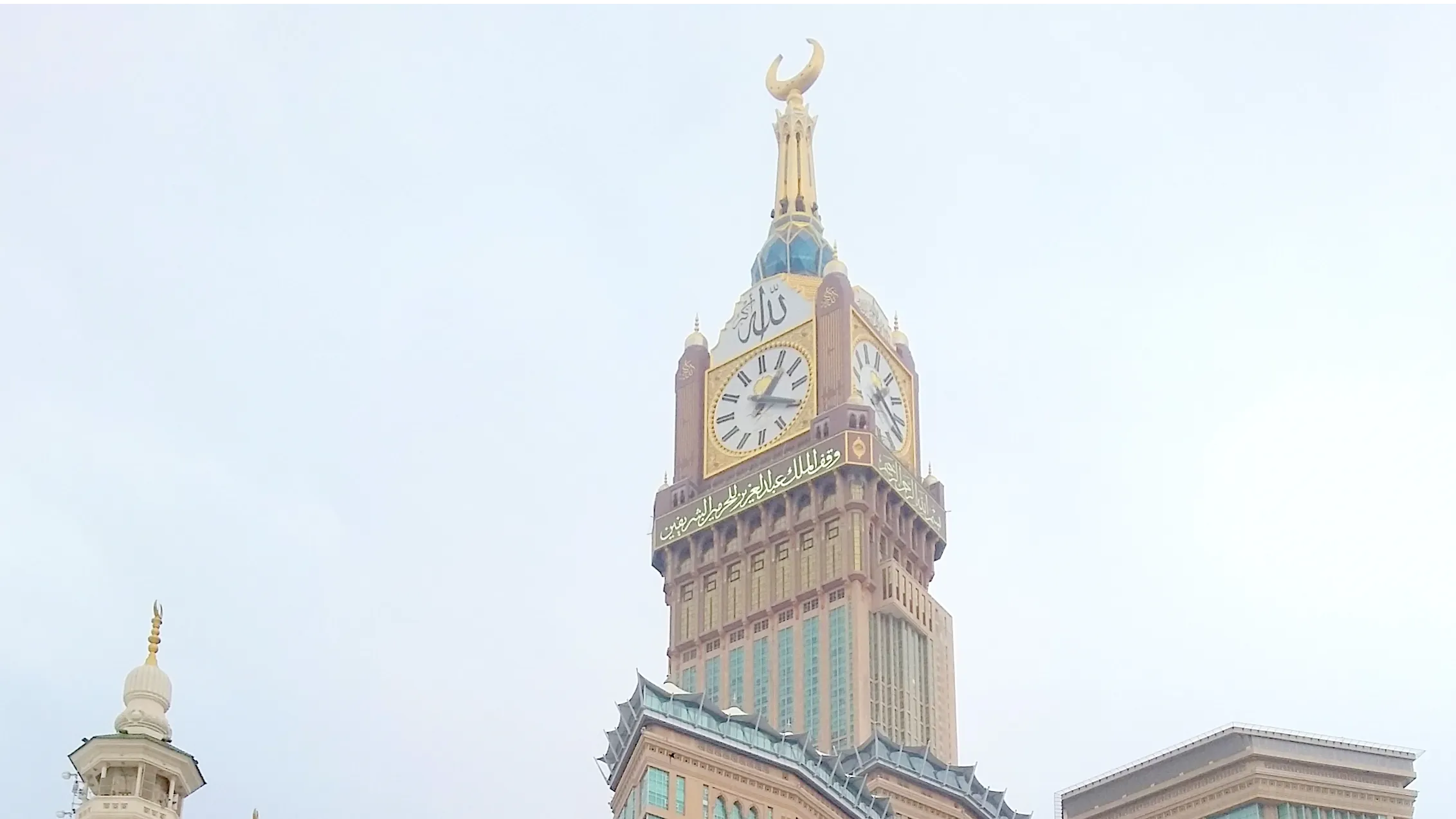 Photo: King Eliot, Wikimedia
https://en.wikipedia.org/wiki/File:Makkah_Clock_Tower.jpg
4. Makkah Royal Clock Tower – 601 meters
Standing adjacent to the Grand Mosque, the Makkah Royal Clock Tower merges spiritual importance with monumental height.
Its massive clock faces dominate the skyline and serve pilgrims visiting Islam’s holiest city. The tower forms part of a vast religious and hospitality complex.
- Year completed: 2012
- Primary uses: Hotel, prayer areas, retail
- Landmark feature: One of the world’s largest clock faces
- Cultural role: Serves Hajj pilgrims
 Photo: Dinkuk Chen, Wikimedia
https://commons.wikimedia.org/wiki/File:PING_AN_FINANCE_CENTER,_SHENZHEN_(14).jpg
5. Ping An Finance Center – 599 meters
Ping An Finance Center defines Shenzhen’s modern financial district. The tower reflects the city’s rapid rise from manufacturing base to global technology hub.
Its sleek vertical profile emphasizes corporate strength and urban growth.
- Year completed: 2017
- Primary use: Office
- Location: Shenzhen CBD
- Significance: Symbol of economic expansion
 Photo: kallerna, Wikimedia
https://commons.wikimedia.org/wiki/File:Lotte_World_morning_view_8.jpg
6. Lotte World Tower – 555 meters
Lotte World Tower tapers smoothly into the skyline of Seoul. Inspired by traditional Korean aesthetics, it blends cultural references with contemporary engineering.
The tower houses retail outlets, residences, offices, and one of the world’s highest observation decks.
- Year completed: 2017
- Primary uses: Mixed-use
- Observation deck: Among the highest globally
- Design influence: Korean art forms
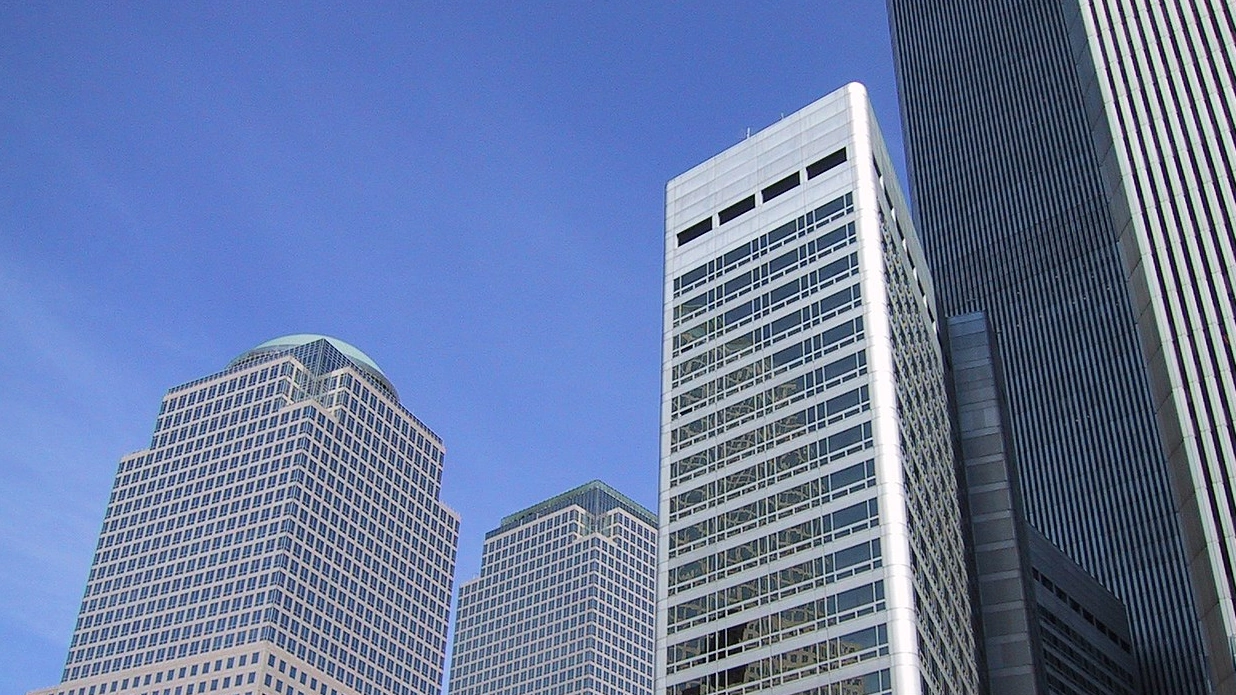 Photo: Julien Menichini, Wikimedia
https://commons.wikimedia.org/wiki/File:WFC2_WFC3_Marriott_World_Trade_Center_3_World_Trade_Center_2_September_2001.jpg
7. One World Trade Center – 541 meters
One World Trade Center stands at a symbolic 1,776 feet, referencing the year of American independence.
Built on the former World Trade Center site, it represents resilience and renewal. Its reflective façade integrates seamlessly into the Manhattan skyline.
- Year completed: 2014
- Primary use: Office
- Symbolic height: 1,776 feet
- Role: Memorial and commercial tower
 Photo: xiquinhosilva, Wikimedia
https://commons.wikimedia.org/wiki/File:Guangzhou_Twin_Towers.jpg
8. Guangzhou CTF Finance Centre – 530 meters
Guangzhou CTF Finance Centre forms part of a cluster of supertall buildings along the Pearl River. Designed for efficiency and speed, it features high-performance elevators and a dense mixed-use layout. The tower reinforces Guangzhou’s commercial prominence.
- Year completed: 2016
- Primary uses: Office, residential, hotel
- Engineering focus: High-speed vertical transport
- Urban role: Financial hub anchor
 Photo: xiquinhosilva, Wikimedia
https://commons.wikimedia.org/wiki/File:Heping_District_21798-Tianjin_(49063946472).jpg
9. Tianjin CTF Finance Centre – 530 meters
Equal in height to its Guangzhou counterpart, Tianjin CTF Finance Centre features a gently curved façade that improves aerodynamic stability.
The building supports Tianjin’s expanding financial sector and adds prominence to its skyline.
- Year completed: 2019
- Primary uses: Office, residential, hotel
- Structural design: Wind-resistant curvature
- Regional role: Economic centerpiece
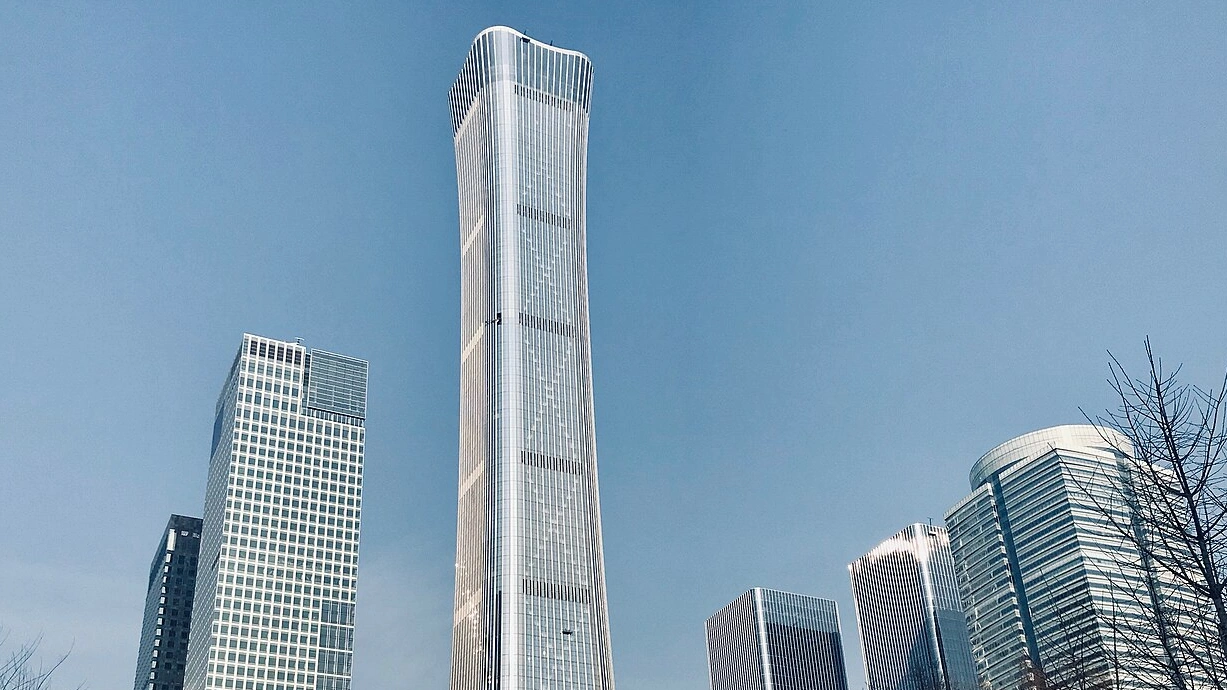 Photo: Bairuilong, Wikimedia
https://commons.wikimedia.org/wiki/File:China_Zun_tillsammans_med_Samsung_China_Headquarters._(januari_2019).jpg
10. CITIC Tower – 528 meters
CITIC Tower, often called “China Zun,” draws inspiration from an ancient ceremonial vessel. Its distinctive shape widens at the base and crown, creating a strong architectural identity. The tower stands as Beijing’s tallest completed building.
- Year completed: 2018
- Primary use: Office
- Nickname: China Zun
- Significance: Tallest building in Beijing
 Petronas Twin Tower, Kuala Lumpur; Photo- Pexels
Modern Skyscraper Design Trends
The world’s tallest buildings are no longer just about height—they are showcases of cutting-edge engineering, sustainability, and mixed-use functionality.
Architects and developers increasingly design supertall towers to integrate office space, luxury residences, hotels, retail, and observation decks into single vertical ecosystems.
Recent trends emphasize aerodynamic shapes, high-performance glass façades, and energy-efficient mechanical systems. Twisting or tapered forms reduce wind loads, while tuned mass dampers and reinforced concrete allow structures to rise higher safely.
These innovations make skyscrapers not just taller but more functional, comfortable, and environmentally responsible.
 Photo: flydubai
Engineering the Future
These ten skyscrapers illustrate how architectural ambition has shifted eastward while maintaining a global footprint.
Data: CN Traveler
Each building combines engineering innovation with cultural meaning, reinforcing its city’s identity on the world stage.
A clear geographic pattern emerges from this ranking. Asia accounts for the majority of the world’s tallest buildings, with China alone hosting several entries in the top ten.
The Middle East retains the top position through Dubai, while North America appears with a single representative in New York. Europe, notably, does not feature among the top ten tallest completed structures.
Modern supertalls no longer function as single-purpose office blocks. Developers now integrate hotels, residences, observation decks, and retail into one continuous vertical environment.
This mixed-use strategy improves economic viability and ensures constant activity throughout the day. It also transforms skyscrapers into tourist attractions, generating revenue beyond traditional leasing models.
 Photo: By Closenoble – Own work, CC BY-SA 3.0, https://commons.wikimedia.org/w/index.php?curid=12115068
Bottom Line
Advancements in materials and structural systems continue to push boundaries. Wind-tunnel testing, smart façades, and energy-efficient mechanical systems make extreme height more practical and sustainable.
While new megatall projects remain under construction worldwide, the buildings on this list define the current ceiling of architectural achievement.
Each structure represents a city’s ambition, technical expertise, and global positioning in the 21st century.
As new megatall projects advance, these completed giants continue to define the upper limits of human-built height.
Stay tuned with us. Further, follow us on social media for the latest updates.
Join us on Telegram Group for the Latest Aviation Updates. Subsequently, follow us on Google News