
Contentious speed limits proposed for e-bikes and e-scooters in Queensland should be watered down, a parliamentary inquiry has recommended.
The proposed blanket 10km/h speed limit on footpaths should instead only apply in high pedestrian zones and not on shared paths, the committee said.
Other notable changes, including a requirement that all riders hold at least a learner’s licence, and that under-16s be banned from using devices, have been given the green light.
However, the committee has proposed the bill is amended to ensure people who can not hold a licence but can safely ride an e-mobility device can continue to do so.
The state development, infrastructure and works committee tasked with considering sweeping reforms to e-mobility use in Queensland received more than 3,000 submissions.
It is the same committee that conducted the inquiry into e-mobility safety in Queensland and made 28 recommendations to Transport Minister Brent Mickelberg in March.

Riders protested against the proposed laws on Thursday. (ABC News: Alex Brewster)
The committee recommended amendments that would apply a 10km/h speed limit to all footpaths in high pedestrian areas, with a clear definition of where this applies.
It has also recommended the Department of Transport and Main Roads consider a speed limit of 10km/h on other footpaths when riders are travelling within 10 metres of a pedestrian.
The committee recommended the 10km/h limit not apply to shared paths unless otherwise signed, and that the department consider a limit of 15km/h within 10 metres of a pedestrian on shared paths.
More than 100 e-bike riders and regular cyclists took to Brisbane’s Story Bridge on Thursday night to show their opposition to the proposed laws, with the 10km/h limit of particular concern.
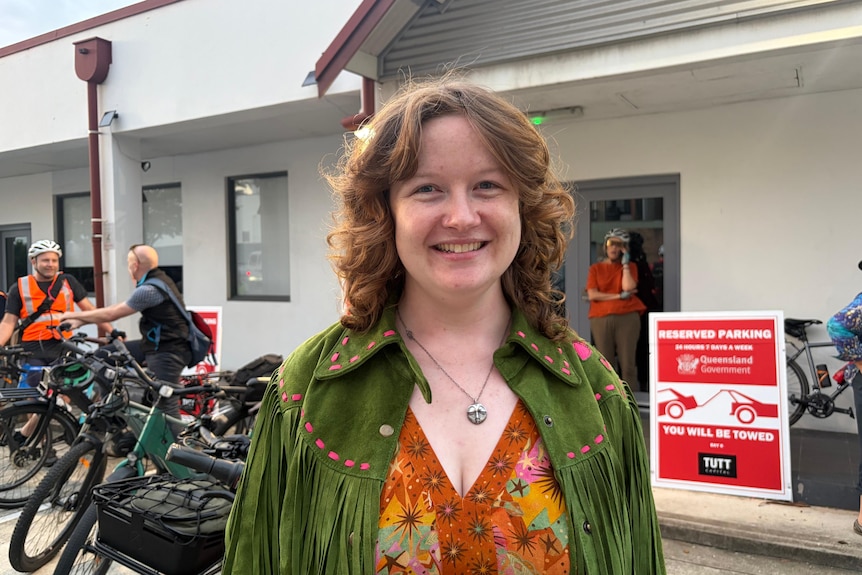
Kathryn Good says limiting e-mobility devices to 10km/h on footpaths would extend commute times. (ABC News: Alex Brewster)
Organiser Kathryn Good said it was their last chance to rail against an “impractical and silly law” ahead of the committee report release.
“It’s going to turn a 10-minute commute into a 40-minute commute for most people,” she said of the 10km/h proposal.
“The fight is not over once the committee report is released because it’s still got to go through parliament and that’s still a big unknown.”

A sign at a protest ride on Thursday against the proposed e-mobility laws. (ABC News: Alex Brewster)
Opposition Leader Steven Miles criticised the government for refusing to listen to community concerns.
“It looks to me like the LNP members of the committee have realised how badly they stuffed it up. It’s pretty incredible given they spent 12 months working on this legislation,” he said.
“They’d already received evidence that forcing people to ride at less than 10 kilometres an hour would make their bike unstable and be dangerous and unsafe, yet they went ahead and drafted laws that said that and now it looks like they’ve had to acknowledge they were wrong.”
Labor has called for the bill to be abandoned, with significant work needed for it to be fit for purpose.
Licence exemption for people with disabilities recommended
Committee chair Jim McDonald said in the report the committee stood by its recommendation that riders hold at least a learner’s licence despite considerable discussion.
“This requirement remains important due to medical evidence indicating a higher risk among those under 16 years of age and who may not yet have the cognitive or motor skills required to safely operate e-mobility devices in dynamic environments,” he said.
Immediate past president of Australian Medical Association Queensland, Dr Maria Boulton, agreed with that minors were at higher risk of harm.
“It’s like driving a car or driving a boat and that’s why there are age restrictions, particularly with these devices that can go quite fast,” she said.
“Last year we saw over 6,300 injuries come through the emergency departments, with people with horrific injuries.
“Sadly we’ve also seen deaths, and deaths in children, and that’s what has us concerned.”

The proposed legislation would make it illegal for people who are not medically fit to drive to ride an e-bike. (ABC News: Kenji Sato)
Chief executive of Queensland Advocacy for Inclusion, Matilda Alexander, who raised the licence mandate as a major concern for people with disabilities, said the committee’s suggested amendment was an improvement.
“There is still work to be done in terms of making sure that people with disabilities can access the exemptions and know how their disability will impact on this vague criteria of safely being able to ride a bike or another mobility device,” she said.
RACQ’s general manager of advocacy Joshua Cooney said the committee’s recommendations showed a better balance had been struck and common sense had been “brought back into the equation”.
“Will this report make everyone happy? Probably not. But it is a step forward and it is better than the bill that is in parliament right now,” he said.

Joshua Cooney says he believes the government has struck the right balance with its recommendations. (ABC News: Joshua Cooney)
Mr Cooney said the RACQ had raised concerns over the proposed 10km/h speed limit on shared paths and preventing people who could not hold a licence from riding.
“The 10km/h speed limit on shared paths was always going to be a tricky proposition because it threatened to push riders on to already busy roads and it threatened to produce adverse outcomes in that regard,” he said.
‘Overpowered’ electric motorbikes could still be sold under proposed e-bike laws
The committee also said proposed changes should be broadened so as to allow for bikes that were compliant at the time of manufacture to remain legal.
Bicycle Queensland said in its submission the changes as initially proposed would have resulted in more than 90 per cent of the 230,000 legal e-bikes sold in the state since 2017 becoming non-compliant.
Among the committee’s nine recommendations were the establishment of a scheme to certify and label currently compliant e-bikes at minimal cost, and an exemption for e-mobility devices that do not meet the current standard but are limited to 25km/h and 250 watts, such as e-trikes, from certification requirements.
Mr Mickelberg has previously said the proposed laws would come into effect from July 1, subject to the parliamentary process, with a six-month transition period.
The committee has recommended the government reviews the proposed laws after 12 months.
In statement, Mr Mickelberg said the state government would consider the recommendations “which aim to enhance delivery of our nation leading reforms”.
Parliament returns next week, when it is expected the legislation will be debated.