Villa Chardonnay Horses With Wings, a sprawling animal sanctuary tucked into the Cuyamaca Mountains in San Diego County, billed itself for years as a place where unwanted animals could find love and a second chance at life.
A video tour of the sanctuary posted in 2023 showed horses grazing and galloping across a vast expanse of the 40-acre property in Julian and a cattery where felines lounged in cat condos.
But rescue organizations that seized hundreds of domestic and farm animals from the property this month painted a different picture of the operation — one where animals suffered from severe neglect, malnutrition, emaciation, untreated open wounds and contagious infections.
“It truly is appalling,” Dr. Gary Weitzman, president and CEO of the San Diego Humane Society, said in a statement. “There is no question at all about the neglect, at the very least, that occurred out there.”
The undertaking in San Diego County is just one of several large-scale rescues that have occurred across Southern California this year, raising alarms among advocates about a lack of oversight and funding constraints for organizations that take in so many animals.
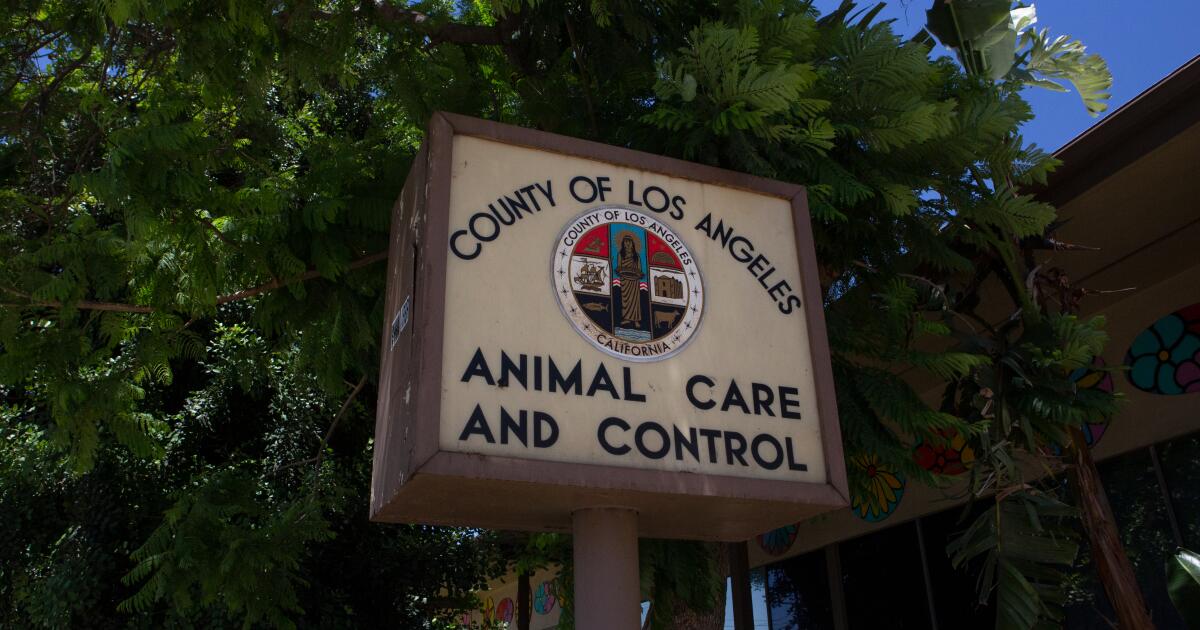
In March, the Los Angeles Department of Animal Care and Control recovered hundreds of dogs and cats from a home in a rural part of Lake Hughes operating as an animal rescue. The operation — one of the largest in county history — was prompted by years of complaints from neighbors over the smell and noise at the property.
About a month later, officials in Riverside County rescued 480 ducks from a home in Anza that authorities say was operating as a sanctuary.
Though there are cases of individuals starting animal sanctuaries or rescues with the hopes of lining their own pockets with donations, most are often founded by well-intentioned animal lovers, said Bradley Miller, the national director of the Humane Farming Assn.
“They’re well-meaning folks that just want to be around animals, and they figure, hey, we’ll have an animal sanctuary,” he said. “And they quickly realize that’s no easy task. Funding is difficult, and a lot of times small operators don’t know what they’re getting into.”
The rising cost of food and veterinary services, which can put even individual pet owners in difficult situations, creates an even bigger burden on sanctuaries and rescues caring for so many animals.
At times, operators “go into a state of denial where they’re just hanging on to these animals and, even though there’s widespread neglect, it’s not necessarily intentional cruelty, their lives just fall apart, and the animals suffer,” Miller said.
Judie Mancuso, the founder of Social Compassion in Legislation, a political advocacy group dedicated to advancing animal protection laws, said it’s been the worst year for donations she’s ever experienced, a situation she attributes to the lagging economy and the war in Iran.
“I’m hearing the same from everybody. The money has stopped — funding, donations have stopped — and we’re all still doing the work,” she said.
And when pet owners fall on hard times, they’re more likely to give up their animals, creating overcrowding conditions at shelters and rescues, she said.
Over the last week, the San Diego Humane Society has removed 446 cats, 30 dogs and dozens of other animals, including goats, alpacas, pigs, ducks, donkeys, geese and chickens from the property in Julian. Humane Society staff is also caring for about 165 horses, several ponies and red-eared sliders who are still at the sanctuary, according to the organization.
Four horses, a pony and a bull experiencing severe medical distress were euthanized “to prevent further suffering,” and one kitten died while in the care of the San Diego Humane Society, according to the organization.
Monika Kerber, the president and founder of Villa Chardonnay, did not immediately respond to a request for comment on Friday.
Kerber has not been arrested or charged with any crime associated with the animals at the property. Her bio on the sanctuary’s website states that she rescued her first horse at the age of 20 and is a strong advocate for no-kill, no exceptions organizations.
“She has always envisioned creating a sanctuary for horses and all creatures, providing them with a safe haven filled with love and care,” her bio says.
Utopia Sultana first visited Villa Chardonnay in September 2025 while searching for a sanctuary for four horses whorequired long-term support and specialized care. She described Kerber as “emotionally present, devoted and deeply attuned to the physical and emotional needs of the animals in her care.”
She placed one horse at the sanctuary in September and, less than a month later, placed three additional horses there for retirement care, she told The Times.
“Watching those horses arrive and finally experience freedom, peace, and safety was one of the most emotional experiences I have ever experienced in my life,” she said in an email.
Sultana said that while the seizure of the animals has been incredibly painful for everyone involved, it does not “erase years of sacrifice, dedication, sleepless nights, hardship, emergency medical care, grief, love, or the countless animals whose suffering was eased because someone remained present no matter the cost.”
Financial problems appeared to be at play in both the sanctuary in Julian and the rescue in Lake Hughes, public records show.
Form 900s for Rock N Pawz Rescue in Lake Hughes were not immediately available, but information on Guidestar showed just under $11,000 in donations over a two-year period in 2022 and 2023.
Villa Chardonnay filed for Chapter 11 bankruptcy in October 2025 after the property in Julian went into foreclosure stemming from a $1.6-million unpaid loan, according to court records.
In November, Kerber testified that Villa Chardonnay had received between $30,000 and $40,000 in donations a month prior and $70,000 in cash from her parents, according to a transcript of the meeting filed in court.
Villa Chardonnay acknowledged financial constraints in the property tour video posted on YouTube in 2023. A voiceover notes that “as a sanctuary, we do have our challenges with funding” because they don’t adopt out any animals.
“How can we adopt out when we take the ones that rescues don’t even want? If we don’t do it, then who will?”