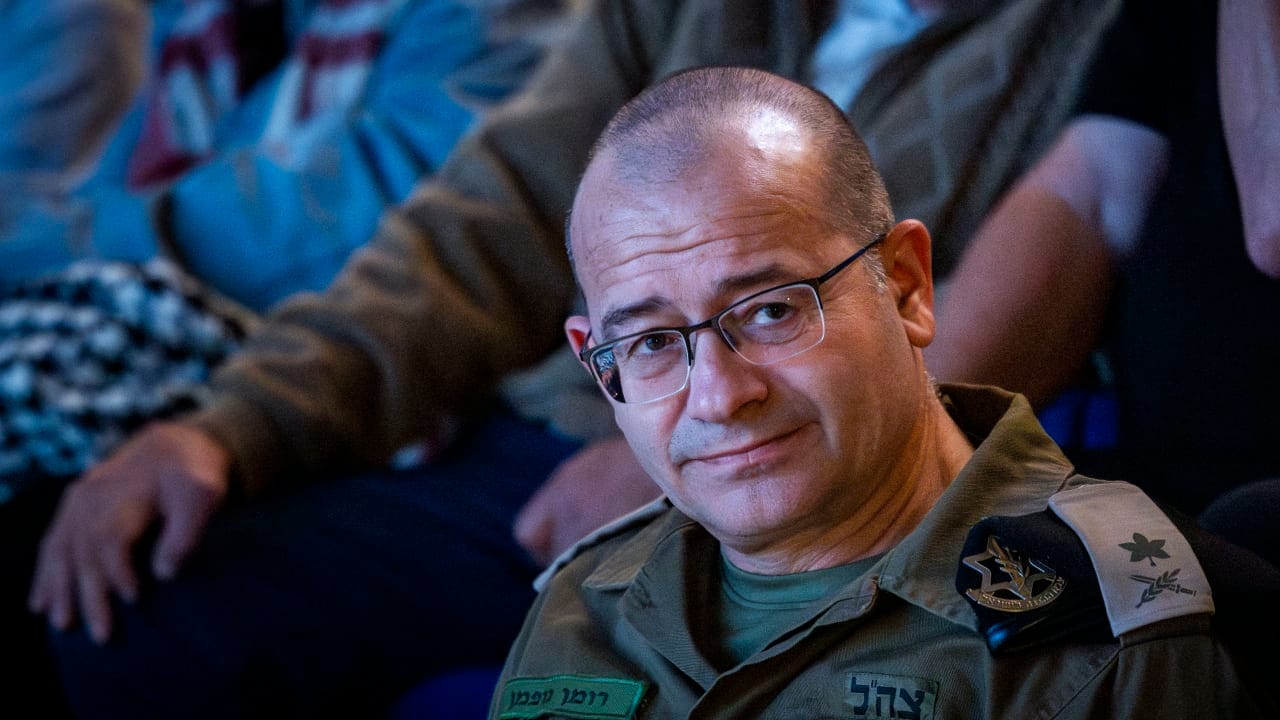
Attorney-General Gali Baharav-Miara told the High Court of Justice on Sunday that Prime Minister Benjamin Netanyahu’s decision to appoint Maj.-Gen. Roman Gofman as the next Mossad chief cannot stand, arguing that the process that cleared him was fundamentally flawed.
The position was filed ahead of a Tuesday hearing on petitions challenging the appointment. Netanyahu appointed Gofman to head the Mossad beginning June 2 for a five-year term, after the Advisory Committee for Senior Appointments approved the appointment by a majority vote.
According to Baharav-Miara, however, the committee’s approval was not enough for Netanyahu to rely on.
“An examination of the committee’s decision and the full circumstances of the matter shows that substantial flaws were found, both in the process conducted by the committee, in the factual basis on which the committee majority’s opinion relied, and in the conclusions it formulated on that basis,” the attorney-general wrote.
“This is sufficient to warrant the cancellation of the prime minister’s decision regarding the appointment.”
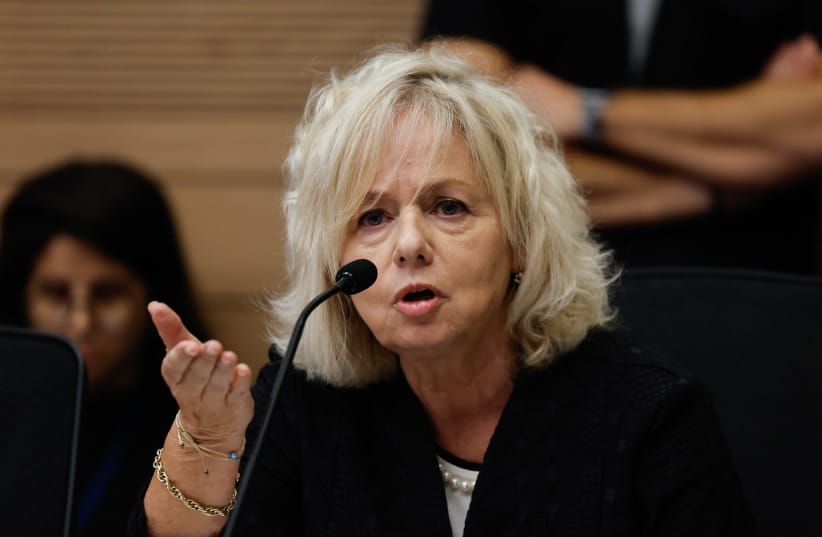 Attorney-General Gali Baharav-Miara at a Constitution, Law and Justice Committee meeting at the Knesset, in the Israeli parliament on September 30, 2025. (credit: OREN BEN HAKOON/FLASH90)
At the center of the petitions is the affair involving Ori Elmakayes, who was a minor at the time and, according to the filing, was activated in 2022 by Division 210, then commanded by Gofman, without going through the authorized intelligence bodies.
The attorney-general said there was no dispute that Gofman knew the division was activating an Israeli citizen, approved the activation itself, and that neither he nor the division had authority to do so without approval.
Elmakayes was arrested in May 2022, held in full detention until July, and then spent a lengthy period under electronic monitoring, house arrest, and other restrictions. The indictment against him was canceled in late 2023 at the prosecution’s request.
The senior appointments committee was split on the issue. Three members found no integrity flaw in Gofman’s conduct, while committee chairman and former Supreme Court president Asher Grunis reached the opposite conclusion.
Grunis found that integrity flaws had been found and that it was not appropriate to appoint Gofman as Mossad chief. His full opinion is classified, though a public summary was attached to the committee’s decision.
In a separate request filed ahead of the hearing, the petitioners also asked the court to allow the classified materials to be submitted in a closed-door session. They said the documents include classified material, secret committee transcripts, and a classified minority opinion, which they argued show the depth of the flaws in the committee majority’s decision and its factual basis.
Baharav-Miara argued that the affair was unusual by any measure and required a particularly careful examination, especially because the appointment concerns the head of the Mossad – one of the most sensitive positions in the state.
Instead, she said, the committee majority’s decision suffered from deep problems.
Among other things, the attorney-general said the majority members signed their opinion before Grunis’s dissent had been written, and before two members had reviewed several classified documents that were significant to understanding the full picture. After later reviewing the material, they said their view had only been strengthened, but did not explain why, she said.
Baharav-Miara also criticized the committee for not hearing directly from Elmakayes, despite the fact that his activation was at the center of the case. Instead, the committee relied in part on media interviews he had given.
The committee also did not hear from another relevant officer, identified as Brig.-Gen. P., who had served in a central Military Intelligence role at the time.
The attorney-general said the committee failed to properly examine what happened before Elmakayes’s arrest, when the IDF checked whether he had been activated by military officials, including Division 210.
Grunis found that the division, and specifically Gofman, had not given an accurate answer when asked a direct question on the matter, calling it a significant integrity flaw.
A-G’s position does not diminish Gofman’s military service
Baharav-Miara further argued that the committee relied on an incomplete picture when it accepted Gofman’s explanation of his conduct after Elmakayes’s arrest.
According to the attorney-general, the picture that emerges from Grunis’s analysis is severe: the division activated a minor in an irregular way, bypassed the authorized bodies, and later effectively turned its back on him after his arrest.
She emphasized that her position did not diminish Gofman’s long military service, his contribution to the state, or his conduct on October 7.
But, she said, the question before the court was whether the conduct described created a flaw that disqualifies him from serving as Mossad chief.
In her view, the answer is yes.
The filing said the flaws went to the root of the appointment and cast a heavy shadow over Gofman’s integrity and, by extension, over his appointment to lead the Mossad.
Baharav-Miara concluded that Netanyahu’s decision to appoint him was extremely unreasonable, could not stand legally, and should be canceled.
The attorney-general’s position drew sharp criticism from coalition figures, who accused her of again acting against the government rather than defending its decisions.
National Security Minister Itamar Ben-Gvir attacked Baharav-Miara personally, saying that “in Tehran, they are applauding you,” and accusing her of fighting the State of Israel while Gofman fought the enemy.
Coalition chairman Ofir Katz also criticized the move, calling Baharav-Miara “the opposition chairwoman” and saying the government should ignore her position and proceed with the appointment.
Finance Minister Bezalel Smotrich said Baharav-Miara’s position was “one step too far,” arguing that she had repeatedly joined petitioners and the opposition against the government. He said the coalition was determined to advance legislation splitting the attorney-general’s role and defining its powers in the Knesset’s summer session.
Keshet Neev contributed to this report.