
Dozens of ultra-Orthodox extremists smashed windows and caused property damage while trying to break into Supreme Court Deputy Chief Justice Noam Sohlberg’s house during a riot Wednesday night, in the latest such violent demonstration targeting law enforcement over the arrest of Haredi draft dodgers.
Images from the Alon Shvut settlement showed shattered windows, broken flowerpots by the front door of the house, a car in the garage with a smashed windshield, and a small Israeli flag with a swastika in place of the Star of David.
Sohlberg and his wife were both home at the time of the attempted break-in.
The Haredi demonstrators tried to flee the scene on a bus but were stopped by police, who said they detained dozens of suspects.
It was not clear why the rioters chose to protest Sohlberg, though he has been highly critical of the government for failing to enforce conscription, saying in April that the low number of arrests of ultra-Orthodox draft dodgers gave “the impression of a complete failure of the police.”
Get The Times of Israel’s Daily Edition
by email and never miss our top stories
By signing up, you agree to the terms
He was also part of the nine-member judicial panel that in 2024 unanimously invalidated the years-long exemptions to mandatory military service for ultra-Orthodox yeshiva students, exposing those who do not enlist as legally required to arrest and leading to the coalition’s current efforts to legislate a new exemption law.
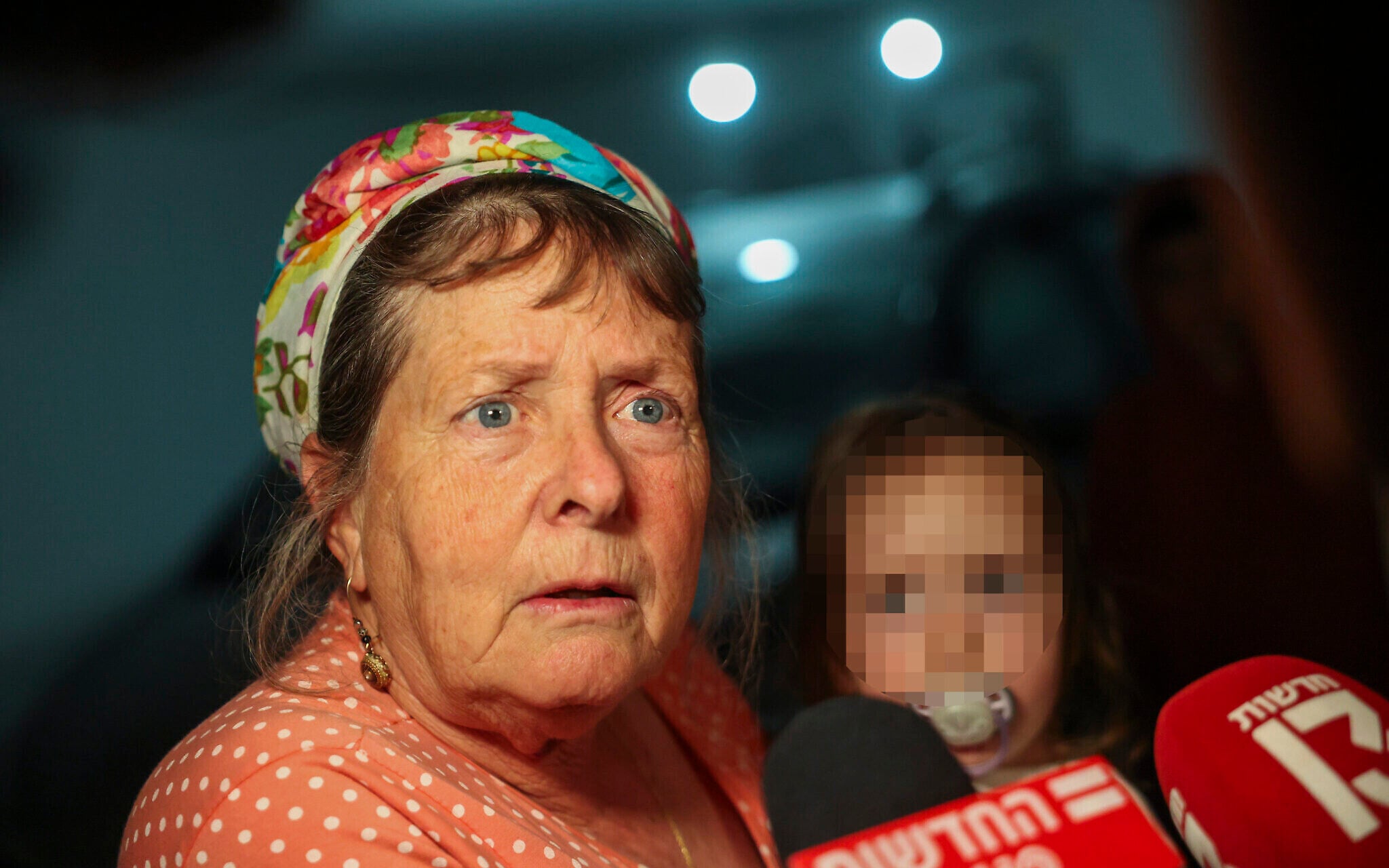
Meira Sohlberg, the wife of Supreme Court Deputy Chief Justice Noam Sohlberg, speaks to reporters outside her home in the Alon Shvut settlement following a riot by Haredi demonstrators,June 3, 2026. (Chaim Goldberg/Flash90)
“We are children of Holocaust survivors; how can Jews hurt one another?” Sohlberg’s wife, Meira, said to reporters outside her vandalized home. “Look at this devastation, it’s a pogrom. What is this, Kristallnacht?”
The Judicial Authority released a statement decrying the “grave and unacceptable incident,” which it described as “an attempt to harm the sense of security of judicial officeholders and their families.”
“Efforts to pressure, intimidate or deter judges will not influence the fulfillment of their roles. Israeli judges will continue to carry out their work professionally, independently and without fear, in accordance with the rule of law and their duty to the public,” the statement added.
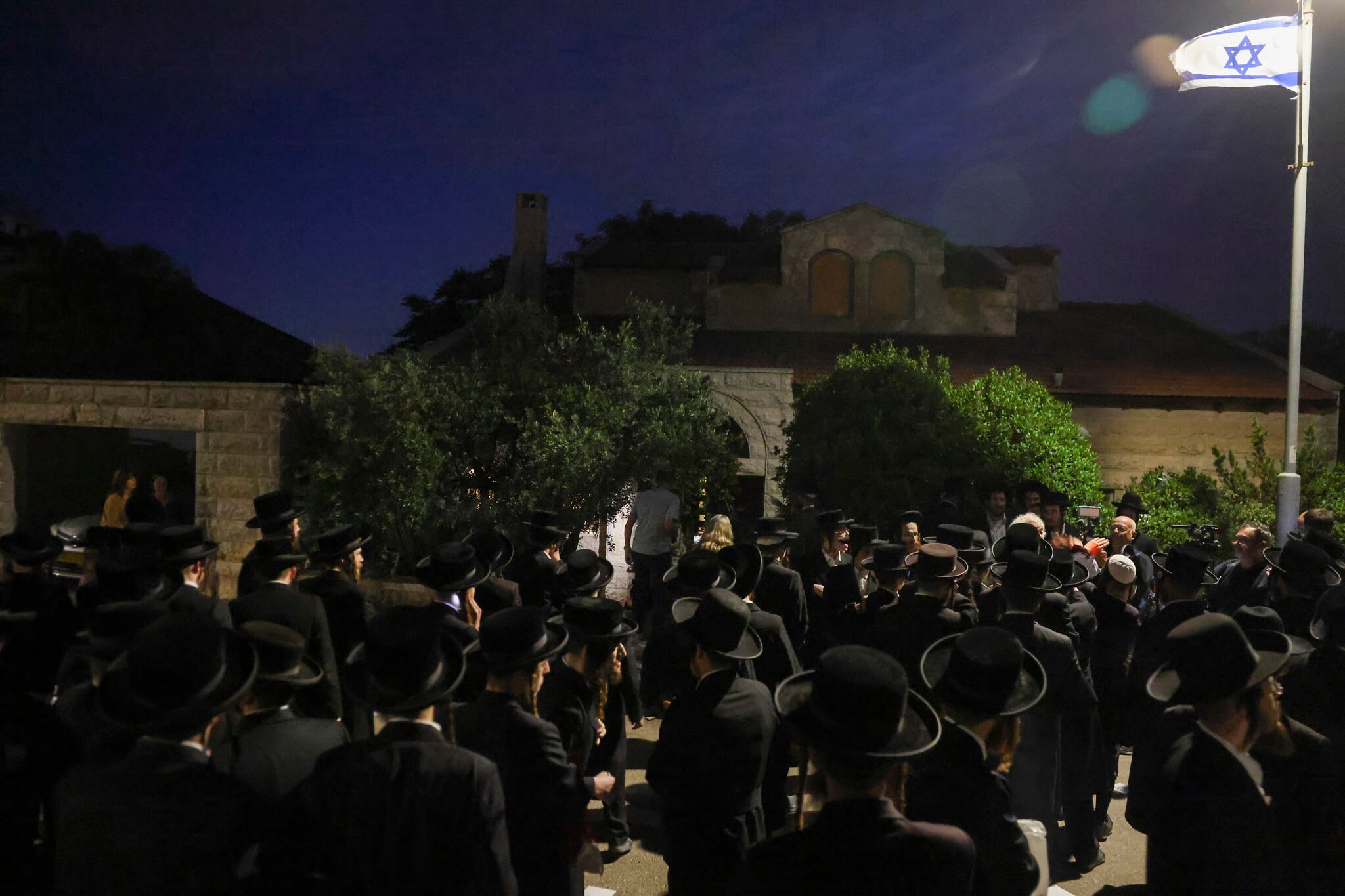
Ultra-Orthodox Jewish men, protesting against the jailing of those who failed to comply with IDF draft orders, attack the home of Supreme Court Deputy President Noam Sohlberg in the West Bank settlement of Alon Shvut, June 3, 2026. (Chaim Goldberg/Flash90)
Israel Police Commissioner Danny Levy also slammed the riot, stating that “it can’t be that the right to protest turns into violent acts, causing damage or harming public figures.”
Israeli politicians denounced the attack, which President Isaac Herzog called “a dangerous crossing of a red line.”
“Whoever tries to sow fear in the judicial system harms… the foundations of Israeli democracy. Disagreement, however deep it may be, cannot turn into violence and intimidation,” Herzog said, adding that he spoke with Sohlberg to stress his condemnation of vandalism and “threats against his and his wife’s lives.”
“I call on everyone: Stop before there is a disaster,” the president added.
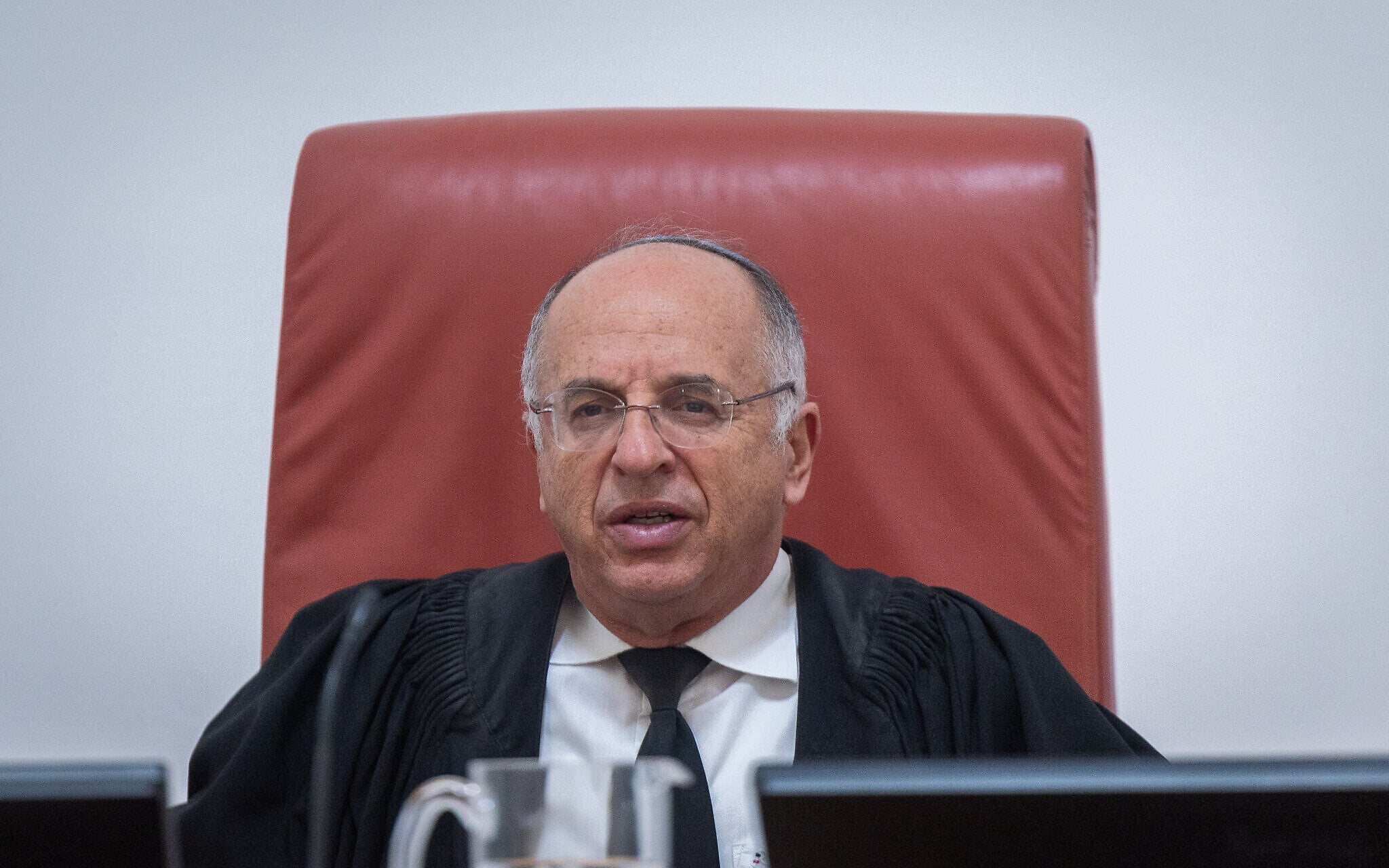
Supreme Court Deputy President Noam Sohlberg at a court hearing, February 2, 2026. (Yonatan Sindel/Flash90)
Prime Minister Benjamin Netanyahu said he strongly condemned the riot and called for the perpetrators to be brought to justice, without mentioning their identity. Netanyahu’s office later announced that he too spoke with Sohlberg, reiterating his denunciation of the violence and saying he “expects law enforcement officials to deal aggressively with the rioters.”
United Torah Judaism leader Yitzhak Goldknopf, who was among Haredi faction leaders demanding last week that Netanyahu intervene to stop the arrest of draft dodgers, claimed “there is no place for violence in our camp” while expressing his “full support for the Torah students whose honor and standing have been trampled under the feet of the current government and are expressing their pain.”
There was no immediate comment from UTJ No. 2 Moshe Gafni or Aryeh Deri, a top Netanyahu ally and leader of the coalition’s Shas party, which, like United Torah Judaism, has been advocating to again enshrine draft exemptions for Haredi seminarians into law.
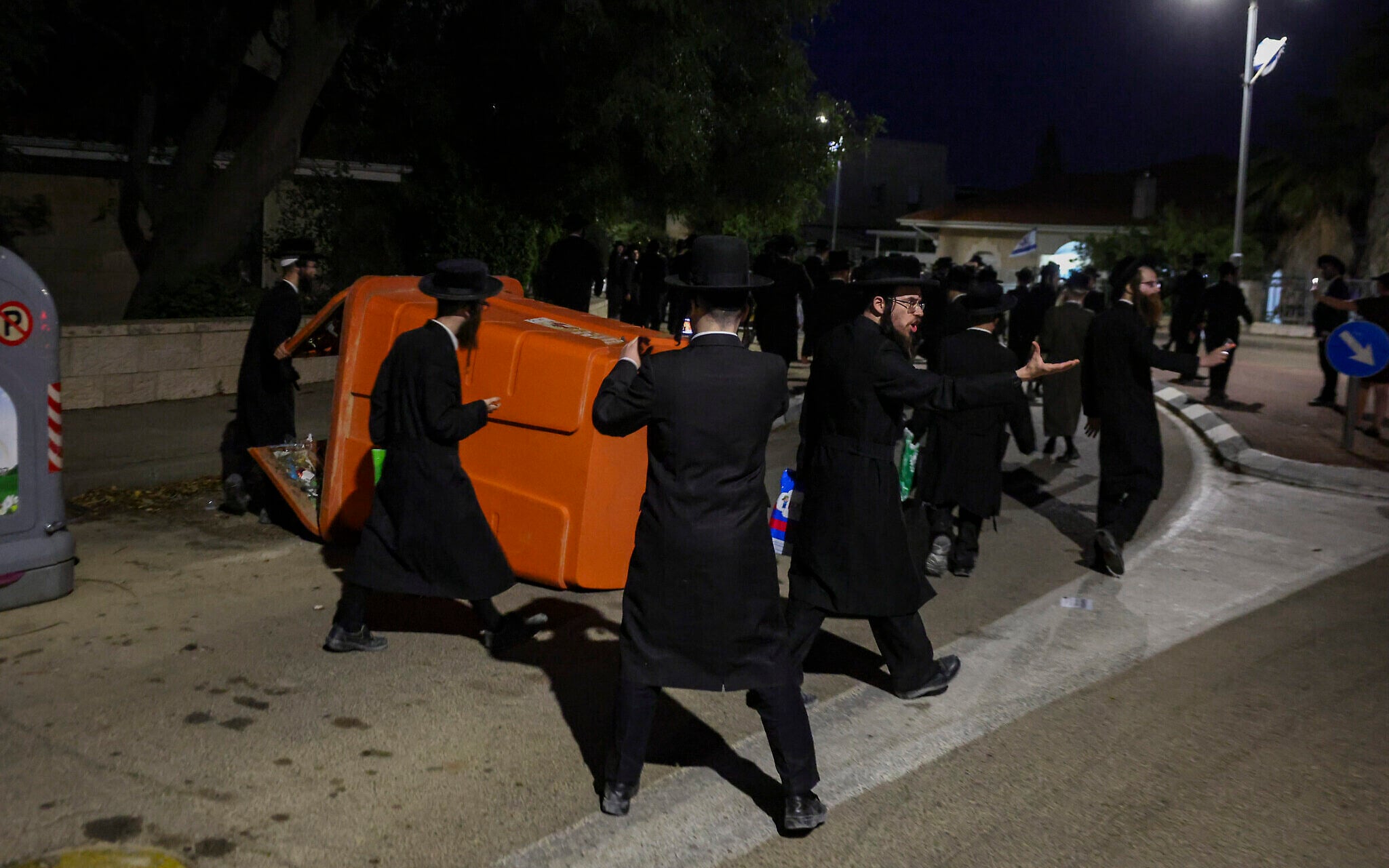
Haredi demonstrators push over a dumpster while rioting outside the home of Supreme Court Deputy Chief Justice Noam Sohlberg in the settlement of Alon Shvut, June 3, 2026. (Chaim Goldberg/Flash90)
Opposition Yashar party chief Gadi Eisenkot said “the extremist shirkers are harvesting the corrupt government’s fruits of incitement,” calling for all those involved to be arrested and tried while slamming Netanyahu’s “insufficient” response, which “will not prevent the next riot.”
“Harming a judge is harming the order of the democratic system and its institutions,” Eisenkot wrote on X, calling for the Shin Bet security service to be put in charge of the investigation.
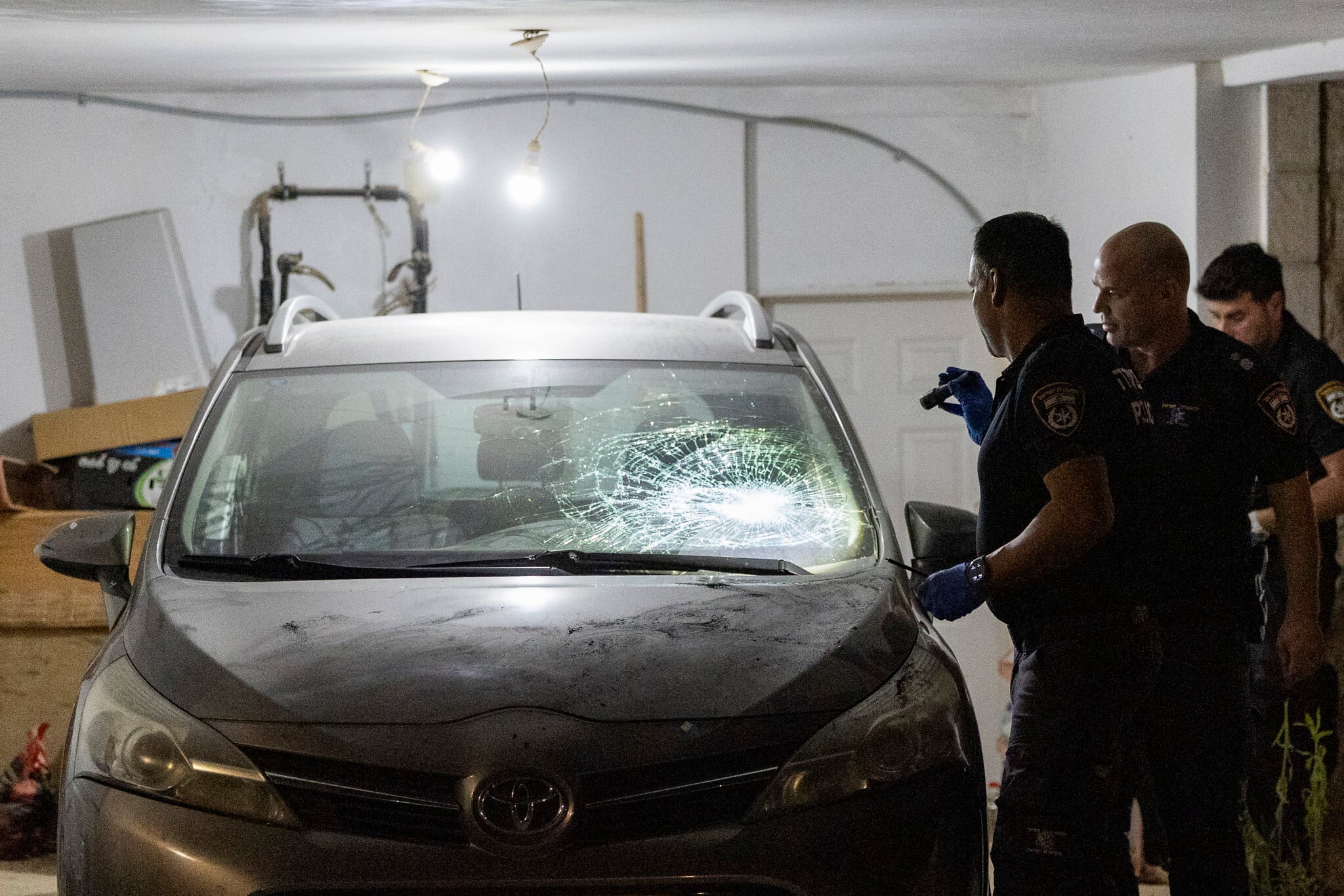
Police inspect a damaged car at the home of Supreme Court Deputy President Noam Sohlberg in the West Bank settlement of Alon Shvut, after ultra-Orthodox Jews attacked the home in protest against the jailing of those who failed to comply with IDF draft orders, June 3, 2026. (Chaim Goldberg/Flash90)
Opposition Leader Yair Lapid also tore into the government, saying that “there is no police, no law, not even someone to complain to,” while former prime minister Naftali Bennett said Sohlberg’s home was attacked “only because he won’t surrender to the criminal ploys of the Netanyahu-Deri-Gafni coalition.”
“This small extremist and violent group receives protection from the government and permits itself to go further and further,” added Bennett, who warned of potential casualties “the next time.”
The violence at Sohlberg’s house came days after a group of Haredi protesters broke into a police station compound in Beit Shemesh, rioting and clashing with officers, and after members of the radical Jerusalem Faction in April broke into the home of the Military Police chief while his family was inside.
Discover Israel’s most beloved poet

She died more than four decades ago, but Leah Goldberg remains a magnetic and enigmatic figure: Israel’s most beloved poet, a powerful woman who lived with her mother and never married, who reinvented herself from the ashes of World War I through her magical writing.
You can screen ‘The Five Houses of Leah Goldberg’ June 4-11. Join The Times of Israel Community today to support our work and watch this and other outstanding documentary films in our DocuNation series.
Already a member? Sign in to stop seeing this
You’re a dedicated reader

That’s why we started the Times of Israel – to provide discerning readers like you with must-read coverage of Israel and the Jewish world.
So now we have a request. Unlike other news outlets, we haven’t put up a paywall. But as the journalism we do is costly, we invite readers for whom The Times of Israel has become important to help support our work by joining The Times of Israel Community.
For as little as $6 a month you can help support our quality journalism while enjoying The Times of Israel AD-FREE, as well as accessing exclusive content available only to Times of Israel Community members.
Thank you,
David Horovitz, Founding Editor of The Times of Israel