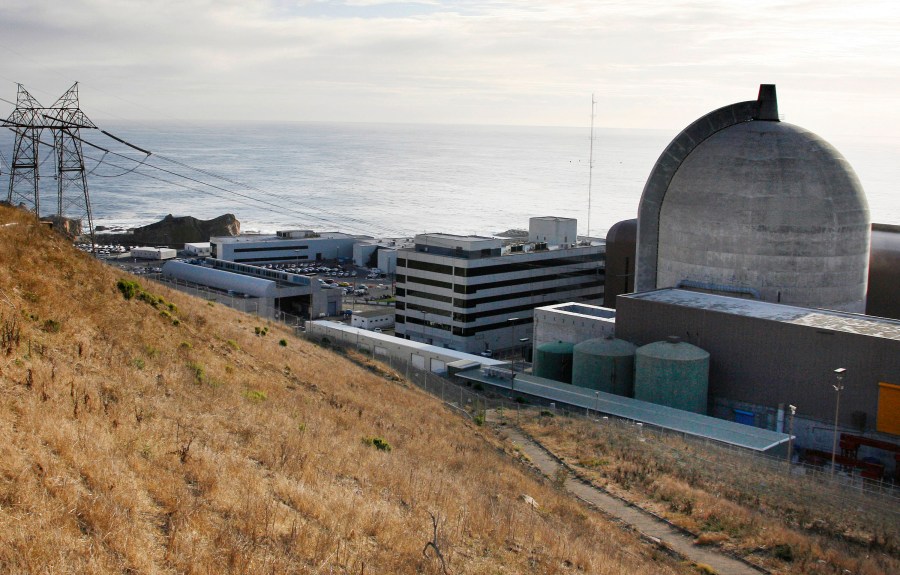
In 2016, California announced plans to retire Diablo Canyon, the state’s last nuclear power plant. Coming from America’s most influential environmental rulemaker, the decision seemed to confirm nuclear power’s place outside the environmental mainstream.
A decade later, at the May 6 California gubernatorial debate, moderators revisited the question of whether the state should keep Diablo Canyon operating past 2030. This time, all seven candidates said yes.
With a changing climate and rising electric bills driving demand for abundant clean energy, nuclear has become hard to dismiss, especially as modern safety reforms have quelled many historical fears. Public support for nuclear has reached record highs, with half of Americans aged 18-34 favoring constructing a nuclear energy plant in their own community. Yet many of America’s legacy environmental organizations, such as Friends of the Earth, the Sierra Club, and Greenpeace, remain steadfastly opposed to nuclear, increasingly out of step with the young people whose futures they purport to safeguard.
If the old guard want to maintain credibility as environmental leaders, they must start embracing nuclear power for what it is: an imperfect but increasingly popular source of carbon-free energy.
Of course, nuclear power has its limitations. The levelized cost of electricity for advanced nuclear power was estimated at $110/MWh in 2023, whereas photovoltaic solar and onshore wind registered $55/MWh and $40/MWh respectively, with continued price drops expected in the coming decades. New reactors require significant upfront investment and notoriously experience delays and budget overruns.
Nuclear also raises questions around radioactive waste storage, water use, and uranium mining. Up to two-thirds of U.S. uranium deposits are on indigenous land and Navajo communities experienced devastating consequences from Cold War-era uranium mining, including sick workers, contaminated homes, and hundreds of abandoned mines that have not been remediated to this day.
But these concerns don’t tell the whole story. Nuclear has proven its incredible power density, with only 93 reactors supplying roughly 20 percent of U.S. electricity since 1990. Unlike fossil fuels, nuclear does not produce planet-warming carbon emissions while generating electricity. And unlike solar and wind, nuclear generates energy around the clock, offering vital grid stability during nighttime, peak hours, and uncooperative weather.
Three times since March 2025, renewables and nuclear have combined to power more than half of America’s electric grid for a full month. One can imagine these sources as complementary teammates in a carbon-free future.
Safety has also improved. Since Three Mile Island, operators receive more rigorous training, control rooms and emergency procedures have improved, and newer reactor designs rely more on redundant and passive safety systems rather than last-minute human intervention. Modern uranium mines adhere to far stricter ventilation, monitoring, and occupational standards.
And radioactive waste is not a technical problem, but a solvable political problem. The total volume of spent fuel in the U.S. is quite small and safely stored at reactor sites in the interim; it’s just that politicians cannot agree on a location for long-term deep geological disposal.
In fact, even including deaths from Chernobyl and Fukushima, nuclear is overwhelmingly safer than fossil fuels, causing 99.8 percent fewer deaths per unit of electricity than coal and 97.6 percent fewer than gas.
But although nuclear energy has changed since the 1970s, most legacy environmental groups have not. On Diablo Canyon, Friends of the Earth was part of the 2016 retirement agreement, sued the Department of Energy over federal funding and spearheaded a campaign to prevent its extension. The Environmental Working Group published a report calling Diablo Canyon “costly and dangerous “and joined Friends of Earth in a petition alleging that the Nuclear Regulatory Commission was unlawful in extending the operating license.
The Sierra Club’s Santa Lucia chapter filed comments with the California Energy Commission to oppose the extension, while Environment America’s California chapter joined the 2016 closure agreement and called the plant’s federal subsidies “bad news for the environment.”
These campaigns were not nuanced concerns about site-specific issues, but rather part of their broader playbook of unyielding opposition to nuclear power. It does not matter at all that Diablo Canyon passed dozens of rigorous Nuclear Regulatory Commission safety reviews, nor that it provides 8.5 percent of California’s electricity with minimal climate impact.
Paradoxically, this stance places America’s leading environmental groups at odds with the stakeholders they claim to protect. In addition to California’s gubernatorial candidates, term-limited Gov. Gavin Newsom (D) welcomed the commission’s decision to extend Diablo Canyon’s license through 2045, citing the plant’s continuation as one of his climate accomplishments. A student group at California Polytechnic State University, 20 miles from the site, organized to support the plant, and says none of their fellow students seem to disagree.
Even youth-led climate organizations seem to be striking a different tone from their predecessors. On fossil fuels, groups such as Sunrise Movement, Fridays for Future, and Zero Hour routinely name local projects, mobilize members, and show up for protests. On nuclear, they sometimes sign on to broad coalition letters led by legacy groups that offer passing critiques, but they don’t engage in local nuclear fights or publish detailed stances.
In other words, environmentalism hasn’t shed its anti-nuclear past, but the next generation seems reluctant to inherit it.
That is a welcome shift. In 2021, only 41 percent of Americans identified as environmentalists, down from 78 percent in 1991. That drop isn’t due to Americans suddenly wanting dirty air and water. Rather, it is due to a movement unable to adapt to today’s problems. In the 60s and 70s, when America’s environmental crises included smog-choked cities, companies dumping DDT into the ocean, rivers catching fire, commercial whaling driving entire populations toward extinction, and the partial nuclear meltdown at Three Mile Island, America needed a movement to slow things down.
But today’s environmental issues are different. Carbon emissions from fossil fuels are exacerbating deadly heatwaves, wildfires, hurricanes, and droughts, yet a return to the Stone Age would do more harm than good. This moment demands an environmentalism that listens to communities, embraces nuance, and builds good things instead of just blocking bad things. If legacy environmental groups can’t update their nuclear power views after fifty years of change, perhaps their green purity has become more of a liability than an asset.
Environmental groups don’t need to become nuclear power cheerleaders. But when Californians face rising electric bills, record heatwaves, and worsening wildfires, demanding they shut down a major source of the state’s carbon-free electricity is deeply out of touch.
Diablo Canyon’s resurgence shows California has reimagined environmentalism. It is time for legacy groups to reimagine it, too.
Ethan Brown, an award-winning climate writer and commentator, is training program coordinator at the University of Rhode Island’s Metcalf Institute. His opinions do not necessarily represent those of his employer or any other entity.
Copyright 2026 Nexstar Media, Inc. All rights reserved. This material may not be published, broadcast, rewritten, or redistributed.
For the latest news, weather, sports, and streaming video, head to The Hill.