
A team of international researchers, including Hebrew University of Jerusalem’s Dr. Liora Kolska Horwitz, has found evidence of the earliest use of fire in the Wonderwerk Cave in South Africa, according to a study published in the prestigious PLOS ONE journal earlier this month.
The new research pushed back the origin of intentional use of fire by several hundred thousand years, to as early as 1.8 million years ago. In 2012, previous research based on remains from a more superficial level of the same cave dated it to one million years ago.
The researchers developed an innovative technique to detect signs of burns on fossilized bones, Kolska Horwitz, co-director of the Wonderwerk Cave project with Prof. Michael Chazan of the University of Toronto, told The Times of Israel over the phone.
“In 2012, when we published the article about the Wonderwerk Cave at one million years ago, we had the indications that there was fire in a lower, older level. Now, we pushed the use of fire back to well over a million years ago,” she said.
The expert explained that the two levels are separated by around 80 centimeters of sediments.
Get The Times of Israel’s Daily Edition
by email and never miss our top stories
By signing up, you agree to the terms
The deeper level was in use between circa 1.79 and 1.079 million years ago.
“The sample we use for this study was close to the bottom, and therefore to the 1.8 million years ago period,” Kolska Horwitz said.
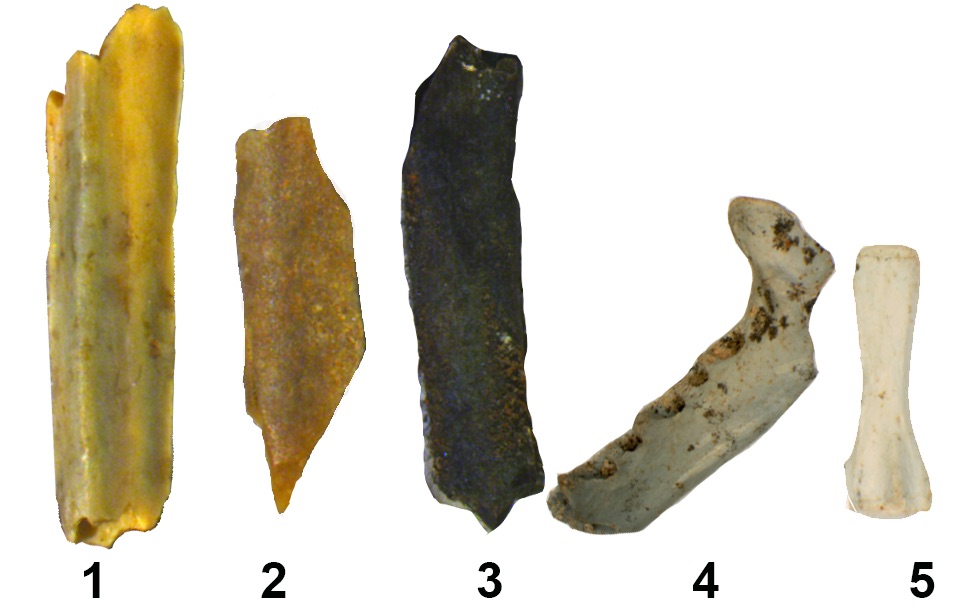
Prehistoric animal bones found in the Wonderwerk Cave in South Africa and examined with an innovative method to detect signs of burns through luminescence, as explained in a PLOS ONE study published in June 2026. The yellow bone to the left does not present signs of burns, while the white one to the right is burnt. (Wonderwerk Cave Project)
The evidence that fire was used does not imply that early humans were the ones igniting it; but the fact that it was found deep inside the cave suggests it did not reach that depth naturally, but rather was brought there on purpose.
“This is intentional use of fire, which doesn’t mean that people started it; they are two separate things,” Kolska Horwitz noted.
“We can say that it’s not a natural fire, because the fire is at least 30 meters in from the entrance of the cave, so it was not a wildfire that crept in,” she added. “There is also nothing in this layer that could have caused what we call spontaneous combustion, like guano [accumulation of animal excrement] that suddenly burns by itself due to the chemical composition. The fire must have been introduced there by someone.”

Dr. Liora Kolska Horwitz of the Hebrew University of Jerusalem. (Courtesy)
Kolska Horwitz has been working at Wonderwerk for over 20 years. She explained that the site is unique because humans lived in the cave for two million years, from the earliest known occupants to a farmer’s family that temporarily sheltered there in the early 20th century.
“The cave occupation begins at about two million years and is associated with a stone tool culture called the Oldowan,” she said. “Most Oldowan sites were little campsites in the open air. Here we have a cave where people intentionally moved in, so Wonderwerk is the oldest cave home.”
The cave features stone tools from all the different phases of occupation.
“We have such a long record in one site that we can follow the evolution of technology,” Kolska Horwitz noted. “And of course, people hunted or scavenged animals, and so we have the remains of the animals they ate.”
One thing that was never found in any level of the cave was human bones, so the scholars cannot say for certain what kind of early humans lived there, including those associated with the earliest use of fire.
“There were several hominins in southern Africa at that time, and since we haven’t found any human remains, it is a bit difficult to pin [which type lived in the cave] with any certainty, but likely it was a form of Homo erectus,” Kolska Horwitz said.
The researcher expressed hope that they will find human bones at some point, saying, “Perhaps it is going to happen when we go back to excavate in July.”
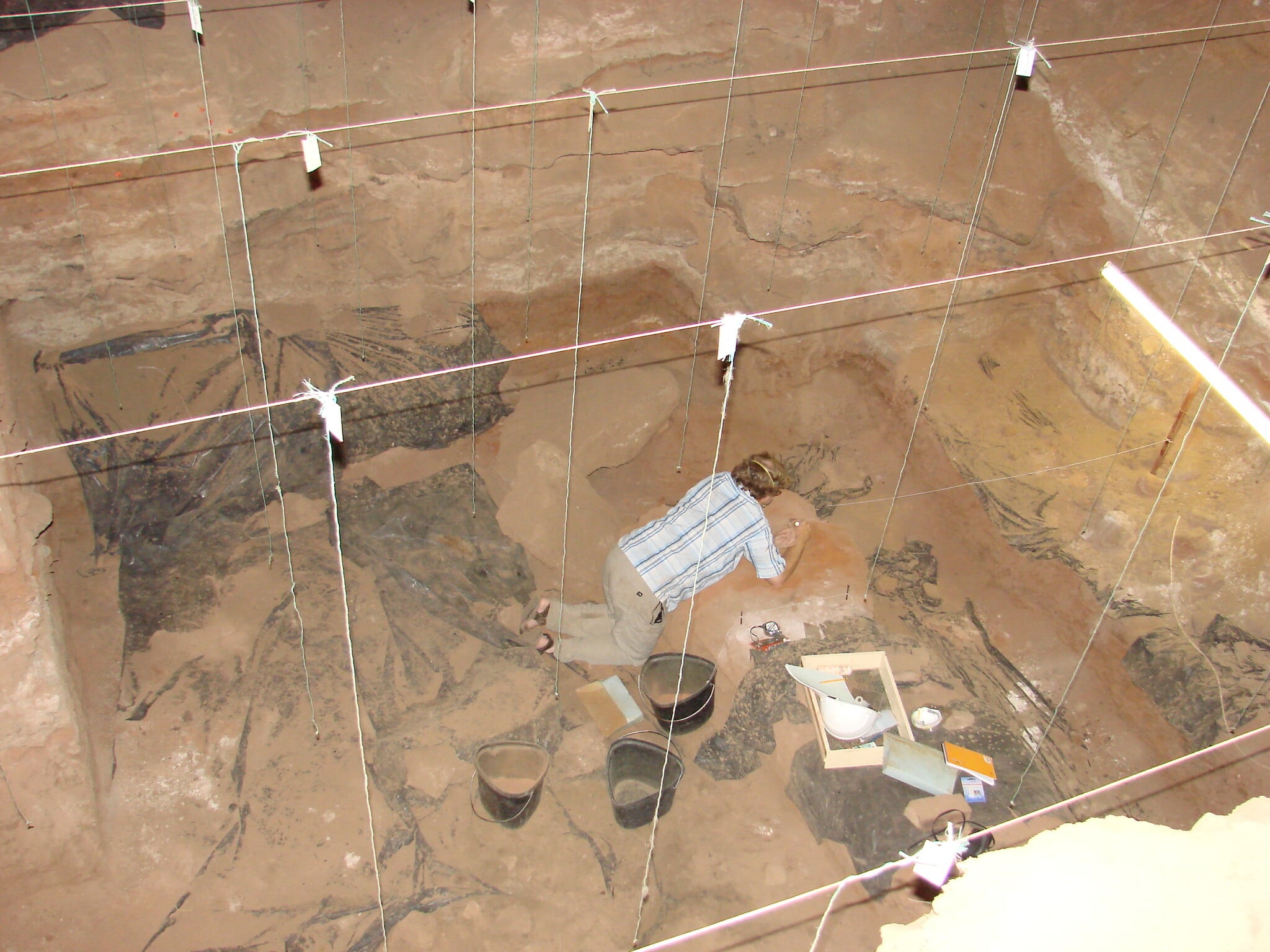
Prof. Michael Chazan of the University of Toronto excavates in the Wonderwerk Cave in South Africa, where early humans lived for about two million years, in an undated picture. (Wonderwerk Cave Project)
Illuminating evidence
According to Kolska Horwitz, the method for detecting burns on bones developed by the PLOS ONE study authors opens new possibilities for searching for traces of fires across prehistoric sites and remains worldwide.
“The new method uses luminescence [to detect] signs of burning,” she said. “The main reason why we wanted to develop a new method is that [the standard ones] are quite expensive and invasive, as you have to grind up a small piece of bone and therefore destroy evidence.”
“The idea was to develop a method that’s quick, cheap, and can also be run by people working in the field in a small field station,” she added.

A reconstruction of a 1,600,000-year-old Homo erectus based on the fossil specimen known as ‘Turkana boy’ is seen at the Neanderthal Museum in Mettmann, Germany, on July 3, 2019. (AMartin Meissner/AP)
The technique entails applying a substance to the bone, waiting for it to react, and examining the bone under UV light, where the burnt areas glow white.
Kolska Horwitz said the team hopes that other researchers around the world will adopt the method, which could pave the way for additional evidence of the use of fire in early prehistoric times.
A timeline buried in the soil
The dating of the site was carried out in previous years mainly by an Israeli team from the Hebrew University, including Kolska Horwitz, and the Geological Survey of Israel.
First, the scientists used paleomagnetic dating, which relies on changes in Earth’s magnetic field as magnetic north shifted over the millennia.
“It’s a standard method used in Earth sciences,” Kolska Horwitz explained. “We used the sediments in the cave to get a signal of the magnetic directionality.”
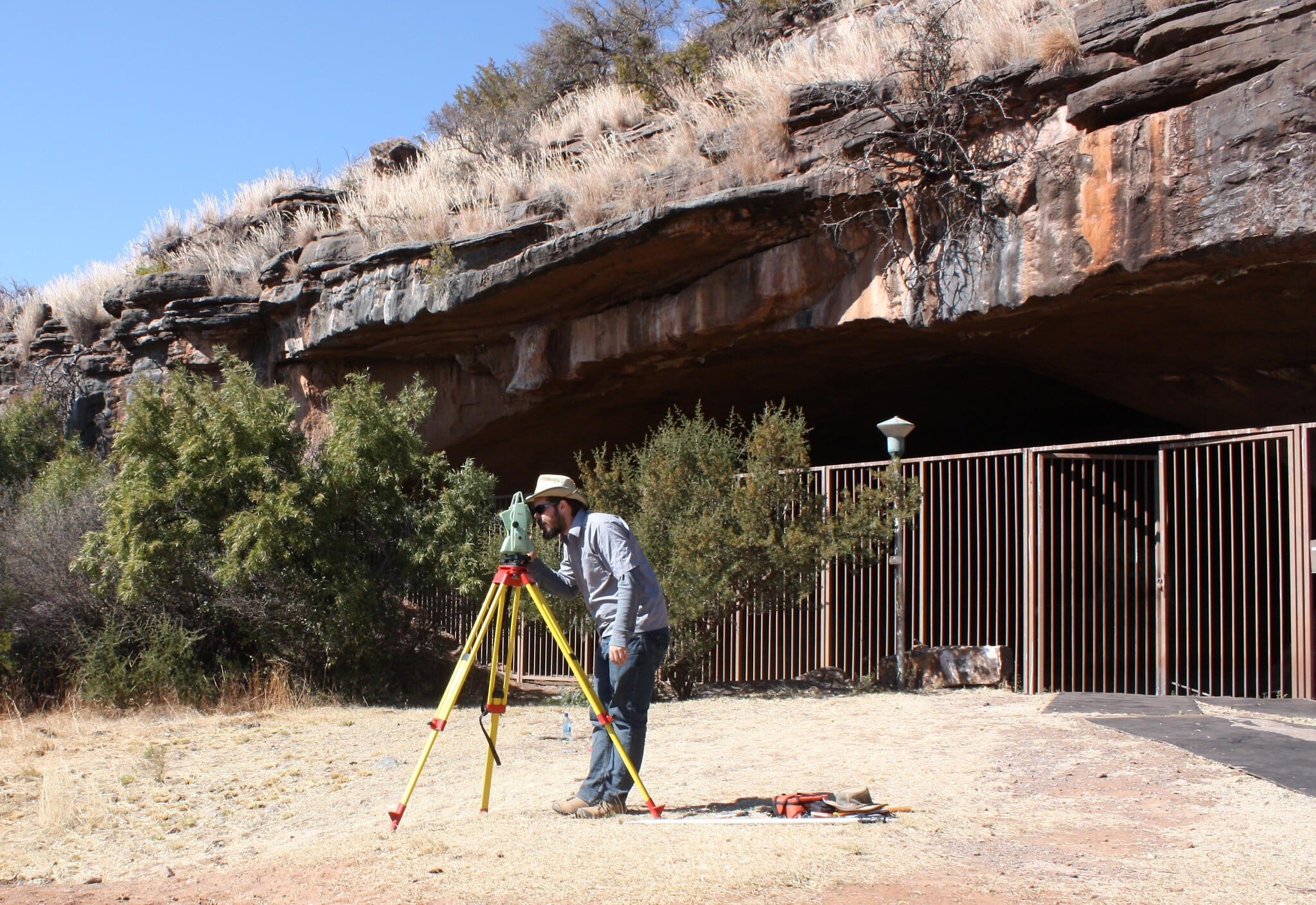
A researcher outside the Wonderwerk Cave in South Africa, where early humans lived for about two million years, in an undated picture. (Wonderwerk Cave Project)
The second type of analysis was the cosmogenic burial dating.
“This is also based on sediments in the cave,” Kolska Horwitz said. “When the soil entered the cave, little white quartz grains from the sand found in the soil stopped receiving radiation from the sun’s cosmic rays, and locked. In the laboratory, we can [analyze] that signature that tells us when the sediment entered the cave.”
Now that they have managed to prove fire was used close to 1.8 million years ago, the archaeologists plan to check for evidence of it even in the deepest level of the cave’s occupation, dating to two million years ago.
“This is the big question now,” Kolska Horwitz said
We can’t do this work alone.

The war with Iran has been draining for all of us in Israel. But when I heard about a high casualty incident – ballistic missile impacts in Arad and Dimona that left nearly 200 people wounded – I drank a cup of coffee, packed a bag, and headed south.
There, I spoke with Shilgit, the head of an after-school program for underprivileged youth. Standing outside her destroyed center, Shilgit said it was a miracle that no children were hurt and spoke about the community coming together in the hours since.
As a Times of Israel reporter, I’m committed to telling stories of resilience like Shilgit’s. But my colleagues and I can’t do this alone. If you value work like this, please consider joining our reader support group, The Times of Israel Community. Your financial support is essential to keep real human reporting like this going.
— Stav Levaton, military reporter
Already a member? Sign in to stop seeing this
You’re a dedicated reader

That’s why we started the Times of Israel – to provide discerning readers like you with must-read coverage of Israel and the Jewish world.
So now we have a request. Unlike other news outlets, we haven’t put up a paywall. But as the journalism we do is costly, we invite readers for whom The Times of Israel has become important to help support our work by joining The Times of Israel Community.
For as little as $6 a month you can help support our quality journalism while enjoying The Times of Israel AD-FREE, as well as accessing exclusive content available only to Times of Israel Community members.
Thank you,
David Horovitz, Founding Editor of The Times of Israel