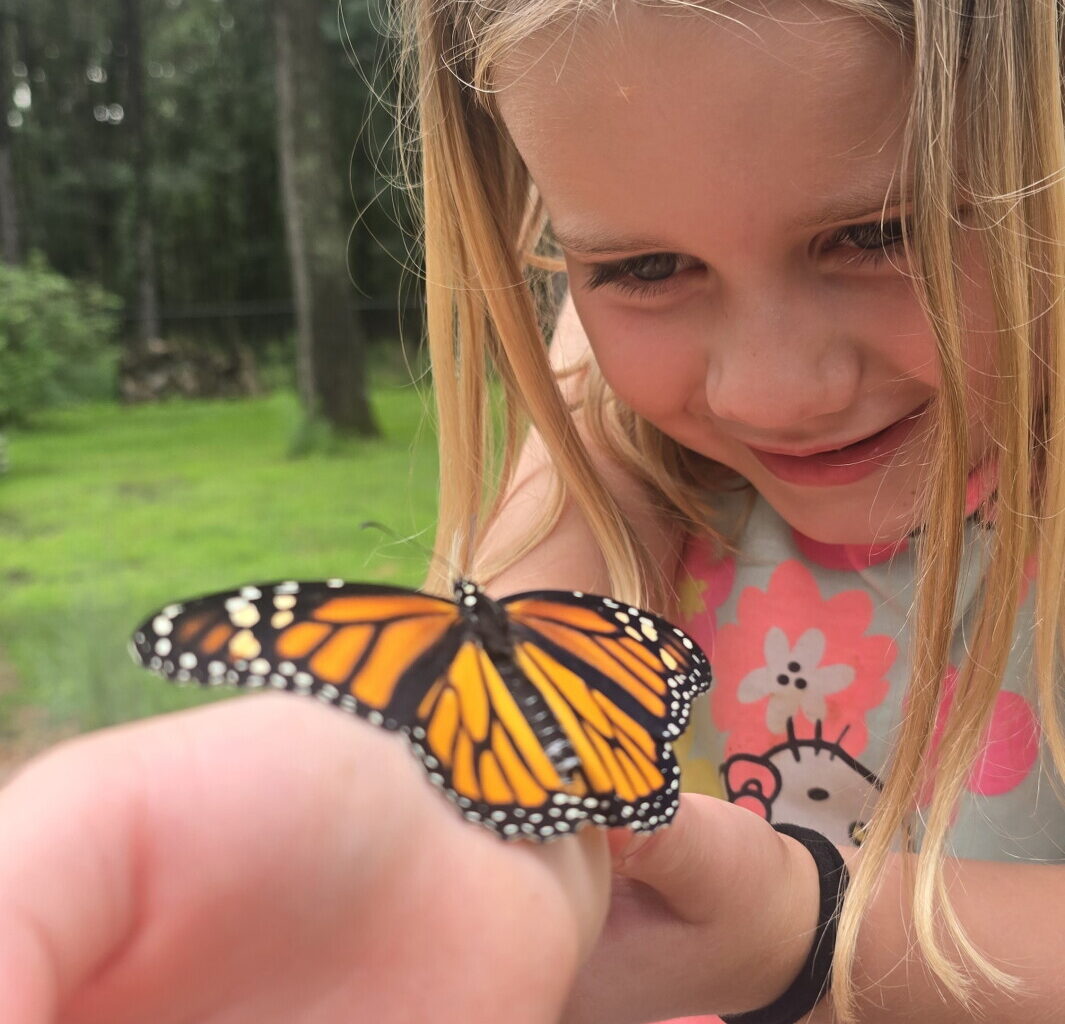
BAXTER, Minn. — What started as a practical childhood science experiment birthed from classic grade school curricula, colorful life-cycle diagrams and the curiosity of Carrie Scarfino’s three children has turned into a yearly venture for the Baxter, Minnesota, mom.
“I started doing more research, and I realized how the monarch butterfly population has decreased significantly over the years,” Scarfino said. “I was like, OK, what can I do to help?”
Scarfino is a marketing manager with an unusual side-job — raising monarch butterflies. She’s a Twin Cities native who earned her bachelor of arts degree in journalism and Spanish from the University of Minnesota in 2006. Her family owned property in Randall, Minnesota, and, after deciding she wanted to live closer to home, she figured the Brainerd lakes area would be a good place to plant roots.
“When we moved up here in ‘21, the previous owners had this garden all kind of figured out, and one day I was walking through and I saw milkweed,” Scarfino said. “I was like ‘oh’ and I started looking into the leaves, because I remembered back in high school or middle school we talked about the cycle of the butterflies. I found my first monarch egg and I was like, ‘this is so cool.’ I have three kids, and I was like, let’s go through, and have them watch the cycle, right? So that summer, I think I had maybe five caterpillars.”
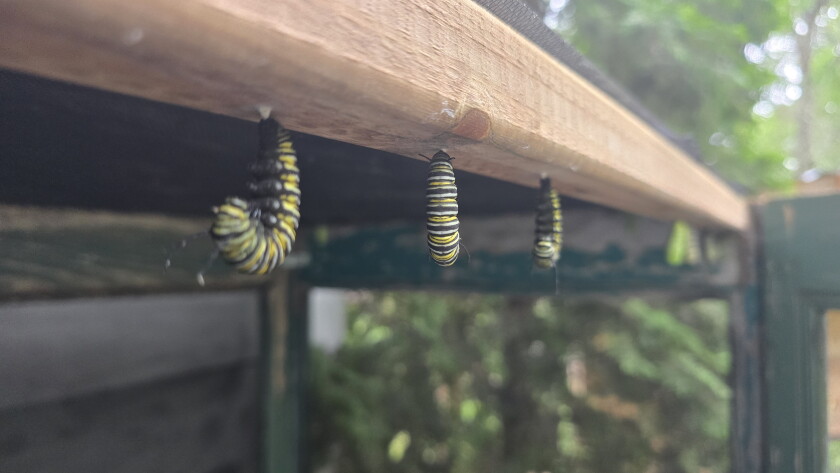
Three of Scarfino’s caterpillars in J formation, the precursor to a chrysalis in the butterfly coming-of-age process on June 18, 2026.
Contributed / Carrie Scarfino
Since then her operation has grown. As of June 19, she has eight caterpillars in chrysalis and 10 in “J” formation, the precursor stage. Her children took an interest in the process as well; her daughter Sutton in particular remains invested in the process.
“She helps me find the eggs,” Scarfino said.
The monarch butterfly is not a
under
United States Fish & Wildlife Service,
though there is a proposal from the agency in pursuit of the “threatened” categorization, which would give the species federal protection. The decision has been delayed, however. A protected species receives financial assistance and legislative actions designed with preventing its extinction in mind. Between the 1990s and 2025, western monarch populations have declined 99%, and eastern monarchs by 80% according to the
Xerces Society for Intevertebrate Conservation.
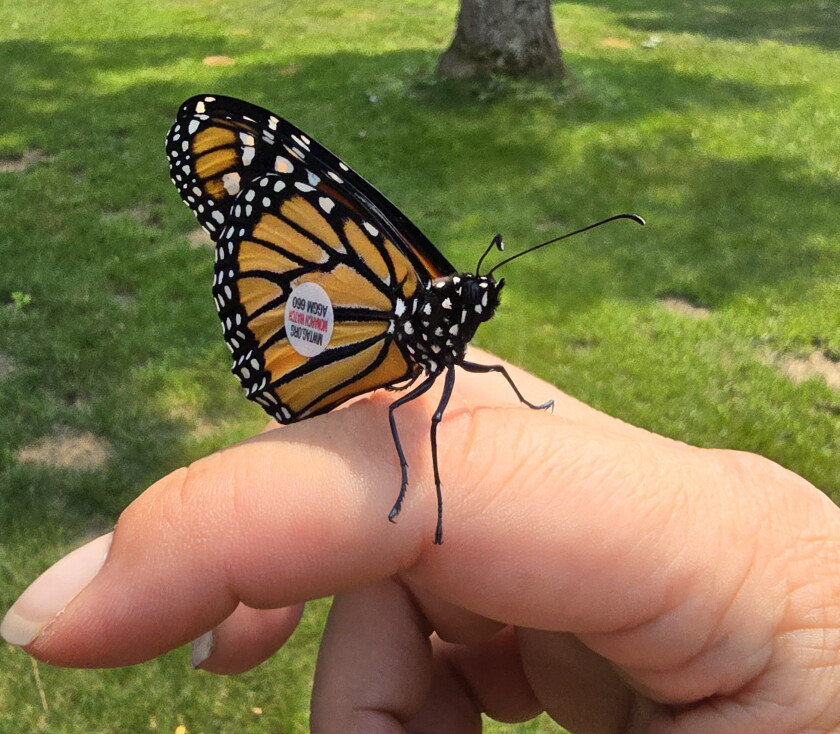
One of Scarfino’s butterflies outfitted with with a tracking sticker.
Contributed / Carrie Scarfino
Scarfino said finding and cultivating milkweed for the butterflies to feed on isn’t an easy feat. There are two kinds of milkweed she’s grown, common and swamp. A more ideal setup would be a plot with more land for growing space. Still, she said she’ll continue the process as long as it brings her and her daughter joy. She anticipates her caterpillars will emerge as butterflies in about a week or two.
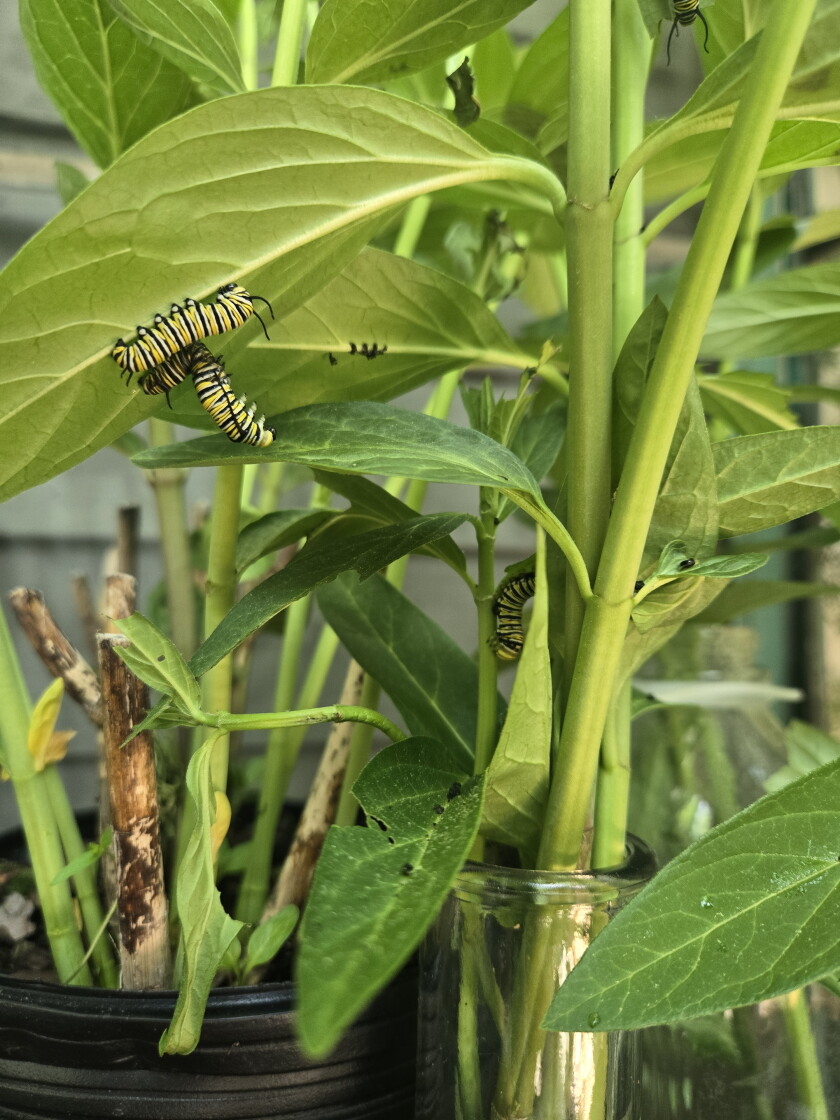
Carrie Scarfino’s caterpillars feed on milkweed in their outdoor enclosure on June 10, 2026.
Vivian Wilson / Brainerd Dispatch
“When I was in high school, middle school, elementary school, it was all about the endangered animals, right?” Scarfino said. “And you’re like, we gotta save the whales, and now as an adult I have a means, a capability to help some sort of, not necessarily endangered creature, but help kind of replenish the lost population of monarchs, and this is, I guess, my contribution to the world, to earth, maybe. And it’s so simple and easy, it doesn’t really hurt me at all.”

Vivian Wilson is a reporter intern with the Brainerd Dispatch for summer 2026. She studies journalism at the University of Minnesota and will start her junior year this fall. Wilson was born in Fairfield, Ohio, and grew up in Fargo, N.D., where she graduated high school before moving to Minneapolis for college.