NEED TO KNOW
-
A disease spread by ticks is rising in the United States
-
The Powassan virus mostly affects the Northeast and Great Lakes regions from late spring through mid-fall, when ticks are most active
-
There are no vaccines or medicines available to prevent or treat the disease
A disease spread by ticks, which can be contracted in as little as 15 minutes after contact, is rising in the United States.
The Powassan virus is spread through the bite of an infected tick, and most cases have so far been reported in the Northeast and Great Lakes regions. Contact typically occurs between late spring and mid-fall, when the ticks are most active, according to the Centers for Disease Control and Prevention (CDC).
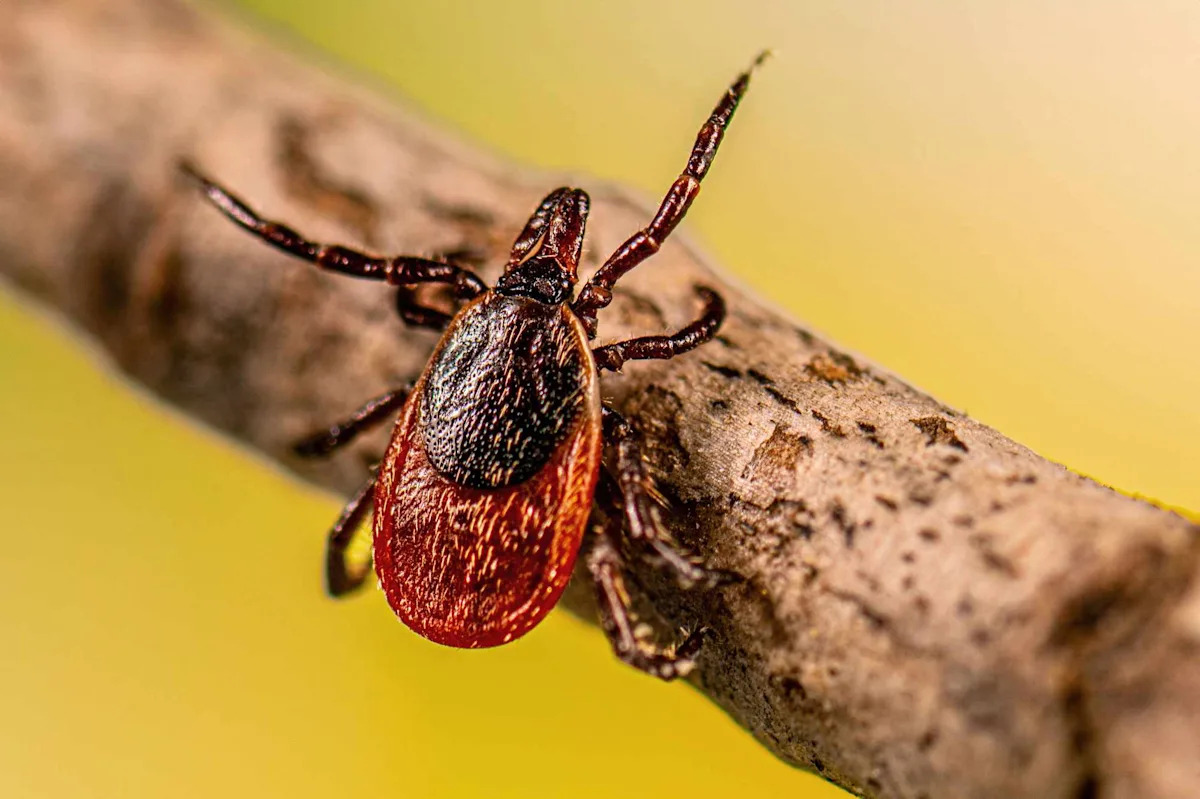
Three specific ticks spread the Powassan virus: the groundhog tick, the squirrel tick and the blacklegged tick, which is also known as the deer tick.
The Powassan virus is deemed “rare,” but the CDC said cases are increasing. They have risen from one in 2004 to 76 in 2025, and there have been 15 cases of the virus so far in 2026.

The blacklegged tick.
Credit: courtesy NASA
There are no vaccines or medicines available to prevent or treat the disease. The CDC said the general public can only reduce their risk by avoiding ticks altogether.
The Powassan virus can be transmitted to humans in as little as 15 minutes, according to the New York State Department of Health and the Canadian Government.
It cannot spread directly from one person to another.
According to the Cleveland Clinic, many can obtain the Powassan virus without showing any symptoms, which typically include fever, headache, vomiting, fatigue, confusion, seizures, difficulty speaking and paralysis.
Some more serious signs of the virus include confusion, loss of coordination, difficulty speaking and seizures.
The Powassan virus can also cause severe illnesses such as encephalitis, inflammation of the brain, or meningitis, which affects the membranes around the brain and spinal cord, per the CDC.
Never miss a story — sign up for PEOPLE’s free daily newsletter to stay up-to-date on the best of what PEOPLE has to offer, from celebrity news to compelling human interest stories.
Experts said that because the ticks live in grassy, brushy or wooded areas and on animals, “Many people get ticks in their own yard or neighborhood.”
Using insect repellents, avoiding wooded areas with high grass and leaf litter, and treating clothes with products containing 0.5% permethrin are helpful ways to avoid ticks.
The CDC advises checking under the arms, in and around the ears, inside the belly button, the back of the knees, in and around the hair, between the legs and around the waist for ticks after going outside.
Read the original article on People