
The Great Barrier Reef has avoided an “in danger” listing in a draft decision by the World Heritage Committee.
In the document released overnight, the UNESCO Committee noted Australia’s “ongoing commitment and enhanced collaborative efforts” towards the reef’s long-term protection.
However, the UN body also raised “utmost concern” over the site’s declining coral cover after mass bleaching events in 2024 and 2025.
“Whilst the resilience of the Reef remains evident, its capacity to tolerate and recover from such events is increasingly compromised,” the committee wrote.
The draft decision will be considered by the World Heritage Committee in a matter of weeks.
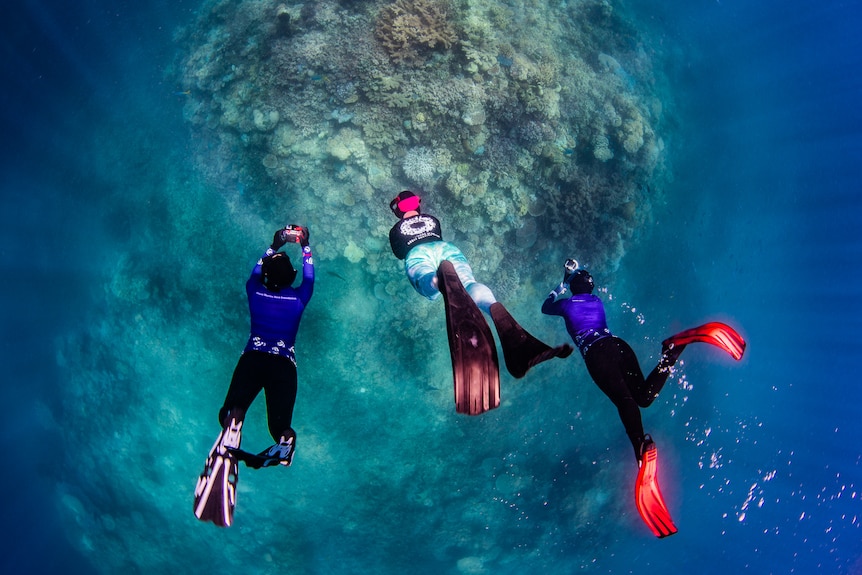
The committee raised concerns about mass coral bleaching events in 2024 and 2025. (Citizens of the GBR: Nicole McLachlan)
The committee has requested a full assessment of the most recent bleaching event to the World Heritage Centre “as soon as it becomes available”.
It also called for a progress report focusing on water quality targets by December 2028, and a conservation report in 2029.
The draft decision noted the federal government’s Net Zero Plan, which pledges to cut emissions by 62 to 70 per cent by 2035, but called for further ambitious targets to limit temperature increases.
Draft decision welcomed
In a statement, Environment Minister Murray Watt said the draft decision acknowledged Australia’s efforts to protect and manage the reef but that there was more work to do.

Environment Minister Murray Watt welcomed the World Heritage Committee’s draft decision. (ABC News: Matt Roberts)
“We will continue to build on our actions, leverage strong partnerships, and utilise our world-leading Reef management to support the Great Barrier Reef’s resilience into the future,” Mr Watt said.
“We are extremely lucky to be home to one of the most beautiful and precious places on earth — and we’re determined to protect it.”
Queensland Environment Minister Andrew Powell spruiked the state government’s “record investment” in the reef.
“No-one cares more for the Great Barrier Reef than Queenslanders,” Mr Powell said.

Queensland Environment Minister Andrew Powell said the reef brings in billions of dollars a year in tourism. (ABC News: Lucas Hill)
Mr Powell said the draft decision confirmed that the hard work of farmers, local governments, scientists and “all the people on the ground” had helped protect the reef.
He described the reef as the backbone of the state and the country’s economy, bringing in billions of dollars a year in tourism dollars.
Speaking in Canberra, Assistant Minister for Tourism Nita Green said she was “very pleased” with the draft decision, which “recognises Australia’s continued efforts to protect and manage the reef”.
“We know that it’s incredibly important to protect this special icon,” she said.
Ms Green said the reef was important for tourism and it supported 77,000 jobs.

Assistant Minister for Tourism Nita Green said the federal and Queensland governments had both worked to protect the reef. (AAP: Mick Tsikas)
She said the federal and Queensland governments had put more than $5 billion into protecting the reef since 2014, and acknowledged the continued risk of climate change.
“This is a constant effort from our government and the Queensland government to not only build the reef’s resilience on climate change but to reduce the risk of poor water quality and over-fishing.”
Reef on the brink for years
Lissa Schindler from the Australian Marine Conservation Society said the draft decision did not mean the Committee was satisfied with the state of the reef.

Dr Lissa Schindler from the Australian Marine Conservation Society said Queensland and Australia are not doing enough to secure the reef’s future. (Supplied)
“If Australia and Queensland had a perfect tick for the Great Barrier Reef, then UNESCO would say ‘Job done, thank you, we don’t need to see you again’,” Dr Schindler said.
“The fact that they’ve given Australia only two years until they have to report back is a sign that they’re not doing enough.”
She said the federal and state government were “doing things” but “not enough to secure the health and future of the Great Barrier Reef”.
There have been repeated warnings from the committee in recent years that the Great Barrier Reef was at risk of being placed on the “in danger” list.
In July last year, the committee noted with “utmost concern” that the long-term outlook for the reef remained “very poor”.
It expressed “regret” that water quality targets for the reef had not been met, though it welcomed several actions taken by the government in attempting to repair the world heritage site.

The World Heritage Committee has called for a progress report on the reef’s water quality by December 2028. (Supplied: Great Barrier Reef Marine Park Authority/Jumbo Aerial Photography)
Last term, the government raced to escape an “in danger” recommendation after reassuring UNESCO that its plan to restore the reef was working, and committing another round of funding.
In 2021, then-environment minister Sussan Ley also fought off a recommendation to list the reef as in danger under the Morrison government.