SAN ANTONIO — Some of those who fought for freedom during the civil rights movement are still around. Those elders are making sure their years of activism live on in San Antonio.
“We’re trying to save the historical significance of this neighborhood as much as possible. And it’s not been easy,” former San Antonio City Councilman Mario Salas said.
For decades, Salas has worked to preserve Black history on the East Side.
“A lot of the empty lots used to have houses on them and they were bought up, a lot of them by out-of-town investors,” Salas said. “And they don’t give a damn about what the history of the neighborhood is.”
The professor and activist says the Denver Heights neighborhood was predominately Black in the 1960s.
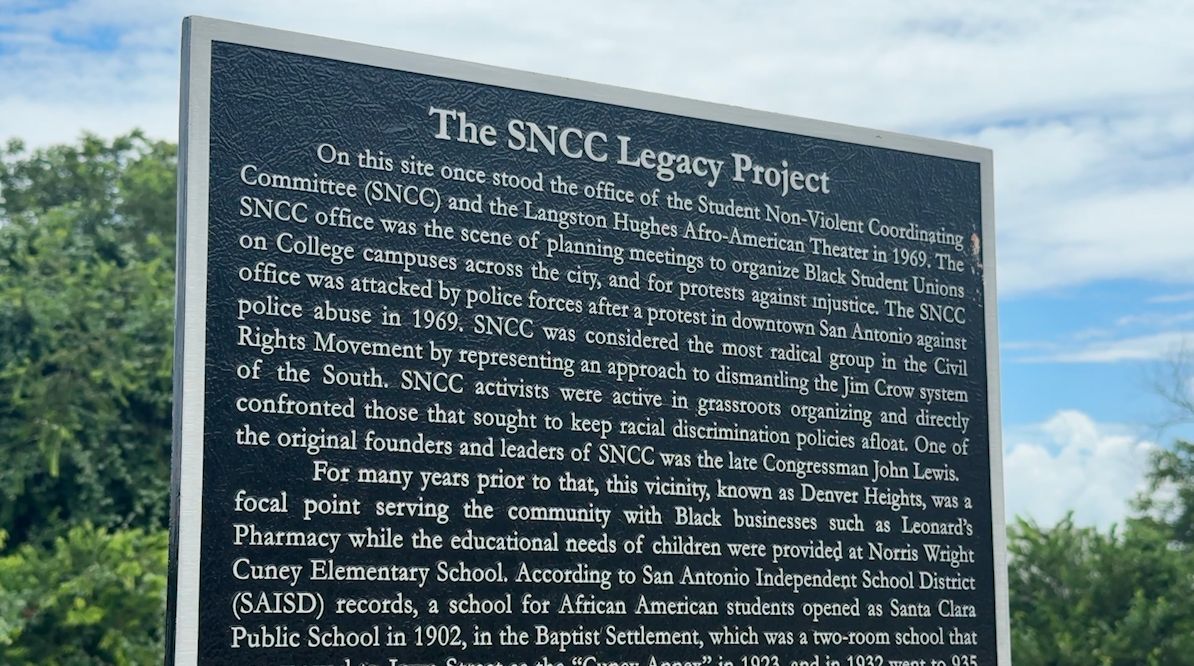
“This is where the Student Nonviolent Coordinating Committee (SNCC) office was located,” Salas said.
Although it’s now an empty lot, this is where colleges’ Black Student Unions met to plan their protests against injustice.
“They fought against segregation,” Salas said. “They fought against white supremacy. They made a real big difference in what was going on in the country at the time.”
Decades later, a historic marker now stands at the corner of Iowa and Pine Street — acknowledging SNCC’s impact.
“SNCC was helping the everyday people,” said Becky Brenner with the SNCC Legacy Project. “And they won our respect as civil rights workers in Alabama. SNCC won our hearts and minds.”
It’s one of many historic markers that documents significant places.
“We’ve put up plaques to save a few,” Salas said. “We’ve got more plaques to put up so that people won’t forget what this neighborhood was like.”
And the people who fought for civil rights.
“Comrades and close friends that are no longer with us,” Brenner said. “We wanted to make sure they were included in our thoughts and hearts today.”
Elders like Nettie Hinton say Black history is being erased. These markers help young people appreciate those who came before them.
“We have to feel certain that the generation younger than we are will continue to fight just as hard, and as strong and as intelligently as we fought,” said Hinton.
As neighborhoods continue to change, Salas believes the markers ensure San Antonio’s Black history won’t be ignored or forgotten.
“It’s important to remember what they did so future generations will know we fought hard to get where we are and were not about to give up the fight now,” Salas said.