
Star Wars: Legacy by Madeleine Roux is finally out in the world. The novel, which explores the burgeoning relationship between Rey and Leia, is really only the tip of the iceberg. As the duo head to Tython, a planet steeped in the Force, to heal the broken kyber crystal that belongs to the Skywalker family lightsaber, they are forced to confront hard truths about themselves and the Jedi Order at large.
*This article contains major spoilers for Star Wars: Legacy*
In my non-spoiler review, I worked incredibly hard to avoid discussing how Tython and its ancient history influence the very personal, character-driven journeys of Rey and Leia. The women leave the planet with a better understanding of themselves and a new resolve to face the First Order and chart a new road ahead for the galaxy. But what I didn’t get into was what that path actually looks like in regard to the Jedi. It’s easy to say that Legacy critiques the Jedi through ideas like attachment, but the novel’s message is far more nuanced — something that seems to be getting lost in online discussion.
 Star Wars: Legacy by Madeleine Roux, available now
On Tython, Rey and Leia discover an ancient Jedi Temple. As they go deeper inside, they stumble upon a bunch of lightsabers and a series of recordings from the Jedi that once called the temple home. These Jedi date back to the Old Republic — yes, that Old Republic. In one of canon’s first real looks at these ancient Jedi, Rey finally gets to see another perspective on the Force.
As she studies, she learns of a Sith Lord known as Kalrian Diir. After killing her Master, Darth Maritosh, Diir sought redemption. Rather than condemning her outright, Master Vree Ra’vinel acts more like a counselor than a traditional Jedi Master. While he was reluctant at first, Vree refused to let Diir go, promising to walk side-by-side with Diir as she seeks the light — a venture that ultimately failed. Diir’s spirit still lingers in the temple, calling out to Rey throughout the book.
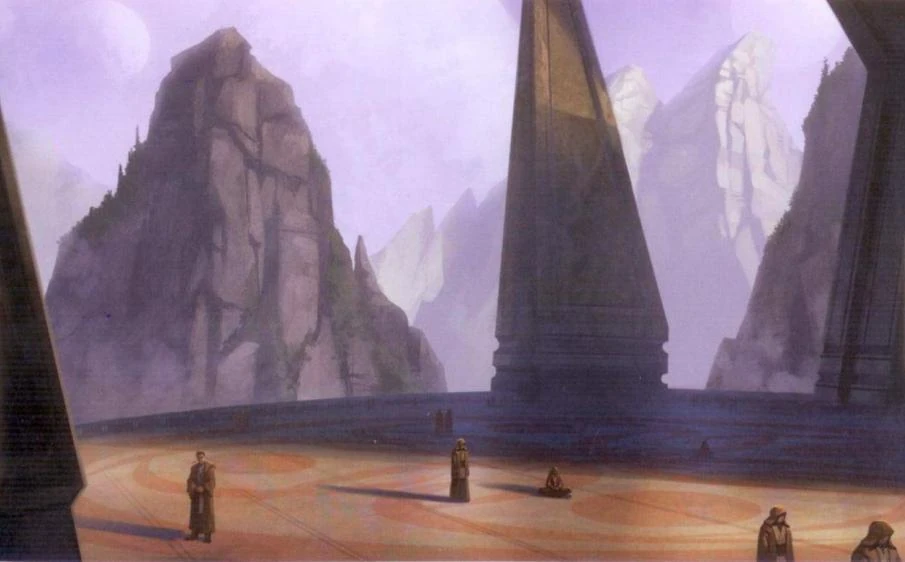 Tython in Legends
Our young heroine feels a kinship with the fallen Jedi; their journeys are not dissimilar. Throughout the book, Rey struggles with the words Luke told her when she first connected with the Force on Ahch-To: “You went straight to the dark” — a line that stuck with her, now feeding a lingering fear that all it will take is one push for the darkness to consume her as it once did Diir and Kylo Ren in the present. That fear comes to the forefront as she attempts to heal the kyber crystal, ultimately holding her back.
In one of the book’s most important scenes, she confides in Leia:
“The more I learn about the Jedi, the more I . . . I don’t know, the more I want to change things.”
Rey goes on about what she’s observed about the Jedi and where it might have gone wrong. The trials. The riddles. The rules and regulations. Taking children from their parents. Something about the rigidness of the Order irks her to her core, keeping the Jedi away from everything else that’s beautiful in the galaxy. Leia chimes in with an idea: “Not an academy, but a community.”
That word “community” resonates with Rey, calling back to the age-old dogma that Jedi needed to let go of all attachments. “Everyone needs something to fight for, and more than just ideas, people.”
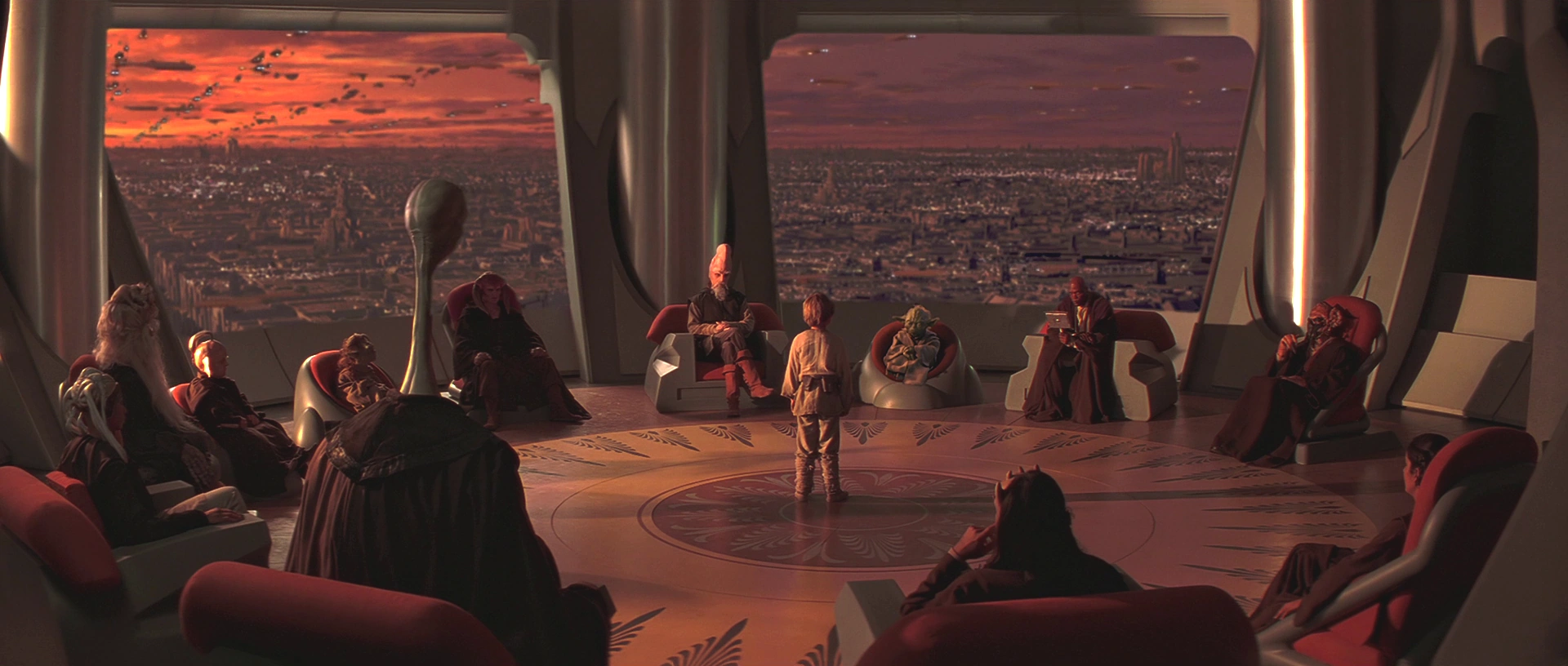
What I think is getting lost in the discussion around Legacy is that this goes far beyond the Jedi’s ban on attachments. Through Diir, Legacy shines another harsh light on the failures that have persisted across generations of Jedi. Even as she tries to reclaim herself, Diir is forced to do it in isolation, in virtual exile. The Order at large afraid of what she could do. A pattern that repeats itself throughout Jedi history. In the High Republic, Azlin Rell fell to the darkness and was ultimately cast aside, even if he never became a true Sith. Then there’s Anakin Skywalker, perhaps the Order’s greatest failure. The list goes on and on, with echoes of it in Rey’s own journey, beginning with Luke initially keeping her at arm’s length.
Instead of leaving people behind, I get the sense that Rey’s Jedi Order will take a more active role in helping people through their lowest moments. Walking the Jedi path will still mean choosing the light, but no one can make that choice alone forever. Life has a way of testing even the strongest convictions, and having a community there to shoulder that burden may ultimately be what sets Rey’s Order apart from every generation that came before. Someone’s darkness isn’t something to inherently fear. It’s an idea that some might say resembles the High Republic Jedi — but even their philosophies faded with time.

As the Old Republic morphed into the High Republic and finally into the Republic we see in the prequels, one thing lacked: acceptance. Rey’s Jedi Order seems poised to be willing to walk with anyone who steps into the community she hopes to build. People and their acceptance of each other could be what makes the New Jedi Order tick.
This theme is reinforced throughout Legacy as Rey and Leia work through their own demons. The Force guided them to Tython to heal the kyber crystal that belongs to the lightsaber once owned by Luke and Anakin Skywalker. And it wouldn’t be a Skywalker family story if Luke and Anakin didn’t make their presence felt.

Luke, appearing to Leia on multiple occasions as a Force ghost, makes it clear he regrets how he approached teaching Rey. He even admitted that Leia was the only one who could be there for Rey, as he didn’t have what she needed. He urges Leia to lean into what she can provide Rey. Later on, Luke reveals to Leia Rey’s lineage — a secret that only underscores how desperately Rey needs someone in her corner. Luke says that this is about more than healing a simple lightsaber. The Skywalker name is about more than that.
Almost as if father and son are working together to get this message across, Anakin appears to Rey when she is alone on one of Tython’s snowy mountains. Rey had just failed to perform a Force heal, coming face-to-face with the darkness inside her again that’s preventing her from breaking through. Anakin’s words are a bit more cryptic, but nonetheless poignant.
“I know what it’s like to be alone. We’re hard people, Rey, raised by the desert. There were people that tried to help me, but I wouldn’t let them. I wanted to do it all on my own . . . That was weakness, Rey. Evil looks for the weak There is strength in you and all around you.”

None of this explicitly tells us what Rey’s Jedi Order will look like, but there is something to be said about being there for one another. The lesson isn’t that attachment or mistakes no longer matter. It’s that no one should have to carry those burdens alone. At the end of the book, Rey accepts that her darkness will always be a part of her, but refuses to let it control her. This acceptance opens Rey up to powers of the Force once inaccessible to her, allowing her to heal young Meepka and the broken kyber crystal at once using the Force. None of it would’ve been possible without Leia, encouraging her every step of the way — something previous generations of Jedi may not have done.
Star Wars: Legacy gives so much connective tissue to the sequel trilogy, all the way up to its closing moments when Rey takes on the Skywalker name. Legacy brings new meaning to that family name, with just about every member, blood or otherwise, adding another layer to Rey’s journey as the galaxy forges ahead into a new era.
Star Wars: Legacy by Madeleine Roux is available now wherever books are sold.

Nate uses his love for Star Wars and movies as a way to cope with the pain of being a Minnesota sports fan. When he’s not at the theater, you can usually find Nate reading or pretending he isn’t washed at video games.