

Credit: Far Out / Alamy / Album Cover
Sat 8 August 2026 10:43, UK
Looking through the pantheon of 20th-century music, it is easy to see a heavy conglomerate of stars from the 1960s. The Beatles, Bob Dylan, The Rolling Stones, Joni Mitchell, and so many more found their way in the decade.
These stars used the roots they laid to grow into the coming years, blooming into fame and fortune with the perfumed ease of a bowing sunflower in midsummer. Their success in the music industry came as pop music was still in its infancy. Those who made good on their names commercially had to bob and weave to get there. But not everybody was so lucky when it came to sustaining their breakthrough.
John Fogerty was one of the leading members of the growing counterculture movement as the lead singer of Creedence Clearwater Revival. A vocalist and songwriter that almost every band of the time would have cited as a major inspiration, Fogerty’s career was derailed following a not-uncommon mishap with his management.
In a prolific two-year burst that spanned from 1969 to 1971, Creedence Clearwater Revival scored a whopping nine top ten hits. The band even outsold The Beatles’ swansong in 1970. But this wild success, that pretty much made them the biggest American group on the planet, soured quicker than milk left in the sun towards the end of their brief tenure.
It ended with a tragic situation where the singer refused to play any of the band’s songs because of a dispute with their record label. Beyond the legalities, John Fogerty was almost too traumatised to even continue in the world of music. Enter George Harrison and Bob Dylan.
 Credit: Far Out / Alamy
As many musicians can attest, being cut out of one’s own musical creations is a tough pill to swallow. Whereas some attempt to circumvent those issues by re-recording all of their tracks, Fogerty took a more gentle route and, instead, moved off into the shadows, confident that his time as the frontman of Creedence Clearwater Revival was to fall away with a whimper. Years passed without Fogerty singing his legendary discography.
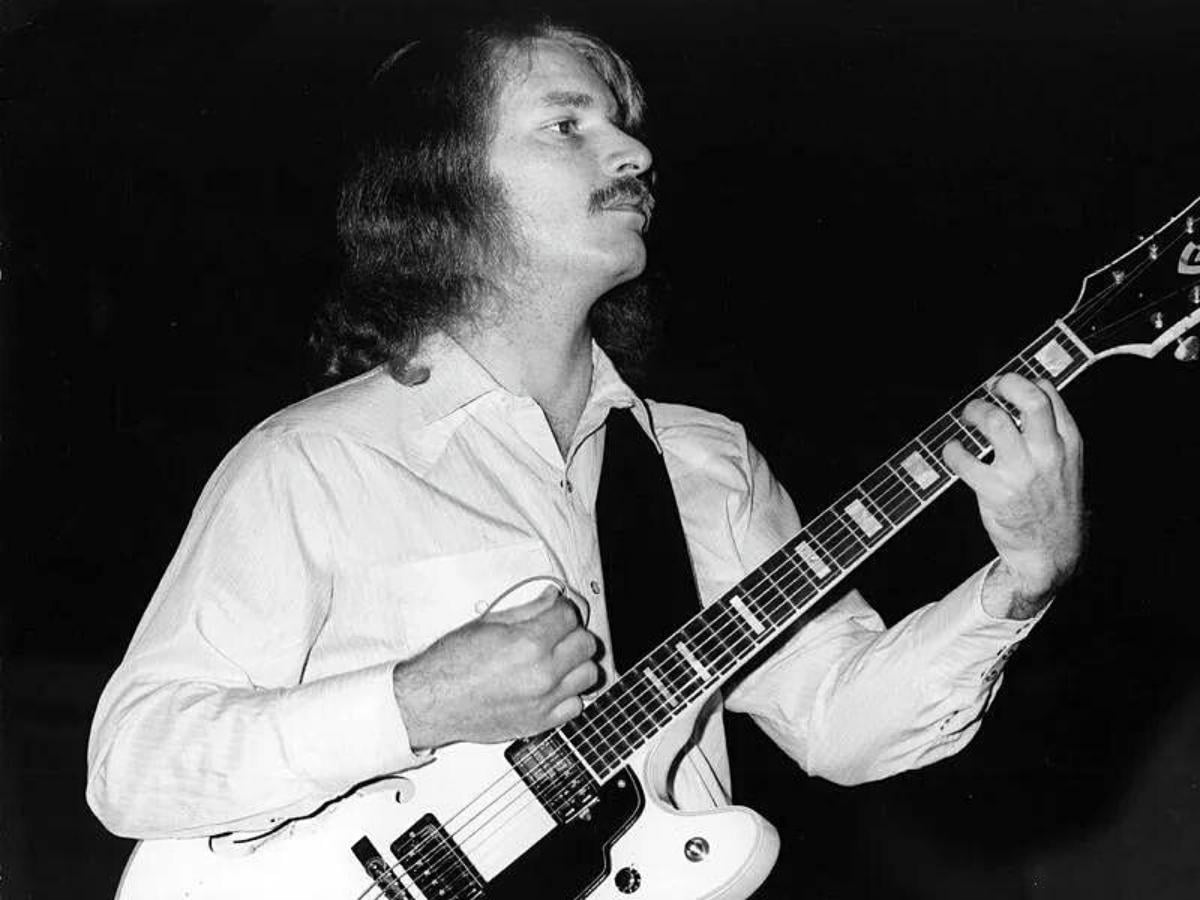
But, thankfully, things changed in 1987 when the Taj Mahal and the Graffiti Band, featuring none other than Jesse Ed Davis on guitar, were performing a set. As the curtain lifted, Harrison, Dylan, and Fogerty entered the little ol’ Palomino Club in North Hollywood with a view of the stage. The trio would end up on stage (imagine being in the audience that night), and they made Fogerty return to some of his old tracks.
The night would offer Fogerty the chance to reconnect with his songs and for a reunion of sorts. Dylan, Davis, and Harrison had previously shared the stage back in 1971 at the Concert For Bangladesh, so they were used to making history. While this performance wouldn’t have the same grand foundations, it would show off what the world was missing in John Fogerty.
Fogerty had been avoiding singing his old songs following a serious breakdown of communications with his and Creedence Clearwater Revival’s label. Fantasy Records still had CCR contractually obliged to produce more albums when the band broke up. To avoid the enormous contract-breaking fee Fogerty gave the label the copyright royalties to all of his songs. So, they could effectively sue him for impersonating himself if he sang them.
It’s a situation that left Fogerty avoiding the songs he wrote himself at all costs to avoid making Fantasy any richer than it already was off his back. But this awful paradox had also broken his spirit. “I was hurt. I was damaged. I gave it away to end that chapter of my life,” he said. And feeling as though his “future had been taken away”, he worried he had relinquished more than just his songs.
At least that was until the night when his two idols came to his aid. During the performance, Dylan leaned over and said, with a wry wink, “Hey, John, if you don’t do these tunes, the world’s going to remember ‘Proud Mary’ as Tina Turner’s song.” It was just the sort of lighthearted jibe he needed.
 Credit: Alamy
During an interview with Uncut, Fogerty recalled, “Dylan’s words were very provocative, and he certainly put the bee in my bonnet, you could say.”
Looking back at the man who wrote his neglected songs, he earnestly reflected, “That guy must have had a lot on his mind. He must have been a troubled person to make that sort of a decision. I daresay it has harmed me in some way.”
It certainly arrested the momentum he had built up as the gravel-voiced craftsman behind CCR. As Fogerty continued, “I remain a bit of a mystery to a large number of people, because I wasn’t out in the world performing for about 25 years or whatever. Thankfully, I look back and think, ‘Well, I guess I’m a man of convictions, but I’m sure glad I’m over that!’”
Luckily, Fogerty is back out on the road and making music, but it all started one evening when George Harrison and Bob Dylan (of all people) made him get up on stage and sing ‘Proud Mary’ for a feverish and very surprised audience at a bloody Taj Mahal gig.
While it might seem like a comparatively small moment in Fogerty’s impressive career, the truth is that the push onto the stage, and the renewed air of fun surrounding music that night, gave him the extra impetus needed to once again kickstart his career as a musician.
Without Harrison and Dylan, Fogerty’s songs would have remained cherished memories from the bygone days of the late ‘60s. Now, they are given the chance to live again every time he steps on stage to play them.
Now, Fogerty has not only reasserted his class as a solo artist, but also shone a light on the importance of CCR in the process. As Bruce Springsteen put it, “Creedence Clearwater Revival … were progressive and anachronistic at the same time. An unapologetic throwback to the golden era of rock ‘n’ roll, they broke ranks with their peers on the progressive, psychedelic San Francisco scene.”
Concluding, “Their approach was basic and uncompromising, holding true to the band members’ working-class origins.” That’s as important now as ever.
ADD AS A PREFERRED SOURCE ON GOOGLE  The Far Out Bob Dylan Newsletter
All the latest stories about Bob Dylan from the independent voice of culture.
Straight to your inbox.