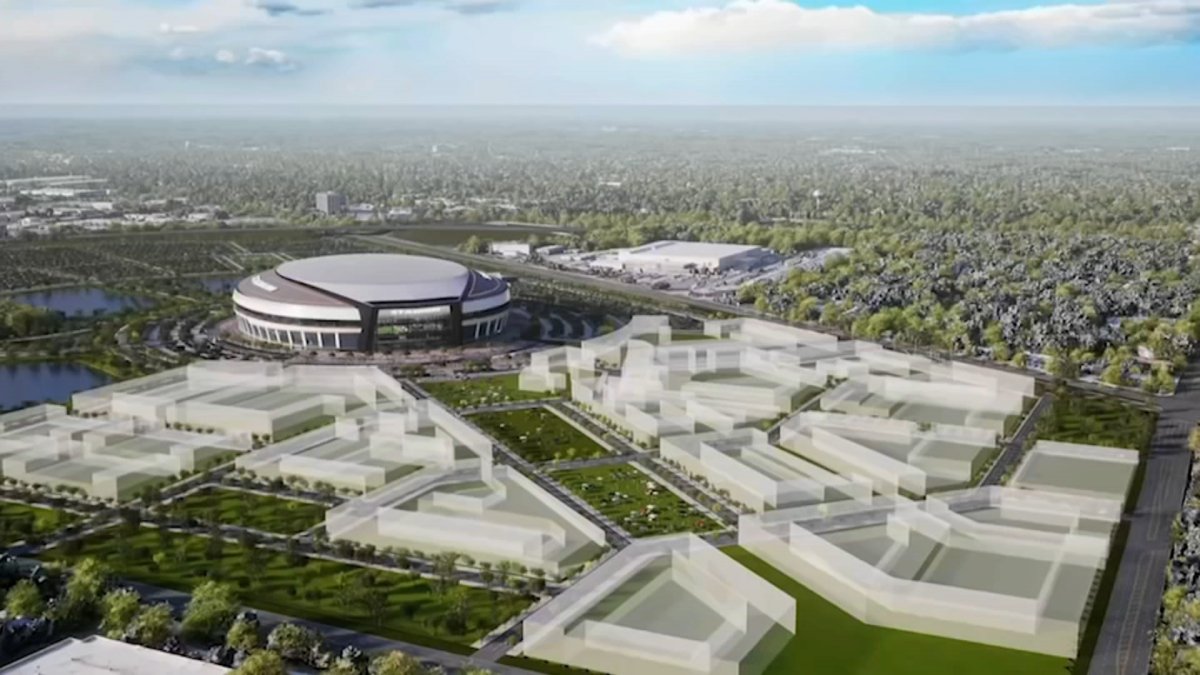
The Chicago Bears’ bid for an Illinois bill to kickstart their stadium project remains on hold, thought a proposed law would require greater transparency in negotiations between the team and state.
The Stadium Transparency and Responsible Spending (STARS) Act, introduced by Chicago Rep. Kam Buckner, is a wide-ranging bill that would require teams seeking state subsidies to not only provide notice to the public about their stadium proposals, but would also require them to pay for studies on the financial viability and final cost of any project undertaken.
“We have this opportunity as a state, not just to be smart on this current proposal that they’re putting forward, but to change the way that we do stadium financing in this state for the long term,” Buckner said in a statement to Crain’s Chicago Business.
Under provisions of HB 4152, state and local entities would be prohibited from entering into agreements granting financial or tax incentives for construction, renovation or operation of a stadium project unless the full text of an agreement was posted for public viewing for a minimum of one month prior to passage.
The Illinois Commission on Government Forecasting and Accountability would be required to prepare a report containing a cost-benefit analysis of the agreement, and would require the team seeking the subsidies to pay for the production of the report.
A minimum of two public hearings would be required in impacted communities.
Finally, any franchise seeking public subsidies would be required to reimburse public schools, libraries or emergency services for any net loss of funding they experience due to a reduction of property tax revenue. Teams would also be required to repay subsidies with interest if they relocate or fail to meet commitments contained within the agreements.
Arlington Heights residents are sharing their reactions as the Bears zero in on the community for their new stadium, and Courtney Sisk has the latest.
Illinois Gov. J.B. Pritzker has said he would prefer the Bears to remain in Chicago, a position Buckner shares, but he did not indicate whether he would sign the bill into law if it were to pass.
“I would like them not to move either, but I will say broadly that it’s a private business,” he said. “If they want to move they can, but the state can put restrictions on what private businesses get from the state. That’s all got to be taken up by the legislature.”
The one thing the bill did not address was the debt still owed by the Illinois Sports Facilities Authority for the 2002 renovation of Soldier Field, with Illinois taxpayers still on the hook for more than $500 million for that project.
In September, Pritzker indicated that he would be in favor of requiring the Bears to reimburse the state for the remainder of the debt owed on the project.
“We need the Bears to pay off what’s owed on the existing stadium. That’s going to be a really important feature of whatever happens,” he said.
Buckner said his bill to increase transparency would prevent a similar situation from unfolding in the future, and warned that if the Bears are allowed to move without taking care of the debt, that Illinois taxpayers would suffer the consequences.
“Chicagoans still owe more than $500 million on the debt incurred on Soldier Field renovations the last time the Bears threw a tantrum and threatened to leave,” he said in a social media post earlier this month. “If the state foots this bill, Chicago residents will again pay, helping cover the bill for the roads, sewers and rail in Arlington Heights.”
Ahead of Monday night’s home opener, the Chicago Bears reiterated their commitment to moving to Arlington Heights with an open letter to Bears’ fans. NBC Chicago’s JC Navarrete reports.
The Bears have expressed hope that the state would negotiate bills to help facilitate the start of their stadium project, but those hopes have been largely muted as lawmakers begin their fall legislative session in Springfield.
In an interview with Capitol News Illinois, Senate Majority Leader Don Harmon said he doesn’t anticipate that lawmakers will debate a Bears stadium bill during the fall session, saying the team should consider the session “a bye week.”
“I am most concerned about the health and ability of their offensive tackles,” Harmon said, according to the publication.
At the center of the negotiations, the Bears are seeking two different bills to help them with the project. The first is known as a bill that would freeze the team’s property tax breaks and other incentives for a long period of time. As part of that, the Bears would make a “payment in lieu of taxes,” or PILOT for short. Such a payment would allow for companies like the Bears to freeze property tax breaks, and would permit the Bears to negotiate an annual payment with local officials in lieu of standard property tax payments.
Why the Bears passed the Eagles on CNBC Sport’s official NFL team valuations list for 2925.
According to the Associated Press, the Bears are also seeking at least $855 million in public funding to help upgrade infrastructure around the stadium project site, improving rail service and upgrading roads and utilities around the Arlington Heights facility.
A report by HR&A Advisors Inc. says such a subsidy would “set the stage” for the mixed-use development the team plans at the site, which includes more than 1,000 residential units, music venues, restaurants, retail shops and more.
State lawmakers have been skeptical of footing the bill for the subsidies, with many including Buckner pointing to a recent sale of a 2.35% stake in the team to existing owners of the franchise that valued the Bears at a staggering $8.9 billion, a dramatic increase from the $6.4 billion valuation reported by CNBC in 2024.