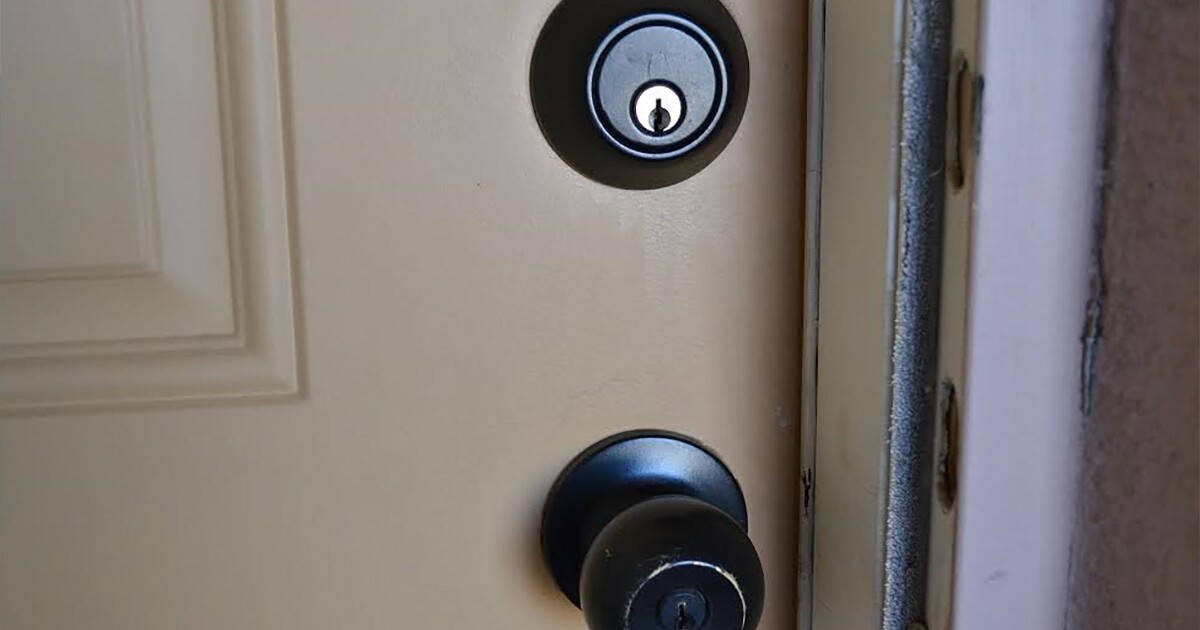
A recent ruling from the Arizona Supreme Court seems to extend the right to self-defense in the state.
The case stems from an altercation inside a condo a man shared with a woman. The woman had invited over a neighbor with whom the male resident had had disagreements.
When the neighbor arrived, the man who lived in the condo locked himself inside his bedroom, but his roommate and the neighbor tried to force their way inside. The male resident hit the neighbor with a microphone stand.
Lower courts had convicted the man of aggravated assault, but the state’s high court, with one justice dissenting, vacated that conviction — and ruled the man had the right to self-defense.
Bryan Schwartz, associate clinical professor in the James E. Rogers College of Law at the University of Arizona, joined The Show to walk through the ruling and its potential implications.
Full conversation
MARK BRODIE: Bryan, lots of people have been talking about the “castle doctrine” in relation to this case, so let’s start with a thumbnail version of what exactly the Castle Doctrine is.
BRYAN SCHWARTZ: Yeah, it’s, it’s interesting because the castle doctrine often kind of gets looped in with some of these self defense laws. And they’re related, I would say, but there, there is a distinction between the two. So the castle doctrine originally was in relation to our duty to retreat. So before we could act in self-defense, originally we had a duty to retreat to avoid … whatever the harmful conduct might be.
And that was problematic when you think about if you’re in your own home and something happens, someone’s breaking in, the law required you to retreat away from that home or that, that place of safety, your castle. And so eventually the castle doctrine was created to eliminate the duty to retreat. And then what this case kind of brings out is some related defenses. So you don’t have to retreat, but can you use these defenses that the case talks about to protect your home or wherever you are?

University of Arizona
/
Handout
Bryan Schwartz
BRODIE: Yeah. So do you see the ruling in this case as an expansion of the castle doctrine?
SCHWARTZ: I would say it’s not an expansion of the castle doctrine, but it would be an expansion of our self-defense laws. So the, the two defense laws that it looks at is this defense of residential structure is what they’re called in Arizona and defensive premises. And even if you are, you know, listeners aren’t familiar with those terms, realistically, they probably are familiar with what these self-defense laws protect.
And that’s if you’re in your home and someone is breaking into it or unlawfully entering in some way, you have the right — the law allows you to use force to stop that intruder or person from breaking in. So what this case actually does is it reevaluates, or I guess it defines, the idea of where you can claim this defense.
And so residential structure is the term that Arizona uses. And the case looks at whether a locked bedroom could be a residential structure. So, again, if something is a residential structure and you’re inside it, you own it, you live there, and someone’s trying to come in, you can use this defense — you can claim this defense, I should say — if you use force to stop them.
So really, what the court was looking at is typically, we think of the home, just generally. But could this bedroom specifically be its own residential structure, such that you could use this defense to kind of protect, to stop someone from entering that home?
BRODIE: Well, so it sounds like instead of maybe being an expansion of the castle doctrine, it’s an expansion of the definition of residential structure.
SCHWARTZ: Absolutely. And I think the court would probably say that it’s not an expansion so much as they’re just defining it. They believe that the room falls under the existing definition. But I think either way you look at it, I would agree with what you said. Yeah, I think we’re expanding the possible places where someone could use this defense.
BRODIE: Well, how far do you think that would be applicable? For example, would this be applicable if you were behind a locked bathroom door? Or if you were in your car, which is locked? How far do you think that the justices would say this could go?
SCHWARTZ: It’s hard to say for sure, of course, but I think there’s a couple things to say about that. One, you mentioned the locked car. An occupied vehicle is actually part of this defense that I mentioned. So along with the residential structure, we do allow for someone who’s in their vehicle, and there’s another individual trying to get into the vehicle, you can use this defense to stop them. So the car has actually already been considered.
I think, as far as, like, any other type of place within the home. You mentioned the bathroom, you know, any other kind of isolated room, it comes down to the definition of residential structure. And the court kind of goes through these different definitions and how to interpret it.
I think realistically there’s a little bit more nuance to it than what I’ll say, but they’re looking at: Is this a place that you could live? Essentially, it has four walls, it can be secured, and it’s designed to be a residence or someplace that you can live.
So the extent that you would argue that a bathroom meets that? Probably not. I think there’s opportunity where we could see an expansion on our self-defense laws in Arizona. It’s hard to tell obviously at this point, but I do think like this was a minor step in that direction and there’s certainly room for it to expand further.
BRODIE: Yeah, well, I mean, I would imagine that there’s a whole bunch of rabbit holes, legal rabbit holes, one could go down on this, right? Could you argue that a basement, for example, would be a residential structure? And would it matter if it was finished or not or if it had, I don’t know, if it had furniture in it or not. Or a spare bedroom that maybe had or did not have other things in it versus just an empty room. Is it that nuanced?
SCHWARTZ: It’s interesting because like in law school we always joke that the professors usually respond with like, “It depends,” to all the questions, “It depends.” Though there’s a lot of different factual things that we could kind of play with. And see, I do think that, you know, given that they’re willing to extend it to a bedroom so realistically a place where you could imagine someone like sleeping and being for long periods of time, I do think that could probably be, that could, that could meet the definition of like you mentioned a basement.
I think one of the other interesting kind of rabbit holes that this case brings up is in reality, like if someone’s breaking into your house and you’re up in your room, the second they enter your house, even if they then come into your room at any point you could use force to stop them.
So on the one hand, like, why do we, why did we make this exception for the house, for the room specifically? And I think it brings up kind of an interest situation. Like in this case, it had to do with an invited guest. So you, you can’t claim this defense that we’re talking about if the person has a lawful right to enter the residential structure.
And so that’s really what prompted the, the Supreme Court to have to deal with this. We had a couple, there was a husband and wife living in, excuse me, in a condo, and they had separate bedrooms. Their neighbor was invited over who the husband didn’t really get along with. And so the husband said, you know, I’m going to lock myself in my room, stay out, stay away from this situation, whatever’s happening.
And the question was, well, what if this invited guest, this neighbor now decides that he wants to force his way into the husband’s bedroom? Can the husband now claim this defense that he was using force to stop the invited guests from coming into the room. And so that’s that’s really what prompted it.
I think with that in mind, it’s sort of a specific, factual scenario. I mean, I suppose if you have, you know, a house with roommates, that might be a more there might be this situation could arise more easily where roommates all have their own room, and then there’s friends over and something happens where someone’s unlawfully entering a room. But that’s sort of the unique twist on why we even got to this point.
KJZZ’s The Show transcripts are created on deadline. This text is edited for length and clarity, and may not be in its final form. The authoritative record of KJZZ’s programming is the audio record.