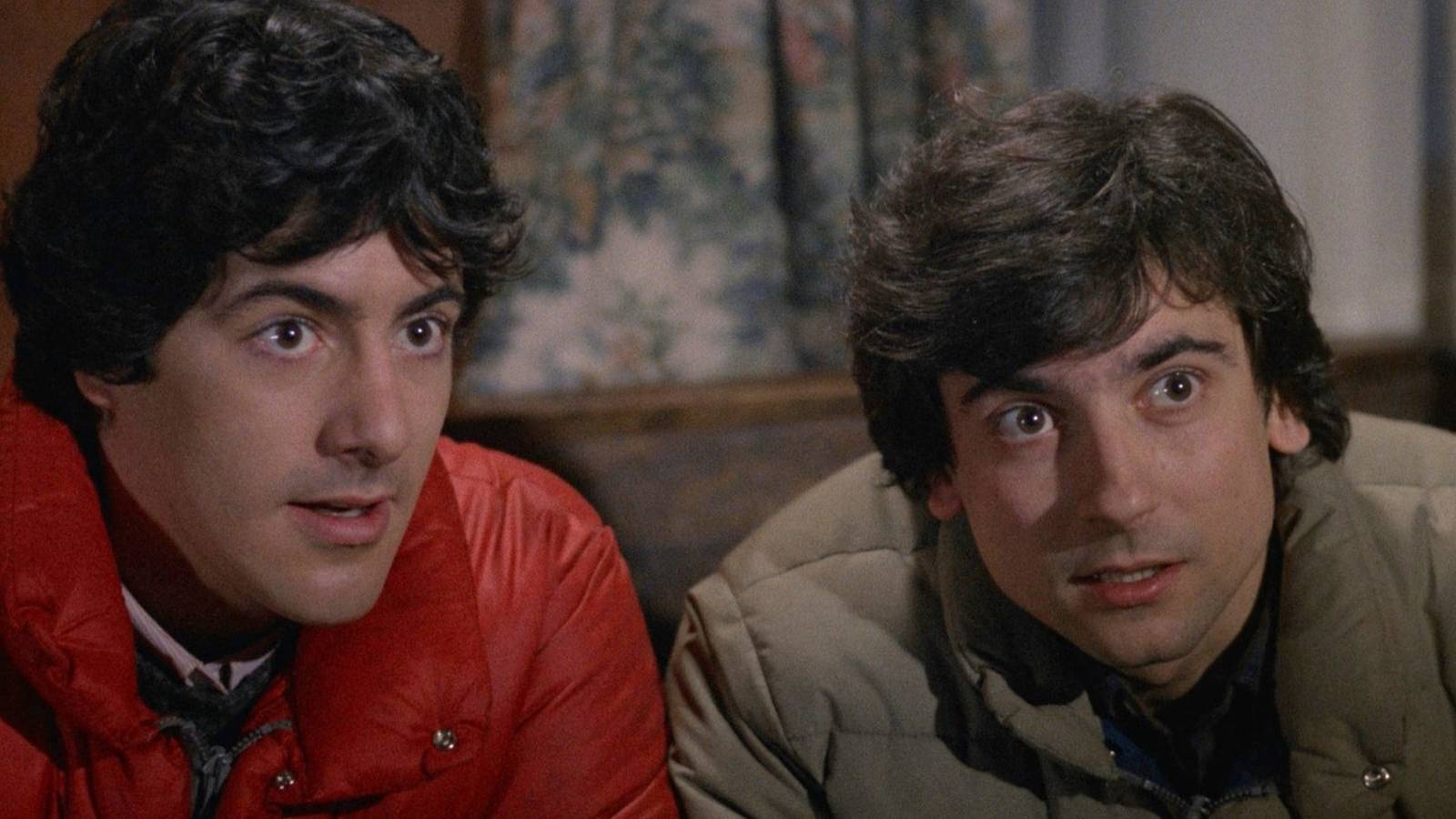
When people hear the term creature feature, they often imagine giant, radioactive monsters wreaking havoc on a city or inhuman beasts stalking unsuspecting campers. In reality, the term encompasses more than simple bloodthirsty creatures. It spans stories of humanity fighting against nature, as in Jaws, to explorations of the repressed self, as seen in countless werewolf films.
The creature feature is one of horror’s most enduring subgenres. Since 1913, when Universal Studios released Dr. Jekyll and Mr. Hyde, it has grown alongside innovations in practical effects, suit work, CGI, and, most importantly, imaginative storytelling. In recent years, films like The Host and A Quiet Place have continued to push the genre in exciting new directions, along with the surge of kaiju movies and several Alien and Predator sequels. While fans eagerly anticipate remakes of classics like Frankenstein and David Bruckner’s The Blob, there are still plenty of standout creature features to enjoy.
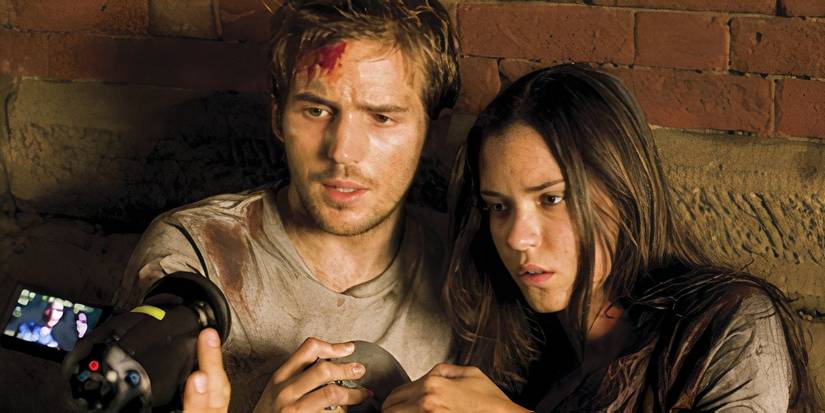
Jason and Lily are looking at the camera in CloverfieldImage via Paramount Pictures
The found footage subgenre has become something of a bore since the early days of Cannibal Holocaust and The Blair Witch Project. With shaky cameras and little justification for their use in the first place, horror fans have become almost numb to its gimmick. Cloverfield is shaky and offers little reasoning beyond “people need to see this,” but its overall story is too gripping to turn away. The film follows a group of 20-somethings caught up in a monster infestation in Manhattan.
While the main monster is only shown briefly through quick shots, its presence alone makes for an entertaining and terrifying watch. Throw in some smaller parasites that cause humans to explode outwards, and fans have a creature-packed thrill fest that never lets up. If that alone isn’t enough to entice fans, knowing that it comes from the mind of J.J. Abrams, aka the mastermind behind Lost and Super 8, is enough to lure in any fan of the genre.
Kong: Skull Island Reintroduced King Kong to Screens
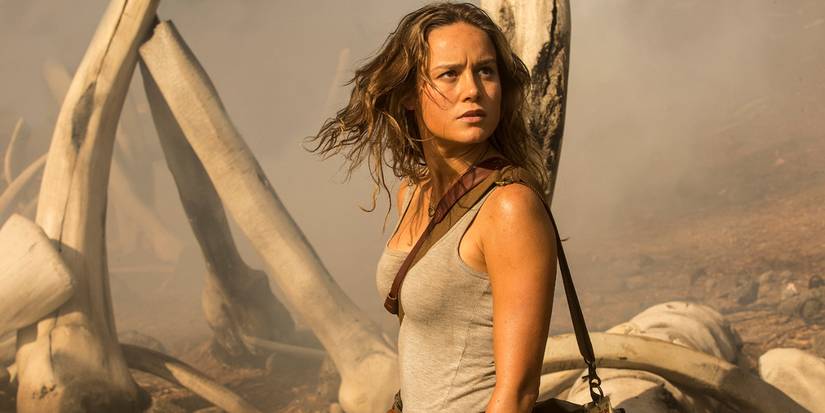
Brie Larson looking at the bones on the island in as Mason Weaver In Kong Skull Island.Image via Warner Bros. Pictures
Three years after 2014’s Godzilla kickstarted the MonsterVerse, Kong: Skull Island took viewers back to the early days of Monarch and reintroduced the legendary King Kong. Set in 1973, the film follows a team of Monarch scientists, led by Bill Randa (John Goodman), who join forces with a U.S. Army unit to explore the newly discovered Skull Island. Alongside former British SAS Captain James Conrad (Tom Hiddleston) and anti-war photographer Mason Weaver (Brie Larson), the team travels across the island, using seismic bombs to map its terrain and investigate Monarch’s Hollow Earth theory.
There, they learn of Kong’s role as protector of the island against predators, including the Skull Crawlers responsible for wiping out his species. Reuniting with the other survivors, the team races to the extraction point, with the now-awakened skullcrawlers chasing them every step of the way. With Kong rampaging across the island to defend his territory, and the Skull Crawlers eating almost everything in sight, there’s no shortage of monster action in Kong: Skull Island. It’s also the first installment to explore Monarch’s origins and backstory, making it an essential watch for fans of the MonsterVerse.
Underwater is an Underrated Lovecraftian Horror
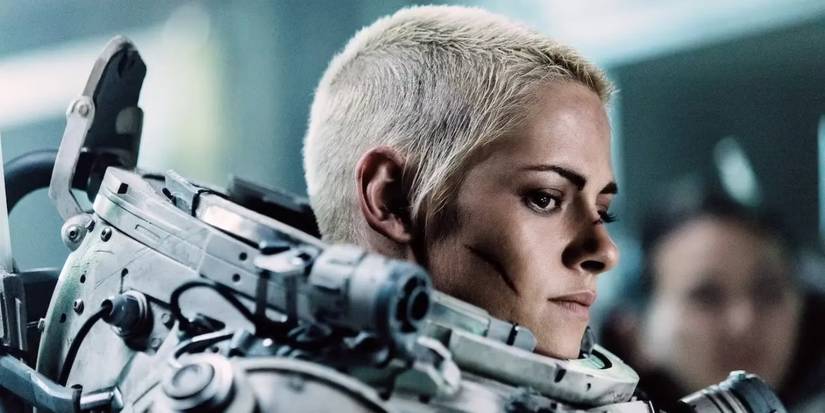
Kristen Stewart wears a suit, looking at something in Underwater.Image via 20th Century Studios
The ocean has always fascinated and unsettled the human mind, its vast and mysterious depths still mostly uncharted even today. Underwater imagines a future where humanity has reached one of the ocean’s most extreme frontiers: the Mariana Trench. At nearly seven miles below the surface, a massive drilling and research facility has been built at its base. But when a sudden tremor, believed to be an earthquake, tears through the structure, an unimaginable creature emerges from its depths. Not to spoil or reveal exactly what the creature is, this is one film fans of cosmic horror don’t want to miss.
The story centers on Norah Price (Kristen Stewart) and her surviving crewmates as they attempt to reach a secondary station nearly a mile away, the only remaining place with escape pods. As the crew is hunted one by one, the film channels the tension and claustrophobia of classic sci-fi horrors set in space, replacing the void of the cosmos with the pressure of the deep.
Love and Monsters is an Apocalyptic Coming-of-Age Story
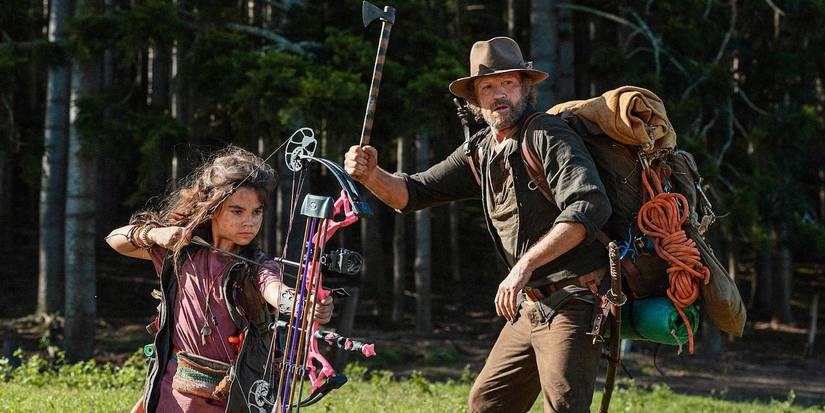
Image via Netflix
Perhaps one of the best creature features of the 2020s to date, Love and Monsters follows Joel (Dylan O’Brien), a 20-something survivor of the “Monsterpocalypse,” a catastrophic event that saw ordinary insects mutate into massive predators after chemicals from an asteroid mission contaminated Earth. Having spent the last seven years living underground with a small group of survivors, the timid Joel decides to leave the safety of his bunker to journey 85 miles across monster-infested terrain in hopes of reuniting with his ex-girlfriend, Aimee (Jessica Henwick).
While it never dips into parody, Love and Monsters is something of a comedy. Constantly scared, often clumsy, and rarely prepared, Joel brings a disarming humor to an otherwise apocalyptic setting. At the same time, there’s plenty of action to keep the pace moving. Joel’s abilities grow throughout the story, so his early “run and hide” tactics are eventually replaced by thrilling man-versus-monster moments. While it leans into familiar sci-fi tropes, the mix of genres and its themes of love, courage, and acceptance make Love and Monsters a must-watch YA creature feature.
The Descent is a Terrifying Modern Classic
Beth and Holly walk through the cave in The Descent (2005)Image via Pathé Distribution
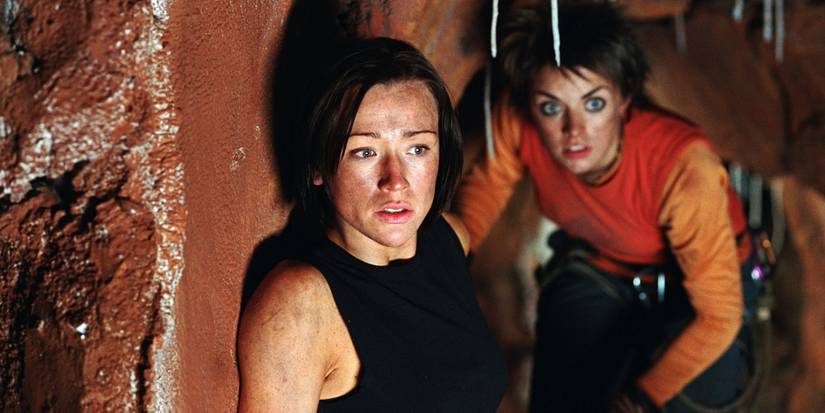
The Descent is as scary as it is emotional. The film follows a group of adventurous friends who visit an uncharted cave system in the Appalachian Mountains, unaware that it’s home to bloodthirsty, humanoid creatures. Alongside this, there’s a subplot surrounding the sudden deaths of Sarah’s (Shauna Macdonald) husband and young daughter, with the grief-stricken mother and widow venturing out for the first time in a year.
The sense of claustrophobia is immediate and unrelenting. As the women descend deeper into the cave, very few moments offer space to breathe, leaving viewers bracing for the inevitable entrapment. The oppressive darkness is unnerving on its own, but the addition of predatory monsters with acute hearing and a hunger for human flesh makes the fear all the more intense.
Sting is Arachnophobia Done Right
Ryan Corr with the spider behind him in StingImage via StudioCanal
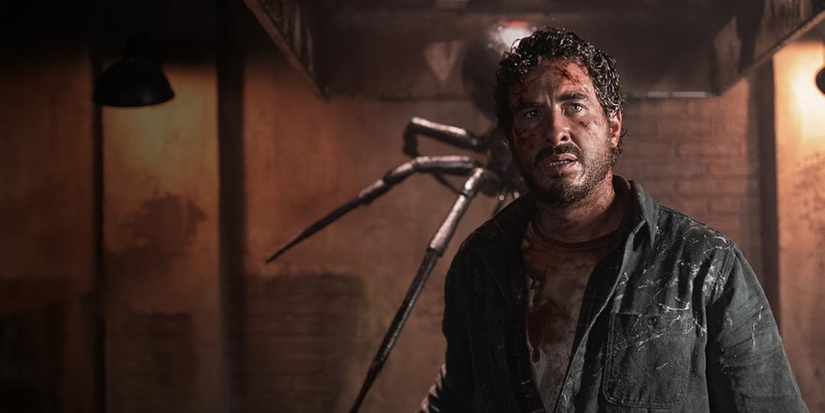
Sting follows Charlotte (Alyla Browne), a young girl who discovers a small spider in her apartment complex. Naming it Sting and deciding to keep it as a pet, she soon realizes that her new best friend grows twice in size every time it feeds. The creature eventually outgrows its closure and escapes, feasting on any poor living soul that dares to cross its path.
For the average viewer, Sting is an entertaining creature feature that offers its fair share of monster mayhem. For arachnophobes, it’s the stuff of nightmares. Many sequences transform seemingly ordinary actions, like scanning a room for spiders, into moments of horror. The film’s cinematography is also rather impressive, with a practical spider puppet enhanced with special effects. Overall, Sting is an inventive creature feature, backed by logical explanations, a strong cast, and a mounting sense of fear that will keep viewers on edge from start to finish.
The Tunnel Reimagines a Terrifying Folkloric Tale
Bel Deliá crying in The TunnelImage via Deadhouse Films
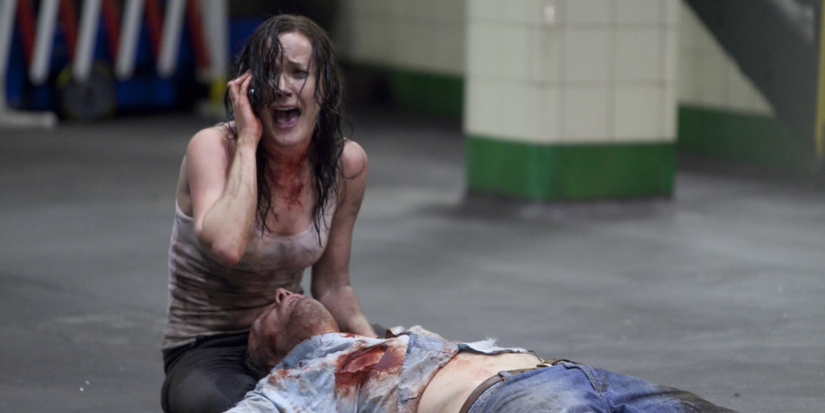
A documentary-style horror, The Tunnel is built from interviews and found footage. The story follows a Sydney news crew investigating the abrupt suspension of a government project designed to repurpose underground water tunnels during a drought. Suspecting a cover-up and concerned about the mysterious disappearances of several homeless individuals, investigative journalist Natasha Warner (Bel Delia) and her team descend into the abandoned tunnels to uncover the truth. Deep below the city, they encounter a humanoid creature that has claimed the deserted WWII air-raid shelters as its home.
Shot on a shoestring budget and released online via crowdfunding, The Tunnel doesn’t exactly reinvent the genre, relying on familiar visuals and a faux-documentary approach that fans have come to expect. Still, it has plenty going for it, notably a well-written script, deliberate pacing, and a sense of realism that lifts it above the typical low-budget and found-footage horrors. With a 100% rating on Rotten Tomatoes and a growing cult following, The Tunnel proves that found footage, when executed well, can still scare the hell out of viewers.
An American Werewolf in London is the Quintessential Werewolf Movie
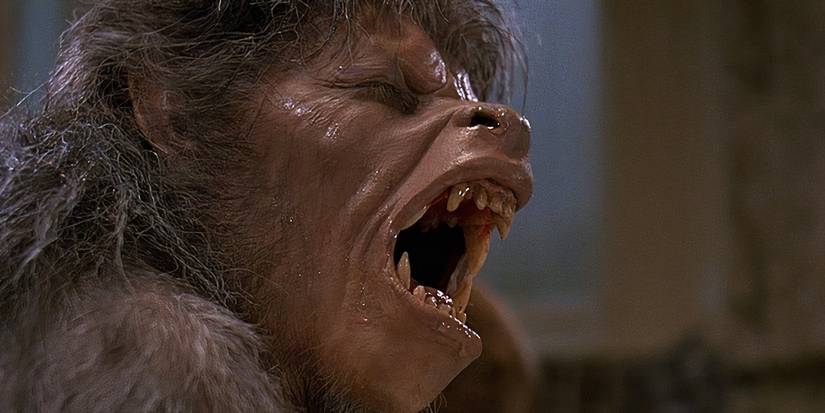
David transforms into a werewolf in An American Werewolf in London.Image via Universal Pictures
In An American Werewolf in London, David Kessler (David Naughton) and his friend Jack Goodman (Griffin Dunne) are attacked by a wolf while backpacking in England, turning what should have been an adventure into a nightmare. Jack is killed, and David faces the horrifying reality that he may be turning into a werewolf himself.
The film’s transformation scene has become iconic, earning its reputation as the gold standard of werewolf movies. Filmed in reverse, David Naughton sat covered in layers of hair that were gradually trimmed away to show the progression from man to monster. The rest of the film remains just as gripping, expertly balancing horror and dark comedy in a way few movies have matched.
Jurassic Park Brought Dinosaurs Back to Life
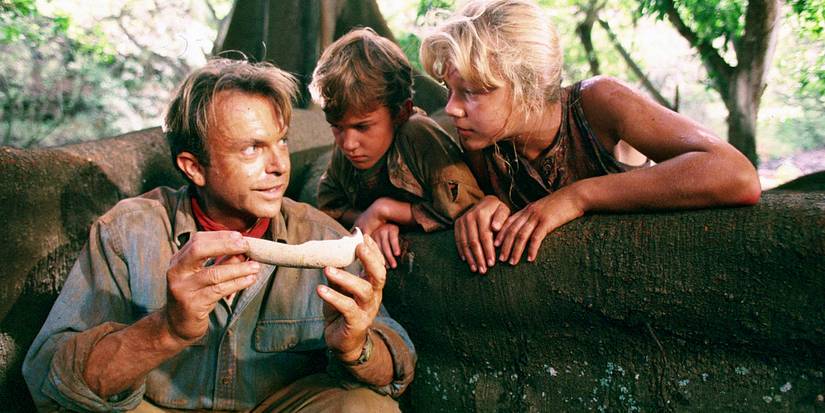
Grant showing Tim and Lex a dino bone in Jurassic Park 1993Image via Universal Pictures
After setting the creature feature bar with Jaws, Spielberg raised it even higher with Jurassic Park. A theme park visit usually isn’t a fight for survival, but John Hammond (Richard Attenborough) turns it into exactly that when he invites guests to tour his titular dinosaur-filled park. The poor ragtag group, including two children, are left to outrun the pack of deadly, genetically engineered predators.
It’s not a film people typically label as a creature feature, but it easily qualifies. After all, the genetically engineered dinosaurs are brutal predators acting on base instincts. Every scene where they’re hunting is packed with tension, while Spielberg spices the story with humor and delightfully cheeky dialogue. It’s an epic adventure, filled with whimsy, elevated by John Williams’s unforgettable score. Jurassic World: Dominion may have disappointed, but the first film will always be there to welcome audiences back.
The Ocean Has Never Been More Terrifying Than in Jaws
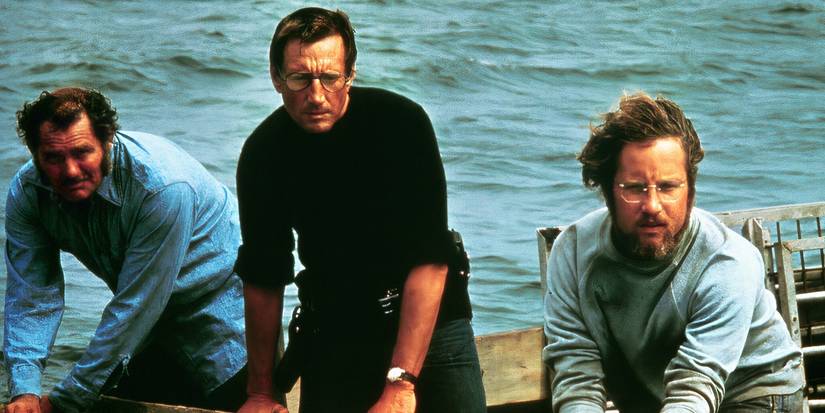
Brody, Hooper and Quint battle the shark in Jaws.Image via Universal Pictures
Set on Amity Island, Jaws follows a great white shark terrorizing beachgoers. Local sheriff Martin Brody (Roy Scheider) recruits marine biologist Matt Hooper (Richard Dreyfuss) and fisherman Quint (Robert Shaw) to hunt the shark and restore safety to the town. From the incredible score to its unforgettable characters, Jaws remains one of the most iconic films of the 20th century. The movie exemplifies ingenuity, arguably the most appealing trait of creature features. To bring Bruce the shark to life, Spielberg combined real-life shark footage with a fully operational animatronic for the climactic scenes.
No filmmaker has ever captured the fear of a shark quite like Spielberg. A key reason is his understanding that the audience’s imagination is far scarier than any budget could depict. Years of special effects-filled shark films have proven that nothing terrifies quite like the thought of an unseen predator lurking beneath the water.