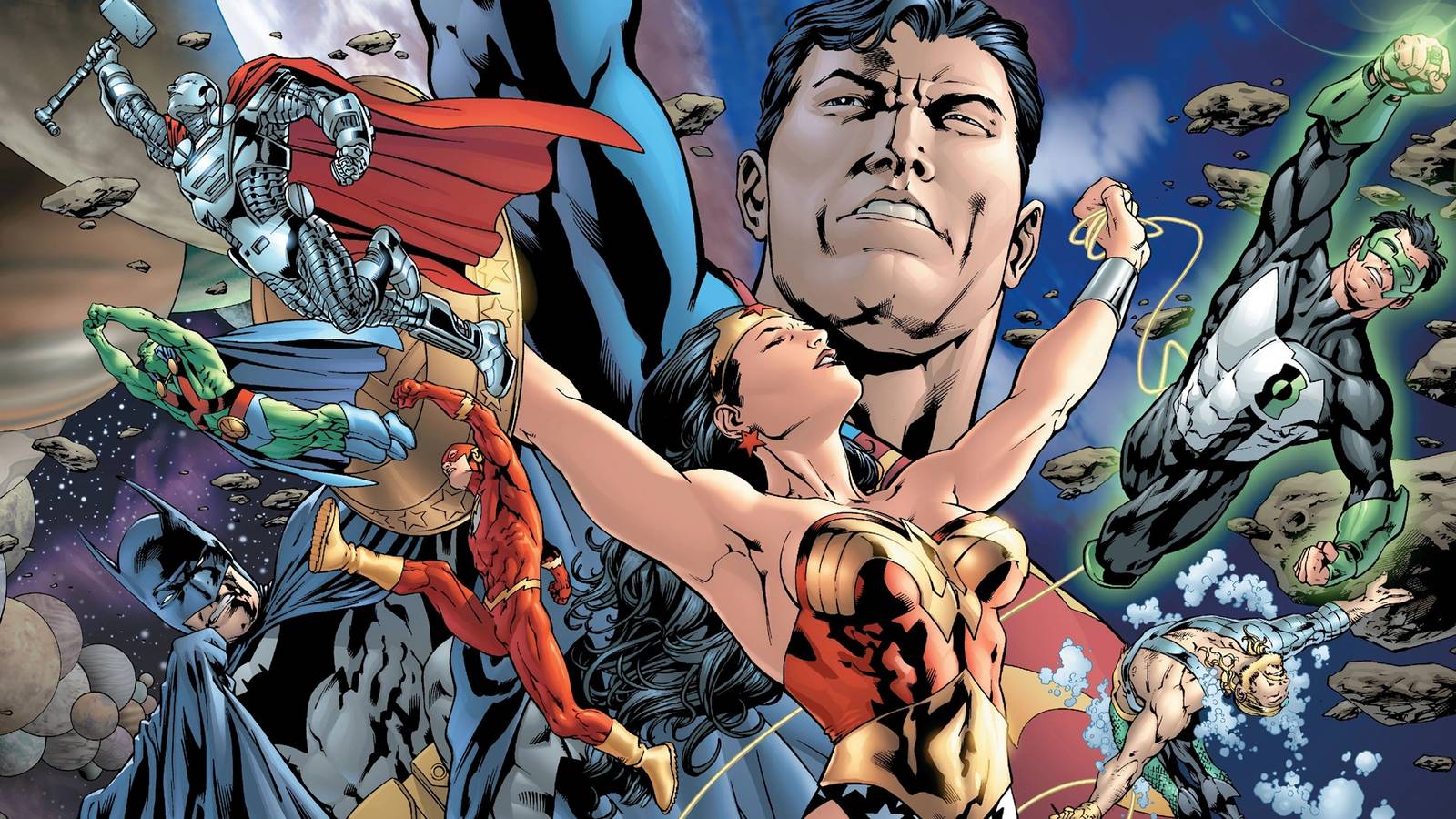
In every Look Back, we examine a comic book issue from 10/25/50 years ago (plus a wild card every month with a fifth week in it). This time around, we head to October 2000 to see a the start of Mark Waid and Bryan Hitch’s run on JLA with an oversized one-shot tackling the idea of heaven in the DC Universe.
Grant Morrison’s JLA was one of the most successful superhero runs at DC in the late 1990s, and one of the most influential superhero runs of all-time. Morrison remained on the series for roughly four years, and when it was time for them to leave, there was one obvious choice to be their successor, and that was Mark Waid, who had written a few fill-in issues that were really good. Meanwhile, Bryan Hitch, Paul Neary and Laura Martin had just finished an epic run on the series, Authority, with writer Warren Ellis, that had been a surprise smash hit. The book took some of the concepts of Morrison’s JLA (which was mostly drawn by Howard Porter and John Dell), and brought them to an even bigger level in terms of the widescreen action aspect of the series.
Therefore, when Waid WAS picked to follow Morrison, and opened up with the hit “Tower of Babel” storyline (drawn by Porter in his final arc on JLA), it seemed like fate that Htich, Neary, and Martin would join Waid on JLA. The run, though, didn’t end up working out that well in the end, and amusingly enough, I think a big part of it was just HOW MUCH work Hitch did in the one truly iconic part of their run, the oversized one-shot that kicked things off, JLA: Heaven’s Ladder, which came out in October 2000.
How did JLA: Heaven’s Ladder explore the DC Universe in a brand-new way?
The basic setup of the issue is that the Earth is just swept up by a giant machine. The League, who were on their Watchtower on the moon, see the situation (and the stunningly large machine/ship that stole the Earth from its orbit), and quickly get to the Earth to help stabilize things, and to help as much as they could.
That is when they discover that the beings who stole the Earth are basically the first beings to exist after the Big Bang. They dub them the Quantum Mechanics, and the issue is that these larger than life beings have no spirituality of their own, and so, as they come to the end of their lifespan, they want to construct themselves a heaven, and are stealing all of these planets because they are planets that DO have spirituality on them, and thus want to get instructions from them. They put sleeper agents on each planet to learn about the planet’s views on death, and the plan is to use all of this information to create a heaven for themselves.
This, cleverly, leads to Waid exploring the various conceptions of death in the DC Unvierse, like Atlanteans’ views on the topic…
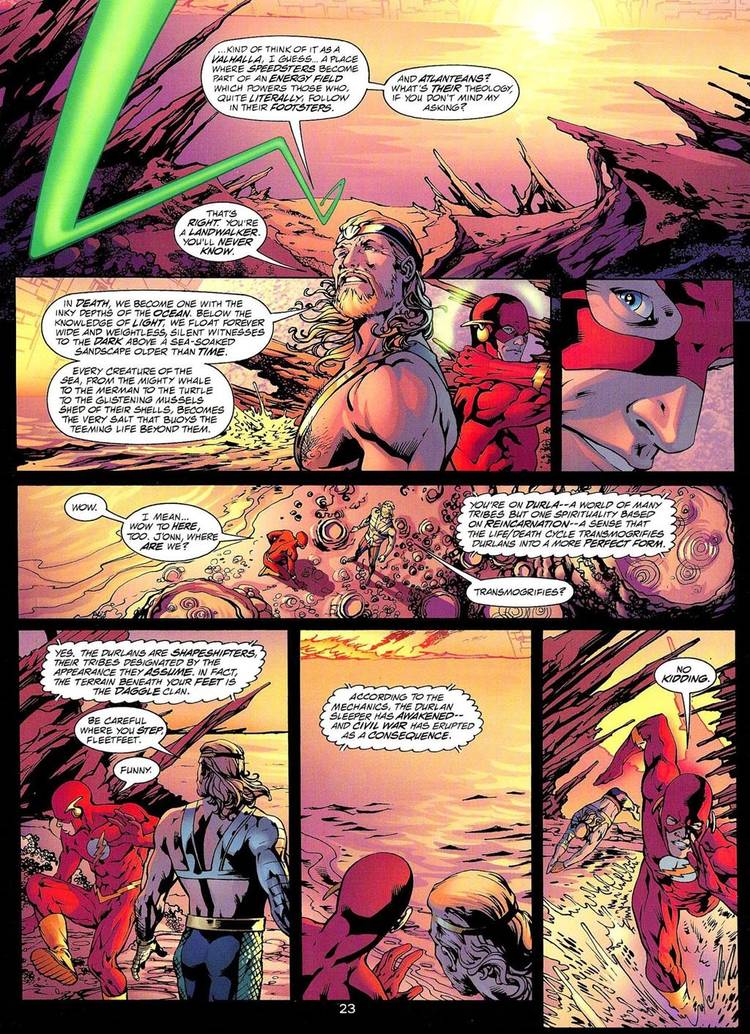
Image via DC
Or a few other planets, like Rann and Thanagar…
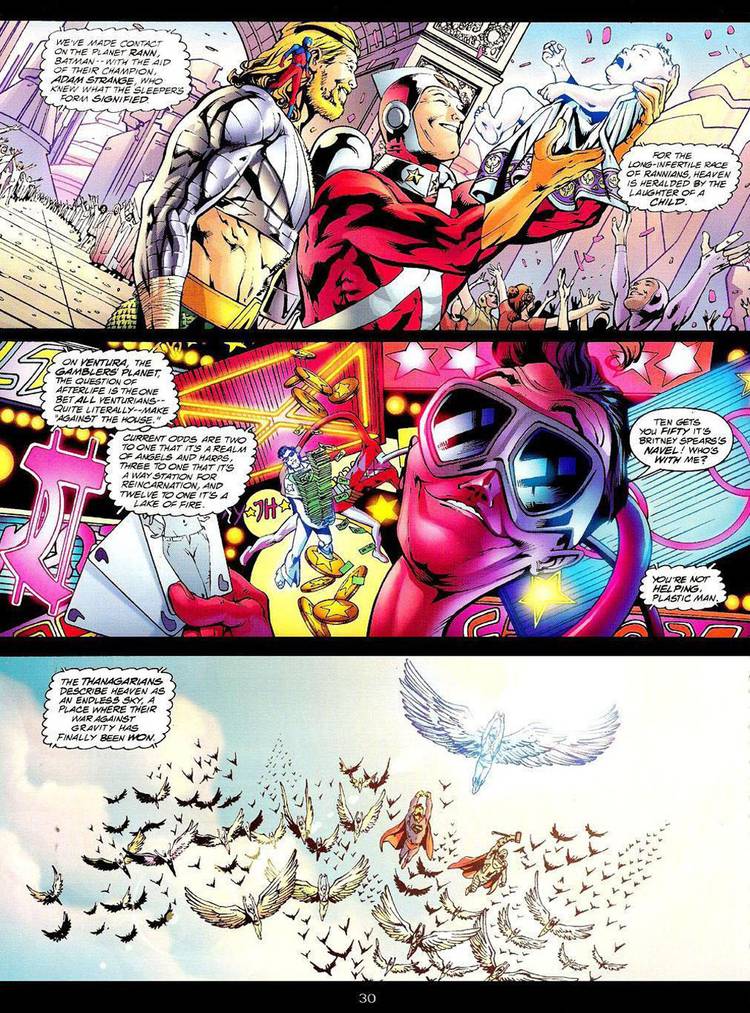
Image via DC
However, some of the Quantum Mechanics view this endeavor as a waste of time, and they are trying to stop the Mechanics from uniting with all the sleepers to learn of their findings, so that they can then conceive of a shared “next step” in their lives (and afterlife). The Justice League call them “Zealots.” They don’t care about the views of “lower beings,” and each want to die separately, not as some shared collective.
Things get bad when it turns out that one of the sleepers has been killed (the one on Earth, of course), and replaced by a Zealot, and so when it comes time for him to present his findings and help with the plan for all of the Quantum Mechanics to “pass over” together, he instead turns on everyone, and causes widespread destruction, because he wants to be seen as an individual.
How did the one-shot take Bryan Hitch’s “widescreen action” to a whole new level?
The over-sized format is just stunning when seen with Hitch’s artwork. The detail that he and Neary put into everything is shocking, especially on the double-page spreads, like when the Earth is stolen…
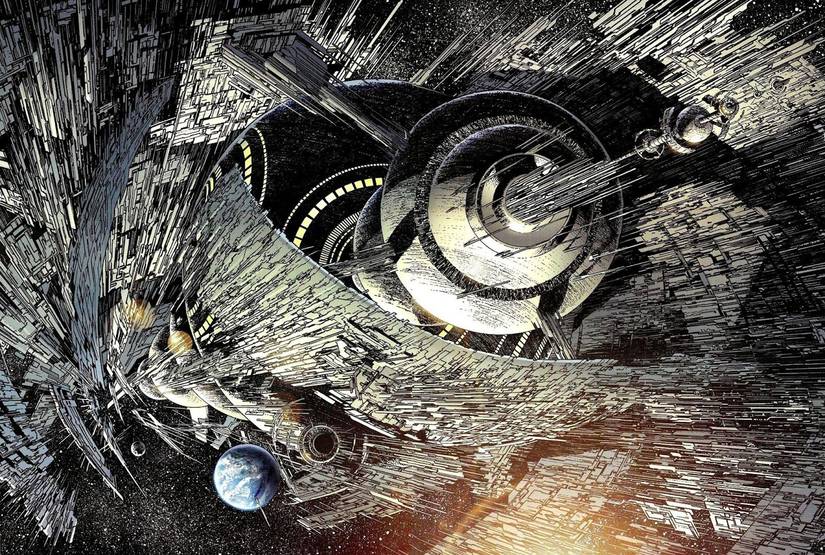
Image via DC
Or when the Justice League fight off the Zealot, who they essentially view as a sort of God-like being (this is Waid’s version of the Fantastic Four fighting Galactus, both sort of conceptually “The heroes fight God”)…
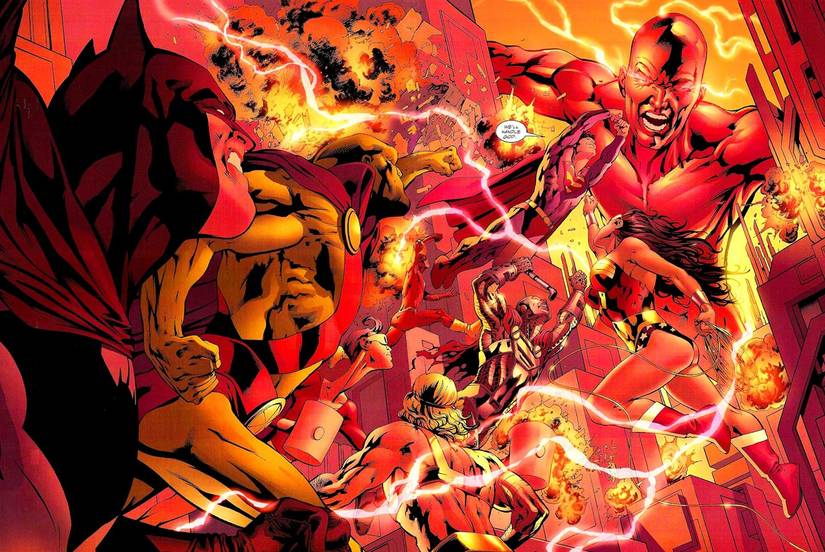
Image via DC
There are other really creative bits, like when we see how other dimensions view death, with Superman trapped in an interdimensional comic…
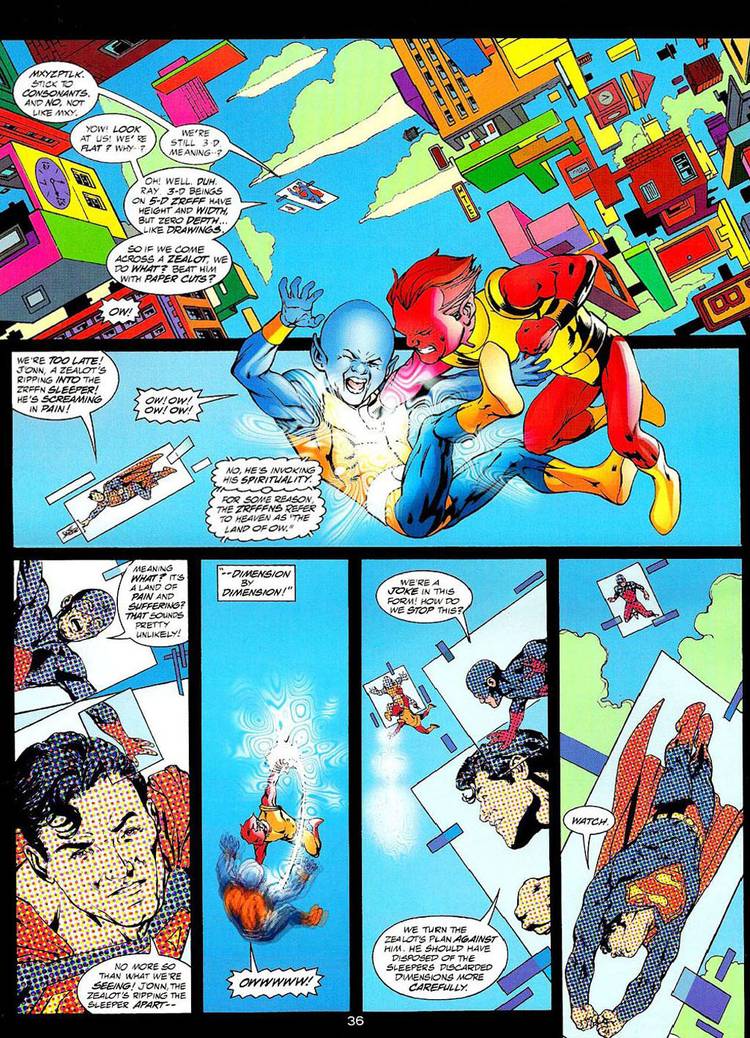
Image via DC
And I was always just really impressed by Hitch’s Wonder Woman here…
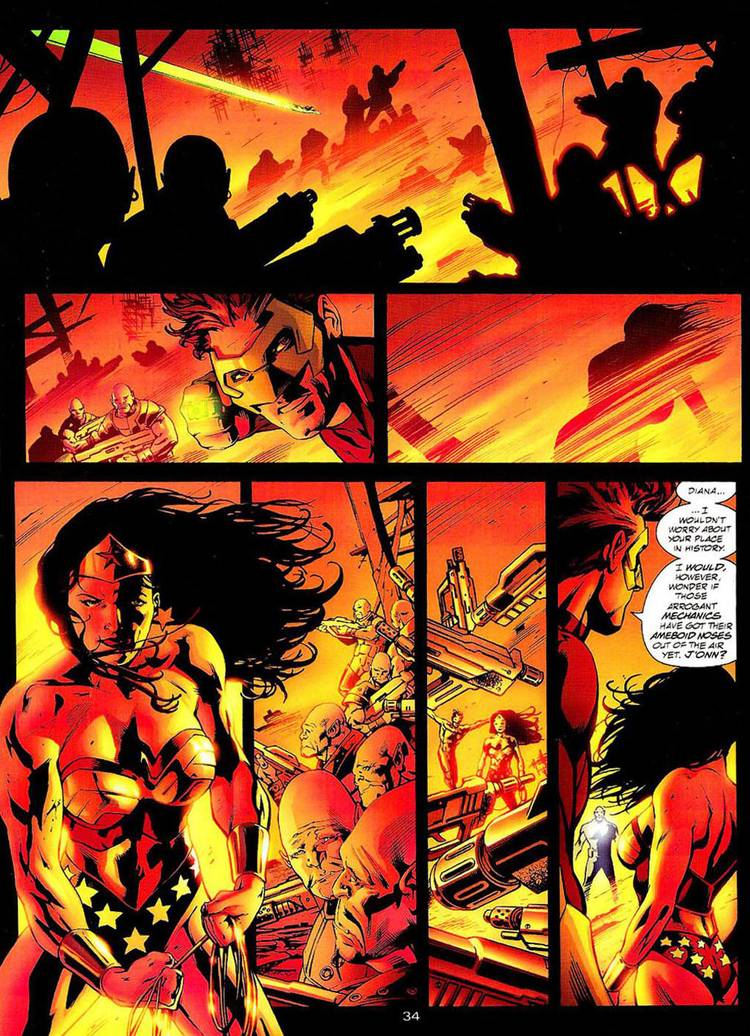
Image via DC
This was just the sort of sweeping superhero story that you rarely get to see, one that spends as much time on widespread awesome panels as it does on the examinations of the various death rituals of the DC Universe. This is such an unusual, but wonderful comic book, and whatever else you felt about this run, we’ll always have this one amazing one-shot to remember it by, and all you can really hope for in any run is something that can last the test of time like this one.
If you folks have any suggestions for November (or any other later months) 2015, 2000, 1975 and 1950 comic books for me to spotlight, drop me a line at brianc@cbr.com! Here is the guide, though, for the cover dates of books so that you can make suggestions for books that actually came out in the correct month. Generally speaking, the traditional amount of time between the cover date and the release date of a comic book throughout most of comic history has been two months (it was three months at times, but not during the times we’re discussing here). So the comic books will have a cover date that is two months ahead of the actual release date (so October for a book that came out in August). Obviously, it is easier to tell when a book from 10 years ago was released, since there was internet coverage of books back then.