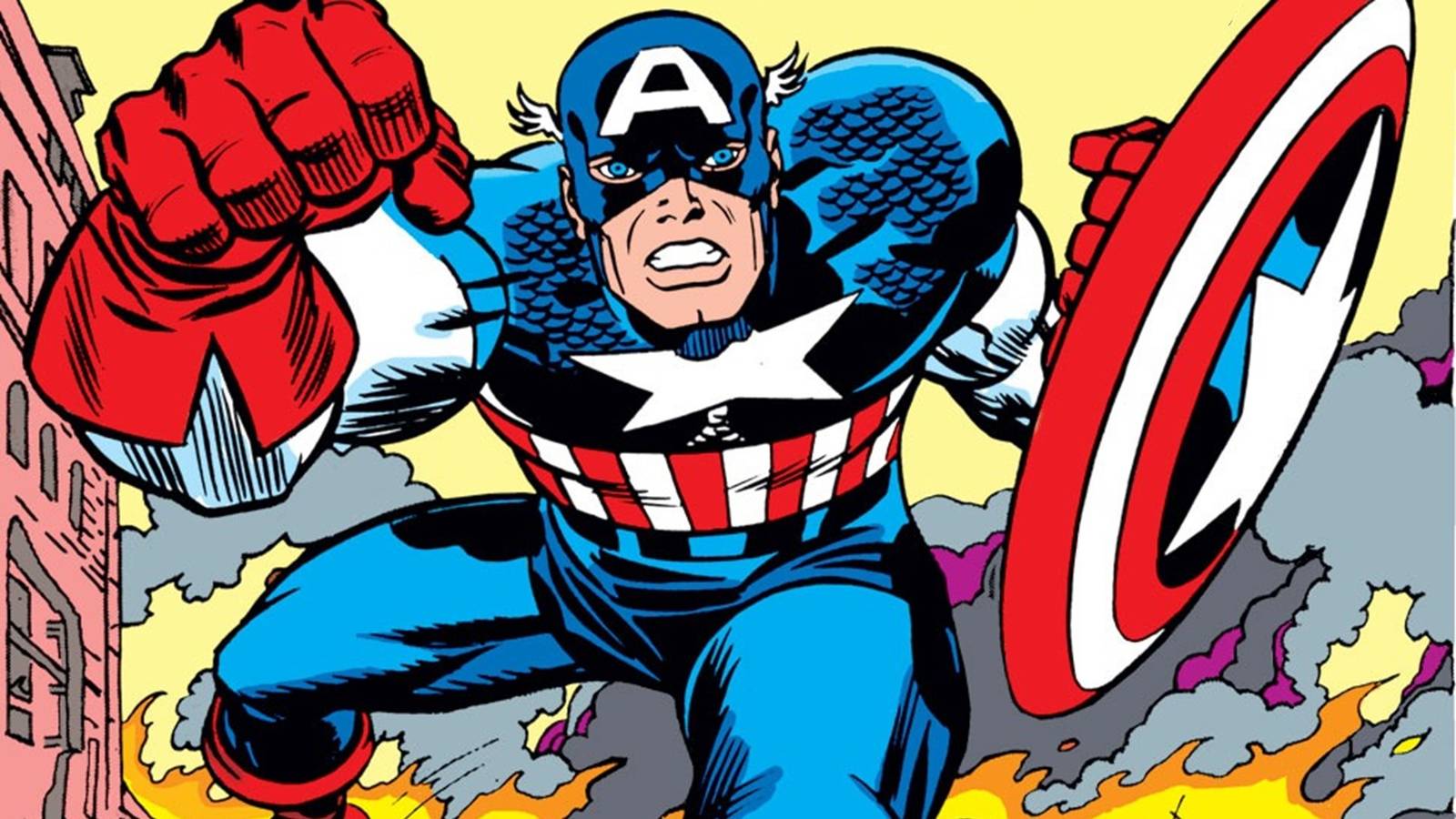
In every Look Back, we examine a comic book issue from 10/25/50 years ago (plus a wild card every month with a fifth week in it). This time around, we head to October 1975 to see the start of Jack Kirby’s triumphant return to Captain America for the “Madbomb” storyline.
As you all likely know, Jack Kirby and Joe Simon created Captain America back in 1940, in a stunning first issue that saw Captain America punching out Adolf Hitler (and this was a year before the United States even ENTERED World War II), which was one of the earliest examples of a wonderful comic book tradition of superheroes punching out Nazis. Martin Goodman, the owner of the company that published the series, though, reneged on some royalty promises to Simon and Kirby, and so, even though the comic book was a huge seller for Goodman, he alienated Simon and Kirby enough that they left for National Comics (DC Comics), and then, after World War II, the pair would work for Harvey Comics and even do their own comic book company before finally splitting in the late 1950s due to the comic book industry going through a major sales slump. Kirby eventually ended up back at Goodman’s company, where Kirby helped to turn the company into Marvel Comics, and in 1964, Kirby brought his co-creation back with Stan Lee in Avengers #4.
Eventually, Goodman drove Kirby to National Comics once more, and Kirby had a major move to DC in 1970. However, the deal with DC wasn’t all that much better than his deal at Marvel, and so Kirby was willing to return to Marvel after it ran up (Goodman was out at Marvel by this point), but his deal required him to be given basically his own little universe. He would write, draw, and edit comic book characters that he created/co-created, and that would be that. The most prominent of these titles was Captain America, which Kirby took over in October 1975 for the first part of the “Madbomb” storyline in Captain America #193!
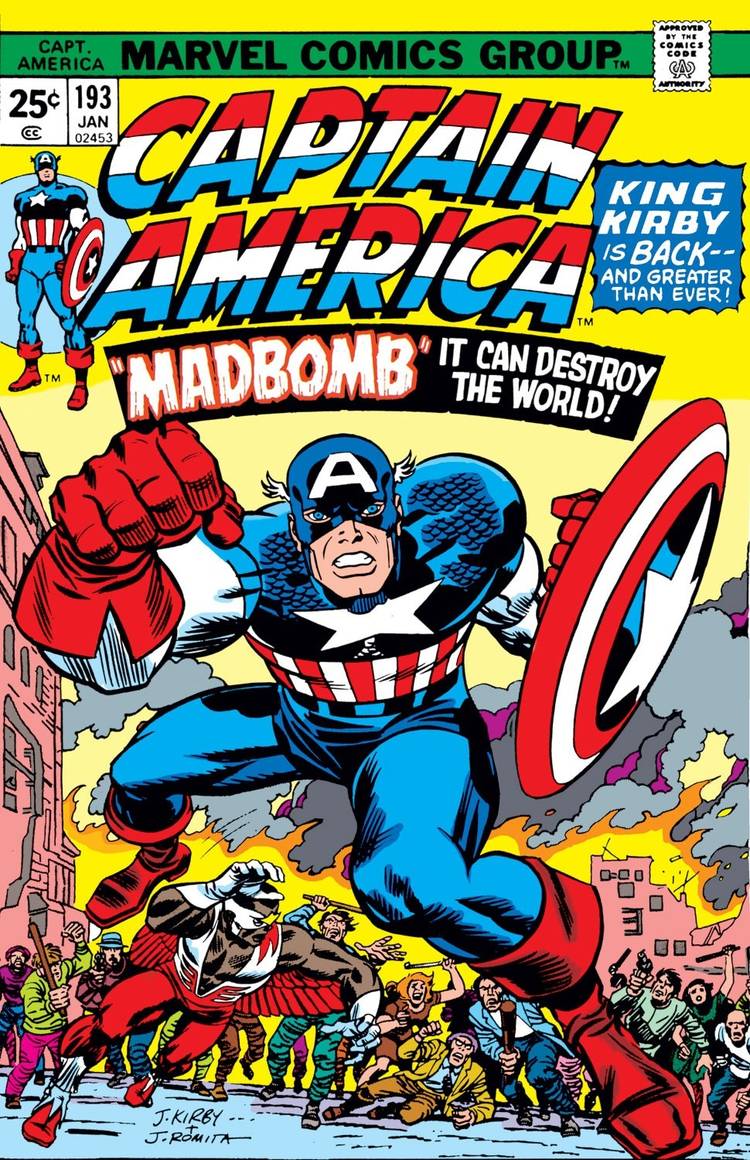
Image via Marvel
(As I noted in an old Comic Book Legends Revealed, this amazing cover, inked by John Romita, was initially intended to be a 3-D image, but it didn’t go down like that. It’s still an outstanding cover either way).
How did the “Madbomb” storyline kick off?
Kirby was not interested in continuing any plots from the previous run, but he did agree to keep Falcon on in the book (I mean, the book WAS called Captain America and the Falcon, ya know?), and Falcon’s love interest, Leila. Cap and Falcon are having some good fun arm-wrestling when suddenly they are affected by some sort of wave that makes them HATE each other…
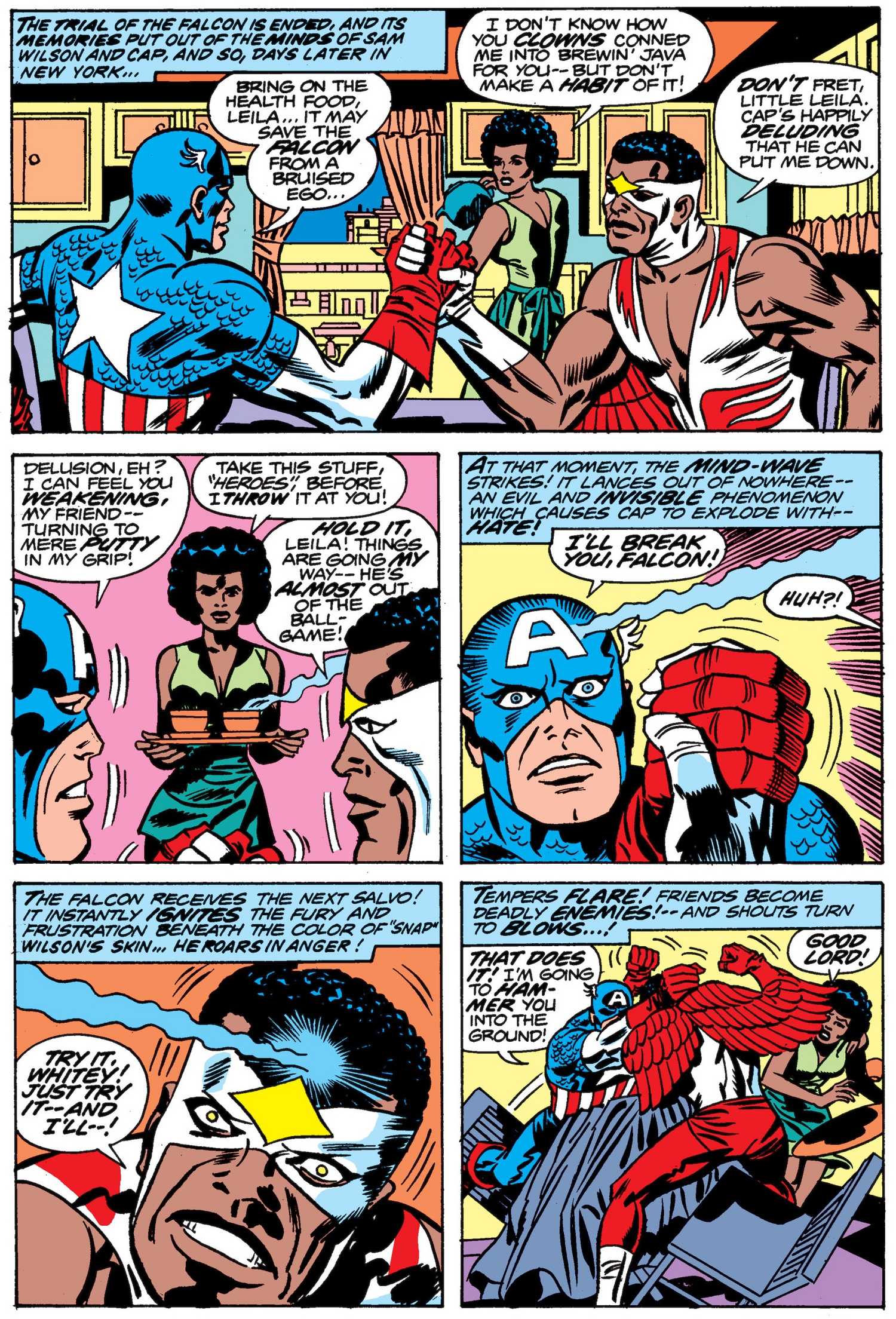
Image via Marvel
Cap and Falcon are strong enough that they were able to fight off the effects, but then they go out into New York City, and it is just a BAD scene. Kirby really did a marvelous job on these sequences (inked by the great Frank Giaocia in this issue). And, of course, a clever bit that Kirby is doing here is similar to what he and Stan Lee did with the Hate-Monger, which is the idea of depicting “hate” of your fellow man as inherently evil, and showing here that it is caused by a villain, so as to note that, hey, maybe you shouldn’t act like this way WITHOUT a supervillain forcing you to do so, ya know?
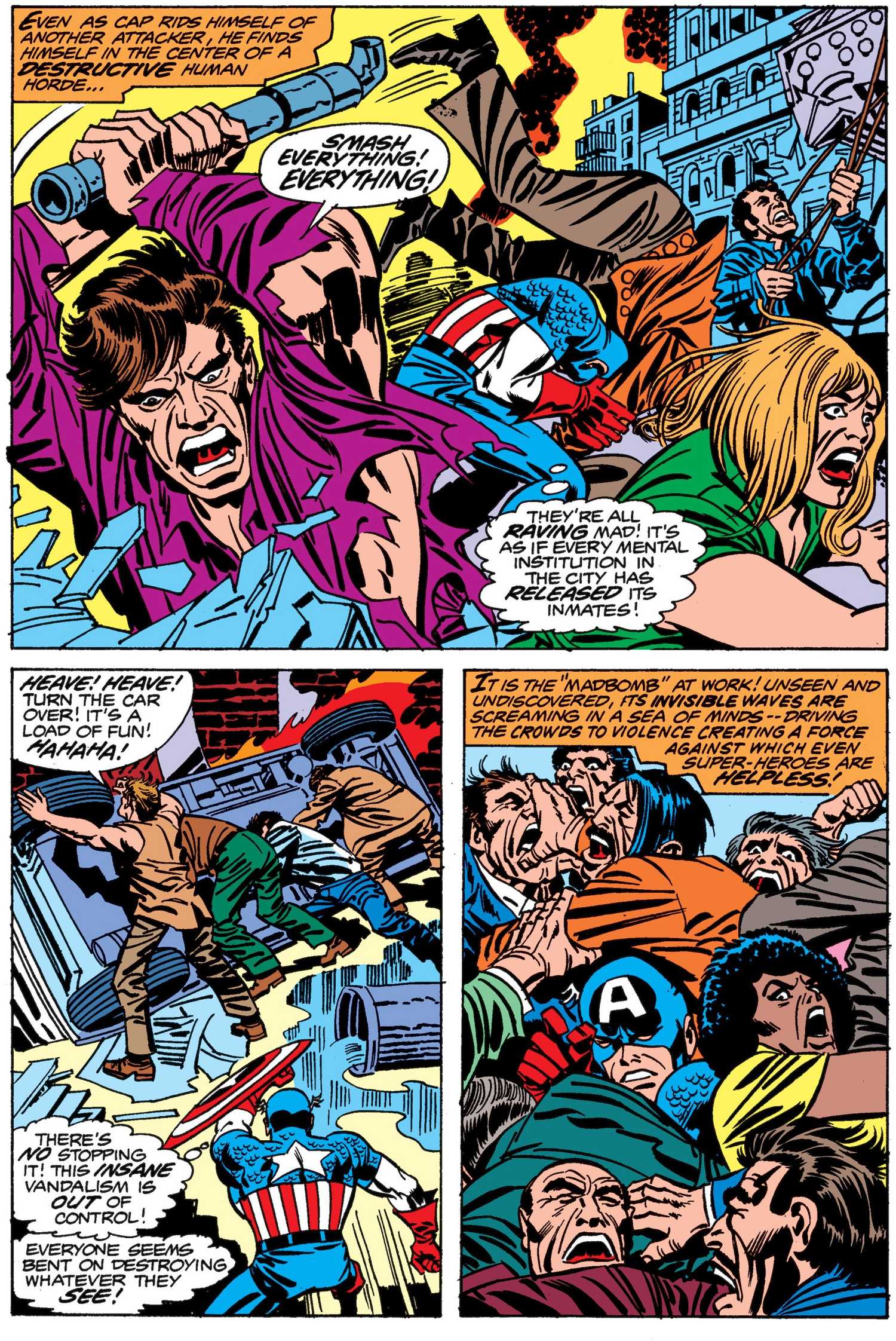
Image via Marvel
Cap finds the small device that is causing all of the problems, and he fights through the effects of its waves to destroy it, and there’s an amazing full-page splash showing how devastating the effects of this “Madbomb” were…
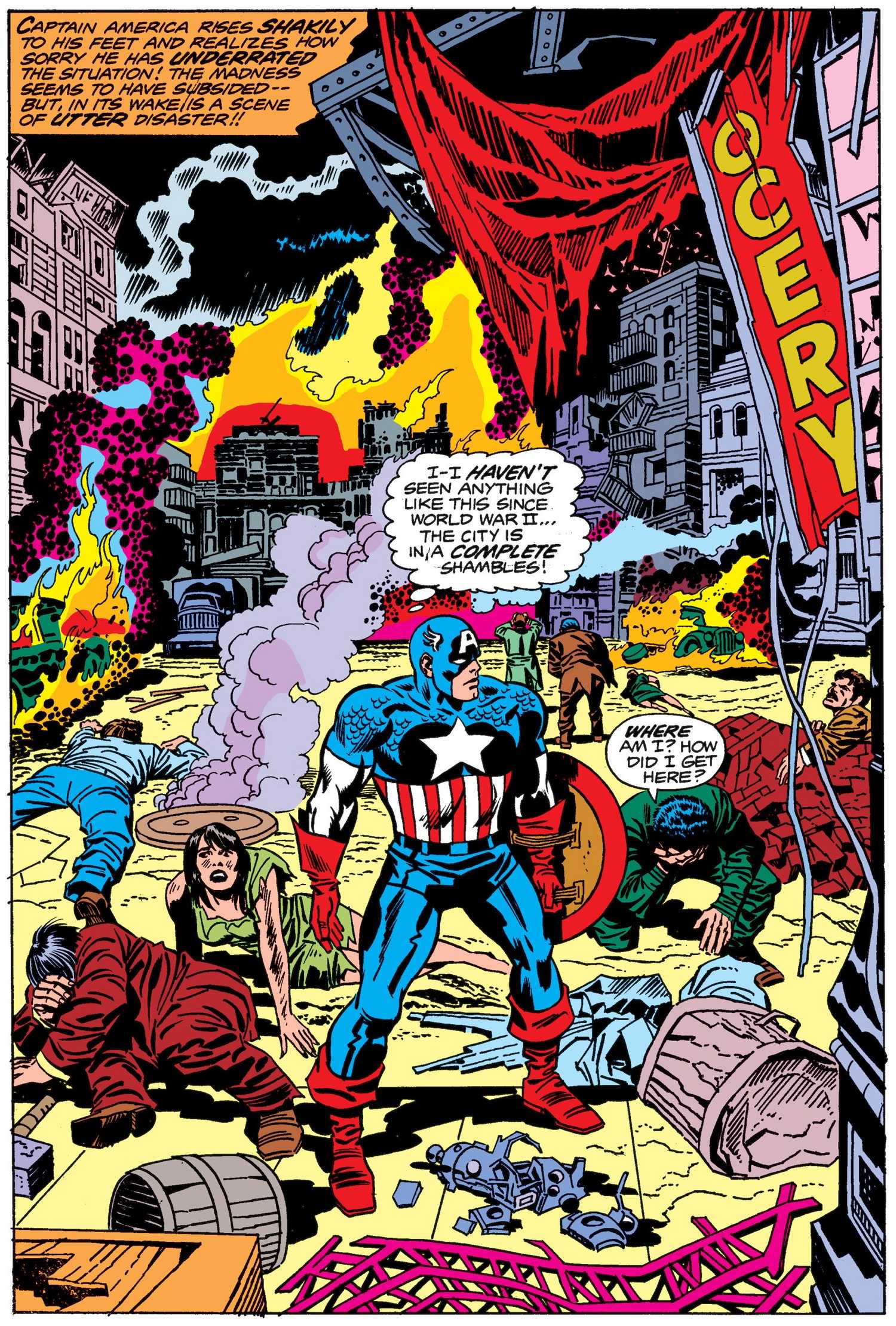
Image via Marvel
Rough stuff.
How did the government involvement speak to Kirby’s approach to the series?
Okay, as noted, Kirby just wanted his own little corner of the Marvel Universe to work in, and as a result, he really didn’t use established characters for his stories, and instead, he introduced a nameless SHIELD agent who comes to Cap and Falcon after the madbomb is destroyed to loop them in on a U.S. government mission to stop these madbombs…
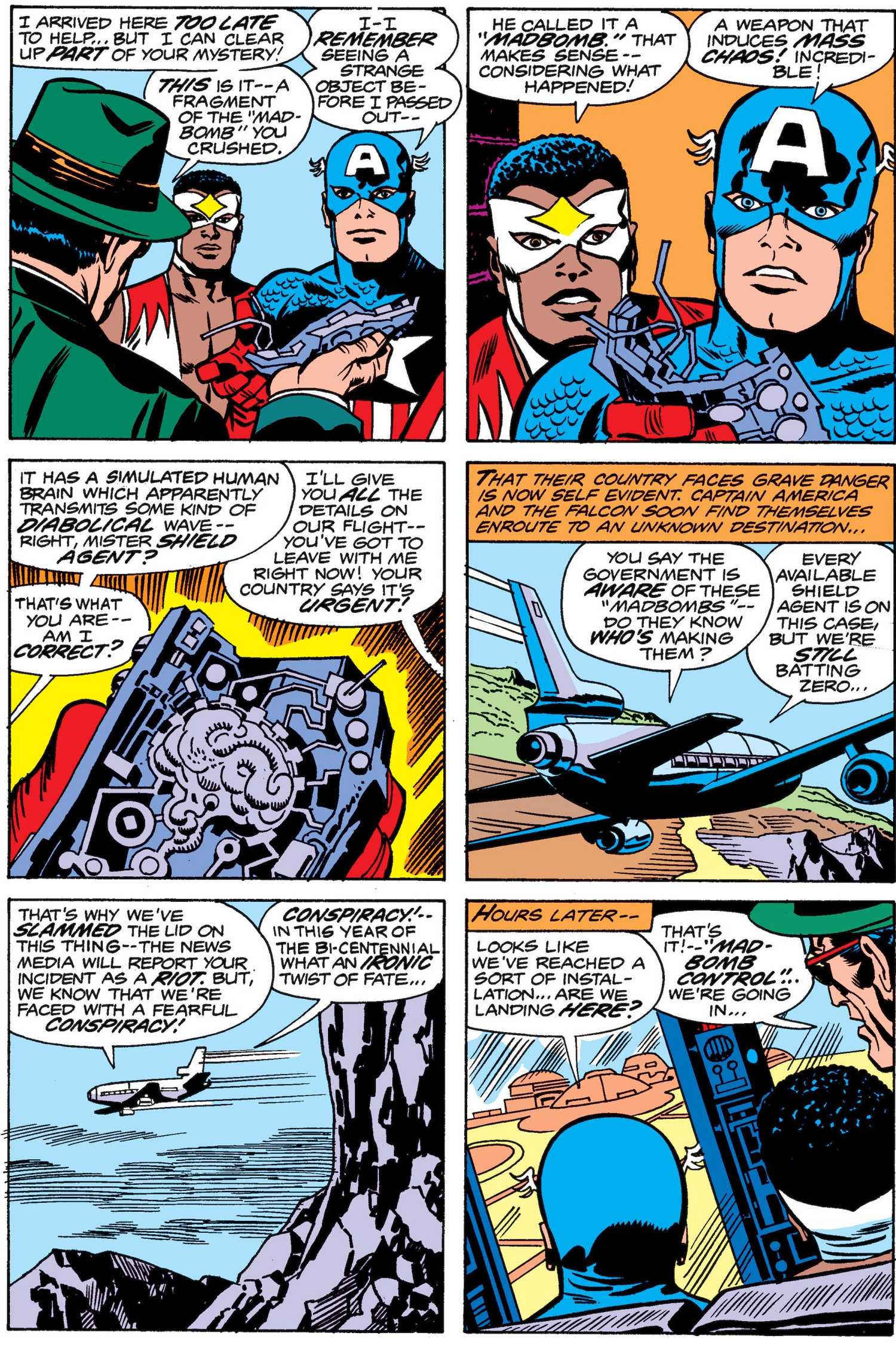
Image via Marvel
Kirby, though, almost assuredly figured that the comic book could use some more action, so when Captain America and Falcon follow the agent into the base, they are suddenly attacked by a series of devices, and they have to use all of their powers to get out of the mess…
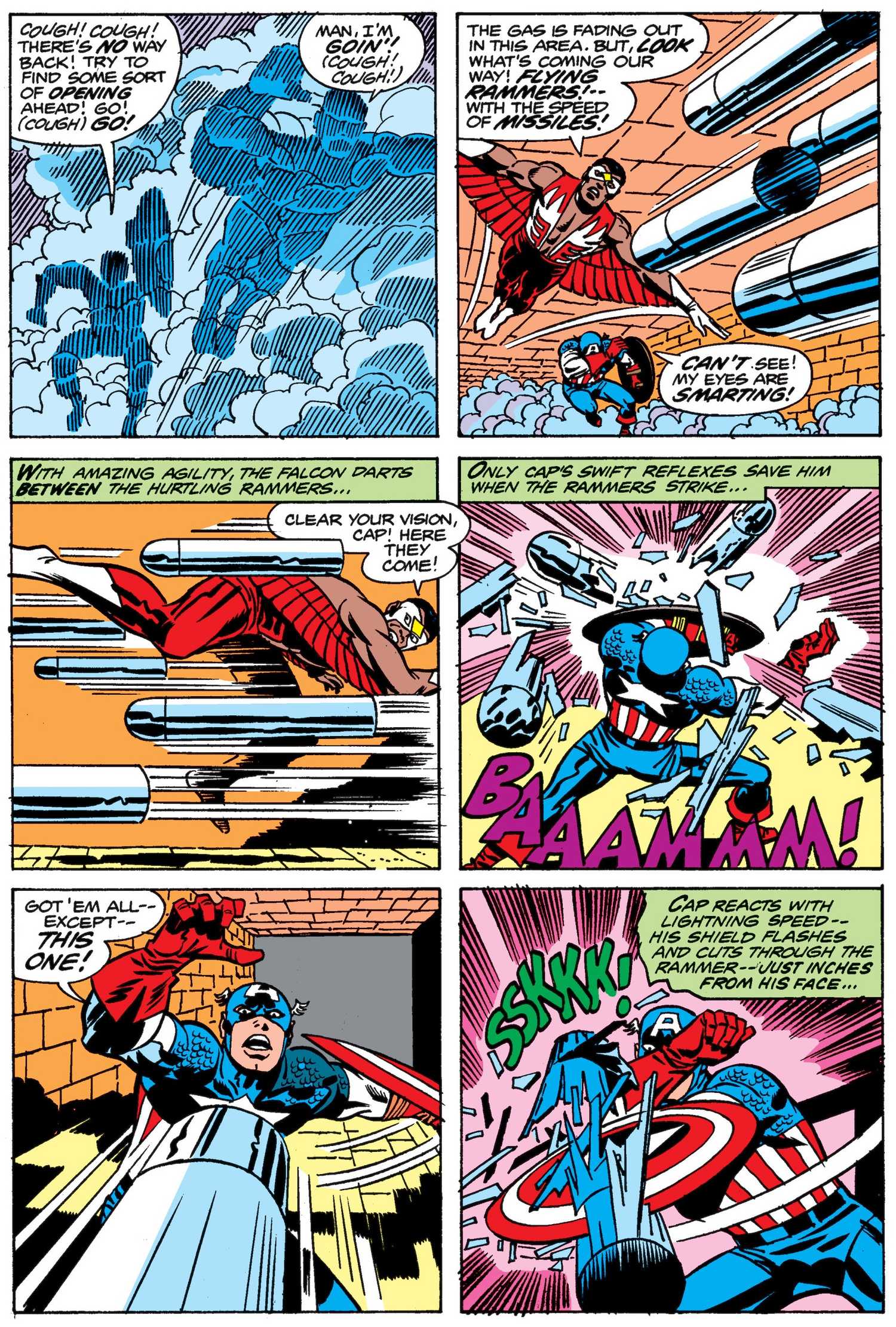
Image via Marvel
It’s a really great action sequence, even if it is a bit peripheral to the story as a whole. As it turns out, this was just the government proving that Cap and Falcon were who they said they were. They then meet the United States Secretary of State, Henry Kissinger (yeah, I know, I know, it ain’t great), and he lets them know the big problem. That madbomb they faced? As you could see earlier, it was basically handheld.
The bad guys, though, had a GIANT ONE!
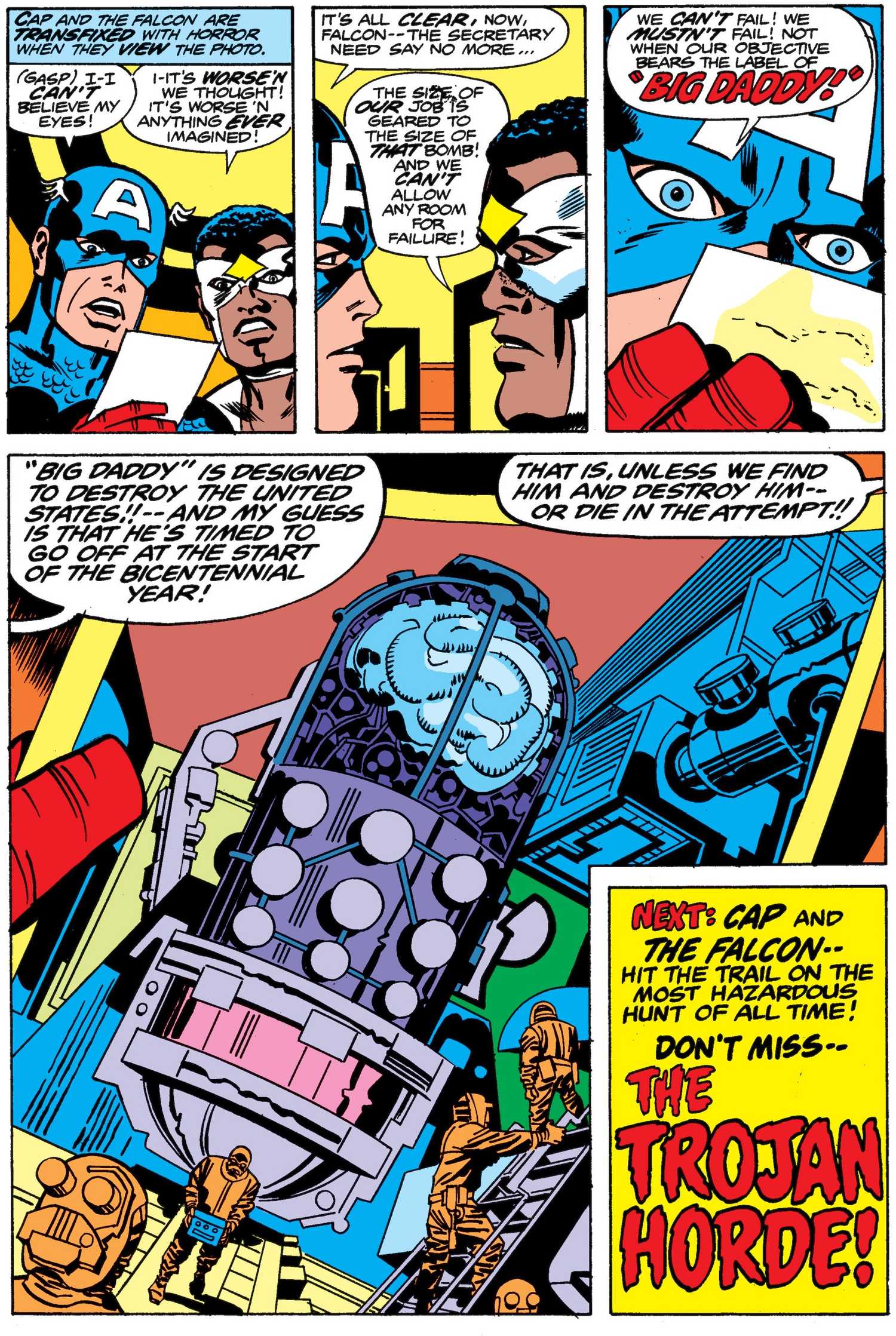
Image via Marvel
Holy crap, right? So, of course, that kickstarts Cap and Falcon’s new adventure, as they have to do everything they can to save the country from this giant Madbomb. This was a fun return to Captain America by the King.
If you folks have any suggestions for November (or any other later months) 2015, 2000, 1975 and 1950 comic books for me to spotlight, drop me a line at brianc@cbr.com! Here is the guide, though, for the cover dates of books so that you can make suggestions for books that actually came out in the correct month. Generally speaking, the traditional amount of time between the cover date and the release date of a comic book throughout most of comic history has been two months (it was three months at times, but not during the times we’re discussing here). So the comic books will have a cover date that is two months ahead of the actual release date (so October for a book that came out in August). Obviously, it is easier to tell when a book from 10 years ago was released, since there was internet coverage of books back then.