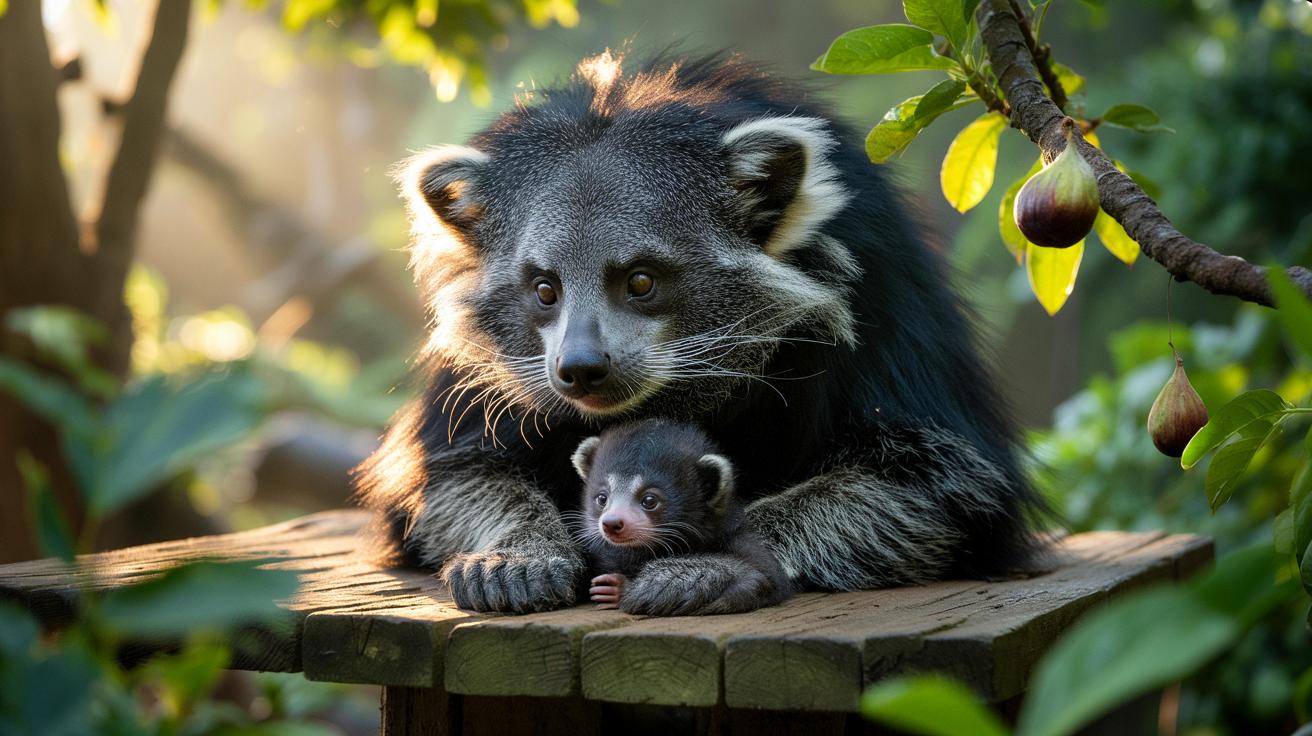
Before doors opened at a Sussex zoo, keepers heard soft squeaks from the treetops and paused their routine with raised eyebrows.
By mid-morning, a new chapter had begun. A palm-sized shadow nestled beside its mother, and the quiet corners of Drusillas Park felt charged with promise.
A century-old first at a small Sussex zoo
Drusillas Park in Polegate has welcomed a rare baby binturong, affectionately called a binlet. The tiny female, named Boots, is the first binturong ever born at the zoo since it opened a century ago. Her arrival on 8 August followed a few days of subtle signs from her mother, Dora, who went quiet and settled into a nest box. The next morning, keepers found the cub tucked against her side, dry, warm and vocal.
For a species under pressure in Southeast Asia’s forests, one healthy cub born within a carefully managed breeding programme carries weight. Staff say their joy sits alongside a sense of duty: a small life in Sussex that points back to bigger stories of habitat loss and trade far away.
First binturong birth at Drusillas in 100 years, born 8 August to parents Dora and Niffler.
Meet Boots: the binlet with a popcorn perfume
Boots already shows classic binturong traits. Keepers report bright, alert eyes, twitching whiskers and that unmistakable scent often compared to warm popcorn. The aroma comes from a compound called 2-acetyl-1-pyrroline, the same molecule found in toasted rice and freshly made popcorn. To visitors it’s a surprise; to animal staff it’s a reassuring sign that glands and grooming are developing as expected.
Her name nods to the children’s character from Dora the Explorer, a neat fit with mum Dora and a cheerful cue for families planning a visit. Although curiosity flickers, Boots still spends most of her time in the nest box. That’s normal. Binlets often remain hidden for around three months, venturing out only for short spells.
Expect brief peeks, not long public outings: binlets usually stay tucked away for their first three months.
How the family is doing
Dora is nursing and will likely continue for about eight weeks. That timing shapes the cub’s diet: she will then start to sample steamed vegetables and soft items that are gentle on young teeth and easy to digest. Keepers have prepared a weaning plan and will track weight, mobility and comfort around keepers daily.
Niffler, the father, keeps his distance. That, too, matches the species. Male binturongs do not rear young in the wild. His relaxed temperament reduces pressure on Dora and gives the cub space to settle. Staff say the pair’s calm dynamic helped them reach this point quickly after Dora’s arrival from Frankfurt in April.
Key facts at a glance
Why this tiny birth matters
Binturongs face a steep decline in the wild. Deforestation fragments their forest canopy, the very place they live and hunt. Roads carve open access for hunting and trade. As members of the civet family, they also get caught up in demand linked to civet coffee and the broader exotic pet market. The IUCN lists the species as Vulnerable, with many populations falling and some regional records now rare.
European zoos use coordinated breeding to hold a genetic safety net. Boots represents a planned step for the EAZA European Ex-situ Programme, which tracks family lines to avoid inbreeding and spreads risk across multiple institutions. The aim is a healthy, diverse population that can teach, inspire and, if conditions allow in future range states, support conservation goals through expertise and funding.
A single cub won’t fix a collapsing canopy, but it can anchor a decade of education, care and support.
What to expect if you visit
Visitors hoping to see Boots may need patience. Short sightings are likely when keepers check the nest, when Dora shifts position, or during cooler, quieter spells. Staff ask guests to keep voices low near the enclosure and give the family room. A calm environment supports feeding and sleep cycles, both vital for growth.
- Best chances: early morning or late afternoon, when heat and crowds drop.
- Look up: binturongs are arboreal and rest on platforms, branches and nest boxes.
- Listen first: soft squeaks or rustling often come before a brief appearance.
- Keep it quiet: sudden noise can send a nervous cub back into cover.
- Bring questions: keepers often share updates during routine checks.
The animal behind the nickname
Despite the “bearcat” label, binturongs are neither bears nor cats. They are viverrids, related to civets and genets. Adults can weigh 9–20 kg, with a body length near 60–90 cm and a tail of similar length. The tail is prehensile, unusual among carnivores, and acts as a fifth limb for climbing. Their diet is mixed—fruit, small animals, eggs—and they play a role in seed dispersal. In some forests, binturongs help spread strangler fig seeds, which shapes canopy structure over time.
The species relies on intact treetops. When logging strips the upper storey, binturongs must come down, where snares and dogs present new hazards. Protected corridors connect tree cover and reduce risky ground crossings. In areas with community forest management, reports show fewer traps and better outcomes for small carnivores.
From nest box to first steps
Keepers at Drusillas have mapped Boots’ next milestones. Across the first eight weeks, they’ll monitor weight, hydration, temperature regulation and mum–cub bonding. Once solid foods begin, the team will add gentle enrichment—soft browse, scent trails and safe climbing choices—to build confidence.
Public viewing will remain secondary to welfare. As her balance improves, Boots will start short climbs on low branches with soft landings beneath. The prehensile tail engages late; you may notice a tentative wrap followed by a firmer grip a week or two later.
Eight weeks to weaning, three months mostly hidden, one prehensile tail learning to hold its own weight.
How this connects to your choices
Small decisions at home can support species like binturongs. Products using certified sustainable palm oil lower pressure on rainforest fronts. Coffee sourced without any link to caged “civet coffee” avoids trade that harms viverrids. Zoo visits that fund conservation and welfare add to the pot that pays for field projects, veterinary training and habitat work.
Families can turn a day out into a learning moment. Talk about why the canopy matters, how a tail can become a tool, and what “vulnerable” means on the IUCN scale. A single statistic sticks with children: one animal’s scent can smell like popcorn, and that detail opens a door to bigger themes about forests, food webs and patience around wildlife.
What comes next for Boots
If growth stays steady, Boots will receive routine health checks, a microchip for identification, and a gradual introduction to safe climbing routes. As she nears independence, the European programme will review her genetics and long-term placement, keeping future pairings in mind. For now, Boots has days of sleep, feeds and short bursts of curiosity. Dora provides calm assurance, and Niffler keeps the peace by giving them both space.
For readers planning a visit, expect a game of hide-and-seek. You might notice a whisker, a tail tip or a brief yawn from the nest box. You might smell warm popcorn on the breeze. And you’ll know that a rare forest mammal has started life in East Sussex, with eight crucial weeks ahead and a century-size milestone already behind her.