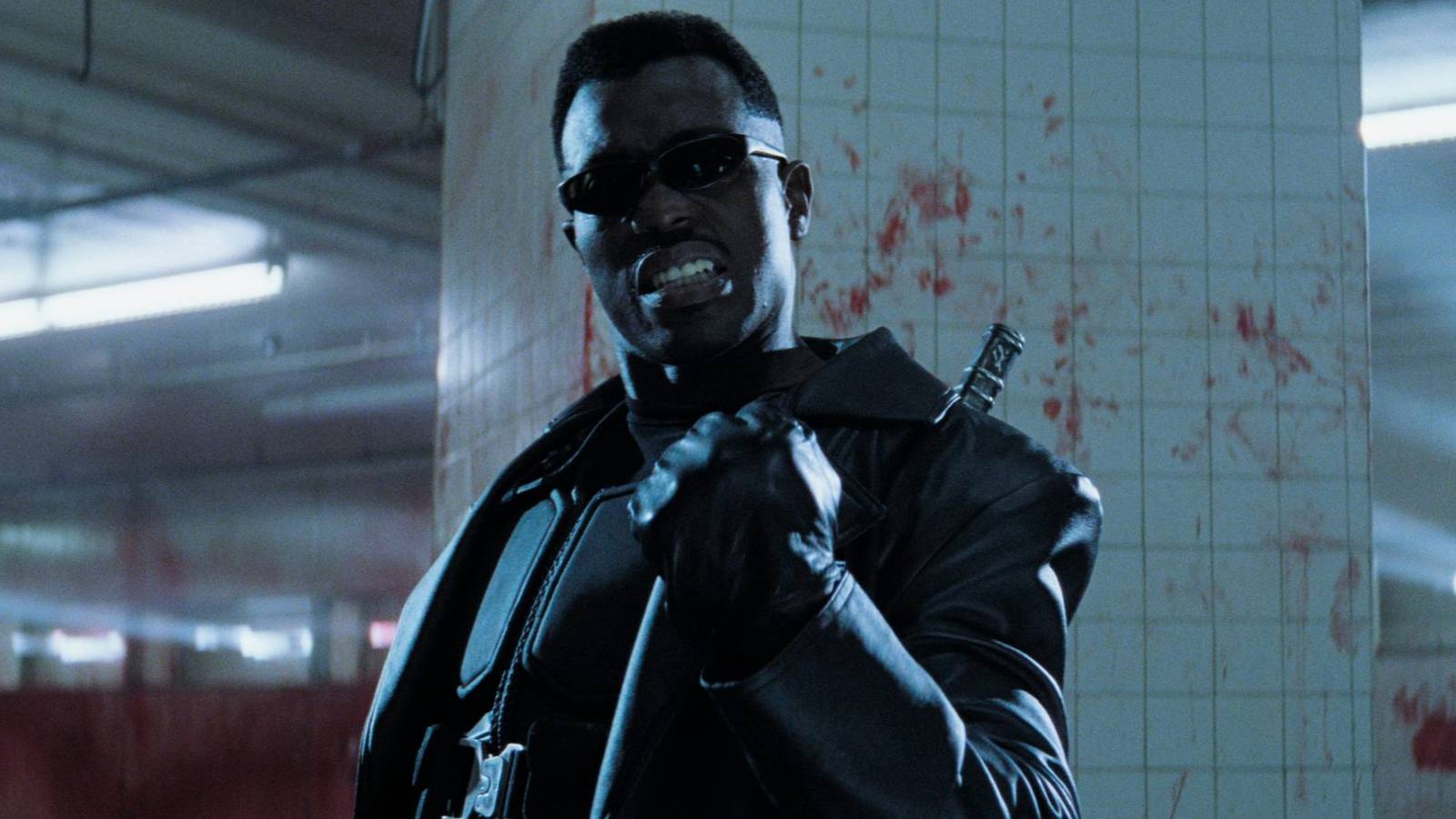
What were 1990s action movies all about? Well, some continued the buddy-comedy plotlines that appeared throughout the ‘80s, of two cops who were opposites becoming best buds. There was the rise of the internet, and how technology played into the film genre: science fiction films were beginning to hit big due to the growth of CGI, and a few superhero films were thrown into the mix.
In today’s world, the ‘90s are becoming a bit of a gimmick for the younger generation, with nostalgia bait just about everywhere. Action movies that go straight to streaming are often the flavor of the week. Throughout the 1990s, every action film felt like it was being marketed as a summer blockbuster, even if it was released in March. It felt like every film with a shootout, a fist fight, a hero with a witty catchphrase, and an explosion that took out a whole city block was trying to define the genre and the decade it was released in.
The Rock is One of Michael Bay’s Best Films
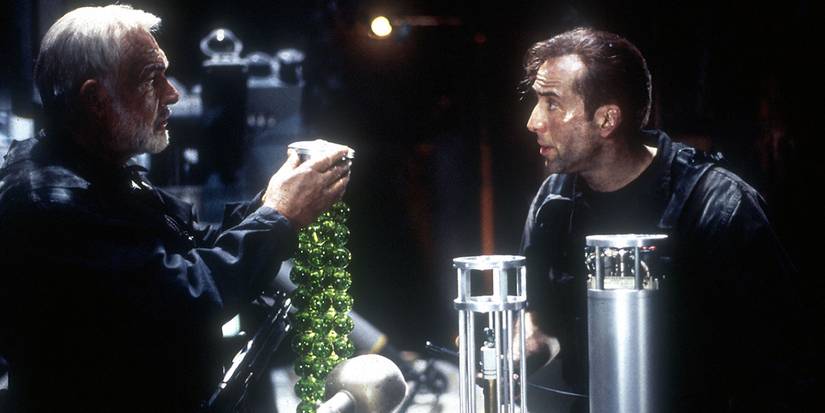
Sean Connery holding the biochemicals in The Rock Image via Hollywood Pictures
Fresh off his 1995 Bad Boys, Michael Bay followed it up with the high-octane, star-studded action film The Rock. The film follows a chemical warfare expert (Nicolas Cage) who must partner with an imprisoned British spy (Sean Connery) to infiltrate the island of Alcatraz after it was been taken over with hostages by an angry general who has gone rogue (Ed Harris), who threatens to launch chemical missiles into San Francisco unless he is paid out $100 million for war reparations to the men who served under him.
The Rock takes the concept of a political thriller, a sub-genre that was huge at the time, and ties it into a hostage crisis, action-packed thriller. The Rock is a precursor to it in terms of how Bay pieces together a movie with big explosions, swooping shots of the military in action, witty dialogue, and the iconic low-angle heroic dolly shot he made famous throughout the rest of his filmography. It’s here that Bay really flourishes as the guy who made movies strictly for 13-year-old boys.
Blade Single-Handedly Saved Marvel From Bankruptcy
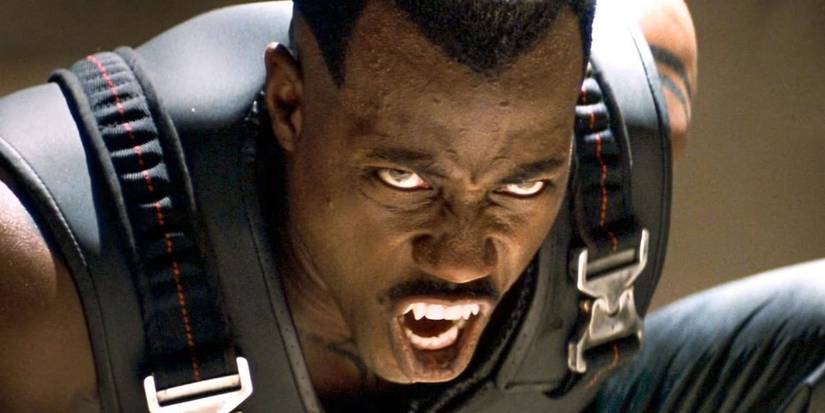
Wesley Snipes prepares for battle in Blade.
Image via Marvel/New Line Cinema
There’s an underbelly of the internet that believes the MCU’s (whenever it gets its release) updated version of Blade will never be successful, given how good the original 1998 film is. Wesley Snipes is iconic in the title role of the day walker vampire slayer, who is out to hunt a group of bloodsuckers who plan to summon a god to destroy the human race so vampires can reign supreme. Blade is a beautiful-looking action film that blends what everyone loves about the comics with a gothic horror tale and insane fight sequences.
What many don’t know is that Blade single-handedly kept Marvel’s doors open in the late ’90s. The middle part of the decade saw the comic book industry take a nosedive. Marvel filed for Chapter 11 bankruptcy in late 1996. However, in August 1998, Blade’s box-office success turned things around for the comic book titan. This didn’t come without risks. Marvel had failed on the big screen many times with 1986’s Howard the Duck and the shelving of 1994’s Fantastic Four right before its release. Blade would earn $131 million worldwide against its $45 million budget. So next time a fan watches an MCU show on Disney+, thank the swinging sword moves of Marvel’s vampire slayer.
The Crow Immortalized Brandon Lee
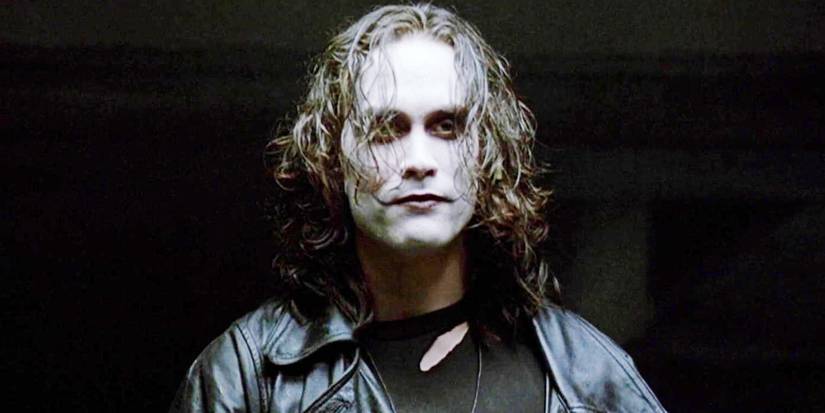
Brandon Lee in the Crow (1994).Image via Lionsgate
People really do hold a special place in their hearts for 1994’s The Crow. The adaptation of the comic book series of the same name tells the tale about musician Eric Draven (Brandon Lee), who, along with his fiancée, is brutally murdered the night before their wedding. On the anniversary of his death, Draven emerges from his grave and takes on the mantle of The Crow, a supernatural force that sets out to avenge those who do wrong. It’s an action film in its beats, but so much more so because of what surrounded it upon its release.
Everyone knows the story by now, even if people who have never seen the film start to finish. Brandon Lee tragically and accidentally died during the production of The Crow when he was shot by a prop gun on set. Most of his scenes were completed before the horrible incident. So, therefore, what people see in the film is primarily him for the majority of it. The aura of Lee’s death is all over the movie, but it does not plague it. Strangely, it aids the story of a good man taken too soon from us. There’s a mythic stature to his screen presence, something that feels similar to what his father, martial arts legend Bruce Lee, brought to a film. Overall, The Crow is a beautiful story of rebirth after death that blends seamlessly into the action genre, thanks to its grittiness, likable characters, and bad guys that audiences love to hate.
Speed is a Masterclass in High Octane Action
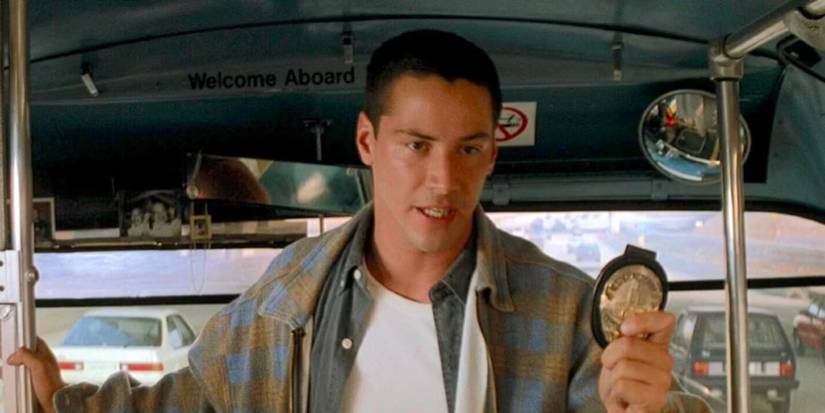
Keanu Reeves ta;king to the passengers on the bus in Speed Image via 20th Century Studios
If 1994’s Speed came out today, it would make for a perfect self-contained psychological thrill ride, but this was the ‘90s, man. They had money to spend back then. Speed is about a deranged bomber (Dennis Hopper) who toys with Los Angeles police officer Jack Traven (Keanu Reeves) by placing a bomb on a bus, and if it travels below 50 miles per hour, it will explode. Thus setting off a wild two-hour ride that keeps the viewers on the edge of their seats.
Speed is self-contained, as it primarily takes place on the bus in the second half of the film. But the precision of the storytelling and the creation of action outside the high-speed bus, which could blow at any minute, is what helps this film thrive. The stunts in this movie hold a place in cinema history, from the moment Traven jumps from a car onto a moving bus to the famous gap-in-the-road sequence. In three acts, this film goes hard and never lets up. Speed also deserves some major points for having Sandra Bullock’s character, Annie, go from what could’ve just been another damsel in distress character and turning the actress into a household name.
Face/Off’s Obscure Plot is Why Viewers Still Love It To This Day
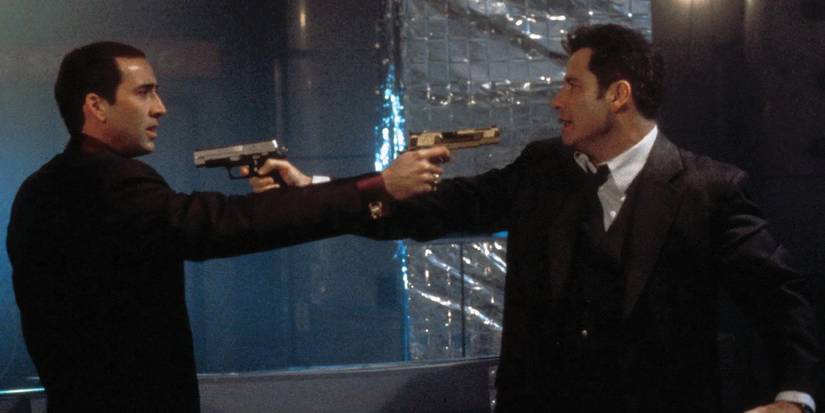
Nicolas Cage and John Travolta point guns at one another in Face/Off.Image via Paramount Pictures
Nicolas Cage and John Travolta were in a movie in 1997 where they had a showdown—better yet, a face-off; even better, they took each other’s faces off. Wild, right? That’s the concept of the John Woo classic action film, Face/Off. Travolta plays FBI agent Sean Archer, who is on the hunt for terrorist Castor Troy (Cage). He gets his man before he hitches a plane ride out of Los Angeles, but severely injures Troy; however, there is information that Troy knows about a bomb that he won’t reveal. So Archer undergoes a procedure to become Troy by getting the wildest facelift ever. He then infiltrates a secluded prison as Troy to get close to the terrorists’ brother and gain information.
This over-the-top action film was the ‘90s in a nutshell. A plotline that feels unheard of but is done at the grandest scale. There are great action set pieces, borderline horror film scenes, and classic John Woo slow-motion shots. Cage and Travolta both get to play the hero and villain in the film. They’re both at peak moments in their careers, with Cage having won an Oscar a few years earlier for Leaving Las Vegas, and Travolta’s career having a resurgence due to his role in Pulp Fiction in 1994. Clearly, these two were on a collision course with one another, and fans were (and still are) here for it.
Heat Gave Audiences One of the Best Shootouts in the History of Cinema
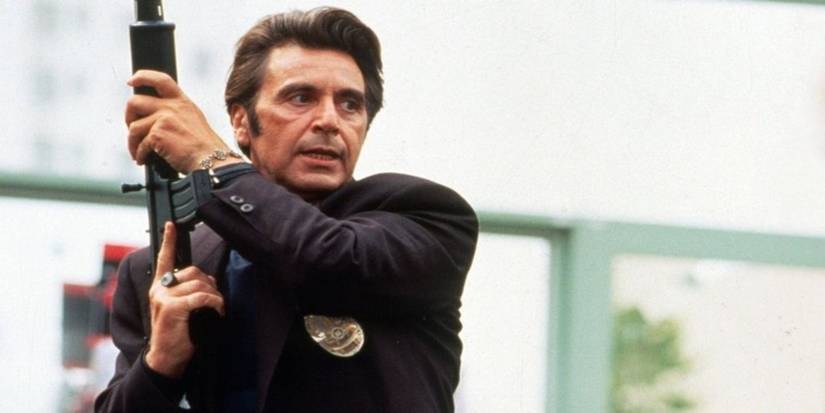
Al Pacino in the famous shootout scene in 1995’s Heat. Image via Warner Bros.
In some circles, Heat is more of a crime drama than it is an action film. However, the action film audience welcomes it as one of their own. For nearly three hours, the audience follows along as master criminal Neil McCauley (Robert De Niro) plots his last heist before calling it quits. In the midst of all of that, Lt. Vincent Hanna (Al Pacino) is on his trail to try and catch him in the act before the score goes down. As the two men’s paths cross, they both discover an odd but relatable mutual respect for one another, even though they’re on the verge of a violent clash.
With Heat 2 nearing a green light to go into production for Michael Mann’s sequel, it’s a good idea to watch the original 1995 film. Yes, it’s Pacino vs. De Niro, two of the best to do it, share some screen time, but the supporting cast of the film thrives, too. Val Kilmer, Ashley Judd, Natalie Portman, Tom Sizemore, Jon Voight, and Hank Azaria, to name just a few, all deliver in their respective roles. The shootout in the streets of Los Angeles after De Niro’s score goes through is one of the most realistic portrayals of cop-versus-bank-robber action. The drama of it all, mixed with the spot-on gunfire sound design, still captivates audiences to this day.
James Cameron Changed How Fans Look at Movies with Terminator 2: Judgment Day
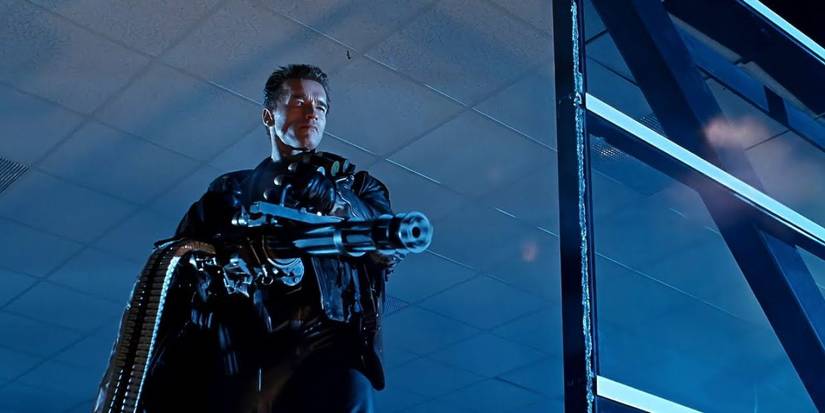
Arnold Schwarzenegger as the Terminator firing a machine gun from Terminator 2: Judgement DayImage via Orion Pictures
Although released in July of 1991, Terminator 2: Judgment Day takes place 11 years after the events of the original film in 1984 (1995). The film focuses on young John Connor (Edward Furlong) years before he becomes the leader of the resistance against the machines that eliminate humans in the future. Connor is now targeted by the shape-shifting T-1000 (Robert Patrick), but a T-800 series cyborg (Arnold Schwarzenegger) is reprogrammed and sent back through time to protect him from being eliminated.
Terminator 2: Judgment Day is a time capsule of the early 1990s, just like the first film was of the 1980s. The wardrobe, music, and action set pieces still hold up and will for decades to come. All of that thanks in part to the forward-thinking of director James Cameron, who has his CGI effects planned years in advance so that by the time the film releases, he’s already ahead of the curve. Cameron has made a career out of wowing people with what he can fit into a frame. T2 is no exception to that statement.
The Matrix Defines all of 1990s Cinema
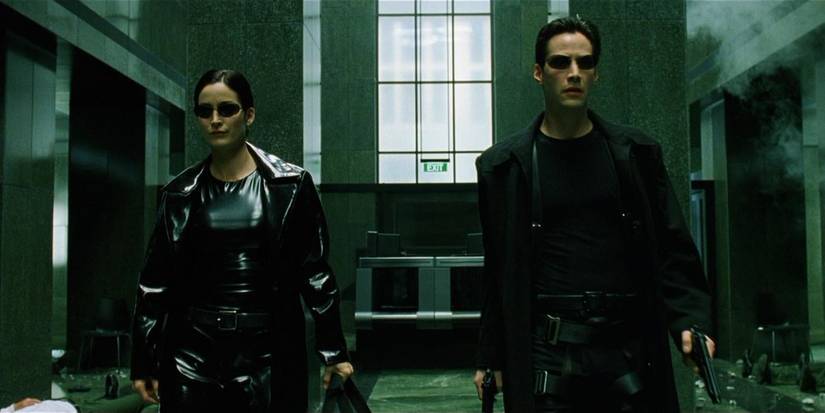
Keanu Reeves as Neo and Carrie-Anne Moss as Trinity in The Matrix (1999)Image via Warner Bros.
When a new decade takes shape, it’s hard to tell what defines that era at first. There were still remnants of the 1980s that trickled into the early ’90s. However, in 1999, many knew what the era was all about as it was wrapping up, and The Matrix helped out a lot with that. The Wachowskis’ science fiction action movie is about a computer hacker (Keanu Reeves) who yearns for knowledge about his fractured reality from a group of mysterious rebels. Once he learns the truth behind the world around him, he goes to battle with a group of agents who look to maintain the false image of what the world actually is.
The Matrix drew on societal anxieties about the world being on the cusp of the new millennium. The initial tech boom hit around this time, leaving people either highly excited or fearful of what might come of it. Like the Terminator franchise, it perfectly predicted truths about the future of tech. Hopefully, it doesn’t predict it all, though. Despite all of that, it’s a fun movie that broke new ground in CGI with special effects that would be duplicated for years to come. The Matrix feels like a martial arts spectacle fused with the kind of visuals audiences see in Japanese anime movies. When all was said and done, when it came to the ’90s, it was The Matrix that made the most lasting impression.