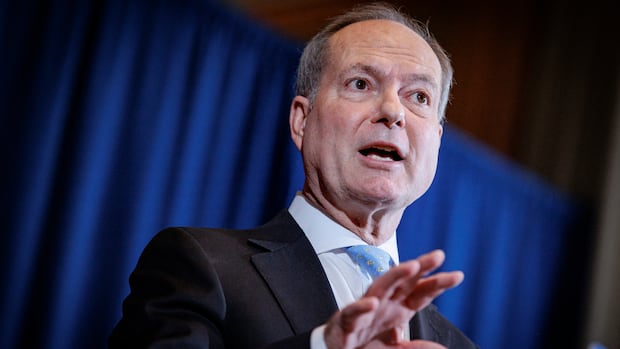
Ontario’s finance minister says the new federal budget put forward by Prime Minister Mark Carney’s government “lacks some ambition” on infrastructure, nation-building and tariff relief.
Minister Peter Bethlenfalvy told reporters at Queen’s Park Wednesday he had spoken with his federal counterpart, François-Philippe Champagne, to go over the newly-tabled budget in more detail.
“My first take is that it’s less transformational, it’s more tinkering,” he said.
The federal budget, tabled Tuesday, details billions in proposed cuts and investments meant to spur growth and productivity amidst trade uncertainty and a slowing economy.
It calls for about $141 billion in new spending — offset by $51.2 billion in cuts, mostly to the public service — and shows a deficit of roughly $78 billion for the 2025-26 fiscal year.
WATCH | Highlights from PM Carney’s budget: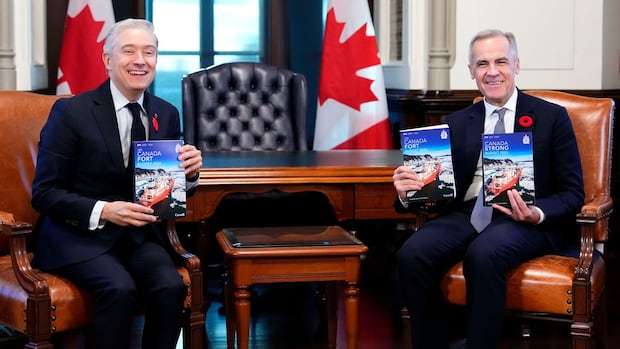
What are the main takeaways from Carney’s first budget? | Hanomansing Tonight
Finance Minister François-Philippe Champagne delivered the Liberal government’s first budget on Tuesday. CBC reporters break down the budget’s political and economic implications, including a major new direction in defence spending.
The budget includes $51 billion in infrastructure spending over the next decade, which Bethlenfalvy called disappointing. Ontario is planning to spend about $200 billion on infrastructure over the next 10 years, he said, and the province was hoping for $100 billion in federal infrastructure funding.
“It falls really short there,” he said. “Also, on the nation-building side, we did not see a commitment to some of our priorities.”
Those priorities include large-scale nuclear energy, mining the Ring of Fire, and the province’s controversial Highway 401-tunnel project, he said.
“These things are really important to creating jobs, getting shovels in the ground, moving our province forward,” he said.
Under the new budget, major projects like high-speed rail, new ports, carbon capture and storage face likely approval in the coming months.
The budget also fell short in support for workers and businesses impacted by U.S. tariffs, Bethlenfalvy said.
“I’ve had workers asking me what’s in the budget for Oshawa, what’s in it for Windsor?” he said. “There isn’t much there specifically.”
WATCH | ‘Think twice’ before rejecting budget: finance minister: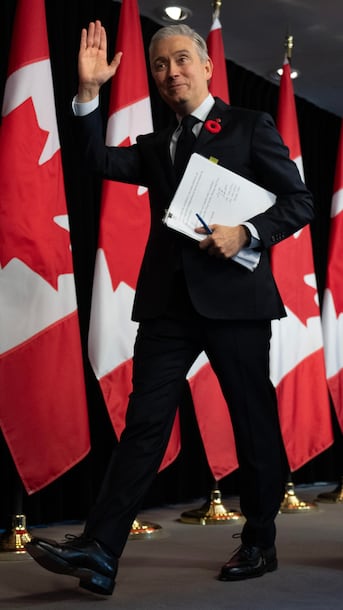
‘Think twice’ before rejecting budget: finance minister
Finance Minister François-Philippe Champagne says he hopes members of Parliament will think carefully about their votes on the budget. Champagne says now isn’t the time for ‘political games.’
In his budget speech Tuesday, Champagne said the level of economic uncertainty the country is facing is generational, and the government’s budget would help prop up the economy as Canada grapples with major economic disruptions.
Earlier this week, Bethlenfalvy had said he would like to see federal tax cuts in the budget, saying that could help the economy in light of U.S. tariffs. The budget included the removal of two high-end taxes on underused housing and luxury aircraft and boats, but the minister did not mention tax cuts in his comments Wednesday.
Is Bethlenfalvy teasing fall economic statement?
The finance minister’s focus on infrastructure spending and protecting jobs from the impacts of U.S. tariffs may provide a glimpse of the themes of the fall economic statement, which often serves as a mini budget, that Bethlenfalvy is set to table Thursday.
In another recent financial update, the 2025-26 first quarter finances, the government projected a $14.6-billion deficit this year.
But in a speech earlier this week, Bethlenfalvy noted the province ended last year with a deficit of $1.1 billion, significantly smaller than the $9.8 billion it had projected.
He also touted a debt-to-GDP ratio that is the lowest it’s been in a decade and falling costs of servicing the province’s debt, suggesting the books may be improving.
Bethlenfalvy has already made a few pre-fall economic statement announcements, including an HST rebate for some first-time homebuyers and $1.1 billion for home care.
Toronto mayor praises housing spending, food program
The budget was well-received by Toronto Mayor Olivia Chow, who said in a statement that she welcomed “the federal government’s commitment to building more affordable homes and investing in critical city infrastructure.”
“The 2025 federal budget represents a significant step forward for Toronto, but only if the provincial government matches its ambitious infrastructure and housing investments,” she said.
Federal funding will help the city create 230 supportive homes on public land in the next 18 months, and preserve about 1,000 at-risk homes, she said.
Chow also praised Ottawa’s decision to make the national school food program permanent.
Opposition reacts to federal budget
At Queen’s Park on Wednesday, Ontario NDP Leader Marit Stiles asked Ford to deliver a jobs plan for Ontario, saying the federal budget did not deliver on it.
“We have a federal budget that I’m just going to just say, I do not think delivered on what we needed in this moment,” Stiles said. “What Ontarians need right now is a government that is going to stand with workers.”
When it comes the finance minister’s demands for the 401 tunnel, Ontario Green Party Leader Mike Schreiner called the idea ridiculous Wednesday.
“I think it’s unrealistic for anyone to support a tunnel that’s going to create a traffic chaos and be a fiscal nightmare for the province of Ontario,” Schreiner said. “There is no way the federal government is going to invest in this ridiculous tunnel and I don’t even understand why the province is embarrassing us by continuing to ask for it.”
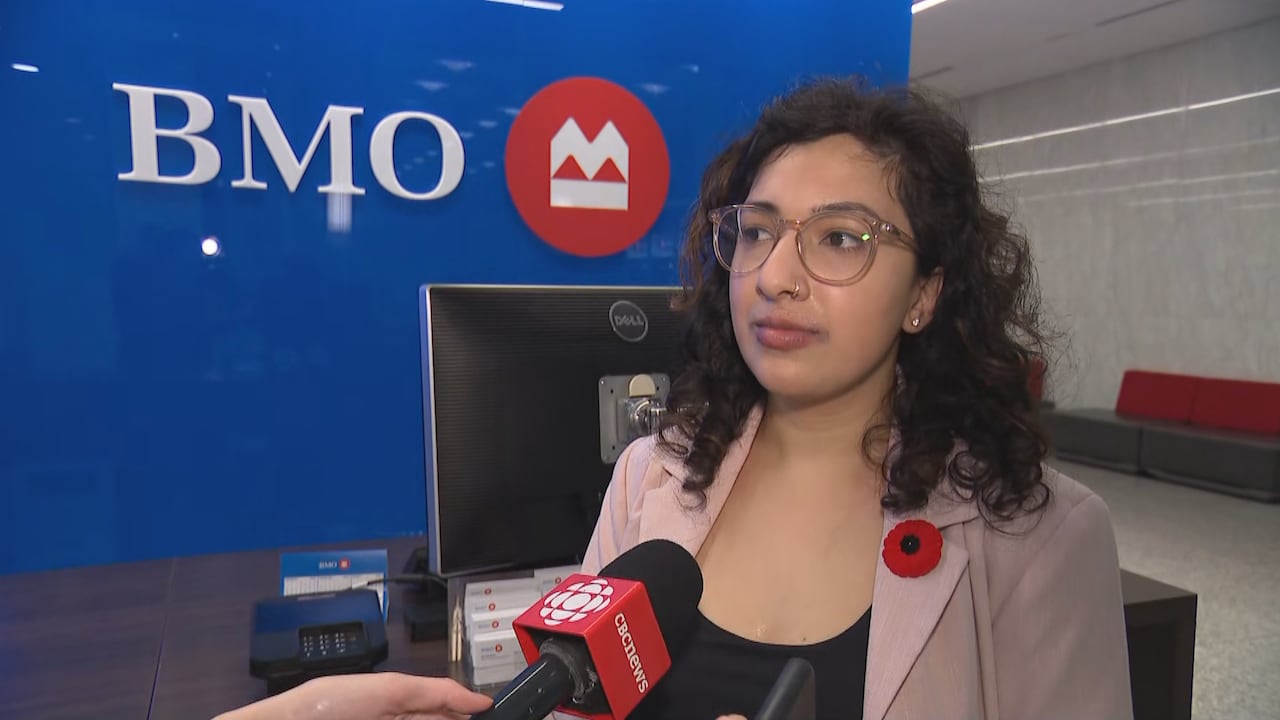 Shelly Kaushik, senior economist at BMO, says the 78B deficit is ‘nothing to sneeze at.’ ( Paul Smith/CBC News)Deficit is ‘nothing to sneeze at,’ economist says
Shelly Kaushik, senior economist at BMO, said that seeing things like the national school food program become permanent, as well as funding for infrastructure and housing should help with affordability in the longer term.
“A deficit of $78 billion this fiscal year is certainly nothing to sneeze at … that’s the deepest deficit we’ve seen [since the] pandemic,” Kaushik said.
Kaushik said rental stability due to immigration changes will hopefully give Canadians some financial relief.
The budget did include some marginal support for tariff impacted sectors, including employment insurance benefits for workers, but Kaushik said ultimately, a trade deal is needed to help manufacturers.
Torontonians react to federal budget
Torontonian Shannon Mollow, who lives in Ave. Road and Eglinton West says that there are still a lot of empty store fronts post-pandemic.
“I’m hoping for the government to be more responsible for the excess spending and if we have to go to election, we go to an election and if it makes things better, it makes things better,” said Molloy.
Pamela Hodgson, speaking next to her 14-year-old granddaughter, said she’s happy with the budget and sees it helping Canada’s future.
“I really believe that we have to move forward and I think the budget yesterday is going to get us there, I really do,” Hodgson said. “Hopefully it will pass. Nobody wants an election again.