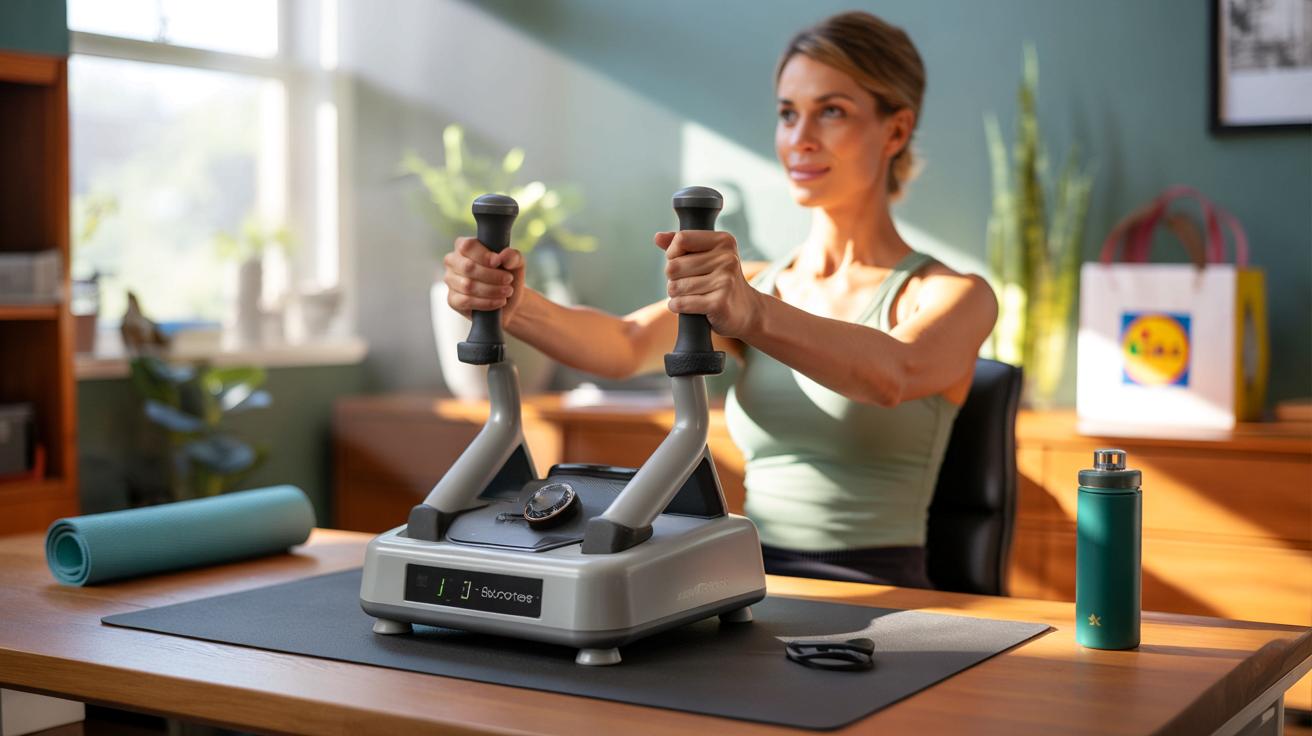
Budgets are tight and gym time is scarce, so compact home kit is creeping back into living rooms across the UK this winter.
A pocket‑sized pedal gadget now targets your arms as well as your legs, promising convenient toning while you sit. The biggest draw sits on the price tag and the promise of simple tracking, not on grand claims.
What is the €29.99 Silvercrest pedal
Lidl sells the Silvercrest Personal Care arm‑and‑leg training device for €29.99. The unit is a compact pedal system that rests on the floor or a desk. The brand positions it for home and office use. A built‑in computer lists six functions and a clear LCD screen. The display shows training time, speed, distance and estimated calories. The resistance adjusts with a simple control to scale effort. Reviews on the retailer’s site cluster around 4 out of 5 stars. The footprint resembles a mini exercise bike without a saddle. The casing aims to stay stable on hard floors and rugs. The price keeps the barrier to entry low for first‑time users.
€29.99, six on‑board functions, LCD feedback, adjustable resistance and a compact frame designed for arms or legs.
How to use it for firmer arms
Set the unit on a non‑slip surface at chest height if you plan arm work at a table. A folded mat or a rubber pad helps. Sit upright with your shoulders relaxed. Grip the pedals lightly and turn through a smooth range. Keep wrists neutral to avoid strain. Start with a low resistance and a steady cadence. Focus on a controlled pull‑push pattern to engage biceps, triceps and shoulders. Breathe rhythmically and avoid shrugging during effort. Aim for short, regular bouts rather than rare marathons.
Try this 15‑minute arm protocol
- Warm up for 3 minutes at the lowest resistance while maintaining a smooth cadence.
- Pedal for 8 minutes at a moderate pace that elevates breathing but allows conversation.
- Add 3 rounds of 30 seconds slightly faster, each followed by 30 seconds easy pedalling.
- Cool down for 1 minute, then gently stretch forearms and shoulders for 60 seconds.
Two to four short sessions a week with gradual resistance increases can nudge visible tone without overloading joints.
Form and safety
Stabilise the base so it does not drift during rotations. Align chair height so elbows bend around 90 degrees at the mid‑stroke. Keep the spine tall and ribs stacked over the pelvis. Avoid gripping too hard to reduce forearm fatigue. Stop if you feel sharp pain in wrists, elbows or shoulders. Add a towel under the unit if your table surface is slick. Track time and cadence on the display to keep effort consistent.
Progression you can measure
Increase resistance one notch every 1–2 weeks if sessions feel comfortable. Add 1–2 minutes to a session when you can maintain smooth form. Use the time and speed readouts to spot plateaus. Record a simple log of minutes, resistance level and perceived effort. Schedule rest days to allow muscles to recover. Pair the device with leg sessions to raise weekly activity time. Aim for a mix of moderate cardio and strength work across the week for broader benefits.
What users report and the limits
Customer feedback often flags three points: the low price, the stability on the floor during use and the ease of setup. Several buyers say it suits light daily activity at a desk. Others value quick resistance changes and a readable screen. These views align with the concept of gentle, frequent movement rather than high‑intensity training. The device does not replace coached strength sessions. It does not replicate heavy lifting or pull‑ups for maximal muscle gain. It acts as a convenient tool to keep arms moving and engaged between larger workouts.
This is a practical companion for consistency, not a magic shortcut to sculpted arms without effort.
How it fits into a weekly plan
UK activity guidance points to regular moderate‑intensity exercise and muscle‑strengthening on at least two days. This pedal unit can fill short gaps in your day. Combine it with brisk walking, cycling or swimming. Add simple bodyweight moves to target triceps, biceps and shoulders. The table below sketches a balanced week that uses the pedal to lift overall volume without a long commute.
Arms with pedal
Cardio
Strength and mobility
Who should be cautious and how to make it work
If you have a recent shoulder, elbow or wrist injury, seek personalised advice before starting. People with neck pain should set the device to a height that does not provoke strain. Pregnant users should avoid breath‑holding and keep intensity moderate. Place the unit on a firm, level surface to reduce slip risk. Wear supportive footwear for leg sessions and keep hands dry for arm sessions. Keep resistance moderate if tingling or numbness appears in the hands. Stop and reassess if symptoms persist.
Consistency beats intensity for this category of tool. Align usage with your week rather than chasing long sessions. Pair sessions with a protein‑rich meal pattern to support muscle maintenance. Hydration and regular sleep help recovery and overall energy for repeat bouts. Small, repeatable habits build arm definition over months.
What about calories and cost
Light arm pedalling typically expends fewer calories than leg work. A rough guide sits around 3–5 kcal per minute for a moderate adult effort. A 15‑minute arm session can reach 45–75 kcal. Five such sessions in a week yields 225–375 kcal. That total supports weight management when combined with nutrition and daily movement. The LCD’s time and distance readouts help you judge trends across weeks. The number on the screen is an estimate, so focus on consistent patterns rather than single sessions.
The headline price sits at €29.99, which equates to roughly £26 at current rates. Use it five days a week for six months and you clock about 130 sessions. The cost per use lands near €0.23 before electricity or batteries, if required by the console. The space requirement stays low, so storage costs nothing extra in most homes. The value case strengthens if you replace a few car trips with active breaks around sessions.
At under €0.25 a session over six months of regular use, the pedal pays for itself in routine alone.
Extra ways to build arm tone around the pedal
Add simple movements on non‑pedal days to recruit more muscle fibres. Do two sets of 8–12 slow triceps dips using a sturdy chair. Follow with two sets of 8–12 incline press‑ups on a kitchen worktop. Finish with two sets of 12 slow resistance‑band curls. Keep rest periods to 60–90 seconds to maintain a steady heart rate. Track your reps and add one rep when you hit the top of the range comfortably.
Office workers can stitch micro‑sessions into breaks. Pedal for five minutes before calls to warm the shoulders. Add a minute of shoulder blade squeezes after standing. Set calendar nudges for two brief blocks daily. These cues help you build a reliable routine without rearranging your day.