There are plenty of trilogies available to stream, rent, or buy in-person and across streaming services these days, but some underrated action movies have either become lost in the crowd or aren’t given the true recognition they deserve. When it comes to a good trilogy, one size does not fit all; whether there are loosely connected stories at play or a specific plot that spans across installments, the only true characteristic is that there are only three works in the series. Some trilogies stick out from the crowd for their sheer scope and popularity alone, such as Peter Jackson’s The Lord of the Rings and Francis Ford Coppola’s The Godfather.
The action genre is one of the most expansive, featuring epic battle sequences, choreographed hand-to-hand combat, and more ordinary conflicts explored through a variety of lenses. With so much talent across the board, it’s understandable that some movies easily slip through the cracks and fall into obscurity or unappreciated territory for various reasons, including financial success and the release of other movies around the same time. These forgotten or underappreciated trilogies have plenty of action to offer and are worth checking out, where available.
The Millennium Trilogy Blends Action With Other Themes

Noomi Rapace as Lisbeth Salander in The Girl with the Dragon TattooImage via Sony Pictures Releasing
The Dragon Tattoo trilogy consists of The Girl with the Dragon Tattoo, The Girl Who Played with Fire, and The Girl Who Kicked the Hornets’ Nest, all released in 2009. The Swedish films are adaptations of Stieg Larsson’s book series, and revolve around Mikael Blomkvist (Michael Nyqvist), a magazine owner who is hired to investigate a disappearance. At the same time, a computer hacker, Lisbeth Salander (Noomi Rapace), looks into Blomkvist’s files and eventually joins forces with him.
While The Girl with the Dragon Tattoo has also been adapted in the United States, it’s safe to say that the Swedish Millennium trilogy reigns supreme. The first film franchise based on Larsson’s novels features a tight plot with immersive storytelling, with the screenplays being relatively faithful to the source material. Rapace commands the screen as Salander, and while the action is compelling, the mysterious and dark shared ambiance is naturally captivating. Between the Swedish and American adaptations, the former should be added to watchlists first.
The Vengeance Trilogy Explores the Effects of Revenge
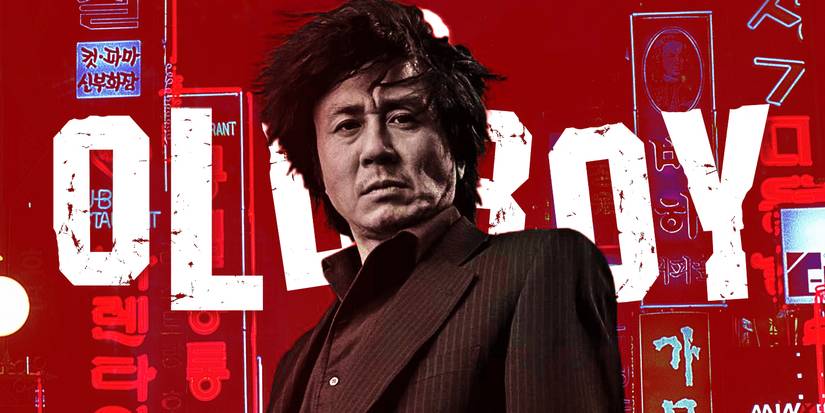
Dae-su Oh (Choi Min-sik) looks serious in front of the title “Oldboy” in a custom image.
Directed by Park Chan-wook, the Vengeance trilogy is a group of loosely connected South Korean films that all revolve around a thirst for revenge. The first film, Sympathy for Mr. Vengeance (2002), revolves around a deaf-mute man who accidentally causes a girl’s death while attempting a ransom. In response, the girl’s father seeks out justice. The second film, Old Boy (2003), follows a man released from prison, who must try to figure out why he was unfairly imprisoned by a deadline to avoid another person’s death. The final film, Lady Vengeance (2005), focuses on a woman released from prison, who attempts to track down her daughter and get revenge on the person she served time for.
The Vengeance trilogy, as its name and premise suggest, is not for the faint of heart: all three films feature a generous serving of violence and conflict, with the physical acts featured overall bordering on uncomfortable, yet incredibly unforgettable. The thematic similarities and complex plots across the films are compelling and highly intriguing, especially coupled with Park’s directorial style and the shared dark ambiance.
The Mexico Trilogy Effortlessly Blends Action and Comedy
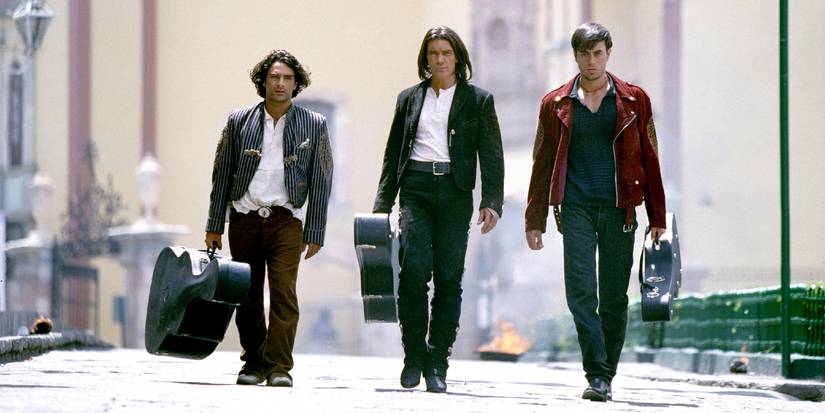
Once Upon a Time in Mexico Starring Antonio Banderas, Enrique Iglesias, and Marco LeonardiImage via Sony Pictures Releasing
The Mexico trilogy, directed by Robert Rodriguez, consists of El Mariachi (1993), Desperado (1995), and Once Upon a Time in Mexico (2003). The series follows El Mariachi (Carlos Gallardo/Antonio Banderas), an ordinary musician who accidentally stumbles into a life of crime and violence, following a case of mistaken identity. As Mariachi embroils himself with Mexico’s criminal underworld, he attempts to make things right in his traumatic personal life by enacting revenge.
The Mexico trilogy is one of those series that many find vaguely recognizable, but don’t understand or know the full scope of Rodriguez’s works unless they watch them. Mariachi is an intriguing character who, in the end, resembles more of an anti-hero than a standard protagonist (as portrayed by Gallardo and Banderas). The action is plentiful and lends itself well to Mariachi’s journey, and there is also a fair amount of comedy to elevate the overall plot as well.
The Has Fallen Trilogy Is Explosive, Yet Straightforward
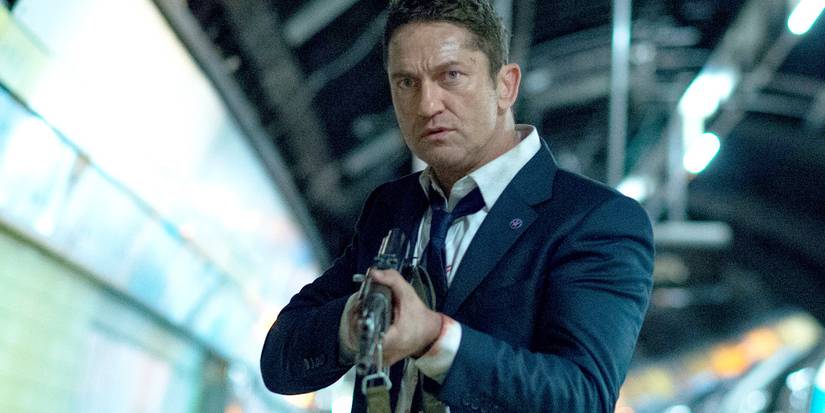
Image via Focus Features
The Has Fallen trilogy consists of Olympus Has Fallen (2013), London Has Fallen (2016), and Angel Has Fallen (2019); the franchise also includes two television series: Paris Has Fallen (2024) and its upcoming sequel, Apollo Has Fallen. The films revolve around Mike Banning (Gerard Butler), a Secret Service agent continuously tasked with protecting President Benjamin Asher (Aaron Eckhart) and other world leaders. Morgan Freeman also stars as Allen Trumball, who eventually succeeds Asher.
The Has Fallen trilogy is dynamite in every sense of the word. The action is non-stop and explosive across all three films, and there is plenty of tension as Banning continuously races to protect those in danger. The direction is solid for each installment, and Butler and Freeman consistently hold their own against all the action. What makes the Has Fallen trilogy stand out among many is that its plot is generally easy to follow, which helps keep the attention of its audience.
The Class of 19XX Trilogy Is So Bad, It’s Good
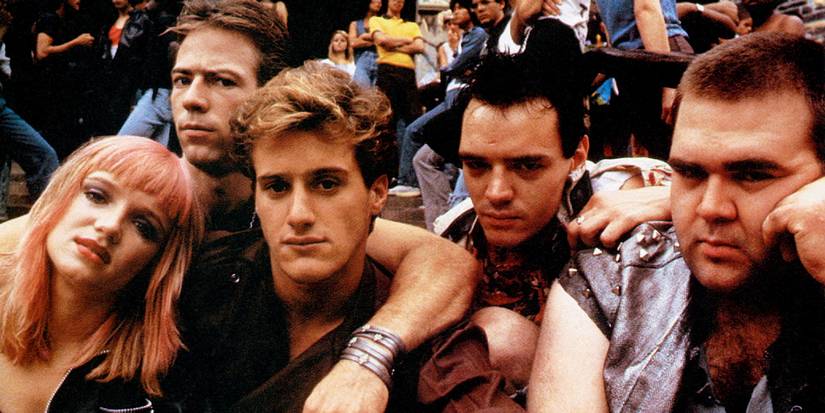
CLASS OF 1984, from left Lisa Langlois, Neil Clifford, Timothy Van Patten, Stefan Arngrim, Keith Knight, 1982Image via United Film Distribution/Courtesy Everett Collection
The Class of 19XX trilogy includes Class of 1984 (1982), Class of 1999 (1990), and Class of 1999 II: The Substitute (1994). The three films are loosely connected by plot, but share some similarities: each story takes place within a high school, and depicts conflict between students and at least one teacher. Class of 1984 follows new teacher Andrew Norris’ (Perry King) problems with a student gang, Class of 1999 includes robots and an addictive substance, and Class of 1999 II: The Substitute focuses on new substitute teacher John Bolen (Sasha Mitchell).
The Class of 19XX trilogy is not everyone’s cup of tea: there is an overabundance of violence, some characters aren’t fully developed and come off more as classic tropes, and overall, the plot is simple. Where the trilogy goes right, however, is that there is plenty of action and drama to follow, continuously leaving viewers on the edge of their seats. For those who enjoy over-the-top stories with a fair amount of tension, this trilogy is worth checking out for how it delivers on those aspects.
The Unbreakable Trilogy Is Thought-Provoking

Mr. Glass (Samuel L. Jackson) and the Beast (James McAvoy) sit in a pink room in GlassImage via Universal
Directed by M. Night Shyamalan, the Unbreakable trilogy consists of Unbreakable (2000), Split (2016), and Glass (2019). The films revolve around characters who discover that they have supernatural powers. However, while there is a large encompassing theme of superheroes and supervillains, the trilogy is more realistic than fantastical. Unbreakable revolves around a man who mysteriously survives a train crash as the only survivor, while Split focuses on a man with dissociative identity disorder. Glass combines characters from both previous films.
Despite Unbreakable and Split being released 16 years apart, there is a nice flow to Shyamalan’s Unbreakable trilogy that makes it worth watching. The mash-up of storylines flows effortlessly and works well within the trilogy’s parameters, and everyone nails their roles flawlessly, especially McAvoy as Kevin Wendell Crumb. The films are suspenseful and full of twists and turns, with a narrative that extends beyond the physical action, rendering everything about the project thought-provoking and meaningful.
The Three Flavours Cornetto Trilogy Is Hilarious
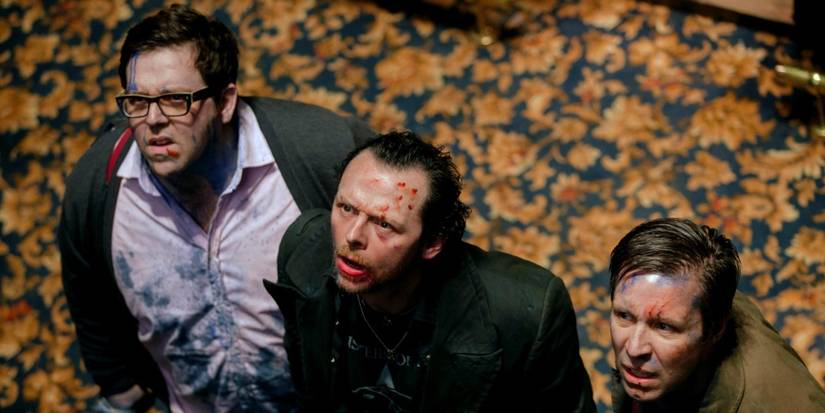
The World’s End remaining survivors drunkenly face off The NetworkImage via Focus Features
The Three Flavours Cornetto trilogy comprises Shaun of the Dead (2004), Hot Fuzz (2007), and The World’s End (2013). Directed by Edgar Wright and starring Simon Pegg and Nick Frost in all three installments, each film in the trilogy is loosely connected by vague references to Cornetto ice cream cones. Shaun of the Dead revolves around a zombie apocalypse, while Hot Fuzz follows two cops who attempt to solve a murder. The World’s End focuses on an alien invasion.
While all of Wright’s movies are recognizable in their own right, many are unaware that they form a trilogy with intentionally repeated references to ice cream; these references are incredibly subtle, yet noticeable. The Three Flavours Cornetto trilogy is well-written and executed across the board, with each story feeling complete and relevant. Pegg and Frost lead the films hilariously, making them a perfect duo to star in such a body of work.
The Equalizer Trilogy Features Memorable Action Shots
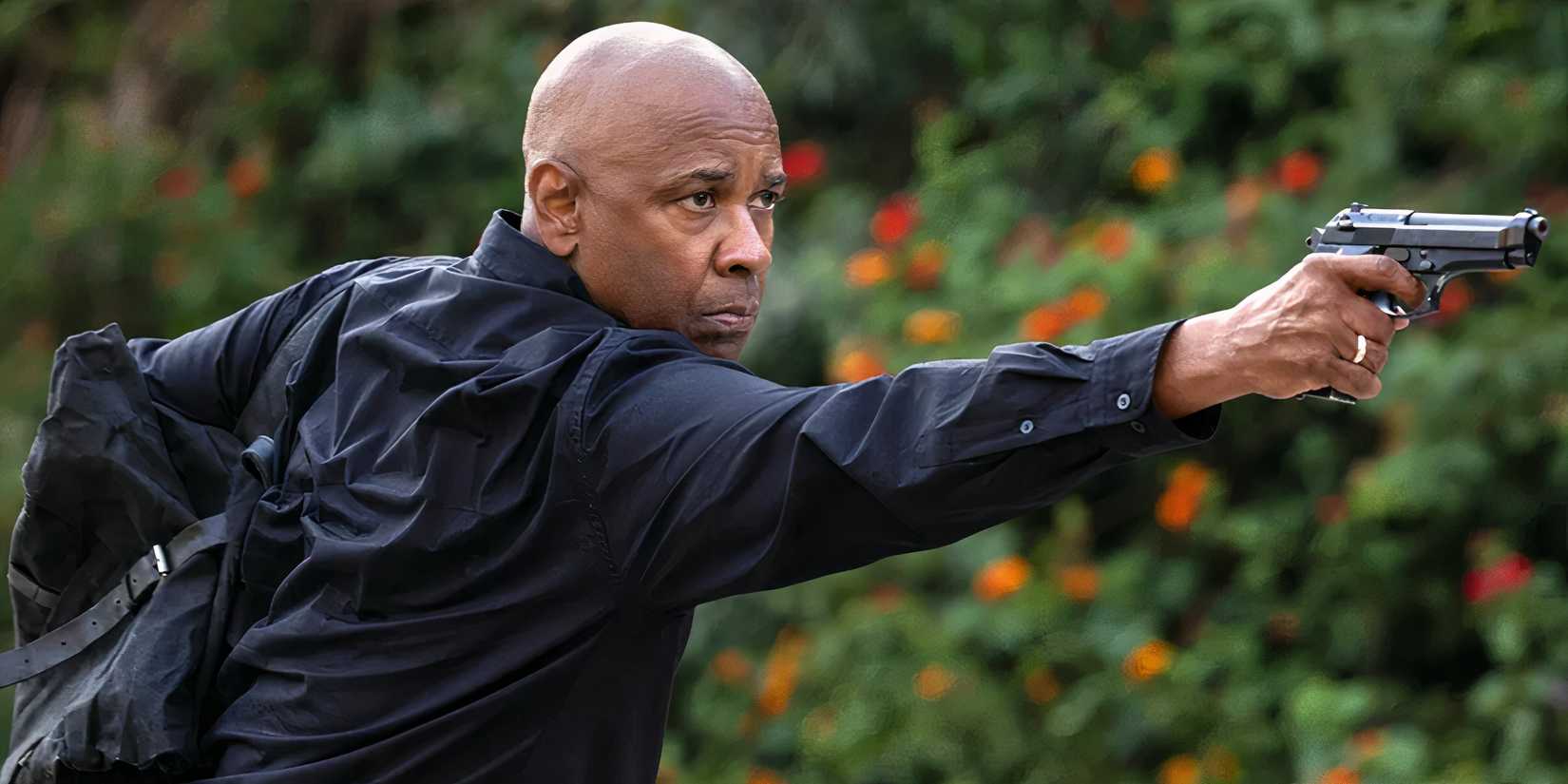
Denzel Washington, wearing all black, aims a pistol off-screen in the movie The Equalizer 3Image via Sony Pictures
The Equalizer trilogy includes The Equalizer (2014), The Equalizer 2 (2018), and The Equalizer 3 (2023), although the franchise itself also features a 2021 television series with Queen Latifah. The film series revolves around Robert McCall (Denzel Washington), a retired Marine and DIA agent who attempts to live a quiet life, but inadvertently becomes a vigilante. Throughout the trilogy, McCall uses his specialized skills and tough background to take down criminals on other people’s behalf.
The Equalizer trilogy consists of just three installments of an entire multimedia franchise (including the original 1980s television series), yet they stand perfectly well on their own. The action is gripping and well-choreographed, and Washington portrays McCall’s complexity and questionable ethics with conviction. The trilogy’s pacing isn’t the fastest compared to other mentions on this list, but its deliberate slow build-up pays off well.