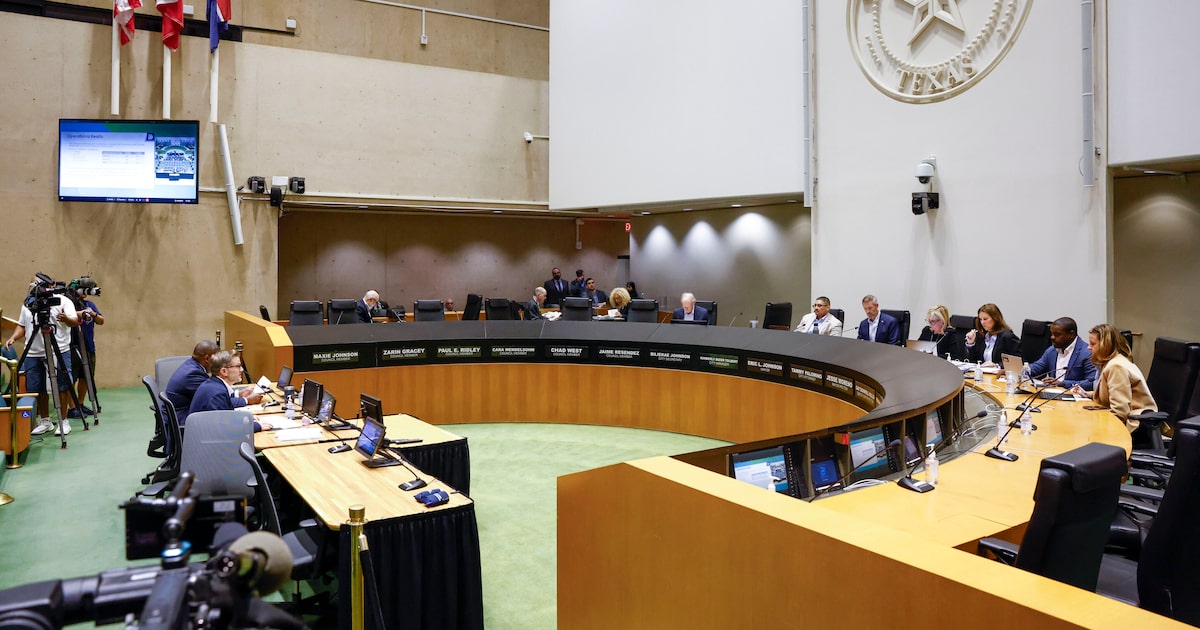
One week after a lawsuit was filed in Denton County, Dallas is bracing for a possible legal showdown over 83 local ordinances, ranging from LGBTQ+ protections to noise rules, that critics say violate Texas’ controversial 2023 “Death Star” law.
Three Dallas residents are suing the city, arguing that dozens of local rules go beyond state authority and create conflicting, costly standards for residents and businesses. If the plaintiffs win, the ruling could reshape how Dallas regulates wages, housing, noise, waste, and even pet ownership.
Dallas officials have declined to comment on the lawsuit, citing the pending litigation. City attorneys haven’t yet responded in legal filings to the allegations in the lawsuit.
Passed in 2023, the Texas Regulatory Consistency Act bars Texas cities and counties from creating or enforcing local policies that go beyond state law.
Political Points
Supporters, including Gov. Greg Abbott and GOP lawmakers, argued it was necessary to eliminate a confusing mix of regulations that vary by city or county that they say burden businesses and stifle growth.
Opponents countered that the law strips local governments of their ability to protect residents and overturns progressive policies. They also argued its vague wording makes it hard to know which local rules were illegal.
Houston, San Antonio, and El Paso sued to block the law shortly after its passage. A Travis County judge ruled it unconstitutional in 2023, but the Third Court of Appeals overturned that decision in July, paving the way for the Dallas lawsuit.
The challenged ordinances cover everyday life in Dallas, from labor and housing to business operations and public spaces.
The Texas Public Policy Foundation, an Austin-based conservative think tank representing the three plaintiffs in the lawsuit, argues that these rules conflict with state codes governing insurance, occupations, business transactions, natural resources, labor, property, and agriculture. Repealing them could lower compliance costs for businesses but reduce local oversight in areas like worker protections, environmental standards, and public health.
Here are examples of 25 Dallas ordinances being challenged by this lawsuit:
Labor and Employment
1. Minimum Wage Ordinance: Dallas requires city contractors to pay employees a “living wage” above state minimums. TPPF argues this violates Texas Labor Code, which limits municipal wage-setting authority. The ordinance inflates labor costs for taxpayer-funded projects, the lawsuit states.
2. Equal Employment Opportunity Clause: Dallas mandates that city contracts include nondiscrimination clauses covering sexual orientation and gender identity, which are not recognized under state law. TPPF says this exceeds the Texas Labor Code’s authority and compels speech.
3. Anti-Discrimination in Public Accommodations: Dallas prohibits discrimination in businesses like restaurants and hotels based on sexual orientation and other categories not recognized by state law. TPPF argues this conflicts with Texas statutes.
4. Labor Unions Ban for City Employees: Dallas prohibits city employees from joining labor unions. TPPF says this violates Texas Government Code, which protects public employees’ right to union membership.
Housing and Property
5. Housing Voucher Incentives: Dallas requires developers receiving city subsidies to lease 10% of units to housing voucher holders for 15 years. TPPF argues this imposes quotas not authorized by Texas Property Code.
6. Mixed-Income Housing Mandates: Dallas forces developers to reserve units for specific income levels or pay fees. TPPF alleges this exceeds state authority, which does not allow cities to regulate income-based occupancy.
7. Minimum Property Standards: Dallas sets strict maintenance rules for rental properties. TPPF argues this invades Texas Property Code’s regulation of landlord-tenant duties, increasing costs for property owners.
8. Fair Housing Expansion: Dallas expands housing discrimination protections to include sexual orientation and gender identity, which are not recognized under state law. TPPF says this conflicts with Texas Property Code.
9. City Abatement of “Litter”: Dallas allows the city to enter private property to remove “litter,” including yard clippings or fallen leaves. TPPF argues this violates state agricultural laws and property rights.
10. Weed and Vegetation Removal: Dallas authorizes the city to remove weeds and vegetation from private property, even targeting agricultural practices like hay fields. TPPF alleges this exceeds state authority and interferes with farming.
Business and Commerce
11. Convenience Store Regulations: Dallas imposes security, registration, and operational mandates on convenience stores. TPPF argues this duplicates state law and discourages small businesses.
12. Home Solicitation Permits: Dallas requires permits for door-to-door sales. TPPF claims this conflicts with Texas Business & Commerce Code, which regulates such transactions without local permits.
13. Electronic Repair Licensing: Dallas mandates licenses for electronic repair businesses. TPPF argues this is preempted by state business regulations, which already cover deceptive practices.
14. Central Business District Concession Licenses: Dallas requires vendors in downtown Dallas to obtain city licenses, even on private property. TPPF says this exceeds state authority and discourages entrepreneurship.
15. Credit Services Regulation: Dallas imposes local licensing on credit repair and payday lending businesses. TPPF argues this duplicates Texas Finance Code, which regulates these industries.
Public Health and Environment
16. Solid Waste Container Rules: Dallas bans private waste containers, requiring residents to use city-issued roll carts. TPPF claims this violates Texas Health & Safety Code, which prohibits such restrictions.
17. Private Waste Collection Ban: Dallas prohibits private trash collection from residences, forcing reliance on city services. TPPF argues this suppresses competition and violates state waste management laws.
18. Pesticide and Herbicide Regulation: Dallas restricts pesticide use beyond state agricultural laws. TPPF alleges this conflicts with Texas Agriculture Code, which forbids local pesticide regulations.
19. Noise Restrictions in Parks: Dallas prohibits “loud and raucous” noise in parks, with vague standards. TPPF argues this violates free speech protections and conflicts with state noise laws.
20. Water Conservation Mandates: Dallas restricts lawn irrigation, even for non-city water users. TPPF says this exceeds state-delegated authority for water conservation.
Transportation and Services
21. Valet Parking Licensing: Dallas requires valet services to obtain city permits and insurance. TPPF argues this duplicates state transportation regulations and raises costs for businesses.
22. Vehicle Booting Regulations: Dallas imposes licensing, insurance, and operational rules for vehicle immobilization or booting services. TPPF says this exceeds state authority and creates inconsistent standards.
23. Escort Vehicle Licenses: Dallas requires licenses for vehicles escorting oversize loads or funeral processions. TPPF argues this duplicates Texas Transportation Code, which already regulates these services.
Animals and Agriculture
24. Rooster Ban: Dallas prohibits owning roosters within city limits. TPPF alleges this violates Texas Agriculture Code, which protects small-scale poultry keeping as an agricultural operation.
25. Regulated Animals Permit: Dallas requires permits for owning certain animals, like exotic pets. TPPF argues this conflicts with state wildlife regulations, which do not authorize local bans.