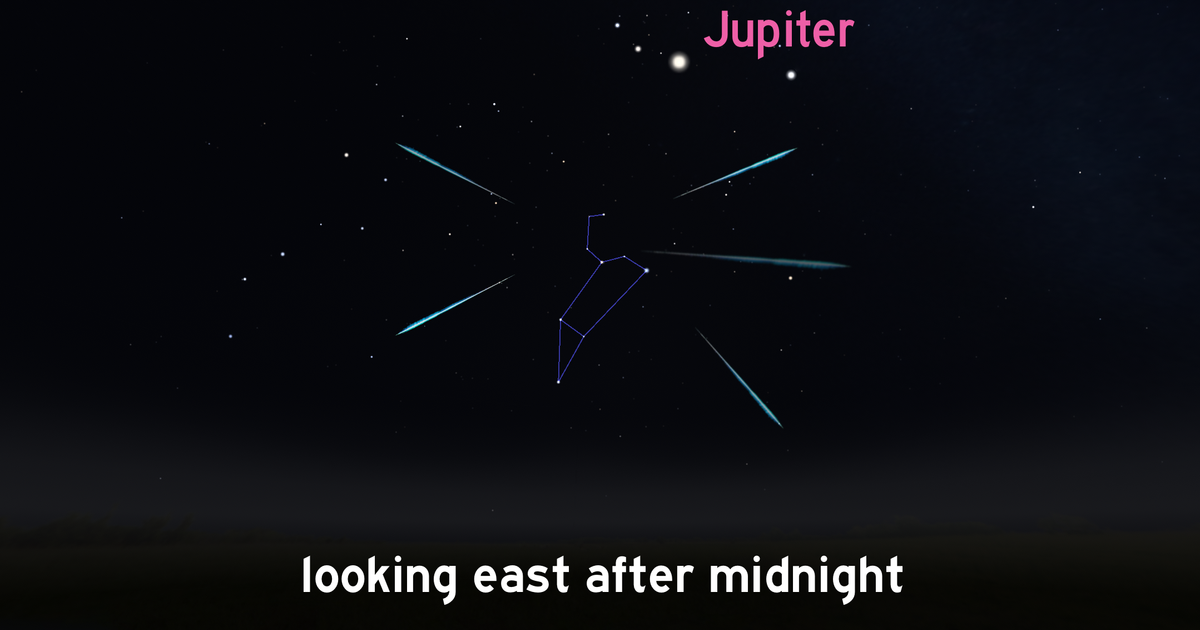
The Leonid meteor shower peaks early this week with best views in the hours before sunrise Monday, Nov. 17. Some meteors may also be visible early Tuesday morning.
Named for the constellation Leo, meteors appear to be originated from near the lion’s head. The easiest way to find Leo is to look for the backwards question mark in the eastern sky.
The 2025 edition of the Leonids are aded by the waning crescent moon, just 11% illuminated,
The Leonid meteor shower is created as Earth pass through the trail of tiny debris left behind by comet 55P/Tempel-Tuttle as it passes through our part of the solar system every 33 years. Even the brightest meteor of this, or other showers, is no bigger than a grain of rice.
While there have been outbursts as recently as 2002 where hundreds of meteors per hour have been visible, a handful of meteors each hour at most is expected this year.
The meteors return in 2031 and 2064 could fuel future impressive shows though.
Meteor viewing tips
- Give your eyes at least 10-15 minutes to adjust to the darkness, you’ll be amazed at how many more stars become visible
- Meteors can appear anywhere in the sky, so look to the darkest part. Even if that’s not near the constellation Leo.
- Leave your phone inside, each time you look at it, that 10-15 minutes starts over
The Leonids are a relatively minor shower with just a handful of meteors expected each hour.
The next major meteor shower is the Geminids which will peak the night of Saturday December 13