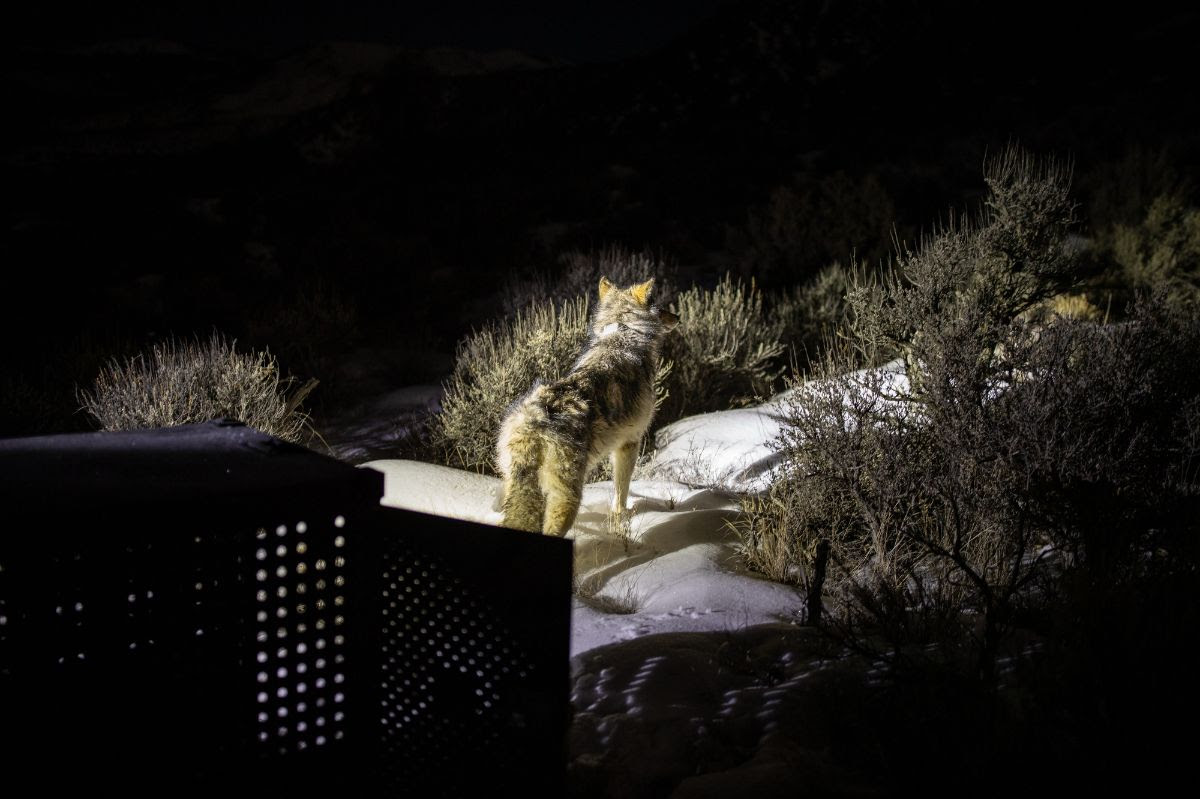
Another door closed on Colorado’s wolf reintroduction efforts when Washington state wildlife officials voted Saturday against giving Colorado Parks and Wildlife 10 to 15 gray wolves for relocation this winter.
The Washington Fish and Wildlife Commission voted 8-1 against providing wolves to Colorado, citing a decline in the state’s gray wolf population, is listed as endangered under both state and federal law.
Colorado Parks and Wildlife Director Jeff Davis presented his case for Washington giving Colorado wolves while acknowledging some of the challenges CPW has faced since it started reintroducing wolves two years ago in December.
Since the start of reintroduction, the agency has released 10 wolves from Oregon into Grand and Summit counties in December 2023, including two that unleashed controversy when it was discovered they had come from a pack that had previously killed livestock. CPW released another 15 wolves from British Columbia into Pitkin and Eagle counties in January.
Of those 25 relocated wolves, 10 have died from a variety of causes including legal and illegal shootings, fights with other predators, vehicle strikes and, in May, when CPW shot a yearling wolf from Copper Creek pack, during a lethal removal effort after the wolf had repeatedly killed livestock in Pitkin County.
The agency attempted to kill another depredating wolf from the Copper Creek pack over the summer, but gave up searching after several weeks. An uncollared wolf from the Copper Creek pack was shot in Rio Blanco County in August, but the agency was unable to locate the animal and therefore could not determine whether it died.
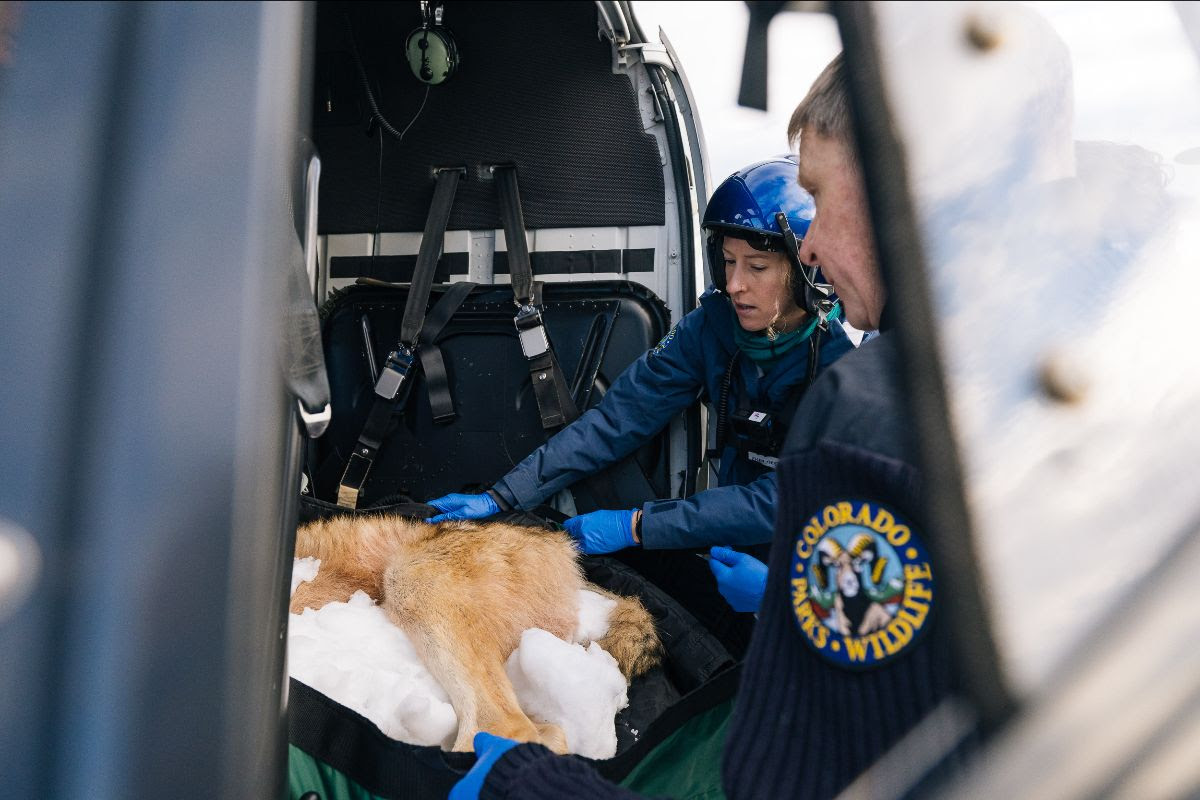 CPW staff prepares to move a recently captured gray wolf from a helicopter during capture operations in British Columbia in January 2025. (Colorado Parks and Wildlife photo)
During public comment at the Washington meeting, people criticized factions of Colorado that are unsupportive of wolf reintroduction, including someone who said he read a comment, after it was announced a female wolf had died, saying, “I hope she was pregnant,” and another that said, “Six down, nine to go. Come on, let’s go, Colorado.”
“So it sounds to me, some of the public in Colorado are very supportive of wiping out wolves in Colorado,” the person said during public comment.
Gray wolves began returning to Washington from populations reintroduced in Montana and Idaho in the early 2000s. Washington confirmed its first breeding pack in nearly 80 years in 2008. Since then Washington’s wolf population has grown significantly, with a 2023 count of at least 254 wolves in 42 packs with 24 breeding pairs, according to the Washington Department of Fish and Wildlife.
But in 2024, the department and participating Native American tribes counted 230 wolves (a 9% decrease) in 43 packs with 18 successful breeding pairs.
The Washington wildlife commission Saturday expressed concern over wolf numbers falling further if wolves are relocated to Colorado. “Translocation is really, really hard on animals,” commissioner Lorna Smith said. “There’s no denying that. And there is a certain expected mortality rate among translocated animals.”
But Commissioner Barbara Baker, who grew up in a ranching family in Texas and was the sole “yes” vote, said the wolf populations should not be the only consideration for why not to send animals to Colorado.
CPW has tried sourcing wolves from Washington before.
In January 2024, it went to the Confederated Tribes of the Colville Nation looking for as many as 15 wolves to bring to Colorado. The tribes initially agreed to give the state wolves. But they rescinded the offer in August 2024, citing the agency’s failure to conduct “necessary and meaningful consultation” with Colorado Ute Mountain Ute and Southern Ute Tribes.
Idaho, Montana and Wyoming have all also declined to give Colorado wolves.
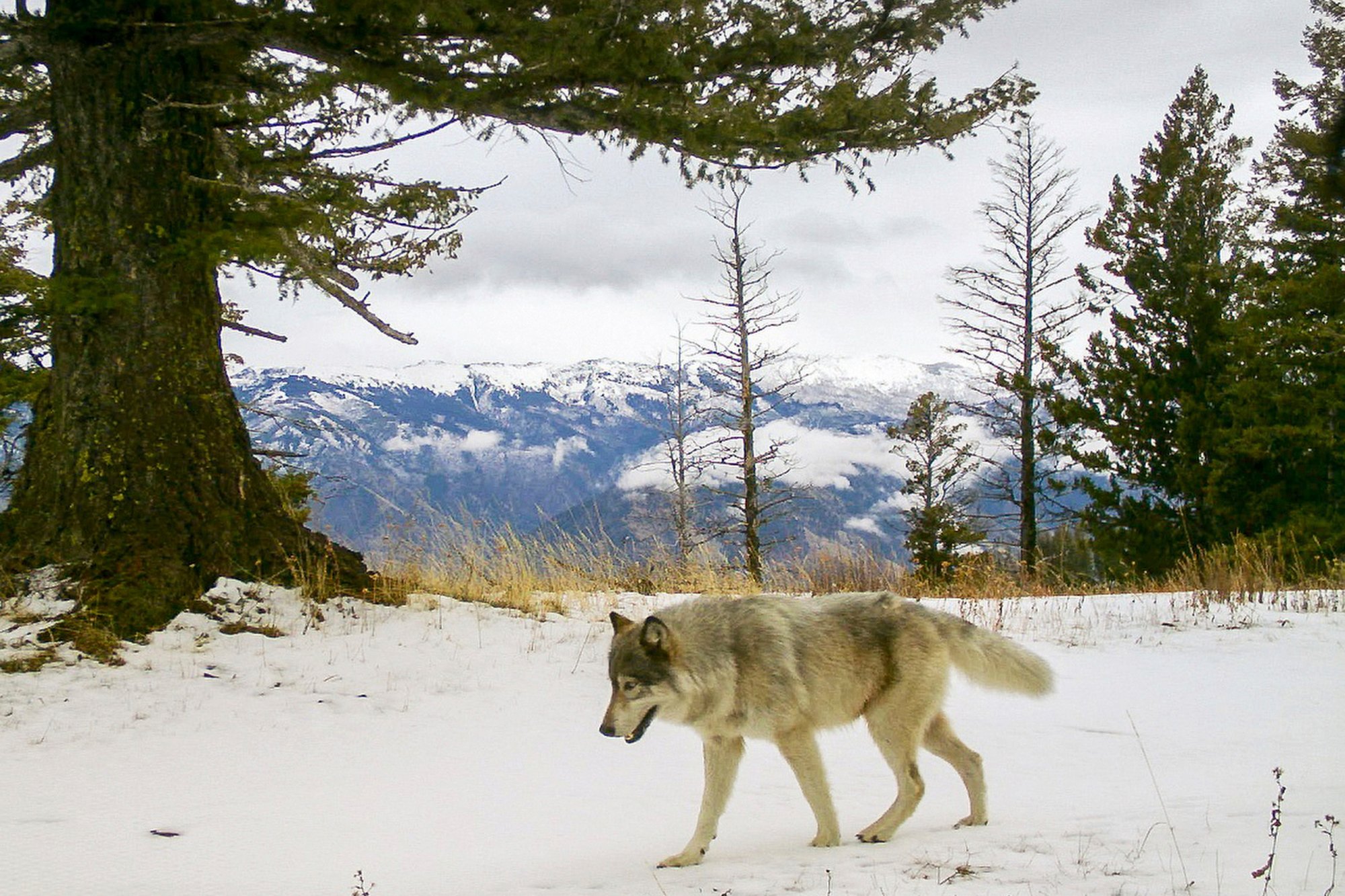 In this Dec. 4, 2014, file photo, released by the Oregon Department of Fish and Wildlife, a wolf from the Snake River Pack passes by a remote camera in eastern Wallowa County, Ore. (Oregon Department of Fish and Wildlife via AP, File)
In October, Brian Nesvik, director of the U.S. Fish and Wildlife Service, told CPW they could no longer source wolves from British Columbia, where they had intended to get them for this year’s relocation. Nesvik is a controversial figure who was Wyoming’s Fish and Game Department director when a Sublette County man was fined $250 for hitting a wolf with a snowmobile, taping the wounded animal’s mouth shut and showing it off in a rural bar before killing it. In August a Sublette County grand jury indicted Robertson on the charge of felony cruelty to animals, a crime that could put him in prison for up to two years.
Nesvik cited permitting issues as his reason for sending Colorado Parks and Wildlife a cease-and-desist order on sourcing wolves from British Columbia. CPW said it has fulfilled all requirements.
CPW says it will continue exploring all options for wolves that can be brought to Colorado this winter for the state’s third round of reintroduction work. Wording in the federal 10 (j) rule, which gives CPW flexibility during reintroduction, mentions the possibility of the agency getting wolves from Wisconsin, Michigan or Minnesota if other source populations are unavailable.
“That … illustrates that there’s no mandatory source population, i.e., CPW has flexibility,” said Tom Delehanty, a senior attorney with Earthjustice.